Caleb Wright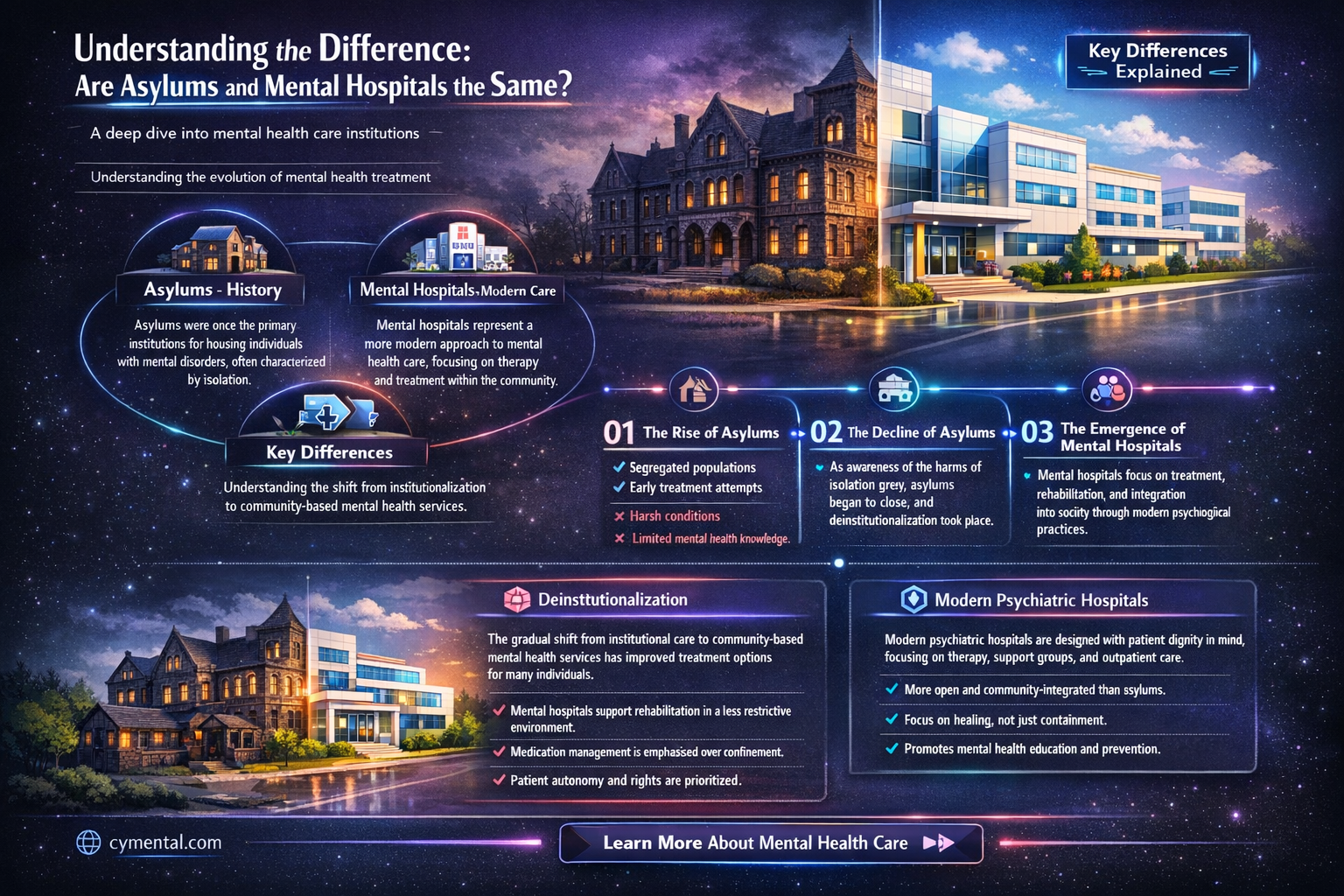
The terms asylum and mental hospital are often used interchangeably, but they have distinct historical and contemporary connotations. Traditionally, an asylum was a place of refuge for individuals deemed mentally ill, providing shelter and care. Over time, the term has evolved, and modern mental health facilities are more commonly referred to as psychiatric hospitals or mental health centers. These institutions focus on the diagnosis, treatment, and rehabilitation of individuals with mental health disorders. While both terms refer to facilities that care for people with mental health issues, the nuances in their usage reflect changes in societal attitudes and approaches to mental health care.
Explore related products


What You'll Learn
- Definitions: Distinguishing between asylums and mental hospitals based on historical and contemporary usage
- Services Provided: Comparing the types of care, treatment, and support offered in each facility
- Patient Rights: Evaluating the legal rights and protections afforded to individuals in asylums versus mental hospitals
- Stigma and Perception: Analyzing societal attitudes and the stigma associated with each type of institution
- Alternatives to Institutionalization: Exploring community-based care options and their effectiveness in supporting mental health

Definitions: Distinguishing between asylums and mental hospitals based on historical and contemporary usage
Historically, the term "asylum" referred to a place of refuge or safety, often with a religious connotation. In the context of mental health, asylums were institutions designed to provide shelter and care for individuals deemed insane or mentally ill. These facilities were typically run by religious orders or private individuals and were not primarily focused on medical treatment. In contrast, mental hospitals emerged as a more clinical and medically oriented approach to treating mental illness. They were often state-run and staffed by psychiatrists and other medical professionals, with a greater emphasis on diagnosis, treatment, and rehabilitation.
Contemporary usage of the terms "asylum" and "mental hospital" has evolved, and the distinction between the two has become less clear. In many countries, the term "asylum" is no longer used, having been replaced by "psychiatric hospital" or "mental health facility." However, in some contexts, "asylum" is still used to refer to a place of refuge for individuals seeking protection from persecution or violence, which can include those with mental health issues.
One unique angle to consider when distinguishing between asylums and mental hospitals is the concept of "moral treatment." In the 18th and 19th centuries, moral treatment was a popular approach to caring for the mentally ill, emphasizing the importance of a supportive and nurturing environment. Asylums were often designed with this philosophy in mind, providing a peaceful and structured setting for patients. Mental hospitals, on the other hand, were more likely to focus on medical treatments, such as medication and electroconvulsive therapy, which were developed later.
Another important distinction is the legal and social status of individuals confined to these institutions. In the past, asylums were often used as a means of social control, with individuals deemed "unfit" or "dangerous" being committed against their will. Mental hospitals, while also used for involuntary confinement, were more likely to be seen as a necessary evil for the treatment of serious mental illness. Today, the legal and ethical considerations surrounding the confinement of individuals with mental health issues are more complex, with a greater emphasis on patient rights and autonomy.
In conclusion, while the terms "asylum" and "mental hospital" are often used interchangeably, they have distinct historical and contemporary meanings. Asylums were originally places of refuge with a religious or moral focus, while mental hospitals were more medically oriented. Understanding these differences is important for appreciating the evolution of mental health care and the ongoing debates surrounding the treatment and confinement of individuals with mental illness.
The President's Decision: Shutting Down Mental Hospitals
You may want to see also
Explore related products


Services Provided: Comparing the types of care, treatment, and support offered in each facility
The services provided in asylums and mental hospitals can vary significantly, reflecting their distinct historical, cultural, and medical contexts. Traditionally, asylums were designed as places of refuge and moral treatment, focusing on providing a calm, orderly environment that would facilitate the recovery of the mentally ill. In contrast, modern mental hospitals are more likely to emphasize medical treatment, often incorporating a range of therapeutic approaches, including medication, psychotherapy, and behavioral therapy.
One key difference lies in the types of care offered. Asylums often provided long-term residential care, with patients staying for months or even years. This approach was based on the belief that a stable, nurturing environment was essential for recovery. Mental hospitals, on the other hand, tend to focus on shorter-term, acute care, aiming to stabilize patients and then discharge them to outpatient care or other community-based services.
The treatment methods employed in these facilities also differ. Asylums historically relied on moral treatment, which involved creating a structured, disciplined environment that would help patients regain their mental faculties. This approach often included activities such as gardening, crafts, and religious instruction. In contrast, mental hospitals today are more likely to use evidence-based treatments, such as cognitive-behavioral therapy, medication management, and group therapy, to address specific mental health conditions.
Support services in asylums and mental hospitals can also vary. Asylums often provided a range of social and recreational activities, designed to promote social interaction and a sense of community among patients. These might include dances, concerts, and sports events. Mental hospitals, while they may offer some recreational activities, tend to place a greater emphasis on providing support services that help patients manage their daily lives, such as vocational training, educational programs, and family therapy.
In conclusion, while both asylums and mental hospitals are designed to provide care and treatment for the mentally ill, the services they offer can differ significantly. Asylums historically focused on long-term residential care and moral treatment, while modern mental hospitals emphasize shorter-term, acute care and evidence-based treatments. Understanding these differences is essential for appreciating the evolution of mental health care and the various approaches that have been used to support individuals with mental health conditions.
Exploring Self-Admission to Mental Health Facilities: A Guide
You may want to see also
Explore related products


Patient Rights: Evaluating the legal rights and protections afforded to individuals in asylums versus mental hospitals
Individuals confined in asylums and mental hospitals are entitled to certain legal rights and protections, although these can vary significantly depending on the jurisdiction and the specific institution. One fundamental right is the protection against unlawful detention. Patients must be informed of the reasons for their confinement and have the right to challenge this in a court of law. This right is enshrined in various international human rights instruments, including the Universal Declaration of Human Rights and the International Covenant on Civil and Political Rights.
Another critical aspect of patient rights is the protection of their dignity and autonomy. This includes the right to privacy, the right to be treated with respect, and the right to participate in decisions regarding their own care. In many countries, laws and regulations have been enacted to ensure that patients are not subjected to degrading or inhumane treatment. For example, the use of restraints and seclusion is often strictly regulated, and patients may have the right to refuse certain treatments.
The right to access appropriate medical care is also a key consideration. Patients in asylums and mental hospitals should receive care that is tailored to their individual needs and that adheres to accepted medical standards. This includes the right to a proper diagnosis, the right to receive information about available treatments, and the right to consent to or refuse treatment. In some cases, patients may also have the right to access alternative or complementary therapies.
In addition to these specific rights, patients in asylums and mental hospitals are also entitled to the general protections afforded to all individuals under the law. This includes the right to legal representation, the right to a fair trial, and the right to appeal decisions that affect their liberty or well-being. It is important to note, however, that the exercise of these rights may be subject to certain limitations, particularly in cases where the patient's mental capacity is in question.
Overall, while there are significant legal rights and protections in place for individuals in asylums and mental hospitals, the reality is that these rights are not always fully respected or enforced. Advocacy groups and legal experts continue to work towards improving the legal framework and ensuring that patients are treated with dignity and respect.
Exploring the Landscape of Mental Health Facilities in the United States
You may want to see also
Explore related products


Stigma and Perception: Analyzing societal attitudes and the stigma associated with each type of institution
The societal attitudes towards asylums and mental hospitals are deeply rooted in historical misconceptions and fear. Asylums, often perceived as places of confinement and neglect, carry a heavier stigma due to their association with the warehousing of the mentally ill during the 19th and early 20th centuries. In contrast, mental hospitals today are viewed as therapeutic environments, albeit still with a lingering stigma that stems from their connection to psychiatric care and the involuntary commitment of patients.
One of the primary drivers of stigma is the media's portrayal of these institutions. Sensationalized news stories and fictional depictions in film and literature often reinforce negative stereotypes, portraying asylums and mental hospitals as places of horror and despair. This perpetuates a cycle of fear and misunderstanding, leading to the marginalization of individuals who seek or require psychiatric care.
Another factor contributing to the stigma is the language used to describe these institutions and their inhabitants. Terms like "crazy," "insane," and "lunatic" are often used pejoratively, dehumanizing those who suffer from mental health issues. This harmful rhetoric extends to the institutions themselves, with asylums and mental hospitals being labeled as "ghettos" or "prisons" for the mentally ill.
To combat this stigma, it is essential to promote education and awareness about mental health and the role of psychiatric institutions in providing care and support. This includes challenging negative stereotypes, using respectful language, and highlighting the successes and positive experiences of individuals who have received treatment in these settings. By fostering a more compassionate and informed public discourse, we can work towards reducing the stigma associated with asylums and mental hospitals and improving the lives of those who rely on them for care.
Navigating Mental Health Crises: When Hospitalization Becomes Necessary
You may want to see also
Explore related products


Alternatives to Institutionalization: Exploring community-based care options and their effectiveness in supporting mental health
Community-based care options have gained prominence as effective alternatives to institutionalization for individuals with mental health challenges. These options encompass a range of services and support systems designed to integrate individuals into their communities, providing them with the necessary assistance to manage their conditions and lead fulfilling lives. One such example is the Assertive Community Treatment (ACT) model, which offers comprehensive, multidisciplinary care to individuals with severe mental illness, often including those who have been institutionalized in the past. ACT teams typically consist of psychiatrists, nurses, social workers, and peer specialists who work collaboratively to address the various needs of their clients, from medication management to housing and employment support.
Another community-based approach is the Housing First model, which prioritizes providing stable housing to individuals experiencing homelessness and mental illness. This model recognizes that having a safe and secure place to live is a fundamental prerequisite for addressing other aspects of a person's mental health and well-being. By offering unconditional housing and wraparound support services, Housing First programs have been shown to reduce homelessness, improve mental health outcomes, and decrease the need for institutionalization.
Peer support services are also an integral component of community-based care. These services, often led by individuals who have experienced mental health challenges themselves, provide a supportive environment where people can share their experiences, learn from one another, and develop coping strategies. Peer support can take many forms, including one-on-one mentoring, group meetings, and online forums. Research has demonstrated that peer support can enhance treatment adherence, improve self-esteem, and foster a sense of community and belonging among individuals with mental health conditions.
In addition to these specific models, community-based care also involves a broader shift in the way mental health services are conceptualized and delivered. This includes a focus on early intervention, prevention, and holistic wellness, as well as efforts to reduce stigma and promote social inclusion. By addressing mental health issues within the context of the community, rather than isolating individuals in institutions, community-based care aims to create a more compassionate and supportive society for all.
The effectiveness of community-based care options is supported by a growing body of research. Studies have shown that these approaches can lead to improved mental health outcomes, increased quality of life, and reduced costs compared to traditional institutional care. Furthermore, community-based care can help to address the social determinants of mental health, such as poverty, unemployment, and lack of access to resources, which are often exacerbated by institutionalization.
In conclusion, community-based care offers a promising alternative to institutionalization for individuals with mental health challenges. By providing a range of supportive services and fostering a sense of community and belonging, these approaches can help individuals to manage their conditions, achieve their goals, and lead meaningful lives. As the mental health field continues to evolve, it is essential to prioritize the development and implementation of effective community-based care options that can meet the diverse needs of individuals with mental health conditions.
Comfort in Care: The Role of Stuffed Animals in Mental Health Hospitals
You may want to see also
Frequently asked questions
While both asylums and mental hospitals are institutions designed to care for individuals with mental health issues, they are not exactly the same. Historically, asylums were often more focused on providing a safe haven for the mentally ill, whereas mental hospitals today are typically more focused on providing medical treatment and therapy.
The main difference between an asylum and a mental hospital lies in their primary purpose. Asylums were originally established to provide a place of refuge for the mentally ill, often with a focus on moral treatment and social reform. In contrast, mental hospitals are more focused on providing medical care, psychiatric treatment, and rehabilitation services to individuals with mental health disorders.
Over time, the terminology used to describe institutions for the mentally ill has evolved significantly. Terms like "asylum" and "mental hospital" were once commonly used, but they have largely been replaced by more modern terms like "psychiatric hospital" or "mental health facility." This shift in terminology reflects changes in societal attitudes towards mental illness and the increasing emphasis on providing medical treatment and support rather than simply warehousing individuals.
The term "asylum" has acquired several negative connotations over the years. It is often associated with images of dilapidated, overcrowded institutions where patients are subjected to inhumane treatment and deprived of basic rights. Additionally, the term has been used in a pejorative sense to describe any situation that is chaotic or out of control, further contributing to its negative associations. These connotations have led many to prefer more neutral terms like "mental hospital" or "psychiatric facility" when discussing institutions for the mentally ill.