Caleb Wright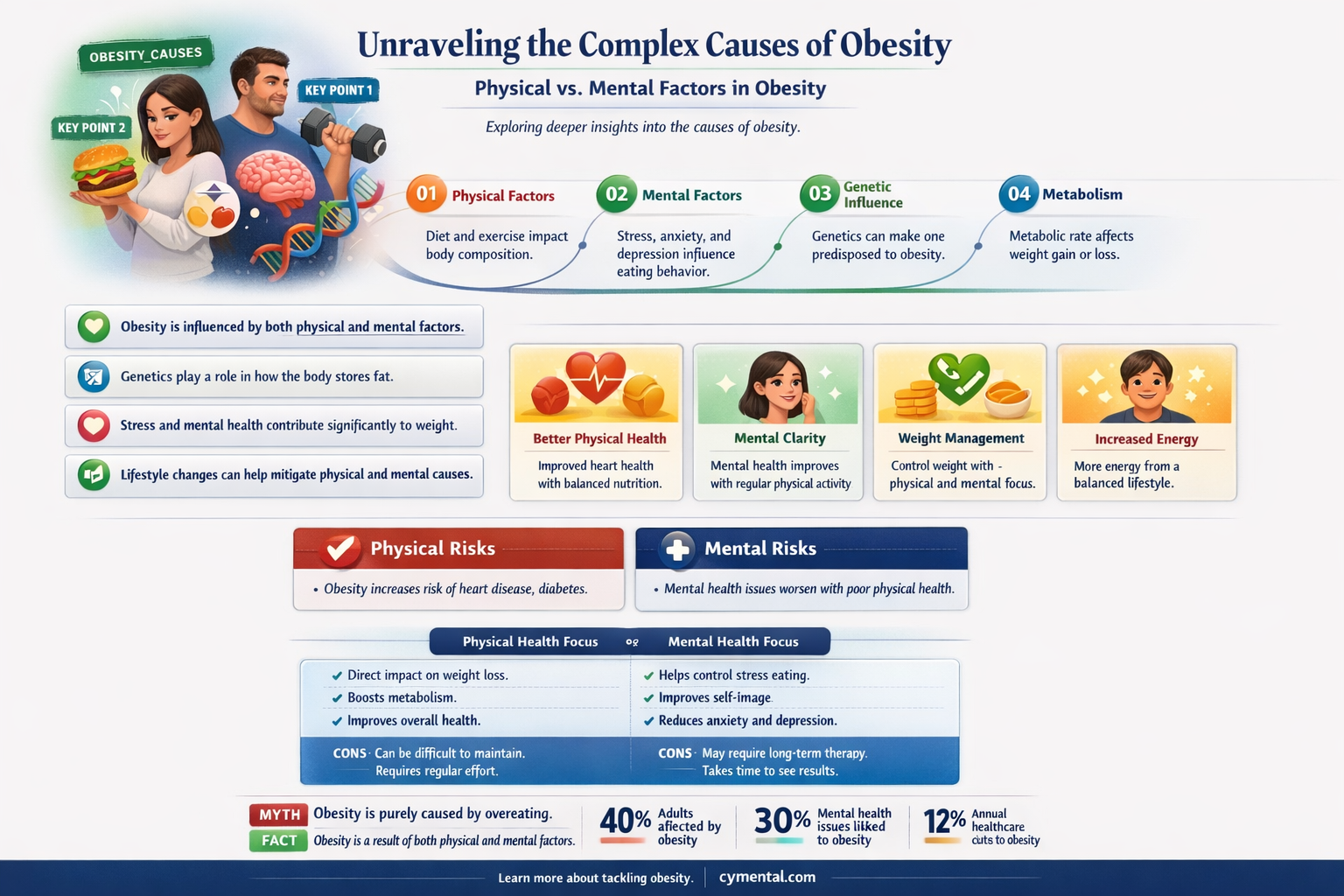
Obesity is a complex health issue influenced by a multitude of factors, leading to ongoing debates about whether its causes are predominantly physical or mental. This discussion delves into the intricate interplay between biological, environmental, and psychological elements that contribute to obesity. By examining the latest research and expert opinions, we aim to shed light on the relative significance of physical factors, such as diet and exercise, versus mental factors, including stress, emotional eating, and socioeconomic influences, in the development and perpetuation of obesity.
Explore related products


What You'll Learn
- Genetic Factors: Exploring the role of genetics in obesity, including inherited traits and predispositions
- Environmental Influences: Examining how factors like access to healthy food, safe spaces for physical activity, and socioeconomic status impact obesity
- Psychological Aspects: Discussing the mental health components of obesity, such as emotional eating, stress, and body image issues
- Physiological Mechanisms: Investigating the biological processes involved in obesity, including metabolism, hormones, and energy balance
- Lifestyle Choices: Analyzing the impact of daily habits like diet, exercise, sleep patterns, and sedentary behaviors on obesity risk

Genetic Factors: Exploring the role of genetics in obesity, including inherited traits and predispositions
Genetic factors play a significant role in obesity, contributing to an individual's predisposition to weight gain and difficulty in weight loss. Inherited traits can affect metabolism, appetite regulation, and fat storage, making some people more susceptible to obesity than others. For instance, genetic variations in the FTO gene have been linked to a higher risk of obesity, as they influence ghrelin levels, a hormone that regulates hunger.
Moreover, family history is a strong indicator of obesity risk. Children of obese parents are more likely to become obese themselves, not only due to genetic factors but also because of shared environmental and lifestyle factors. Twin studies have further supported the genetic component of obesity, showing that identical twins, who share the same genes, are more likely to both be obese compared to fraternal twins.
While genetics can predispose individuals to obesity, it is essential to note that genetic factors do not operate in isolation. Environmental factors, such as diet, physical activity, and socioeconomic status, also play crucial roles. The interplay between genetic and environmental factors is complex and not fully understood, but it is clear that both contribute to the development of obesity.
Understanding the genetic basis of obesity can help in developing more personalized and effective treatment strategies. For example, genetic testing may identify individuals who are more likely to respond to certain medications or dietary interventions. Additionally, research into the genetic factors of obesity may lead to the development of new therapies that target specific genetic pathways involved in weight regulation.
In conclusion, genetic factors are a critical component in the development of obesity, influencing an individual's susceptibility to weight gain and the effectiveness of weight loss interventions. While genetics are not the sole cause of obesity, they interact with environmental factors to determine an individual's overall risk. Further research into the genetic basis of obesity holds promise for improving prevention and treatment strategies.
Understanding Mental Retardation: Causes and Prevention Strategies
You may want to see also
Explore related products


Environmental Influences: Examining how factors like access to healthy food, safe spaces for physical activity, and socioeconomic status impact obesity
Access to healthy food is a critical environmental factor influencing obesity rates. Communities with limited access to fresh fruits, vegetables, and whole grains often have higher rates of obesity due to the prevalence of fast food and processed snacks. This disparity is particularly pronounced in low-income neighborhoods, where residents may rely on convenience stores or dollar stores that stock high-calorie, low-nutrient foods. Improving access to healthy food options through initiatives like community gardens, farmers' markets, and subsidies for healthy food purchases can help mitigate these disparities and promote healthier eating habits.
Safe spaces for physical activity are another essential environmental consideration. Neighborhoods lacking parks, sidewalks, or bike lanes can discourage physical activity, contributing to sedentary lifestyles and higher obesity rates. Furthermore, areas with high crime rates or heavy traffic may pose safety risks that deter residents from engaging in outdoor activities. Creating safe, accessible spaces for physical activity, such as building parks, improving street infrastructure, and implementing traffic calming measures, can encourage more active lifestyles and help combat obesity.
Socioeconomic status (SES) also plays a significant role in obesity rates. Individuals with lower SES often face multiple barriers to maintaining a healthy weight, including limited access to healthy food, safe spaces for physical activity, and healthcare resources. Additionally, stress associated with financial insecurity can lead to emotional eating and other unhealthy coping mechanisms. Addressing these systemic inequalities through policies that improve access to education, healthcare, and economic opportunities can help reduce obesity rates among disadvantaged populations.
Environmental influences on obesity are complex and multifaceted, involving a range of factors that interact in intricate ways. By understanding these influences and implementing targeted interventions, we can create healthier environments that support individuals in maintaining a healthy weight. This requires a comprehensive approach that addresses disparities in access to healthy food, safe spaces for physical activity, and socioeconomic resources, ultimately promoting greater health equity and well-being for all.
Unseen Scars: The Mental and Emotional Toll of Restraints
You may want to see also
Explore related products




Psychological Aspects: Discussing the mental health components of obesity, such as emotional eating, stress, and body image issues
Obesity is often viewed through a physical lens, focusing on diet, exercise, and genetic factors. However, the psychological aspects of obesity play a significant role in its development and maintenance. Emotional eating, stress, and body image issues are key mental health components that contribute to obesity.
Emotional eating is a common coping mechanism for individuals dealing with stress, anxiety, or depression. It involves consuming food in response to emotional states rather than physical hunger. This can lead to overeating and the consumption of high-calorie, low-nutrient foods, which contribute to weight gain. Addressing emotional eating requires a multifaceted approach, including cognitive-behavioral therapy, mindfulness practices, and stress management techniques.
Stress itself is another critical factor in obesity. Chronic stress can lead to the overproduction of cortisol, a hormone that increases appetite and promotes the storage of fat, particularly in the abdominal area. Managing stress through exercise, meditation, and social support can help mitigate its impact on weight.
Body image issues also play a significant role in obesity. Negative body image can lead to low self-esteem, depression, and anxiety, which can further exacerbate emotional eating and stress. Improving body image through therapy, self-compassion exercises, and positive self-talk can help individuals develop a healthier relationship with food and their bodies.
In conclusion, while physical factors are important in understanding obesity, the psychological aspects cannot be overlooked. Addressing emotional eating, stress, and body image issues is crucial in the prevention and treatment of obesity. By adopting a holistic approach that includes both physical and mental health interventions, individuals can achieve better outcomes in their weight management journey.
The Surprising Link Between Dental Health and Mental Well-being
You may want to see also
Explore related products


Physiological Mechanisms: Investigating the biological processes involved in obesity, including metabolism, hormones, and energy balance
The physiological mechanisms underlying obesity are multifaceted, involving intricate biological processes that regulate metabolism, hormones, and energy balance. At the core of these mechanisms is the body's metabolic rate, which determines how efficiently it converts food into energy. Individuals with a slower metabolism may be more prone to weight gain, as their bodies are less effective at burning calories. Hormones such as leptin and ghrelin play a crucial role in regulating appetite and energy expenditure. Leptin, produced by fat cells, signals the brain to suppress appetite, while ghrelin, released by the stomach, stimulates hunger. Imbalances in these hormonal signals can lead to overeating and weight gain.
Energy balance is another critical factor in obesity, as it involves the relationship between caloric intake and expenditure. When energy intake exceeds expenditure, the body stores the excess as fat, leading to weight gain. Conversely, when expenditure surpasses intake, the body burns stored fat for energy, resulting in weight loss. Factors such as physical activity, diet composition, and environmental influences can significantly impact energy balance. For instance, a sedentary lifestyle combined with a high-calorie diet can disrupt energy balance, contributing to obesity.
Furthermore, genetic predispositions can influence physiological mechanisms related to obesity. Certain genetic variations may affect metabolism, hormone production, and energy balance, making some individuals more susceptible to weight gain. Environmental factors, such as access to nutritious food, socioeconomic status, and cultural influences, also play a role in shaping these physiological processes. Understanding these complex interactions is essential for developing effective strategies to prevent and treat obesity.
In conclusion, the physiological mechanisms involved in obesity are diverse and interconnected, involving metabolism, hormones, and energy balance. Addressing these mechanisms requires a comprehensive approach that considers both biological and environmental factors. By gaining insights into these processes, we can better understand the causes of obesity and develop targeted interventions to promote health and well-being.
Unraveling the Roots of Mental Exhaustion: A Comprehensive Guide
You may want to see also
Explore related products


Lifestyle Choices: Analyzing the impact of daily habits like diet, exercise, sleep patterns, and sedentary behaviors on obesity risk
Analyzing the impact of daily habits on obesity risk reveals that lifestyle choices play a significant role in determining an individual's likelihood of becoming obese. Among these habits, diet is a primary factor. Consuming high-calorie, low-nutrient foods regularly can lead to weight gain and increase the risk of obesity. Additionally, portion sizes and the frequency of meals can also contribute to this risk. For instance, overeating or having multiple large meals throughout the day can result in a higher caloric intake than the body needs, leading to fat storage and weight gain.
Exercise is another crucial lifestyle factor influencing obesity risk. Regular physical activity helps in burning calories, maintaining muscle mass, and regulating metabolism. Sedentary behaviors, such as prolonged sitting or lack of physical activity, can significantly increase the risk of obesity. This is because a sedentary lifestyle results in a lower caloric expenditure, making it easier to consume more calories than the body burns.
Sleep patterns also have a notable impact on obesity risk. Research indicates that inadequate sleep can disrupt hormones that regulate hunger and satiety, leading to increased food intake and weight gain. Furthermore, poor sleep quality can affect metabolism and insulin sensitivity, contributing to the development of obesity and related health issues.
In conclusion, lifestyle choices, including diet, exercise, sleep patterns, and sedentary behaviors, are significant contributors to obesity risk. By making healthier choices in these areas, individuals can reduce their likelihood of becoming obese and improve their overall health and well-being.
Exploring the Link: Can Herpes Impact Mental Health?
You may want to see also
Frequently asked questions
Obesity is a complex condition influenced by both physical and mental factors. While physical causes like diet, exercise, and genetics play a significant role, mental factors such as stress, emotional eating, and socioeconomic status also contribute to the development of obesity.
Mental factors can contribute to obesity in several ways. For instance, stress can lead to the release of cortisol, which increases appetite and promotes fat storage. Emotional eating, where individuals consume food in response to feelings rather than hunger, can also lead to excessive calorie intake. Additionally, socioeconomic factors like access to healthy food and safe environments for physical activity can impact mental health and, in turn, influence obesity risk.
Yes, addressing mental health issues can be an important part of managing obesity. By treating conditions like depression, anxiety, and stress, individuals may be better equipped to make healthier lifestyle choices. Cognitive-behavioral therapy (CBT) and other forms of counseling can help people develop healthier coping mechanisms and improve their relationship with food, which can contribute to weight management and overall well-being.