Lucas Bennett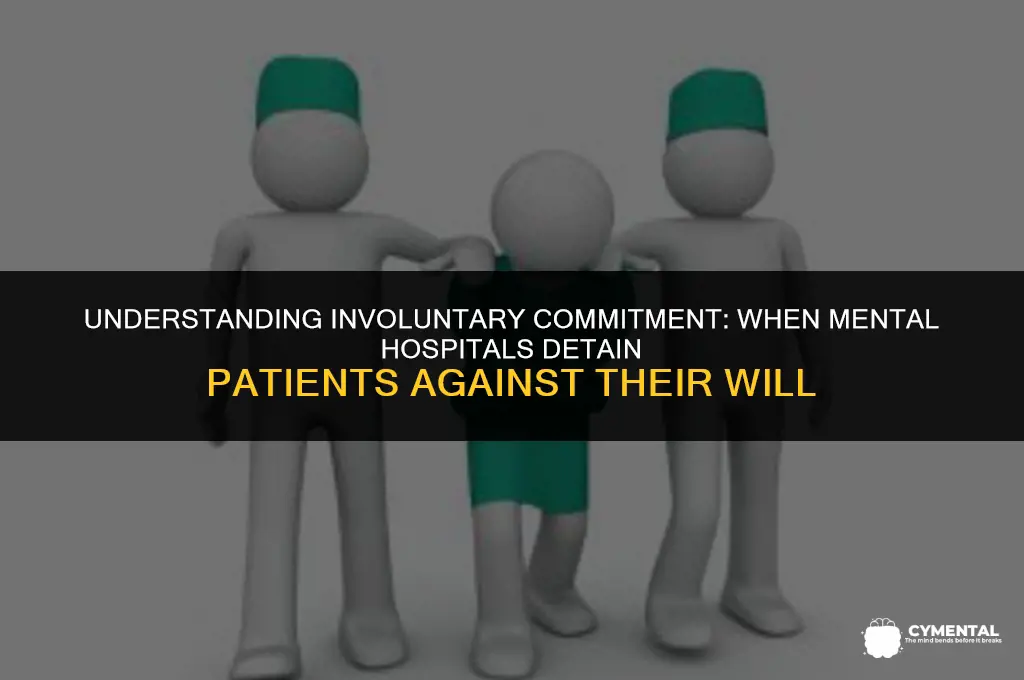
The question of whether a mental hospital can hold a patient against their will is a complex and sensitive issue that intersects with legal, ethical, and medical considerations. In many jurisdictions, mental health facilities are permitted to detain individuals involuntarily under certain circumstances, typically when a person is deemed to be a danger to themselves or others, or when they are unable to care for their own basic needs due to a mental health condition. However, the specifics of these circumstances and the procedures for involuntary commitment vary widely by location. It is crucial to understand the laws and regulations that govern mental health treatment in a given area to fully grasp the rights and protections afforded to patients. Additionally, the ethical implications of involuntary detention must be carefully weighed, as it involves balancing the individual's autonomy with the need to provide necessary care and ensure public safety.
Explore related products


What You'll Learn

Legal Criteria for Involuntary Commitment
In the realm of mental health law, involuntary commitment is a complex and sensitive issue. The legal criteria for such a commitment vary significantly by jurisdiction, but generally, they hinge on the determination that an individual poses a danger to themselves or others due to a mental illness. This danger must be imminent and substantial, often requiring evidence of recent behavior that indicates a likelihood of harm. For instance, a person who has recently attempted suicide or has a history of violent behavior may meet these criteria.
The process typically involves a petition filed by a concerned party, such as a family member, healthcare provider, or law enforcement officer. This petition must be supported by affidavits or sworn statements detailing the individual's behavior and the reasons for concern. A hearing is then held, where the individual has the right to legal representation and to present evidence on their behalf. The burden of proof lies with the petitioner, who must demonstrate by clear and convincing evidence that the individual meets the legal standards for involuntary commitment.
One of the key legal principles in involuntary commitment cases is the "least restrictive alternative" doctrine. This means that the court must consider whether there are less restrictive means of addressing the individual's mental health needs, such as outpatient treatment or medication, before ordering an involuntary commitment. The goal is to balance the individual's right to liberty with the need to protect them and others from harm.
In some cases, emergency involuntary commitments may be ordered without a hearing if there is an immediate risk of harm. However, these orders are typically temporary and must be followed by a prompt hearing to determine whether a longer-term commitment is warranted.
It's important to note that involuntary commitment laws are subject to ongoing debate and reform. Critics argue that these laws can infringe on individuals' civil liberties and that they may be used inappropriately in some cases. Advocates, on the other hand, contend that involuntary commitment can be a necessary tool for ensuring the safety and well-being of individuals with severe mental illnesses.
In conclusion, the legal criteria for involuntary commitment are stringent and designed to protect the rights of individuals while also addressing the need for public safety. Understanding these criteria is essential for anyone involved in the mental health system, including patients, families, and healthcare providers.
Exploring the Current Status of State Mental Hospitals: A Comprehensive Overview
You may want to see also
Explore related products


Patient Rights and Protections
Individuals admitted to mental health facilities are entitled to certain rights and protections under the law. These safeguards are designed to ensure that patients are treated with dignity and respect, and that their autonomy is preserved to the greatest extent possible. Key among these rights is the ability to make informed decisions about one's own treatment, including the right to refuse medication or other interventions. Patients also have the right to privacy, confidentiality, and to be free from discrimination based on their mental health status.
In the context of involuntary commitment, where a patient is held against their will, these rights become particularly critical. Even in such circumstances, the facility must provide the patient with a clear explanation of the reasons for their detention, the expected duration of their stay, and the criteria that must be met for their release. The patient must also be informed of their right to appeal the commitment and to have legal representation if they so choose.
To protect these rights, mental health facilities are required to have policies and procedures in place that ensure patient involvement in their care planning, regular review of their treatment plans, and access to advocacy services. These measures help to safeguard against abuses of power and ensure that patients are not subjected to unnecessary or harmful treatments.
Moreover, patients have the right to be protected from harm, including the right to be free from physical and sexual abuse, neglect, and exploitation. Facilities must take proactive steps to prevent such incidents, including thorough background checks on staff, regular training on patient rights and abuse prevention, and the establishment of clear reporting mechanisms for any suspected abuse.
In summary, patient rights and protections in mental health facilities are multifaceted and encompass a wide range of legal and ethical considerations. These rights are essential for ensuring that patients are treated with the dignity and respect they deserve, and that their autonomy and well-being are protected throughout their stay in the facility.
Exploring the Haunting Legacy of Byberry Mental Hospital's Buildings
You may want to see also
Explore related products


Conditions for Release
In the context of involuntary psychiatric hospitalization, the conditions for release are critical to understanding one's rights and the legal framework governing such detentions. These conditions vary by jurisdiction but generally require a thorough evaluation by mental health professionals to determine if the individual no longer poses a danger to themselves or others and can be safely discharged.
The process typically involves a series of assessments and hearings. Initially, a psychiatrist or psychologist will conduct a clinical evaluation to assess the patient's current mental state. This evaluation may include interviews, behavioral observations, and sometimes input from family members or other relevant parties. If the evaluator believes the patient has stabilized and meets the criteria for release, they may recommend discharge to a judge or a mental health review board.
However, the decision to release is not solely based on clinical judgment. Legal standards and procedures also play a significant role. In many cases, a hearing will be held where the patient, their legal counsel, and the mental health professionals present their arguments and evidence. The patient may need to demonstrate that they have a plan for ongoing treatment and support outside the hospital to ensure their continued stability and safety.
It's important to note that the conditions for release can be stringent and may include requirements such as regular check-ins with a mental health provider, adherence to a medication regimen, or participation in outpatient therapy programs. Failure to comply with these conditions can result in the revocation of release and potential readmission to the hospital.
Moreover, the legal framework surrounding involuntary hospitalization and release is subject to change and can be influenced by advocacy efforts and shifts in public policy. Staying informed about these developments is crucial for individuals affected by these laws and for those working within the mental health system.
In summary, the conditions for release from involuntary psychiatric hospitalization involve a complex interplay of clinical evaluation, legal procedures, and ongoing support and treatment plans. Understanding these conditions is essential for navigating the mental health system and ensuring that individuals receive appropriate care while also protecting their rights and freedoms.
Navigating the Process: How to Check Someone into a Mental Hospital
You may want to see also
Explore related products


Appeals Process
If you believe you are being unlawfully detained in a mental health facility, understanding the appeals process is crucial. This process allows you to challenge the decision to hold you involuntarily and seek your release. The first step typically involves filing a formal complaint or petition with the appropriate legal authority, such as a mental health court or a civil court. This document should outline the reasons why you believe your detention is unjustified, including any violations of your rights or the legal criteria for involuntary commitment.
Once your complaint is filed, a hearing will usually be scheduled within a short timeframe, often within a few days. At this hearing, you will have the opportunity to present your case, call witnesses, and cross-examine the facility's staff. The burden of proof lies with the facility to demonstrate that your detention is necessary and that you meet the legal standards for involuntary commitment. If the court finds in your favor, it may order your immediate release or impose certain conditions on your continued treatment.
In some jurisdictions, there are also administrative review processes that can be utilized in addition to or instead of a court hearing. These processes often involve a review panel or ombudsman who investigates your complaint and makes a determination based on the evidence presented. The decision of this panel can be binding, or it may simply serve as a recommendation to the court.
Throughout the appeals process, it is essential to have legal representation to ensure that your rights are protected and that the legal procedures are followed correctly. A lawyer experienced in mental health law can help you navigate the complexities of the appeals process, gather evidence, and present your case effectively.
It is also important to be aware of the potential risks and consequences of challenging your detention. In some cases, the facility may retaliate against you for filing a complaint, or the court may determine that your detention is justified, potentially leading to a longer period of involuntary treatment. Therefore, it is crucial to carefully consider your options and seek guidance from a legal professional before initiating the appeals process.
Exploring Options: Are There Any Free Mental Hospitals?
You may want to see also
Explore related products
![Commitments [DVD]](https://m.media-amazon.com/images/I/51XY12QHHTL._AC_UY218_.jpg)


Alternatives to Hospitalization
In the realm of mental health care, alternatives to hospitalization are crucial for individuals seeking treatment without the constraints of an inpatient setting. One such alternative is outpatient therapy, which allows patients to receive counseling and medication management while maintaining their daily routines. This approach is particularly beneficial for those with mild to moderate mental health conditions who do not require 24-hour supervision.
Another viable option is intensive outpatient programs (IOPs), which offer a higher level of care than traditional outpatient therapy. IOPs typically involve multiple therapy sessions per week, often including group therapy, individual counseling, and educational workshops. These programs are designed to provide comprehensive treatment while still allowing patients to live at home and attend to their personal and professional responsibilities.
For individuals experiencing acute mental health crises, crisis stabilization units can serve as a short-term alternative to hospitalization. These units provide a safe and supportive environment for patients to receive intensive therapy and medication management until their symptoms stabilize. Unlike traditional hospital settings, crisis stabilization units are often smaller and more focused on rapid intervention and discharge planning.
Additionally, peer support services and community-based programs can play a significant role in supporting individuals with mental health challenges. These services, which are often free or low-cost, provide opportunities for social connection, skill-building, and mutual support among individuals with shared experiences. By fostering a sense of community and belonging, peer support services can help reduce the need for hospitalization and promote long-term recovery.
In conclusion, alternatives to hospitalization offer a range of options for individuals seeking mental health care without the need for inpatient treatment. From outpatient therapy to intensive programs and peer support services, these alternatives provide flexible and accessible care that can be tailored to meet the unique needs of each patient. By exploring these options, individuals can find the support they need to manage their mental health challenges and improve their overall well-being.
Exploring the Myths and Realities of Psychiatric Care Facilities
You may want to see also
Frequently asked questions
Yes, under certain circumstances. If a mental health professional believes you are a danger to yourself or others, or are unable to care for yourself due to a mental illness, they may involuntarily commit you to a mental hospital.
The criteria for involuntary commitment vary by jurisdiction, but generally include being a danger to oneself or others, or being unable to care for oneself due to a mental illness. A mental health professional must evaluate the individual and determine that they meet these criteria.
The length of time you can be held in a mental hospital against your will also varies by jurisdiction. In some cases, it may be for a short period of time, such as 24-72 hours, for evaluation and treatment. In other cases, it may be for a longer period of time, such as several weeks or months, if a court determines that you are a danger to yourself or others, or are unable to care for yourself.


![The Commitments [Region 2]](https://m.media-amazon.com/images/I/713yBGUHr5L._AC_UY218_.jpg)
![The Commitments [Blu-ray]](https://m.media-amazon.com/images/I/81rJDGABK0L._AC_UY218_.jpg)