Harper Lewis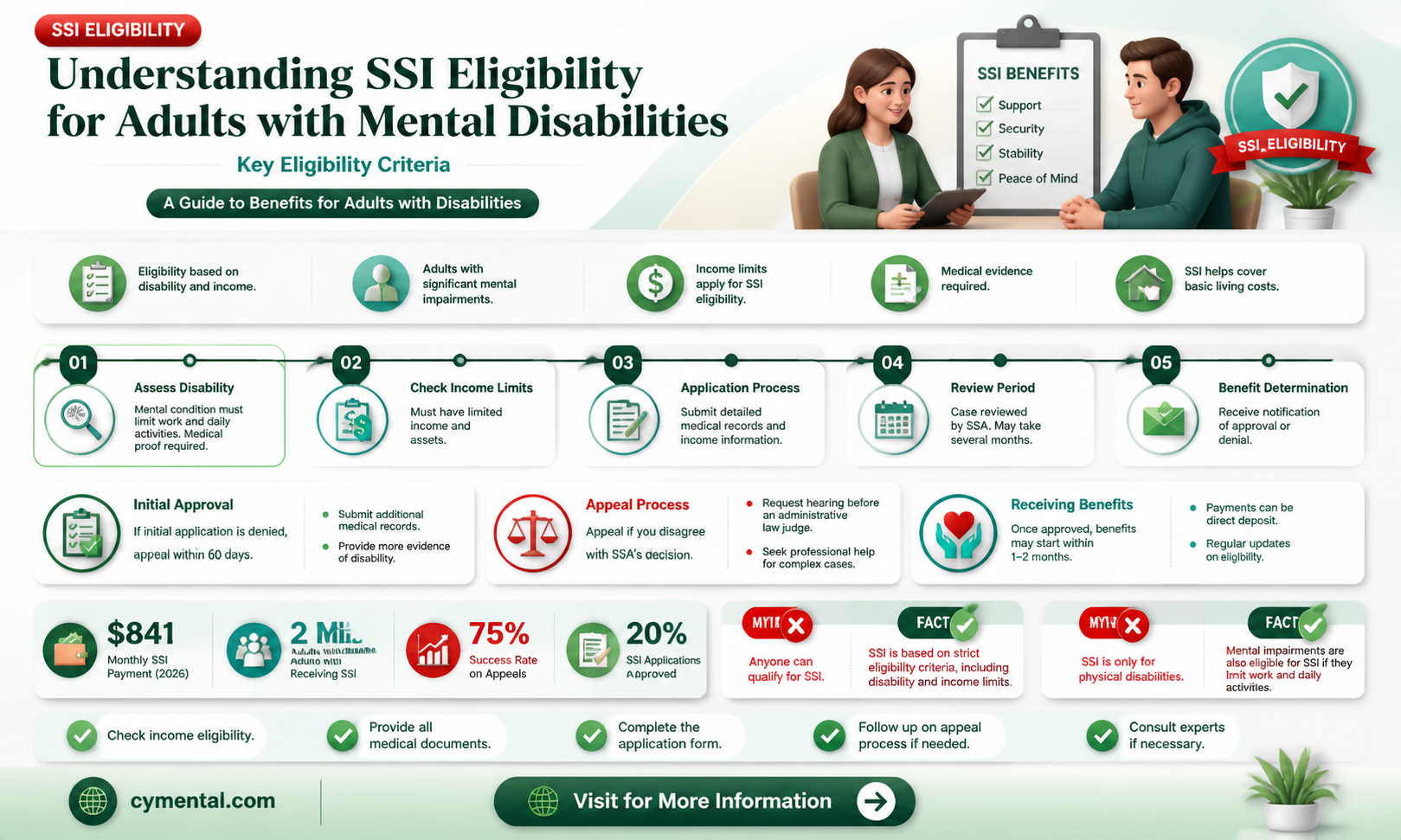
Supplemental Security Income (SSI) is a federal program in the United States that provides financial assistance to elderly, blind, and disabled individuals with little or no income. It is designed to help meet basic needs for food, clothing, and shelter. Adults with mental disabilities may be eligible for SSI benefits if their condition significantly limits their ability to work and earn a living. The Social Security Administration (SSA) evaluates each application on a case-by-case basis, considering the severity of the mental disability, the individual's work history, and their current financial situation. To qualify, applicants must provide medical evidence documenting their mental health condition and how it impacts their daily functioning and ability to perform work-related tasks. If approved, SSI benefits can provide crucial support for adults with mental disabilities, helping them maintain their independence and quality of life.
What You'll Learn
- Eligibility Criteria: Understand the specific requirements for SSI benefits regarding mental disabilities in adults
- Application Process: Learn the steps involved in applying for SSI benefits, including necessary documentation and forms
- Types of Mental Disabilities: Explore the range of mental health conditions that may qualify for SSI benefits
- Benefit Amounts: Discover how SSI benefit amounts are determined and what additional support may be available
- Appeals and Denials: Find out the procedures for appealing a denial of SSI benefits and common reasons for rejection

Eligibility Criteria: Understand the specific requirements for SSI benefits regarding mental disabilities in adults
To qualify for SSI benefits due to a mental disability, adults must meet stringent eligibility criteria set forth by the Social Security Administration (SSA). The SSA evaluates mental disabilities based on their impact on an individual's ability to perform substantial gainful activity (SGA). This means that the mental condition must significantly limit the person's capacity to work and earn a living. The SSA uses a detailed set of criteria to assess the severity of mental impairments, including the ability to understand, remember, and apply information; interact appropriately with others; concentrate, persist, and maintain pace; and adapt to changes in the environment.
The evaluation process involves a thorough review of medical records, psychological assessments, and other relevant documentation. The SSA may also conduct interviews with the applicant and their healthcare providers to gain a comprehensive understanding of the mental disability and its effects. It is crucial for applicants to provide detailed and accurate information about their condition, including any medications, therapies, and hospitalizations.
In addition to meeting the medical criteria, applicants must also satisfy certain non-medical eligibility requirements. These include being a U.S. citizen or eligible non-citizen, having limited income and resources, and being at least 18 years old. The SSA has specific income and asset limits that applicants must fall below to qualify for SSI benefits. Furthermore, the applicant must not be receiving substantial support from other sources, such as family members or government programs.
Understanding the eligibility criteria for SSI benefits regarding mental disabilities is essential for adults seeking financial assistance. It is important to note that the application process can be complex and time-consuming, and many applicants may need to seek legal representation or guidance from a qualified professional. By being well-informed about the requirements and providing thorough documentation, applicants can improve their chances of successfully obtaining SSI benefits.
Dive into Sanity: Wayne's World GIFs for Mental Health Wins
You may want to see also
Application Process: Learn the steps involved in applying for SSI benefits, including necessary documentation and forms
To apply for SSI benefits, adults with mental disabilities must follow a specific process that involves several key steps. First, they need to gather all necessary documentation, which typically includes medical records, proof of income, and identification documents. It's crucial to ensure that all documents are up-to-date and relevant to the application.
Next, applicants must fill out the appropriate forms, which can be obtained from the Social Security Administration (SSA) website or by visiting a local SSA office. The forms will ask for detailed information about the applicant's medical condition, work history, and financial situation. It's important to answer all questions accurately and completely to avoid delays in the application process.
Once the forms are completed, they can be submitted to the SSA either online, by mail, or in person. Applicants should keep a copy of all submitted documents for their records. After submitting the application, the SSA will review it to determine eligibility for benefits. This process can take several months, so it's important for applicants to be patient and prepared for potential follow-up questions or requests for additional documentation.
Throughout the application process, it's essential for adults with mental disabilities to seek support from advocates, legal representatives, or mental health professionals who can provide guidance and assistance. These resources can help ensure that the application is completed correctly and that the applicant's rights are protected.
In conclusion, applying for SSI benefits involves a series of steps that require careful attention to detail and the submission of comprehensive documentation. By understanding the process and seeking appropriate support, adults with mental disabilities can increase their chances of successfully obtaining the benefits they need.
Unleashing Mental Clarity: A Guide to a Focused Mind
You may want to see also
Types of Mental Disabilities: Explore the range of mental health conditions that may qualify for SSI benefits
The Social Security Administration (SSA) recognizes a wide range of mental health conditions that may qualify for Supplemental Security Income (SSI) benefits. These conditions are evaluated based on their severity and impact on an individual's ability to work and perform daily activities. Some of the mental disabilities that may qualify for SSI include schizophrenia, bipolar disorder, major depressive disorder, anxiety disorders, and post-traumatic stress disorder (PTSD).
Schizophrenia is a chronic brain disorder characterized by symptoms such as delusions, hallucinations, trouble with thinking, and concentration. Individuals with schizophrenia may experience significant social and occupational impairment, making it difficult to maintain employment. Bipolar disorder, on the other hand, is marked by episodes of mania and depression that can affect a person's mood, energy, and ability to function. Major depressive disorder involves persistent feelings of sadness, hopelessness, and a loss of interest in activities, which can severely impact a person's ability to work and interact with others.
Anxiety disorders encompass a range of conditions, including generalized anxiety disorder, panic disorder, and social anxiety disorder. These conditions are characterized by excessive worry, fear, and avoidance behaviors that can interfere with daily life and work responsibilities. PTSD is a condition that can develop after experiencing or witnessing a traumatic event, leading to symptoms such as flashbacks, nightmares, and severe anxiety.
To qualify for SSI benefits, individuals with mental disabilities must provide medical evidence that supports their diagnosis and demonstrates the severity of their condition. This may include psychiatric evaluations, therapy notes, and medication records. Additionally, the SSA will consider the individual's work history, education, and any other relevant factors that may impact their ability to work.
It is important to note that the SSA has specific criteria for evaluating mental health conditions, and not all individuals with mental disabilities will qualify for SSI benefits. However, for those who do qualify, SSI can provide essential financial support and access to healthcare services.
Navigating the Journey to a Mental Health Diagnosis: A Comprehensive Guide
You may want to see also
Benefit Amounts: Discover how SSI benefit amounts are determined and what additional support may be available
The determination of SSI benefit amounts is a complex process that takes into account various factors. Primarily, the Social Security Administration (SSA) calculates benefits based on the applicant's past earnings and work history. However, for adults with mental disabilities, the calculation may differ slightly. The SSA uses a formula that includes the average indexed monthly earnings (AIME) and the primary insurance amount (PIA). The AIME is calculated by indexing the applicant's earnings to the average wage growth over time, while the PIA is the amount that would be payable at full retirement age.
For individuals with mental disabilities, the SSA may also consider the impact of their condition on their ability to work and earn a living. This is where the medical evidence and the applicant's work history play a crucial role. The SSA may use a residual functional capacity (RFC) assessment to determine the applicant's ability to perform work-related tasks despite their mental impairment. The RFC assessment helps the SSA to understand the applicant's limitations and how these limitations affect their earning capacity.
In addition to the basic SSI benefits, there may be additional support available for adults with mental disabilities. For instance, some states offer supplemental payments to the federal SSI benefits. These supplemental payments are designed to help cover the additional costs associated with mental health care and other disability-related expenses. Furthermore, individuals with mental disabilities may also be eligible for other government programs, such as Medicaid, Medicare, and food assistance programs.
It is important to note that the SSI benefit amounts are subject to change based on the applicant's circumstances. For example, if an individual's condition improves and they are able to return to work, their benefit amount may be reduced or terminated. On the other hand, if their condition worsens, they may be eligible for an increase in benefits. Therefore, it is crucial for applicants to keep the SSA informed of any changes in their medical condition or work status.
In conclusion, the SSI benefit amounts for adults with mental disabilities are determined by a combination of factors, including past earnings, work history, and the impact of their condition on their ability to work. Additional support may be available through state supplements and other government programs. Understanding the process and keeping the SSA informed of any changes can help ensure that individuals receive the appropriate benefits to support their needs.
Where to Get a Mental Health Assessment: A Comprehensive Guide
You may want to see also
Appeals and Denials: Find out the procedures for appealing a denial of SSI benefits and common reasons for rejection
If your application for Supplemental Security Income (SSI) benefits has been denied, you have the right to appeal the decision. The appeals process involves several steps, starting with a request for reconsideration. This initial step must be filed within 60 days of receiving the denial notice. During the reconsideration process, your case will be reviewed by a different examiner who will consider any new evidence you submit.
If your request for reconsideration is denied, you can then request a hearing before an administrative law judge. This hearing provides an opportunity to present your case in person and to call witnesses who can testify on your behalf. The judge will review the evidence and make a decision based on the merits of your case.
Common reasons for rejection of SSI benefits include insufficient medical evidence to support the claim of disability, failure to meet the income and resource limits, and lack of documentation. To improve your chances of a successful appeal, it is important to gather additional evidence that addresses the specific reasons for the denial. This may include obtaining more detailed medical reports, providing proof of income and resources, and ensuring that all required documentation is complete and up-to-date.
In some cases, the denial may be based on a technicality, such as a missed deadline or an incomplete form. In these situations, it is crucial to identify and correct the error as quickly as possible to avoid further delays in the appeals process.
Throughout the appeals process, it is advisable to seek assistance from a qualified representative, such as a disability attorney or advocate. These professionals can help guide you through the complex procedures and ensure that your case is presented in the most effective manner possible.
Remember, persistence is key when appealing a denial of SSI benefits. Even if your initial appeal is unsuccessful, you may have further options, such as requesting a review by the Appeals Council or filing a new application. By understanding the appeals process and common reasons for rejection, you can better navigate the system and increase your chances of obtaining the benefits you need.
Securing Your Future: Life Insurance Options for Those with Mental Illness
You may want to see also
Frequently asked questions
Yes, adults with mental disabilities can qualify for SSI benefits if their condition meets the Social Security Administration's (SSA) definition of disability and they have limited income and resources.
Various mental disabilities may qualify for SSI, including but not limited to schizophrenia, bipolar disorder, major depressive disorder, anxiety disorders, and intellectual disabilities. The key factor is whether the condition significantly impacts the individual's ability to work and perform daily activities.
The SSA evaluates mental disabilities based on the severity of the condition, its impact on the individual's ability to work, and the presence of any other impairments. They use a set of criteria called the Blue Book to determine if the mental disability meets their definition of disability.
The income limit for SSI eligibility varies by state, but generally, an individual's countable income must be below $794 per month to qualify. This limit applies to both earned income (from work) and unearned income (such as Social Security benefits or pensions).
An adult with a mental disability can apply for SSI benefits online through the SSA's website, by phone at 1-800-772-1213, or in person at their local Social Security office. They will need to provide documentation of their disability, income, and resources as part of the application process.