Madison Cole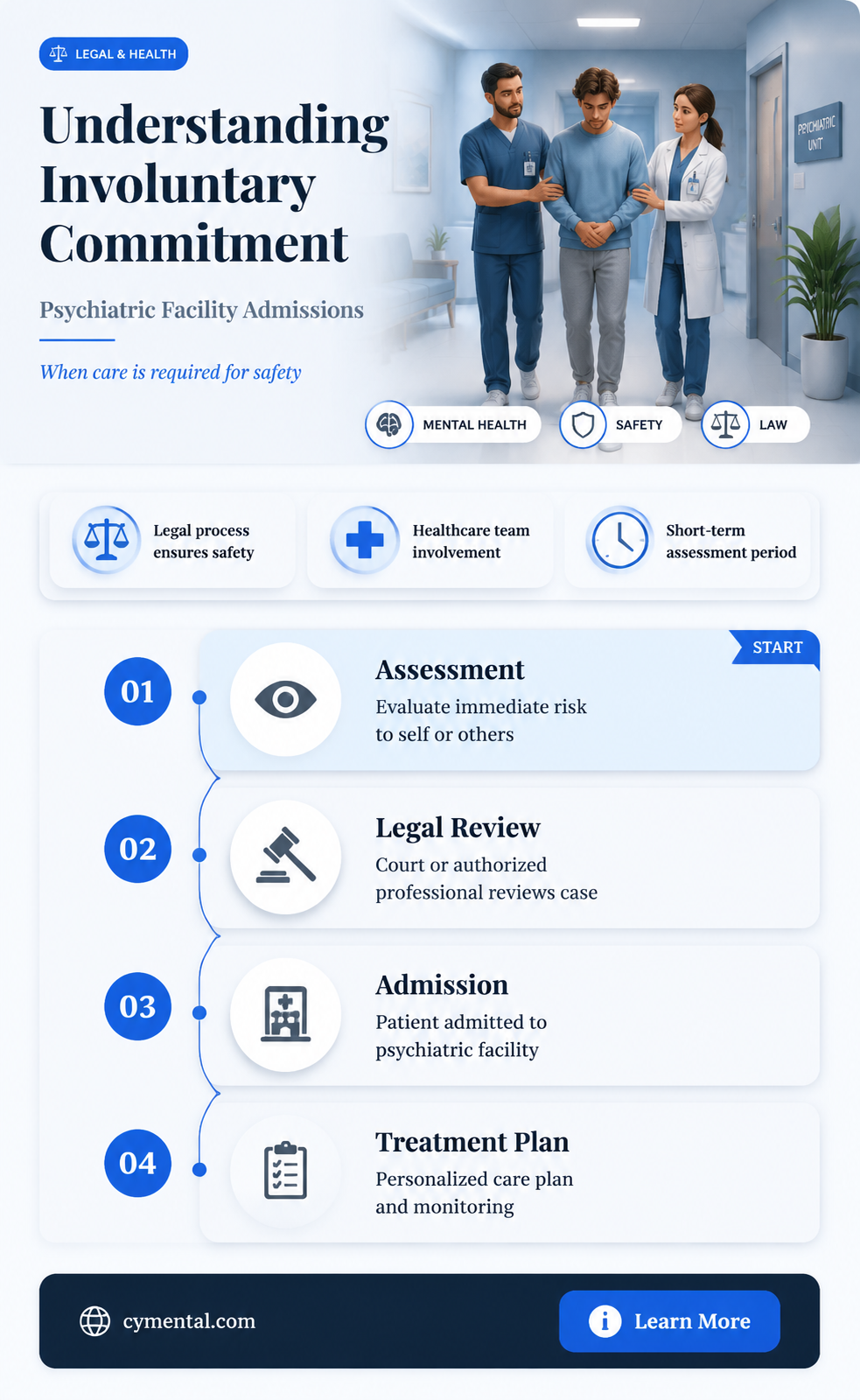
The question of whether someone can be committed to a mental hospital is a complex and sensitive issue that involves legal, ethical, and medical considerations. In many jurisdictions, involuntary commitment is possible under certain circumstances, typically when an individual is deemed to be a danger to themselves or others due to a mental health condition. However, the process and criteria for involuntary commitment vary widely by country and even by state or region within a country. It is important to approach this topic with a nuanced understanding of the legal frameworks, the role of mental health professionals, and the rights of individuals with mental health conditions.
| Characteristics | Values |
|---|---|
| Legal Authority | Varies by jurisdiction; typically requires a court order or a licensed medical professional's assessment |
| Criteria for Commitment | Often includes a determination that the individual is a danger to themselves or others, or is unable to care for their own needs due to a mental health condition |
| Types of Facilities | Psychiatric hospitals, mental health wards in general hospitals, or community-based treatment centers |
| Duration of Commitment | Can range from short-term (e.g., 72-hour holds) to long-term (e.g., indefinite commitment) depending on the individual's condition and the legal framework |
| Patient Rights | Generally includes the right to legal representation, the right to a hearing, and the right to appeal the commitment decision |
| Involuntary Treatment | May include medication, therapy, or other psychiatric interventions without the patient's consent |
| Stigma and Societal Views | Often associated with negative stereotypes and misconceptions about mental illness and treatment |
| Alternatives to Commitment | Outpatient treatment, crisis intervention services, or supportive housing programs may be considered as alternatives |
| Cost and Funding | Typically covered by health insurance, Medicaid, or other government programs; costs can vary significantly depending on the type and duration of treatment |
| Ethical Considerations | Raises complex ethical issues regarding individual autonomy, the duty to protect, and the potential for misuse or abuse of the commitment process |
| Legal Challenges | Can be subject to legal challenges based on constitutional rights, such as the right to liberty and the right to refuse medical treatment |
| Impact on Families | Can have significant emotional and financial impacts on families and loved ones of the individual being committed |
| Cultural Differences | Commitment processes and perceptions can vary widely across different cultures and countries |
| Historical Context | Historically, commitment practices have been subject to abuse and have often reflected societal attitudes towards mental illness |
| Current Trends | Increasing focus on deinstitutionalization, community-based care, and the use of less restrictive treatment options |
Explore related products


What You'll Learn
- Legal Requirements: Understand the legal criteria for involuntary commitment, varying by jurisdiction
- Medical Evaluation: A thorough psychiatric assessment is essential to determine the need for hospitalization
- Involuntary Commitment Process: Learn about the steps involved in admitting someone against their will
- Patient Rights: Explore the rights of individuals during involuntary psychiatric treatment
- Alternatives to Hospitalization: Consider outpatient treatment options and support systems available

Legal Requirements: Understand the legal criteria for involuntary commitment, varying by jurisdiction
Involuntary commitment to a mental health facility is a serious legal and medical process that varies significantly from one jurisdiction to another. Each country, and often each state or province within a country, has its own set of laws and regulations governing when and how an individual can be committed against their will. These laws are designed to balance the need to protect individuals who may be a danger to themselves or others due to mental illness with the fundamental right to personal liberty.
To understand the legal criteria for involuntary commitment in a specific jurisdiction, one must consult the relevant mental health laws and regulations. These typically outline the conditions under which a person can be detained, such as the presence of a mental disorder that impairs judgment or the likelihood of imminent harm to oneself or others. The laws may also specify the procedures for initiating an involuntary commitment, including who can petition for it, what evidence must be presented, and what rights the individual has during the process.
One unique aspect of involuntary commitment laws is the requirement for a mental health professional's assessment. In many jurisdictions, a psychiatrist or other qualified mental health provider must evaluate the individual and determine that they meet the legal criteria for involuntary commitment. This assessment often involves a thorough examination of the person's mental state, including their thoughts, feelings, and behaviors, as well as an evaluation of their ability to care for themselves and make informed decisions.
Another important consideration is the duration of involuntary commitment. Laws typically specify how long an individual can be held without their consent, and the procedures for extending that period if necessary. Some jurisdictions also have provisions for outpatient commitment, where the individual is required to attend treatment sessions but is not hospitalized.
In conclusion, understanding the legal requirements for involuntary commitment is crucial for anyone involved in the mental health care system, including mental health professionals, law enforcement officers, and family members of individuals with mental illness. By familiarizing oneself with the specific laws and regulations of their jurisdiction, these individuals can help ensure that the rights of those with mental illness are protected while also providing the necessary care and support to keep them safe.
Understanding Mental Health Care Options for Children Under 12
You may want to see also
Medical Evaluation: A thorough psychiatric assessment is essential to determine the need for hospitalization
A thorough psychiatric assessment is a critical step in determining whether an individual requires hospitalization for mental health concerns. This evaluation involves a comprehensive review of the person's medical history, current symptoms, and overall mental status. Psychiatrists and other mental health professionals use various tools and techniques during this assessment, including interviews, questionnaires, and observational methods. The goal is to gather a complete picture of the individual's mental health to make an informed decision about the appropriate level of care.
During the assessment, the psychiatrist will typically inquire about the individual's symptoms, such as feelings of sadness, anxiety, or hallucinations. They will also assess the person's cognitive functioning, including memory, concentration, and problem-solving abilities. Additionally, the evaluation may involve reviewing the individual's social and family history, as well as any previous mental health treatments or hospitalizations. This thorough approach helps ensure that the decision to hospitalize is based on a comprehensive understanding of the person's needs.
One important aspect of the psychiatric assessment is the determination of whether the individual poses a risk to themselves or others. This involves evaluating the presence of suicidal thoughts or behaviors, as well as any signs of aggression or violence. If the psychiatrist determines that the person is at significant risk, hospitalization may be necessary to provide a safe and supportive environment. In some cases, this may involve involuntary commitment, where the individual is hospitalized against their will due to the perceived risk they pose.
The assessment process can be complex and time-consuming, often requiring multiple sessions and input from various mental health professionals. However, this thorough approach is essential to ensure that individuals receive the appropriate level of care for their mental health needs. By taking the time to gather a complete picture of the person's mental status, psychiatrists can make more accurate and effective treatment recommendations, ultimately leading to better outcomes for the patient.
In conclusion, a thorough psychiatric assessment is a crucial step in determining the need for hospitalization in mental health cases. This evaluation involves a comprehensive review of the individual's medical history, symptoms, and overall mental status, as well as an assessment of any potential risks. By taking a detailed and nuanced approach, mental health professionals can make informed decisions that prioritize the well-being and safety of the patient.
Exploring Self-Admission to Mental Health Facilities: A Guide
You may want to see also
Involuntary Commitment Process: Learn about the steps involved in admitting someone against their will
The involuntary commitment process is a legal procedure used to admit someone to a mental health facility against their will. This process is typically initiated when a person is deemed a danger to themselves or others due to a mental health crisis. The steps involved in this process vary by jurisdiction, but generally include a petition, evaluation, hearing, and commitment order.
First, a petition for involuntary commitment must be filed with the appropriate court. This petition is usually submitted by a family member, friend, or mental health professional who believes the person is in need of treatment. The petition must include specific details about the person's behavior and why they are believed to be a danger.
Once the petition is filed, the court will appoint a mental health evaluator to assess the person's condition. This evaluation may involve a physical examination, psychological testing, and interviews with the person and their family or friends. The evaluator will then submit a report to the court detailing their findings and recommendations.
A hearing will be held to determine whether the person should be involuntarily committed. At this hearing, the person has the right to present evidence and testify on their own behalf. The court will consider the evaluator's report, any other evidence presented, and the testimony of the person and others involved.
If the court determines that the person is a danger to themselves or others and that they are unable to care for themselves, a commitment order will be issued. This order authorizes the person to be admitted to a mental health facility for treatment. The length of the commitment will depend on the specific circumstances of the case and the laws of the jurisdiction.
It's important to note that the involuntary commitment process is a serious and complex legal procedure. It should only be used in situations where a person is clearly a danger to themselves or others and where all other options for treatment have been exhausted.
Unveiling the Mysteries: A Day in the Life at a Mental Hospital
You may want to see also
Patient Rights: Explore the rights of individuals during involuntary psychiatric treatment
Individuals undergoing involuntary psychiatric treatment possess a distinct set of rights designed to protect their autonomy and dignity. These rights are enshrined in various legal frameworks and are intended to ensure that patients are treated humanely and with respect, even when they are unable to make decisions for themselves.
One of the fundamental rights of patients in involuntary treatment is the right to be informed about their condition and treatment plan. This includes receiving clear explanations of the diagnosis, the proposed treatment, potential side effects, and the expected duration of the treatment. Patients also have the right to ask questions and seek clarification about any aspect of their care.
Another crucial right is the ability to refuse treatment, within certain limits. While patients may not be able to refuse all forms of treatment, they typically have the right to refuse specific interventions, such as medication or therapy, if they are deemed capable of making such decisions. In cases where a patient is deemed incapable of making informed decisions, a legal representative or advocate may be appointed to act on their behalf.
Patients in involuntary treatment also have the right to privacy and confidentiality. Their personal information and medical records should be kept confidential, and they should be afforded privacy in their interactions with healthcare providers. This right extends to the ability to communicate with others outside the treatment facility, although this may be subject to certain restrictions in the interest of safety and security.
Additionally, patients have the right to be free from abuse and neglect. This includes the right to be protected from physical, emotional, and sexual abuse, as well as the right to receive adequate nutrition, hygiene, and medical care. Treatment facilities are legally obligated to provide a safe and supportive environment for patients, and any instances of abuse or neglect should be reported and investigated promptly.
Finally, patients in involuntary treatment have the right to appeal their detention and treatment. This typically involves a legal process where the patient or their representative can challenge the basis for the involuntary treatment and seek to have the patient released or transferred to a different facility. The specific procedures for appealing vary depending on the jurisdiction, but patients are generally entitled to a fair hearing and legal representation.
In conclusion, patients undergoing involuntary psychiatric treatment have a range of rights that are designed to protect their autonomy, dignity, and well-being. These rights include the ability to be informed about their condition and treatment, to refuse certain interventions, to maintain privacy and confidentiality, to be free from abuse and neglect, and to appeal their detention and treatment. By understanding and asserting these rights, patients can play an active role in their care and ensure that they are treated with respect and compassion.
Navigating the Process: Committing a Loved One to a Mental Hospital
You may want to see also
Alternatives to Hospitalization: Consider outpatient treatment options and support systems available
In many cases, hospitalization may not be the most appropriate or necessary course of action for individuals experiencing mental health issues. Outpatient treatment options can provide effective care and support without the need for a hospital stay. These alternatives can include therapy sessions, medication management, and various forms of counseling. Outpatient programs can be tailored to fit the individual's specific needs and can offer a more flexible and less disruptive approach to treatment.
Support systems are also crucial in helping individuals manage their mental health. This can include family and friends, as well as community resources such as support groups and peer counseling services. These systems can provide emotional support, practical assistance, and a sense of connection that can be vital in the recovery process. It's important to consider the individual's preferences and strengths when identifying potential support systems.
When evaluating alternatives to hospitalization, it's essential to consider the individual's specific circumstances and needs. Factors such as the severity of symptoms, the presence of any safety concerns, and the individual's willingness to engage in treatment should all be taken into account. In some cases, a combination of outpatient treatment and support systems may be the most effective approach.
It's also important to be aware of the potential challenges and limitations of outpatient treatment. For example, individuals with severe symptoms or those who are at high risk of self-harm may require more intensive care than outpatient programs can provide. Additionally, access to outpatient services may be limited in some areas, and insurance coverage can vary.
Overall, considering alternatives to hospitalization can be a valuable step in developing a comprehensive treatment plan. By exploring outpatient treatment options and support systems, individuals can access the care and resources they need to manage their mental health effectively.
Understanding the Purpose of Grippy Socks in Mental Health Facilities
You may want to see also
Frequently asked questions
In many jurisdictions, it is possible to commit someone to a mental hospital against their will if they are deemed a danger to themselves or others, or if they are unable to care for themselves due to a mental illness. However, the specific laws and procedures vary by location.
The process typically involves a mental health professional evaluating the individual and determining that they meet the criteria for involuntary commitment. A court order may then be obtained, and the individual can be taken to a mental health facility for treatment.
The length of time someone can be held in a mental hospital varies depending on the jurisdiction and the individual's specific circumstances. Some people may be held for a short period of time for evaluation and treatment, while others may be held for longer periods if they are deemed to be a persistent danger to themselves or others.
The criteria for committing someone to a mental hospital typically include a diagnosis of a mental illness, a determination that the individual is a danger to themselves or others, or a finding that the individual is unable to care for themselves due to their mental illness. The specific criteria may vary depending on the jurisdiction.