Harper Lewis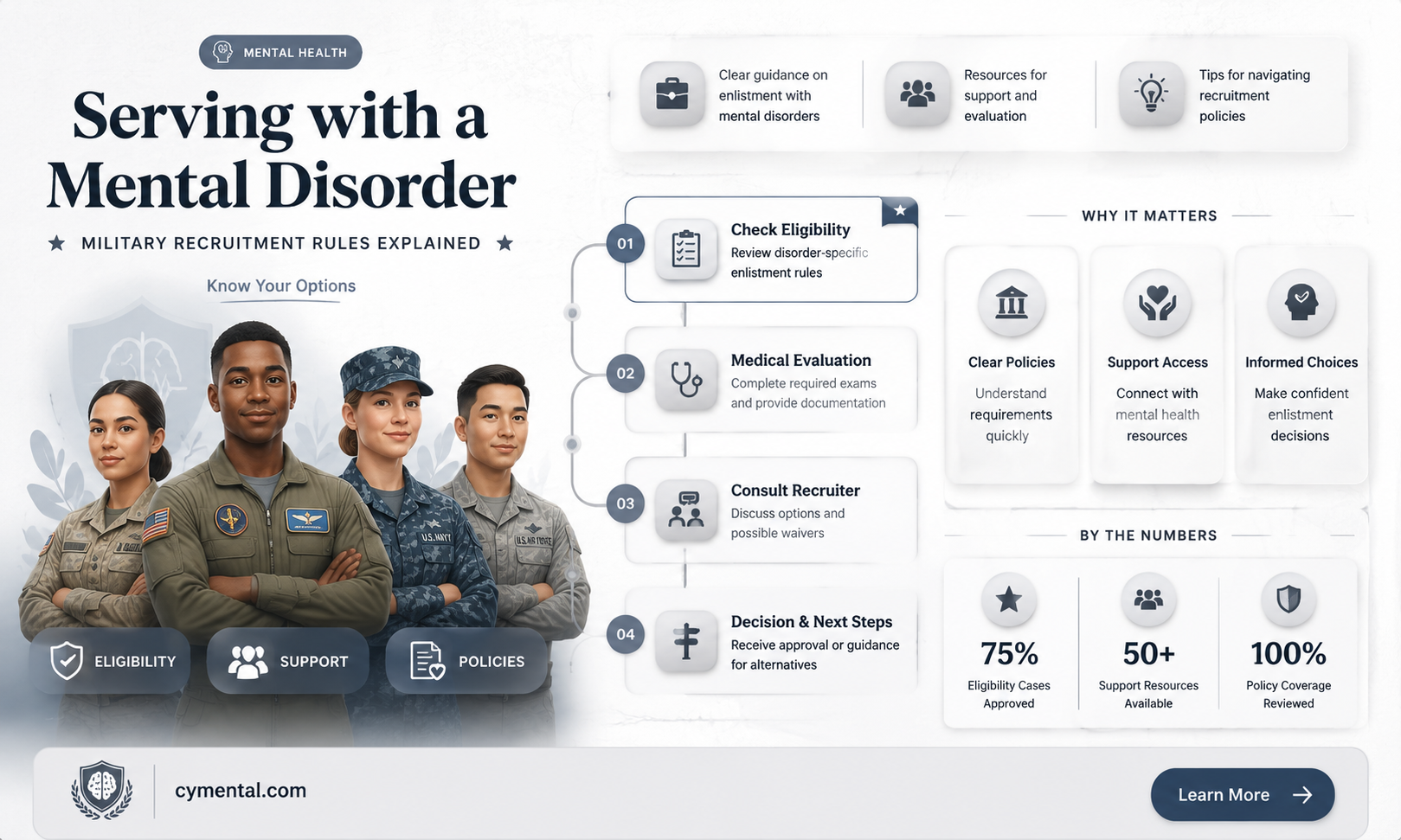
Joining the military with a mental disorder is a complex and nuanced topic. While the military has historically had strict standards regarding mental health, policies have evolved to consider the individual circumstances of each recruit. The key factor is whether the mental disorder interferes with the individual's ability to perform military duties effectively and safely. Some mental health conditions may be deemed disqualifying if they are severe or unstable, while others may be considered on a case-by-case basis. It's important to note that transparency and honesty about one's mental health history are crucial during the recruitment process. Additionally, the military offers resources and support for mental health issues, recognizing the importance of addressing these concerns to maintain the well-being of its personnel.
Explore related products


What You'll Learn
- Eligibility Criteria: Discusses the general requirements and disqualifications for joining the military with a mental health condition
- Types of Mental Disorders: Lists specific mental health conditions that may or may not disqualify an individual from military service
- Evaluation Process: Describes the medical and psychological evaluations conducted to assess a recruit's mental health status
- Support and Resources: Highlights the mental health support systems and resources available to military personnel
- Legal and Policy Framework: Explains the laws and policies governing mental health standards in the military recruitment process

Eligibility Criteria: Discusses the general requirements and disqualifications for joining the military with a mental health condition
To join the military with a mental health condition, individuals must meet specific eligibility criteria. These criteria vary by country and branch of service, but generally, they require that the individual's mental health condition be stable and well-managed. This means that the individual must not have any active symptoms that would interfere with their ability to perform military duties. Additionally, they must not be taking any medications that would disqualify them from service.
In the United States, for example, the Department of Defense (DoD) has a set of medical standards that all recruits must meet. These standards include a mental health evaluation, which assesses the individual's history of mental health conditions, their current symptoms, and their ability to cope with stress. If an individual has a history of mental health conditions, they may be required to provide additional documentation, such as a letter from their mental health provider, to demonstrate that their condition is stable and well-managed.
Some mental health conditions may automatically disqualify an individual from military service. These include conditions such as schizophrenia, bipolar disorder, and major depressive disorder. However, each case is evaluated on an individual basis, and some individuals with these conditions may be able to join the military if they can demonstrate that their condition is stable and well-managed.
In addition to meeting the mental health eligibility criteria, individuals must also meet other requirements, such as physical fitness standards, educational requirements, and age limits. They must also pass a background check and a drug test.
It is important to note that the eligibility criteria for joining the military with a mental health condition are subject to change. Individuals who are interested in joining the military should consult with a recruiter or a mental health professional to determine their eligibility.
Debunking Myths: Unveiling Truths About Mental Health Disorders
You may want to see also
Explore related products


Types of Mental Disorders: Lists specific mental health conditions that may or may not disqualify an individual from military service
The United States military has specific regulations regarding mental health conditions and their impact on an individual's eligibility for service. While some mental disorders may automatically disqualify a person from joining the military, others may be evaluated on a case-by-case basis. It's important to note that the military's standards are stringent, and even conditions that are well-managed may still be considered disqualifying if they are deemed to potentially impair a service member's ability to perform their duties effectively and safely.
One of the most common mental health conditions that can lead to disqualification is depression. If an individual has been diagnosed with depression, they may be required to provide documentation of their treatment and recovery. In some cases, if the depression is severe or has required hospitalization, it may result in an automatic disqualification. Anxiety disorders, including post-traumatic stress disorder (PTSD), are also closely scrutinized. While some forms of anxiety may be manageable with treatment, others, especially those that are severe or have a significant impact on daily functioning, may disqualify an individual from service.
Bipolar disorder is another condition that is often evaluated on a case-by-case basis. Individuals with bipolar disorder may need to provide extensive documentation of their treatment regimen, including medication and therapy, and may be subject to a psychiatric evaluation to determine their stability and ability to serve. Schizophrenia and other psychotic disorders are generally considered disqualifying, as they can significantly impair an individual's ability to function in a military environment.
Attention deficit hyperactivity disorder (ADHD) is a condition that is becoming increasingly common among military applicants. While ADHD alone may not disqualify an individual, it can be a concern if it is accompanied by other conditions or if it has a significant impact on the person's ability to focus and complete tasks. In some cases, individuals with ADHD may be required to undergo a neuropsychological evaluation to assess their cognitive functioning and ability to serve.
It's important to note that the military's regulations regarding mental health conditions are subject to change, and it's always best to consult with a recruiter or a military medical professional for the most up-to-date information. Additionally, even if an individual is disqualified from service due to a mental health condition, they may still be able to serve in other capacities, such as in a civilian role or in a reserve component.
Exploring the Psychology Behind Fabricating False Scenarios
You may want to see also
Explore related products


Evaluation Process: Describes the medical and psychological evaluations conducted to assess a recruit's mental health status
The evaluation process for assessing a recruit's mental health status in the military is rigorous and multifaceted. It begins with a thorough medical examination, which includes a review of the recruit's medical history, a physical examination, and various diagnostic tests. These tests are designed to identify any underlying medical conditions that could impact the recruit's mental health or ability to serve.
Following the medical examination, recruits undergo a psychological evaluation. This typically involves a series of interviews with a military psychologist or psychiatrist, as well as the administration of psychological tests and assessments. These evaluations are used to assess the recruit's cognitive functioning, emotional stability, and overall mental health. The goal is to identify any potential mental health issues that could interfere with the recruit's ability to perform their duties or adapt to the military environment.
In addition to the medical and psychological evaluations, recruits may also be required to undergo a psychiatric evaluation. This involves a more in-depth assessment of the recruit's mental health, including a review of their personal and family history of mental illness, as well as an evaluation of their current symptoms and functioning. The psychiatric evaluation is used to determine whether the recruit meets the criteria for any mental health disorders, and if so, whether these disorders would disqualify them from military service.
Throughout the evaluation process, it is important for recruits to be honest and forthcoming about their mental health history and any concerns they may have. This information is used to make an informed decision about the recruit's fitness for military service, and it is also used to develop a plan for addressing any mental health issues that may arise during their service. Recruits should also be aware that the evaluation process is confidential, and that the information they provide will not be shared with anyone outside of the military medical team.
In conclusion, the evaluation process for assessing a recruit's mental health status in the military is a critical step in ensuring that only those who are mentally and physically fit for service are allowed to join. This process involves a comprehensive medical and psychological evaluation, as well as a psychiatric evaluation if necessary. By identifying and addressing any potential mental health issues early on, the military can help to ensure the safety and well-being of its service members, as well as the overall readiness and effectiveness of its forces.
Unraveling the Mind of a Monster: Jeff Dahmer's Psychological Profile
You may want to see also
Explore related products


Support and Resources: Highlights the mental health support systems and resources available to military personnel
Military personnel often face unique mental health challenges due to the demanding nature of their service. Recognizing this, the military has established comprehensive support systems and resources to address these issues. These include access to mental health professionals, counseling services, and specialized programs designed to mitigate the effects of trauma and stress.
One key resource is the Military Crisis Line, which provides confidential support to service members in crisis. This hotline is staffed by trained professionals who can offer immediate assistance and connect individuals with further resources. Additionally, the military offers a variety of mental health apps and online tools, such as the PTSD Coach app, which can help personnel manage symptoms and improve their overall well-being.
The military also emphasizes the importance of peer support. Programs like the Peer Support Specialist (PSS) initiative train service members to provide support to their peers, fostering a sense of community and understanding. These PSSs are equipped with the skills to identify signs of mental health issues and connect their peers with professional help when needed.
Furthermore, the military has implemented policies to reduce stigma associated with seeking mental health care. Leaders are encouraged to promote a culture of openness and support, ensuring that service members feel comfortable seeking help without fear of judgment or repercussions.
In conclusion, the military offers a robust network of mental health support systems and resources to its personnel. From professional counseling to peer support and innovative digital tools, these resources are designed to address the unique challenges faced by service members and promote their overall mental well-being.
Unraveling the Complex Mind: Jeffrey Dahmer's Mental Health Disorders
You may want to see also
Explore related products


Legal and Policy Framework: Explains the laws and policies governing mental health standards in the military recruitment process
The legal and policy framework governing mental health standards in the military recruitment process is complex and multifaceted. It is designed to ensure that only individuals who are mentally fit and capable of handling the rigors of military service are enlisted. This framework is informed by a variety of laws, regulations, and policies that are specific to each branch of the military and may vary by country.
In the United States, for example, the Department of Defense (DoD) has established a comprehensive set of guidelines for the evaluation of mental health conditions in the context of military recruitment. These guidelines are outlined in the DoD Instruction 6130.3, which provides detailed criteria for the assessment of mental health disorders and the determination of an individual's fitness for military service. The criteria take into account the severity and impact of the mental health condition, as well as the individual's ability to perform military duties and adapt to the military environment.
The evaluation process typically involves a thorough review of the individual's medical history, including any previous mental health diagnoses or treatments. It may also include psychological testing and interviews with mental health professionals. The results of this evaluation are then used to determine whether the individual meets the mental health standards for military service.
In some cases, individuals with mental health disorders may be deemed fit for service if their condition is well-managed and does not significantly impact their ability to perform military duties. However, certain mental health conditions, such as severe depression, anxiety disorders, or psychotic disorders, may automatically disqualify an individual from military service.
The legal and policy framework governing mental health standards in the military recruitment process is subject to ongoing review and revision. This is to ensure that it remains up-to-date and reflective of the latest medical and psychological research, as well as the evolving needs of the military. As such, individuals interested in joining the military with a mental health disorder should consult with a recruiter or military health professional to obtain the most current information on the applicable laws and policies.
Unraveling the Mind of a Monster: Dahmer's Mental Health Diagnosis
You may want to see also
Frequently asked questions
Generally, individuals with mental disorders may face challenges in joining the military. Each country has its own set of regulations and standards for military enlistment, which often include mental health evaluations. If a mental disorder is deemed to impair one's ability to perform military duties effectively, it could result in disqualification.
The specific mental disorders that might disqualify someone from joining the military can vary depending on the country and its military regulations. Commonly, conditions such as schizophrenia, bipolar disorder, major depressive disorder, anxiety disorders, and personality disorders may be considered disqualifying if they significantly impact an individual's functioning and ability to meet the demands of military service.
In some cases, exceptions or waivers may be granted for individuals with mental disorders who wish to join the military. These exceptions are typically evaluated on a case-by-case basis and may require extensive documentation and assessment by military medical professionals. If an individual's mental disorder is deemed to be well-managed and not likely to interfere with their military duties, a waiver might be considered.