Noah Parker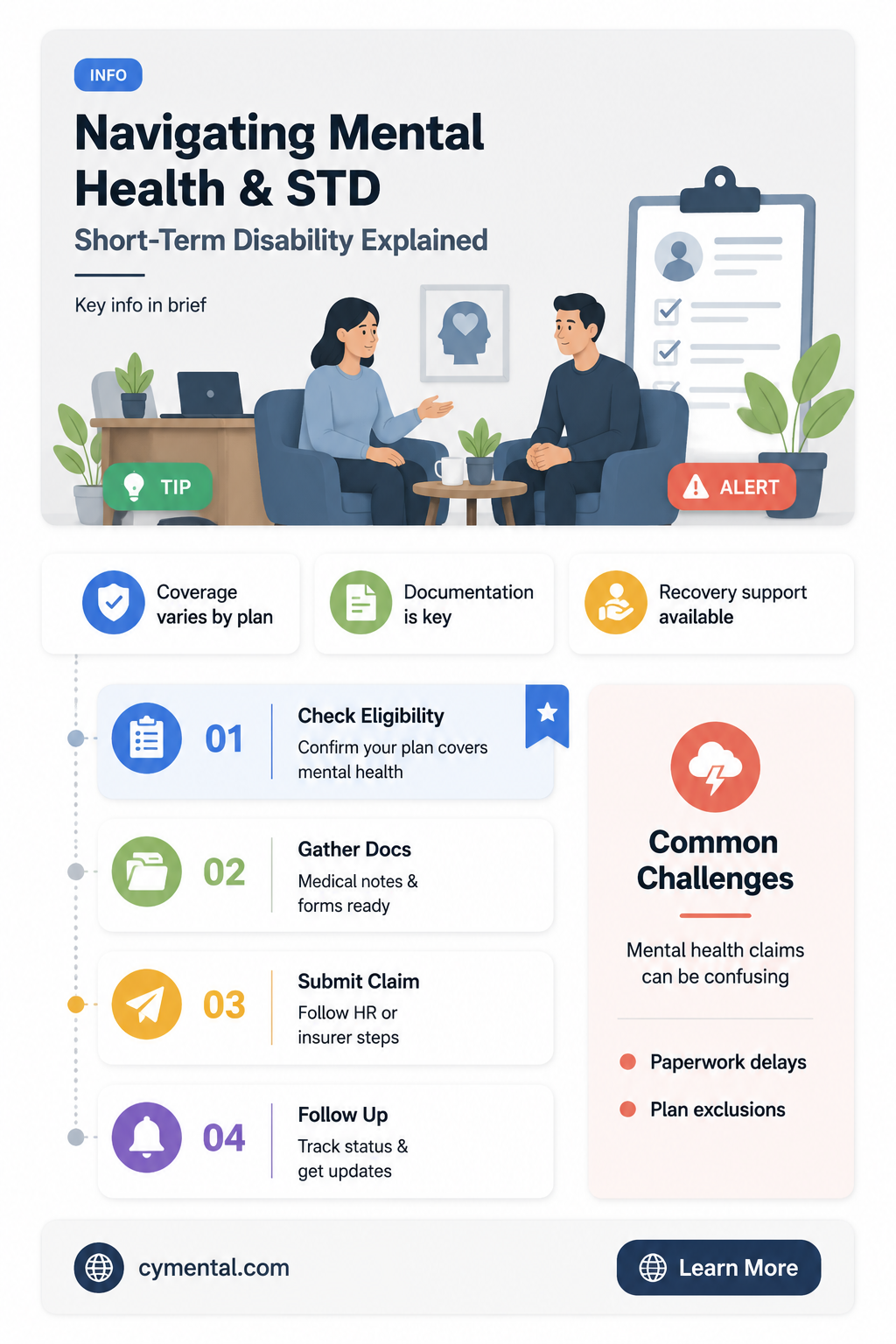
Mental health conditions can significantly impact an individual's ability to perform daily tasks and maintain employment. This raises the question of whether mental health issues qualify for short-term disability benefits. Short-term disability insurance typically covers temporary absences from work due to illness or injury, providing financial support to help individuals recover without the added stress of lost income. In many cases, mental health conditions such as depression, anxiety, and stress-related disorders can indeed qualify for short-term disability, as they can be just as debilitating as physical ailments. However, the specific criteria for eligibility can vary depending on the insurance policy and the severity of the condition. It is essential for individuals to understand their rights and the resources available to them when navigating mental health challenges in the workplace.
| Characteristics | Values |
|---|---|
| Qualification Type | Short-term disability |
| Condition | Mental health |
| Coverage | Varies by employer and insurance policy |
| Duration | Temporary, typically up to 6 months |
| Eligibility | Must meet specific criteria set by the employer or insurance provider |
| Documentation Required | Medical certification or documentation from a mental health professional |
| Benefits | Partial or full pay, job protection, access to mental health resources |
| Limitations | May not cover all mental health conditions, pre-existing conditions may be excluded |
| Renewal | Possible, depending on the policy and individual circumstances |
| Appeal Process | Available if initial claim is denied |
Explore related products


What You'll Learn
- Eligibility Criteria: Understand the specific conditions and requirements set by insurance policies or employers for mental health-related short-term disability
- Documentation Needed: Gather necessary medical documentation and evidence to support a claim for short-term disability due to mental health issues
- Types of Mental Health Conditions: Explore which mental health conditions typically qualify for short-term disability, such as depression, anxiety, or bipolar disorder
- Duration of Benefits: Learn about the typical duration of short-term disability benefits for mental health claims and any limitations or extensions possible
- Appealing Denials: Discover the process for appealing a denied claim for short-term disability related to mental health, including legal considerations and support resources

Eligibility Criteria: Understand the specific conditions and requirements set by insurance policies or employers for mental health-related short-term disability
Insurance policies and employers often set specific eligibility criteria for mental health-related short-term disability claims. These criteria typically require that the individual's mental health condition must be severe enough to interfere with their ability to perform their job duties. This may involve providing medical documentation from a licensed mental health professional, such as a psychiatrist or psychologist, who can attest to the individual's diagnosis and the impact it has on their work capabilities.
The eligibility criteria may also include a requirement that the individual has been receiving treatment for their mental health condition. This could involve therapy sessions, medication management, or other forms of psychiatric care. The purpose of this requirement is to ensure that the individual is actively seeking help and making an effort to manage their condition, rather than simply using it as a reason to take time off work.
In addition to these general requirements, some insurance policies or employers may have more specific criteria that must be met. For example, they may require that the individual's mental health condition is expected to be temporary, rather than a long-term or permanent disability. They may also have specific guidelines for how long the individual can be out of work on short-term disability leave, or how much of their salary they will continue to receive during this time.
It is important for individuals who are considering applying for short-term disability due to a mental health condition to carefully review the eligibility criteria set by their insurance policy or employer. This will help them understand what is required of them and increase their chances of having their claim approved. If they are unsure about any aspect of the criteria, they should reach out to their insurance provider or employer's human resources department for clarification.
Ultimately, the goal of these eligibility criteria is to ensure that individuals who are genuinely struggling with their mental health are able to receive the support they need, while also preventing abuse of the system. By setting clear guidelines and requirements, insurance policies and employers can help to strike a balance between providing necessary support and maintaining the integrity of the short-term disability system.
Understanding the Duration of a Mental Health Evaluation: A Comprehensive Guide
You may want to see also
Explore related products


Documentation Needed: Gather necessary medical documentation and evidence to support a claim for short-term disability due to mental health issues
Gathering the necessary medical documentation is a critical step in supporting a claim for short-term disability due to mental health issues. This process involves obtaining detailed records from healthcare providers that clearly outline the nature, severity, and impact of the mental health condition on the individual's ability to work. Essential documents typically include a diagnosis from a licensed mental health professional, treatment plans, medication lists, therapy session notes, and any relevant test results or evaluations.
In addition to medical records, it is important to gather evidence that demonstrates how the mental health condition affects daily functioning and work capabilities. This can include statements from family members, friends, or colleagues who can attest to the individual's symptoms and their impact on work performance. Keeping a personal journal or log that details daily struggles, symptom severity, and how these affect work tasks can also serve as valuable evidence.
When compiling documentation, it is crucial to ensure that all records are up-to-date and relevant to the claim. This may involve requesting recent evaluations or follow-up appointments to obtain the most current information. It is also important to be thorough in collecting records from all relevant healthcare providers, including primary care physicians, psychiatrists, therapists, and any specialists involved in the individual's treatment.
Organizing the documentation in a clear and concise manner can significantly aid in the claims process. Creating a comprehensive summary of the medical records, along with a cover letter that outlines the key points and how they support the claim, can help ensure that the information is easily accessible and understandable to the claims reviewer.
Finally, it is advisable to consult with a legal professional or a disability claims advocate who can provide guidance on the specific documentation requirements and help ensure that the claim is presented in the most effective manner possible. This can increase the likelihood of a successful claim and help the individual receive the necessary support during a challenging time.
Prioritizing Your Well-being: A Guide to Taking a Mental Health Day
You may want to see also
Explore related products




Types of Mental Health Conditions: Explore which mental health conditions typically qualify for short-term disability, such as depression, anxiety, or bipolar disorder
Depression is one of the most common mental health conditions that may qualify for short-term disability. It is characterized by persistent feelings of sadness, loss of interest in activities, changes in appetite and sleep patterns, and difficulty concentrating. To qualify for disability benefits, individuals must demonstrate that their depression significantly impacts their ability to perform daily tasks and maintain employment.
Anxiety disorders, including generalized anxiety disorder, panic disorder, and social anxiety disorder, can also be eligible for short-term disability. These conditions are marked by excessive worry, fear, and avoidance behaviors that interfere with daily life and work responsibilities. Individuals seeking disability benefits for anxiety must provide evidence of how their symptoms affect their ability to function in a work environment.
Bipolar disorder, which involves extreme mood swings between mania and depression, is another mental health condition that may qualify for short-term disability. During manic episodes, individuals may experience increased energy, impulsivity, and difficulty sleeping, while depressive episodes can lead to feelings of hopelessness and worthlessness. To be considered for disability benefits, individuals with bipolar disorder must show that their condition significantly impairs their ability to maintain employment and perform daily tasks.
Other mental health conditions that may qualify for short-term disability include post-traumatic stress disorder (PTSD), obsessive-compulsive disorder (OCD), and schizophrenia. Each of these conditions has specific criteria that must be met to demonstrate their impact on an individual's ability to work and function in daily life. It is important to note that qualifying for disability benefits often requires a thorough evaluation by a mental health professional and may involve a review of medical records and other supporting documentation.
Prioritizing Well-being: How to Explain Leaving a Job for Mental Health Reasons
You may want to see also
Explore related products


Duration of Benefits: Learn about the typical duration of short-term disability benefits for mental health claims and any limitations or extensions possible
Typically, short-term disability benefits for mental health claims last between 10 to 26 weeks, depending on the specific policy and the severity of the condition. However, some policies may offer extensions if the individual's mental health condition persists beyond the initial benefit period. It's crucial to review the terms of the policy to understand the exact duration and any potential for extension.
Extensions are usually granted on a case-by-case basis and may require additional medical documentation to support the need for continued benefits. In some instances, policies may allow for partial benefits or a transition to long-term disability benefits if the individual's condition is deemed chronic or long-lasting.
It's important to note that there may be limitations on the total duration of benefits an individual can receive for mental health claims. For example, some policies may cap the total benefit period at one year, regardless of the number of extensions granted. Understanding these limitations can help individuals plan their financial and treatment strategies accordingly.
In addition to the duration of benefits, it's also essential to consider the elimination period, which is the waiting period before benefits begin. This period can range from 7 to 14 days, and during this time, the individual may need to rely on other sources of income or savings.
To maximize the duration of benefits and minimize any limitations, individuals should work closely with their healthcare providers and insurance companies. This collaboration can help ensure that all necessary documentation is submitted promptly and that the individual's treatment plan aligns with the policy's requirements.
Ultimately, the duration of short-term disability benefits for mental health claims can vary significantly based on the policy's terms and the individual's specific circumstances. By understanding these factors and working proactively with healthcare providers and insurers, individuals can better navigate the complexities of short-term disability benefits for mental health conditions.
Pathways to Becoming a Qualified Mental Health Professional
You may want to see also
Explore related products


Appealing Denials: Discover the process for appealing a denied claim for short-term disability related to mental health, including legal considerations and support resources
If your claim for short-term disability benefits due to mental health issues has been denied, you have the right to appeal the decision. The appeals process can be complex, but understanding the steps involved and the legal considerations can significantly improve your chances of a successful outcome.
First, it's essential to review the denial letter carefully. The letter should explain the reasons for the denial and the procedures for filing an appeal. Pay close attention to any deadlines, as missing them can result in the loss of your appeal rights. Typically, you have a limited time frame, such as 30 or 60 days, to submit your appeal.
Next, gather all relevant documentation to support your appeal. This may include medical records, letters from your healthcare providers, and any other evidence that demonstrates your mental health condition and its impact on your ability to work. It's crucial to ensure that your documentation is thorough and up-to-date, as this will be a key factor in the appeals process.
Once you have compiled your evidence, you will need to submit your appeal in writing. This usually involves filling out an appeal form provided by the insurance company or disability benefits administrator. Be sure to follow the instructions carefully and provide all requested information. In addition to the form, you should include a detailed explanation of why you believe the denial was incorrect and how your condition qualifies for short-term disability benefits.
During the appeals process, it's important to be aware of your legal rights and the applicable laws. The Americans with Disabilities Act (ADA) and the Family and Medical Leave Act (FMLA) provide protections for individuals with mental health conditions. Familiarize yourself with these laws and how they apply to your situation. You may also want to consult with an attorney who specializes in disability law to ensure that your appeal is handled correctly and that your rights are protected.
Finally, don't hesitate to seek support from mental health professionals, advocacy groups, or friends and family during this process. Appealing a denial can be stressful and overwhelming, but having a support system in place can make a significant difference. Remember, you are not alone, and there are resources available to help you navigate the appeals process and fight for the benefits you deserve.
Overlooked Struggles: The Silent Crisis of Men's Mental Health
You may want to see also
Frequently asked questions
Yes, mental health conditions can qualify for short term disability benefits, depending on the severity and impact on your ability to work.
Conditions such as depression, anxiety, bipolar disorder, schizophrenia, and post-traumatic stress disorder (PTSD) may be eligible for short term disability benefits.
You typically need to consult with your healthcare provider and obtain documentation supporting your mental health condition and its impact on your work. Then, you can file a claim with your employer or insurance provider.
The duration of short term disability benefits varies depending on the policy, but it usually ranges from a few weeks to several months.
Yes, you can be denied benefits if your condition does not meet the criteria set by your employer or insurance provider, or if there is insufficient documentation to support your claim.