Madison Cole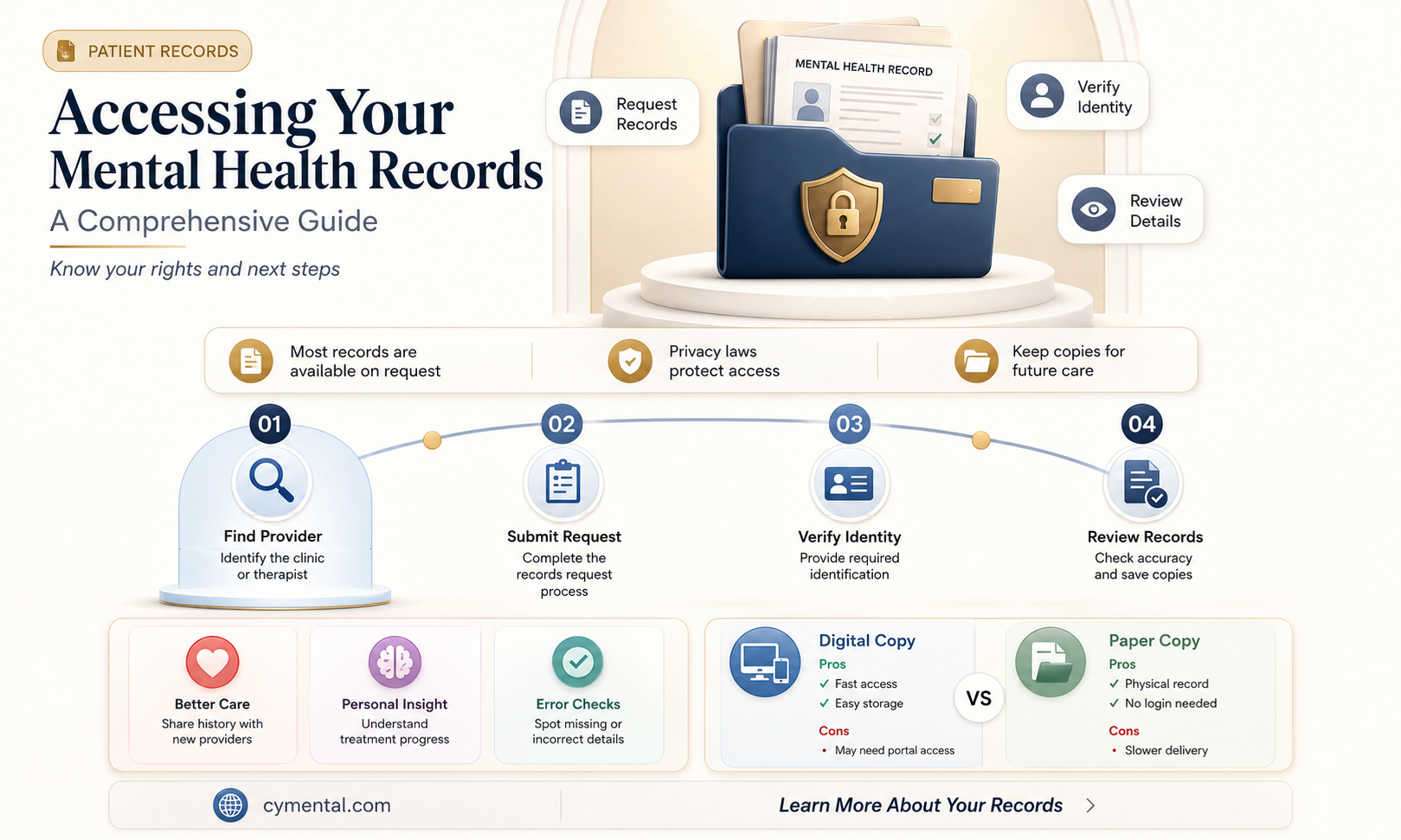
Obtaining your mental health records can be an important step in managing your mental health care. These records contain valuable information about your diagnoses, treatments, and progress over time. They can help you track your symptoms, understand your condition, and ensure continuity of care when seeing new healthcare providers. To get your mental health records, you'll typically need to contact the healthcare provider or facility where you received treatment. They may have specific procedures and forms for requesting records, and you might need to provide identification and consent. It's also important to be aware of any applicable laws or regulations regarding the release of mental health records in your jurisdiction.
| Characteristics | Values |
|---|---|
| Request Process | Contact healthcare provider, Submit written request, Provide identification and consent |
| Response Time | Varies by provider, Typically within 30-60 days |
| Format | Electronic (PDF, CD), Printed paper |
| Cost | May vary, Some providers charge a fee |
| Access Rights | Right to access and review, Right to request amendments |
| Confidentiality | Protected by HIPAA, Shared only with authorized parties |
| Retention Period | Varies by provider and state laws, Typically 6-10 years |
Explore related products


What You'll Learn
- Requesting Records from Healthcare Providers: Contact your mental health provider's office to request a copy of your records
- Understanding Your Rights: Familiarize yourself with HIPAA regulations, which protect your health information and outline your rights
- Accessing Electronic Health Records: Many providers offer online portals where you can access and download your mental health records
- Transferring Records Between Providers: If you're switching providers, ensure your new provider has access to your previous mental health records
- Keeping Track of Your Records: Maintain a personal copy of your mental health records for your own reference and to share with future providers if needed

Requesting Records from Healthcare Providers: Contact your mental health provider's office to request a copy of your records
To obtain your mental health records, the first step is to contact your healthcare provider's office directly. This can be done via phone, email, or in-person visit, depending on the provider's preferred method of communication. When reaching out, it's essential to be clear and concise about your request, specifying that you would like a copy of your mental health records.
Before making the request, it's helpful to gather any relevant information that may be needed to process your request, such as your full name, date of birth, and any previous addresses or contact information associated with your account. This will help ensure that your request is processed efficiently and accurately.
When contacting your provider, it's important to be aware of any specific procedures or requirements they may have in place for requesting records. For example, some providers may require you to fill out a specific form or provide written consent before releasing your records. Others may have a designated records department that handles all requests.
Once you've made your request, be prepared to wait for a response. The timeframe for receiving your records can vary depending on the provider and the volume of requests they receive. However, under the Health Insurance Portability and Accountability Act (HIPAA), healthcare providers are generally required to respond to record requests within 30 days.
If you encounter any difficulties or delays in obtaining your records, don't hesitate to follow up with your provider. It's also important to keep a record of your request and any subsequent communications with your provider, in case you need to escalate the issue or seek assistance from a patient advocate or legal professional.
Navigating the Legal Process for a Court-Ordered Mental Health Evaluation
You may want to see also
Explore related products


Understanding Your Rights: Familiarize yourself with HIPAA regulations, which protect your health information and outline your rights
The Health Insurance Portability and Accountability Act (HIPAA) is a federal law that provides protections for individuals' health information. Understanding your rights under HIPAA is crucial when seeking access to your mental health records. HIPAA gives you the right to access and obtain a copy of your health records, including mental health records, in a reasonable time frame.
To exercise your rights under HIPAA, you should first familiarize yourself with the specific regulations that apply to your situation. This may involve contacting your healthcare provider or insurance company to inquire about their policies and procedures for accessing mental health records. It's important to note that while HIPAA provides a general framework for protecting health information, individual states may have additional laws and regulations that offer further protections or requirements.
When requesting your mental health records, it's essential to be aware of any potential limitations or restrictions that may apply. For example, HIPAA allows healthcare providers to deny access to certain information if it is deemed harmful to the individual or if it contains sensitive information about another person. Additionally, some states may have laws that restrict access to certain types of mental health records, such as those related to psychotherapy or counseling.
To ensure a smooth process when requesting your mental health records, it's helpful to be prepared and organized. This may involve gathering any relevant documentation, such as identification and proof of insurance, and being aware of any specific forms or procedures that need to be followed. It's also important to be patient and persistent, as obtaining mental health records can sometimes be a time-consuming process.
In conclusion, understanding your rights under HIPAA is a critical step in accessing your mental health records. By familiarizing yourself with the relevant regulations and being prepared for the process, you can navigate the complexities of obtaining your records more effectively. Remember, knowledge is power, and being informed about your rights can help you take control of your mental health journey.
Navigating the Process: A Guide to Obtaining Conservatorship for the Mentally Ill
You may want to see also
Explore related products


Accessing Electronic Health Records: Many providers offer online portals where you can access and download your mental health records
To access your mental health records through an electronic health record (EHR) portal, you'll typically need to follow a few key steps. First, check with your healthcare provider to see if they offer an online portal for patient access. If they do, you'll likely need to create an account or register for access. This usually involves providing some personal information, such as your name, date of birth, and contact details. Once registered, you'll be able to log in to the portal and view your records.
One of the benefits of accessing your mental health records online is the convenience it offers. You can review your records from anywhere with an internet connection, at any time. This can be particularly useful if you're seeing multiple providers or need to share information with a new healthcare professional. Additionally, having access to your records can help you stay informed about your treatment and care, and can empower you to take a more active role in your healthcare.
However, it's important to note that not all providers offer online access to mental health records, and some may have limitations on what information is available. If your provider doesn't offer an online portal, or if you're unable to access your records for any reason, you may need to request a copy of your records in writing. In some cases, there may be fees associated with obtaining copies of your records.
When accessing your mental health records online, it's also important to consider privacy and security. Make sure you're using a secure internet connection, and be cautious about sharing your login information with others. If you have concerns about the security of your records, you may want to discuss these with your healthcare provider.
In summary, accessing your mental health records through an electronic health record portal can be a convenient and empowering way to stay informed about your healthcare. However, it's important to be aware of potential limitations and security considerations. If you're unable to access your records online, you may need to request a copy in writing.
Navigating Mental Health Waivers: A Guide for Military Aspirants
You may want to see also
Explore related products



Transferring Records Between Providers: If you're switching providers, ensure your new provider has access to your previous mental health records
When transferring mental health records between providers, it's crucial to ensure a smooth transition to maintain continuity of care. Start by contacting your current provider to request a copy of your records. They may have a specific process or form for you to fill out. Be prepared to provide identification and possibly pay a fee for the records.
Once you have obtained your records, review them for accuracy and completeness. Check for any missing information or errors that could impact your care. If you find any discrepancies, contact your current provider to have them corrected before transferring the records to your new provider.
Next, contact your new provider to inquire about their process for receiving and reviewing transferred records. They may have specific requirements or preferences for how the records should be sent. Ensure that you follow their instructions carefully to avoid any delays in the transfer process.
Consider using a secure, HIPAA-compliant method for transferring your records, such as a password-protected email or a secure online portal. This will help protect your privacy and ensure that your records are not intercepted or accessed by unauthorized individuals.
Finally, follow up with your new provider to confirm that they have received and reviewed your records. This will help ensure that they have all the necessary information to provide you with the best possible care. Remember, maintaining open communication with both your current and new providers is key to a successful transfer of your mental health records.
Nourishing Care: Feeding Practices in Mental Health Facilities
You may want to see also
Explore related products





Keeping Track of Your Records: Maintain a personal copy of your mental health records for your own reference and to share with future providers if needed
Maintaining a personal copy of your mental health records is a proactive step towards managing your mental wellbeing. It allows you to keep track of your treatment history, medications, and any significant changes in your condition. This can be particularly useful when transitioning between healthcare providers or when seeking a second opinion. By having your records readily available, you can ensure continuity of care and avoid unnecessary repetition of tests or treatments.
To start keeping track of your records, you can request a copy of your mental health records from your current provider. This may involve filling out a form or submitting a written request. Once you have obtained your records, it's important to review them for accuracy and completeness. If you notice any discrepancies or missing information, be sure to bring this to the attention of your provider.
There are several ways to maintain your mental health records. You can keep physical copies in a secure location, such as a locked file cabinet or a safe deposit box. Alternatively, you can use digital tools, such as password-protected files or cloud storage services, to store your records electronically. It's important to choose a method that feels most comfortable and secure for you.
In addition to keeping track of your treatment history, it can be helpful to maintain a personal mental health journal. This can include notes on your symptoms, mood, and any coping strategies that you find effective. By tracking your mental health over time, you can identify patterns and triggers that may be contributing to your condition. This information can be valuable to share with your healthcare provider and can help inform your treatment plan.
Remember, keeping track of your mental health records is an ongoing process. It's important to update your records regularly and to review them periodically to ensure that they remain accurate and up-to-date. By taking an active role in managing your mental health records, you can empower yourself to take control of your mental wellbeing and ensure that you receive the best possible care.
Overcoming Mental Hurdles in Tumbling: A Guide to Unblock Your Potential
You may want to see also
Frequently asked questions
To obtain your mental health records, you typically need to contact the healthcare provider or facility where you received treatment. They will have a process for requesting and releasing your records, which may involve filling out a form or submitting a written request.
Your mental health records may include information such as your diagnosis, treatment plans, medication history, therapy notes, test results, and any correspondence between healthcare providers regarding your care.
Yes, there are legal restrictions on accessing mental health records to protect patient privacy. The Health Insurance Portability and Accountability Act (HIPAA) in the United States, for example, sets guidelines for the release of medical records, including mental health records. You may need to provide written consent for the release of your records to third parties.