Lucas Bennett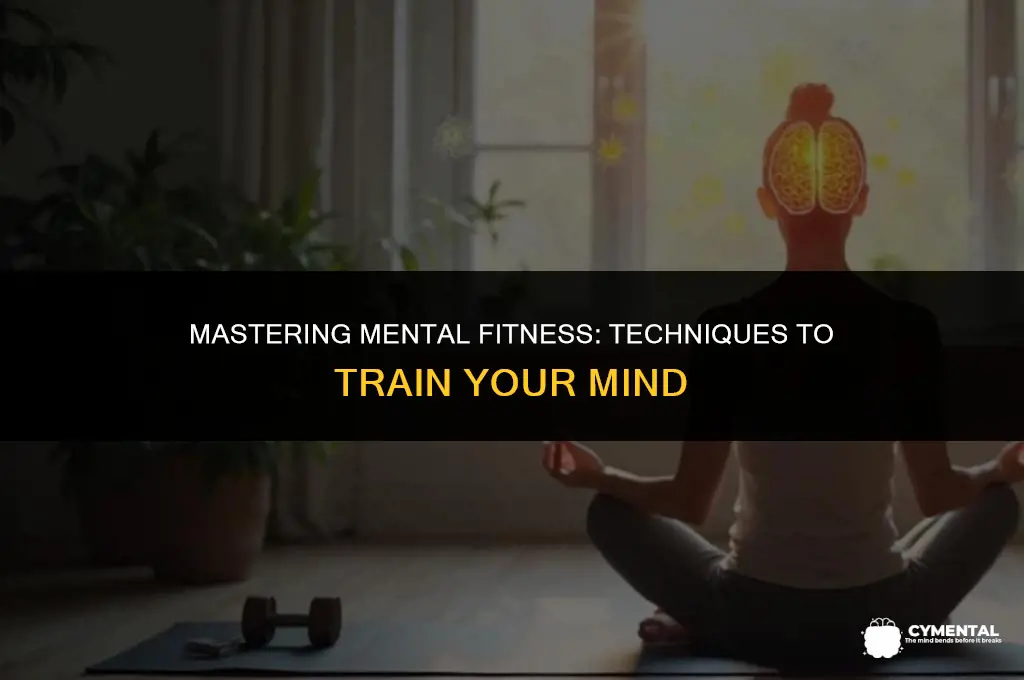
Training your mind is a powerful way to enhance your cognitive abilities, improve focus, and boost overall mental well-being. It involves engaging in activities and exercises that stimulate your brain, helping you develop greater control over your thoughts and emotions. By incorporating mind-training practices into your daily routine, you can cultivate a sharper, more resilient mind capable of tackling life's challenges with greater ease and clarity.
Explore related products



What You'll Learn
- Mindfulness Meditation: Practice present-moment awareness to calm the mind and reduce stress
- Cognitive Exercises: Engage in puzzles, brain games, and problem-solving to enhance cognitive function
- Positive Affirmations: Use uplifting self-talk to foster a positive mindset and build confidence
- Goal Setting: Set clear, achievable goals to focus the mind and track progress
- Physical Activity: Regular exercise improves brain health, boosts mood, and increases mental clarity

Mindfulness Meditation: Practice present-moment awareness to calm the mind and reduce stress
Mindfulness meditation is a powerful tool for training the mind to stay present and focused. By practicing present-moment awareness, individuals can calm their minds and reduce stress levels. This technique involves paying attention to the present moment without judgment or distraction. It can be done through various methods, such as focusing on the breath, body sensations, or sounds in the environment.
One effective way to practice mindfulness meditation is through guided meditations. These can be found online or through mobile apps and provide step-by-step instructions for beginners. Another method is to practice mindfulness during daily activities, such as eating, walking, or showering. This involves paying attention to the sensations and experiences of the activity without getting caught up in thoughts or distractions.
Mindfulness meditation has been shown to have numerous benefits, including reducing anxiety and depression, improving sleep, and increasing focus and concentration. It can also help individuals develop a greater sense of self-awareness and compassion. Regular practice can lead to long-term changes in the brain, including increased activity in areas associated with attention and decreased activity in areas associated with stress.
When practicing mindfulness meditation, it is important to be patient and kind to oneself. It can be challenging to stay focused, especially for beginners. However, with regular practice, individuals can develop the skills necessary to maintain present-moment awareness and reap the benefits of reduced stress and increased well-being.
Understanding Mental Breakdown: Signs, Causes, and Recovery Strategies
You may want to see also
Explore related products


Cognitive Exercises: Engage in puzzles, brain games, and problem-solving to enhance cognitive function
Engaging in cognitive exercises is a proactive approach to enhancing brain function, much like physical exercise improves bodily health. Puzzles, brain games, and problem-solving activities stimulate neural pathways, promoting cognitive flexibility, memory retention, and analytical thinking. These exercises can range from simple word games and Sudoku puzzles to more complex challenges like chess or strategic planning tasks. Regular engagement in such activities has been shown to improve cognitive performance and may even help in delaying age-related cognitive decline.
One effective way to incorporate cognitive exercises into daily life is by setting aside dedicated time each day for brain-stimulating activities. This could be as little as 15-30 minutes, depending on individual schedules and preferences. Consistency is key, as the cumulative effect of regular cognitive exercise can lead to significant improvements over time. Additionally, varying the types of exercises can ensure a well-rounded cognitive workout, targeting different aspects of brain function such as attention, memory, and executive skills.
It's also beneficial to challenge oneself progressively. Starting with simpler tasks and gradually moving to more difficult ones can help build cognitive resilience and confidence. Online platforms and mobile apps offer a plethora of cognitive games and puzzles, often with adjustable difficulty levels, making it easy to find and track progress in exercises that suit one's needs and interests.
Moreover, cognitive exercises can be social activities. Engaging in group puzzles or games can enhance social interaction while also providing cognitive benefits. This social aspect can make cognitive exercises more enjoyable and increase motivation to participate regularly.
In conclusion, cognitive exercises are a valuable tool for enhancing brain function and promoting mental agility. By incorporating a variety of puzzles, brain games, and problem-solving activities into daily routines, individuals can actively support their cognitive health and potentially improve their overall quality of life.
Beyond the 'Me, Myself, and I': Embracing the Power of All Mentality
You may want to see also
Explore related products


$7.78 $12.99


Positive Affirmations: Use uplifting self-talk to foster a positive mindset and build confidence
The power of positive affirmations lies in their ability to rewire your brain. By consistently practicing uplifting self-talk, you can create new neural pathways that promote a positive mindset and build confidence. This process, known as neuroplasticity, allows your brain to adapt and change in response to your thoughts and behaviors.
To harness the benefits of positive affirmations, it's essential to understand how to craft effective ones. Start by identifying negative thought patterns and replacing them with positive, empowering statements. For example, if you often find yourself thinking, "I'm not good enough," try replacing it with, "I am capable and deserving of success." Remember to keep your affirmations specific, present-tense, and personal to maximize their impact.
Consistency is key when it comes to practicing positive affirmations. Set aside time each day to repeat your affirmations, either out loud or in your mind. You can also write them down in a journal or create visual reminders by posting them around your home or workspace. The more you reinforce your positive affirmations, the more they will become ingrained in your thought process.
It's important to note that positive affirmations are not a quick fix or a magic solution. They require dedication and patience to see results. However, when combined with other mindset-training techniques, such as visualization and goal-setting, positive affirmations can be a powerful tool for personal growth and development.
In conclusion, positive affirmations are a simple yet effective way to foster a positive mindset and build confidence. By understanding how to craft and practice them consistently, you can harness the power of your thoughts to create a more fulfilling and successful life. Remember, the key to success lies in your ability to maintain a positive outlook, even in the face of challenges and setbacks.
Mastering the Art of Herd Mentality: A Guide to Group Dynamics
You may want to see also
Explore related products

$15.84 $18.95


Goal Setting: Set clear, achievable goals to focus the mind and track progress
Setting clear, achievable goals is a fundamental aspect of training your mind for success. By defining specific objectives, you provide your brain with a target to focus on, which helps to streamline your thoughts and actions. This process begins with identifying what you want to achieve, whether it's in your personal or professional life. For instance, if you aim to improve your physical fitness, a clear goal could be to run a 5K race in three months. This goal is specific, measurable, and time-bound, making it easier to track your progress and stay motivated.
Once you've set your goals, it's essential to break them down into smaller, manageable tasks. This approach helps to reduce overwhelm and makes the goal feel more attainable. Using the running example, you might start by committing to a daily 30-minute walk, gradually increasing the intensity and duration over time. Each small step brings you closer to your ultimate goal, and celebrating these milestones can boost your confidence and motivation.
Tracking your progress is another crucial component of goal setting. Keeping a journal or using a tracking app can help you monitor your achievements and identify areas where you might need to adjust your strategy. Regularly reviewing your progress also allows you to reflect on what's working and what's not, enabling you to make necessary changes to stay on course.
In addition to setting clear goals, it's important to cultivate a growth mindset. This means embracing challenges, learning from setbacks, and believing that your abilities can be developed through hard work and persistence. By adopting this mindset, you're more likely to view obstacles as opportunities for growth rather than as roadblocks to your success.
Finally, staying flexible and adaptable is key to achieving your goals. Life is unpredictable, and circumstances may change, requiring you to adjust your plans accordingly. By remaining open to change and willing to pivot when necessary, you can continue to make progress toward your goals, even in the face of unexpected challenges.
In summary, setting clear, achievable goals is a powerful way to train your mind and drive success. By breaking down your goals into smaller tasks, tracking your progress, cultivating a growth mindset, and staying flexible, you can overcome obstacles and achieve your desired outcomes.
Cultivating Resilience: A Guide to Mental Toughness in Athletics
You may want to see also
Explore related products


Physical Activity: Regular exercise improves brain health, boosts mood, and increases mental clarity
Regular physical activity is a powerful tool for enhancing cognitive function and overall mental well-being. Engaging in exercise has been shown to improve brain health by increasing blood flow and oxygen to the brain, which can lead to the growth of new neurons and the formation of stronger neural connections. This, in turn, can boost mood and increase mental clarity, making it easier to focus and process information.
One of the most effective ways to incorporate physical activity into your routine is to find an exercise that you enjoy and can stick to consistently. This could be anything from jogging or cycling to swimming or dancing. The key is to choose an activity that gets your heart rate up and keeps it there for at least 30 minutes a day, five days a week.
In addition to aerobic exercise, strength training can also have a positive impact on brain health. Lifting weights or doing bodyweight exercises can help to build muscle mass and improve bone density, which can lead to increased confidence and a sense of accomplishment. This, in turn, can have a positive effect on mood and mental clarity.
It's also important to consider the timing of your workouts. Exercising in the morning can help to jumpstart your day and improve focus and productivity throughout the day. On the other hand, exercising in the evening can help to reduce stress and anxiety and improve sleep quality.
Finally, it's important to remember that physical activity is just one part of a healthy lifestyle. Eating a balanced diet, getting enough sleep, and managing stress are all important factors in maintaining good mental health. By incorporating regular exercise into your routine and making healthy lifestyle choices, you can improve your brain health, boost your mood, and increase your mental clarity.
Cultivating Emotional Stability: A Journey to Inner Balance
You may want to see also
Frequently asked questions
Effective techniques for training your mind include meditation, mindfulness practices, cognitive exercises, and maintaining a consistent learning routine. Engaging in activities that challenge your brain, such as puzzles or learning a new skill, can also be beneficial.
To improve focus and concentration, try minimizing distractions in your environment, setting specific goals for your tasks, and practicing mindfulness meditation. Additionally, taking regular breaks and getting adequate sleep can help enhance your ability to concentrate.
Physical exercise plays a crucial role in mental training as it helps improve cognitive function, reduce stress, and increase overall brain health. Regular physical activity can enhance memory, attention, and problem-solving skills, contributing to a sharper and more resilient mind.
Yes, there are several resources available for mental training and development. Books such as "The Power of Now" by Eckhart Tolle and "Mindset" by Carol S. Dweck offer valuable insights. Additionally, apps like Headspace and Lumosity provide guided meditations and cognitive exercises to help train your mind.


![Memory Games for Seniors: A Large Print XXL Puzzle Activity Book with 501 Exciting and Funny Brain Exercises to Increase Cognitive Abilities [The Smart Senior Adult's Gift]](https://m.media-amazon.com/images/I/71YIvKrxDKL._AC_UL320_.jpg)