Madison Cole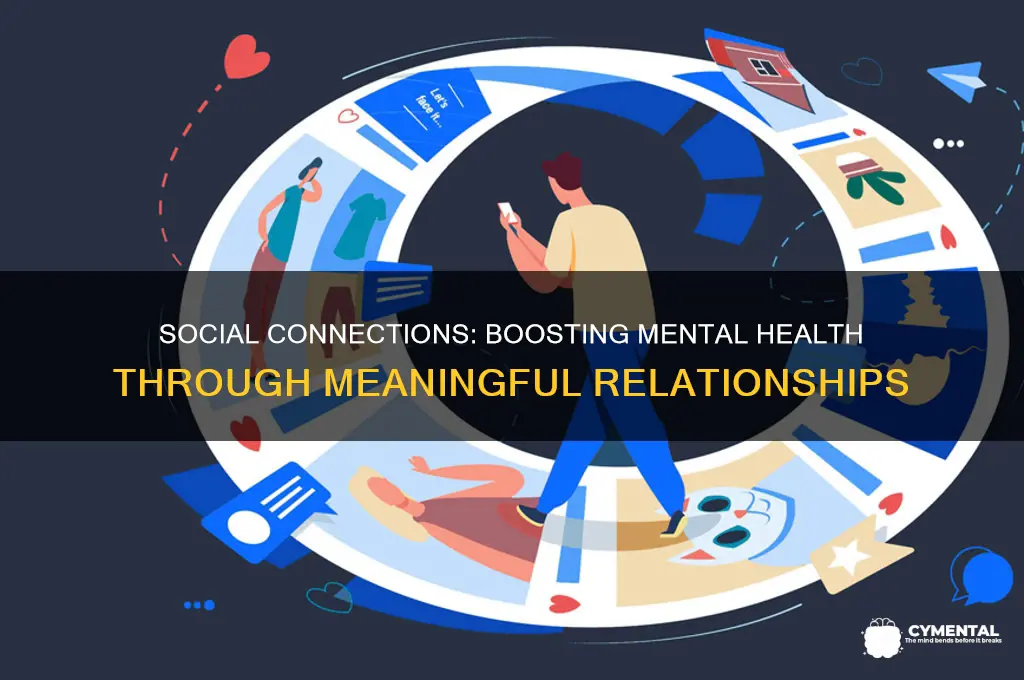
Being social plays a crucial role in supporting mental health by fostering a sense of connection, belonging, and emotional well-being. Human interaction helps reduce feelings of loneliness and isolation, which are often linked to depression and anxiety. Engaging in social activities stimulates the brain, boosts mood through the release of neurotransmitters like oxytocin and dopamine, and provides opportunities for emotional support and validation. Additionally, social networks offer practical help, encouragement, and diverse perspectives, which can enhance resilience and coping mechanisms. By building and maintaining relationships, individuals can create a supportive environment that promotes mental stability, reduces stress, and encourages healthier lifestyle choices, ultimately contributing to overall mental health and happiness.
| Characteristics | Values |
|---|---|
| Reduces Loneliness | Social interactions combat feelings of isolation, which is a risk factor for depression. |
| Provides Emotional Support | Friends and family offer comfort, empathy, and a safe space to share feelings. |
| Boosts Self-Esteem | Positive social connections validate self-worth and foster a sense of belonging. |
| Encourages Healthy Behaviors | Social circles often promote physical activity, balanced diets, and avoidance of harmful habits. |
| Reduces Stress | Social support lowers cortisol levels and helps manage stress through shared coping strategies. |
| Enhances Cognitive Function | Social engagement stimulates the brain, reducing the risk of cognitive decline and dementia. |
| Promotes Resilience | Strong social networks help individuals bounce back from adversity and trauma. |
| Increases Happiness | Social interactions release oxytocin and endorphins, which improve mood and overall well-being. |
| Provides Purpose and Meaning | Social roles (e.g., parent, friend, colleague) give individuals a sense of purpose and identity. |
| Facilitates Problem-Solving | Discussing challenges with others can lead to new perspectives and solutions. |
| Reduces Anxiety | Social connections provide reassurance and reduce feelings of anxiety through shared experiences. |
| Encourages Accountability | Social commitments (e.g., group activities) foster consistency and goal achievement. |
| Improves Sleep Quality | Reduced stress and emotional support from social ties contribute to better sleep patterns. |
| Strengthens Immune System | Socially active individuals often have stronger immune responses due to reduced stress levels. |
| Prevents Mental Health Disorders | Regular social interaction lowers the risk of developing conditions like depression and anxiety. |
| Fosters Empathy and Compassion | Social relationships enhance emotional intelligence and understanding of others' perspectives. |
Explore related products


What You'll Learn
- Social connections reduce feelings of loneliness and isolation, fostering emotional support
- Engaging socially boosts self-esteem and provides a sense of belonging
- Shared activities and conversations distract from stress and negative thoughts
- Social networks offer practical help and resources during difficult times
- Positive interactions release oxytocin, improving mood and reducing anxiety

Social connections reduce feelings of loneliness and isolation, fostering emotional support
Human beings are inherently social creatures, and our connections with others play a pivotal role in shaping our mental well-being. Loneliness and isolation, often silent companions in our modern lives, can have profound negative effects on mental health, increasing the risk of depression, anxiety, and even cognitive decline. Conversely, fostering social connections acts as a powerful antidote, reducing these feelings and creating a supportive environment that nurtures emotional resilience.
Research consistently highlights the importance of social interaction in combating loneliness. A study published in the *Journal of Health and Social Behavior* found that individuals with strong social ties reported significantly lower levels of loneliness compared to those with fewer connections. This is because social interactions provide a sense of belonging and purpose, which are essential for emotional well-being. For instance, joining community groups, engaging in team sports, or simply maintaining regular contact with friends and family can create a network of support that buffers against feelings of isolation.
To effectively reduce loneliness, it’s crucial to prioritize quality over quantity in social interactions. Meaningful conversations, shared activities, and emotional openness foster deeper connections that provide lasting emotional support. For example, spending an hour a week in a book club or volunteering at a local shelter can be more beneficial than superficial small talk with acquaintances. Practical tips include scheduling regular meetups, using technology to stay connected with distant loved ones, and being proactive in reaching out to others. Even small gestures, like sending a thoughtful message or checking in on a friend, can strengthen bonds and reduce feelings of isolation.
A comparative analysis reveals that different age groups may require tailored approaches to combat loneliness. Younger adults often benefit from group activities that align with their interests, such as hobby classes or social media communities. Middle-aged individuals, juggling work and family responsibilities, may find relief in brief but consistent interactions, like coffee dates or virtual catch-ups. For older adults, who are more prone to isolation due to retirement or loss of peers, structured programs like senior centers or intergenerational activities can be particularly effective. Across all ages, the key is to create opportunities for genuine connection that address the unique challenges each group faces.
In conclusion, social connections are a vital resource for reducing loneliness and fostering emotional support. By understanding the importance of meaningful interactions and tailoring approaches to different life stages, individuals can build a robust social network that enhances their mental health. Whether through organized activities, technology, or simple acts of kindness, investing time in relationships pays dividends in emotional well-being. The takeaway is clear: nurturing social connections is not just a luxury but a necessity for a healthier, happier life.
Seaweed's Surprising Role in Supporting Mental Health and Wellness
You may want to see also
Explore related products




Engaging socially boosts self-esteem and provides a sense of belonging
Human connection is a powerful antidote to self-doubt. When we engage socially, we receive feedback, both verbal and nonverbal, that shapes our self-perception. A genuine compliment from a friend, a laugh shared over a joke, or even a simple nod of agreement during a conversation can act as a micro-validation, silently whispering, "You matter." These interactions, when accumulated over time, contribute to a more positive self-image. Research suggests that individuals who regularly participate in social activities report higher levels of self-esteem compared to those who isolate themselves. This isn't merely anecdotal; studies have shown that social support can buffer against the negative effects of stress, a major contributor to low self-esteem.
Imagine a teenager struggling with body image issues. Engaging in a team sport not only provides physical activity but also fosters a sense of belonging to a group with shared goals. The encouragement from teammates, the shared victories and defeats, and the sense of being valued for their contribution can significantly impact their self-worth, helping them see themselves through a more positive lens.
Building a sense of belonging is another crucial aspect of social engagement. We are inherently social creatures, wired for connection. Belonging to a group, whether it's a book club, a religious community, or a group of friends who share a hobby, fulfills a fundamental human need. This sense of belonging provides a safety net, a feeling of being understood and accepted for who we are. It combats loneliness, a major risk factor for mental health issues like depression and anxiety.
When we feel like we belong, we are more likely to take risks, try new things, and step outside our comfort zones, all of which contribute to personal growth and increased self-confidence.
However, it's important to note that not all social interactions are created equal. Quality trumps quantity. A few deep, meaningful connections are far more beneficial than numerous superficial ones. Aim for interactions that are authentic, supportive, and reciprocal. If you're feeling socially isolated, start small. Join a local club, volunteer for a cause you care about, or reach out to an old friend. Even brief, positive social encounters can have a cumulative effect on your self-esteem and sense of belonging. Remember, building a strong social network takes time and effort, but the rewards for your mental well-being are immeasurable.
Protein Shakes and Mental Health: Unlocking the Mind-Body Connection
You may want to see also
Explore related products

$51 $41.99


$7.97 $18.99


Shared activities and conversations distract from stress and negative thoughts
Engaging in shared activities and conversations acts as a mental respite, shifting focus away from stressors and negative thought patterns. When absorbed in a game of tennis, a lively book club discussion, or even a casual chat over coffee, the brain’s attention is redirected to the present moment. This cognitive shift is not merely anecdotal; studies show that social interaction activates the prefrontal cortex, the brain region responsible for attention and decision-making, while temporarily dampening activity in the amygdala, which processes fear and anxiety. Practically, this means a 30-minute conversation or an hour-long group activity can provide immediate relief from rumination, particularly for individuals aged 18–35, who often report higher stress levels due to academic or career pressures.
Consider the mechanics of distraction through social engagement. Unlike passive activities like scrolling through social media, shared experiences require active participation, forcing the mind to prioritize external stimuli over internal worries. For instance, a study published in *Psychological Science* found that individuals who engaged in group problem-solving tasks experienced a 40% reduction in self-reported stress levels compared to those who worked alone. The key lies in the dual nature of these activities: they demand focus while fostering a sense of connection, creating a mental environment where stress struggles to dominate. For optimal results, aim for at least two 45-minute shared activities weekly, balancing structured tasks (e.g., cooking classes) with unstructured conversations (e.g., walking with a friend).
However, not all social distractions are created equal. While binge-watching a show with friends might feel relaxing, it lacks the cognitive engagement needed to fully displace negative thoughts. Instead, opt for activities that encourage collaboration or creativity, such as painting, playing music, or even debating a topic. These not only distract but also stimulate positive emotions, as evidenced by a Harvard study linking creative pursuits to increased dopamine levels. For those hesitant to initiate, start small: invite a colleague to lunch or join a local hobby group. The goal is to create a pattern of active engagement, not to overhaul your schedule overnight.
A cautionary note: while distraction is a powerful tool, it should complement, not replace, deeper coping strategies. Over-reliance on social activities to avoid addressing underlying issues can lead to emotional suppression. For example, a 2020 study in *Journal of Health Psychology* found that individuals who used social interaction solely as an escape were more likely to experience burnout within six months. To avoid this, pair social engagement with reflective practices like journaling or therapy. Think of shared activities as a mental "time-out," not a permanent solution, and use them strategically to create space for problem-solving and emotional processing.
Incorporating this approach into daily life requires intentionality but yields measurable benefits. For parents, engaging in family game nights can reduce stress while strengthening bonds; for remote workers, virtual coffee breaks with colleagues can combat isolation. The takeaway is clear: shared activities and conversations are not just pleasant pastimes—they are evidence-based tools for mental recalibration. By understanding their mechanics and applying them thoughtfully, anyone can harness their power to disrupt the cycle of stress and negativity. Start today: schedule one shared activity this week and observe how it shifts your mental landscape.
Nurturing Your Mind: Practical Strategies for Better Mental Health
You may want to see also
Explore related products


Social networks offer practical help and resources during difficult times
During crises, social networks often become lifelines, offering tangible support that extends beyond emotional comfort. Consider a single parent facing sudden unemployment: their social circle might provide childcare, share job leads, or organize a meal train. These actions alleviate immediate stressors, allowing the individual to focus on long-term solutions rather than daily survival. Research shows that practical assistance from social networks reduces the physiological markers of stress, such as cortisol levels, by up to 26% in individuals facing chronic hardship. This isn’t merely anecdotal—it’s a measurable impact on mental and physical health.
To harness this benefit, start by identifying your network’s strengths. For instance, a friend with legal expertise could review a contract, while a neighbor might offer a spare room during a housing crisis. Next, communicate specific needs clearly; instead of saying, “I’m overwhelmed,” try, “Could you watch my kids for two hours on Tuesday?” Studies indicate that precise requests increase the likelihood of help by 50%, as they remove ambiguity and make it easier for others to act. Remember, reciprocity is key—offer your skills or resources when possible to maintain a balanced exchange.
Contrast this with the limitations of solitary problem-solving. Without a network, individuals often exhaust personal resources quickly, leading to feelings of helplessness and isolation. For example, a person managing chronic illness alone may struggle to coordinate medical appointments, transportation, and household tasks, exacerbating anxiety and depression. In comparison, a networked individual can delegate tasks, access shared knowledge (e.g., affordable healthcare options), and conserve energy for recovery. This division of labor isn’t just practical—it’s transformative, turning insurmountable challenges into manageable steps.
Finally, digital platforms amplify these benefits, especially for those with limited physical networks. Online communities like Reddit’s r/Assistance or local Facebook groups connect individuals with resources such as free furniture, legal advice, or emergency funds. For instance, a 2022 study found that 68% of users in mutual aid groups reported improved mental health due to reduced financial stress. To maximize these tools, join niche groups aligned with your needs (e.g., single parents, chronic illness warriors), and engage consistently to build trust. Whether in-person or online, social networks aren’t just emotional crutches—they’re strategic alliances that fortify resilience in the face of adversity.
CBD and Mental Clarity: Enhancing Focus and Cognitive Function Naturally
You may want to see also
Explore related products


$8.99 $16.99


Positive interactions release oxytocin, improving mood and reducing anxiety
Human connection is a powerful antidote to stress and anxiety, and the science behind it lies in a simple yet remarkable hormone: oxytocin. Often referred to as the "love hormone," oxytocin is released during positive social interactions, such as hugging, laughing with friends, or even making eye contact with a loved one. This hormone acts as a natural mood booster, reducing cortisol levels (the stress hormone) and promoting feelings of calm and contentment. For instance, studies show that a 20-second hug can significantly increase oxytocin levels, providing an immediate sense of relaxation. This biological response highlights why social engagement is not just enjoyable but essential for mental well-being.
To harness the benefits of oxytocin, consider incorporating specific social activities into your routine. Engaging in group exercises, like yoga or team sports, combines physical activity with social interaction, amplifying oxytocin release. Even small acts, such as sharing a meal with family or calling a friend, can trigger this hormone’s effects. For older adults, who may face social isolation, joining community groups or volunteering can be particularly impactful. Research suggests that consistent social engagement can reduce anxiety symptoms by up to 30% in individuals over 60. The key is to prioritize quality interactions over quantity, ensuring they are positive and meaningful.
However, not all social interactions are created equal. Negative or stressful encounters can counteract oxytocin’s benefits, leading to increased anxiety or mood disturbances. To maximize its release, focus on building relationships with supportive, trustworthy individuals. For those with social anxiety, starting small—like initiating a brief conversation or attending a low-pressure social event—can help build confidence. Therapists often recommend "social scripting," where individuals practice positive interactions to reduce anxiety and encourage oxytocin release. Over time, these practices can rewire the brain to associate social engagement with safety and pleasure.
The takeaway is clear: positive social interactions are a natural and effective way to improve mental health. By understanding the role of oxytocin, we can intentionally design our social lives to foster its release. Whether through deep conversations, shared laughter, or physical affection, these moments create a biochemical response that combats anxiety and uplifts mood. In a world where stress is ubiquitous, nurturing our social connections isn’t just a lifestyle choice—it’s a mental health strategy backed by science.
Sea Salt Baths: A Natural Remedy for Mental Health Relief?
You may want to see also
Frequently asked questions
Social interaction reduces feelings of loneliness and isolation, boosts mood through the release of neurotransmitters like oxytocin, and provides emotional support, all of which contribute to better mental well-being.
Yes, social connections can act as a buffer against stress and anxiety by offering support, distraction, and a sense of belonging, which helps regulate the body’s stress response.
Social support provides encouragement, perspective, and practical help, which can alleviate symptoms of depression by fostering a sense of purpose and reducing feelings of hopelessness.
Positive social interactions validate self-worth, provide feedback, and create opportunities for personal growth, all of which enhance self-esteem and confidence over time.
Activities that involve meaningful connections, such as deep conversations, group hobbies, or volunteering, tend to have the greatest positive impact on mental health compared to superficial interactions.