Harper Lewis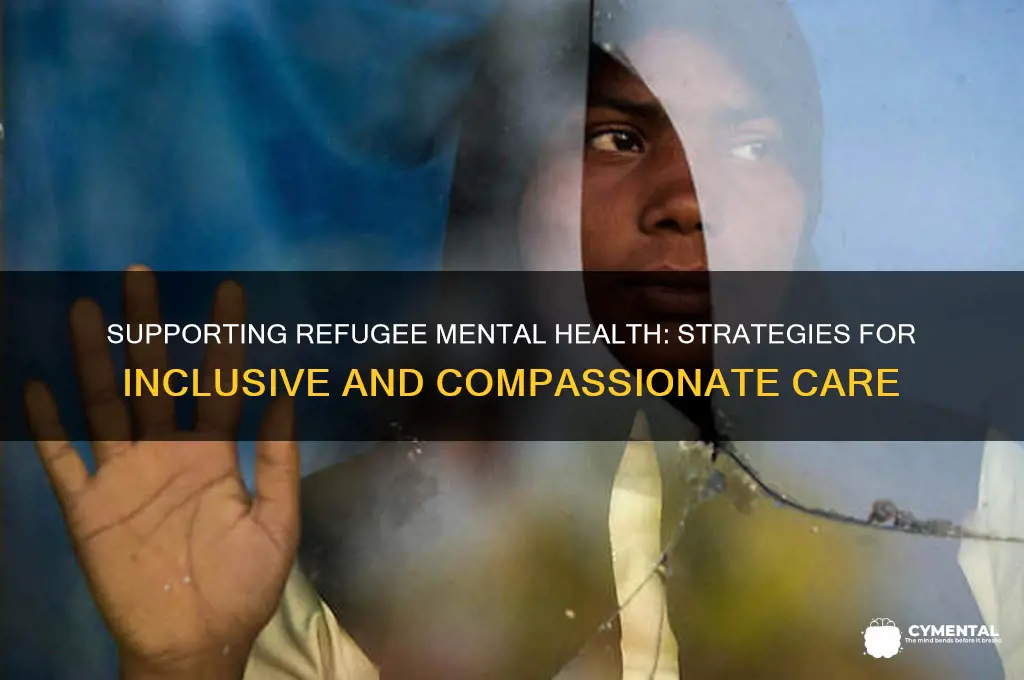
Accommodating refugees with mental health issues requires a compassionate, multifaceted approach that addresses their unique challenges, including trauma, displacement, and cultural disorientation. Effective support systems must integrate accessible mental health services, such as culturally sensitive counseling and trauma-informed care, while also ensuring language interpretation to bridge communication gaps. Community-based initiatives, such as peer support groups and cultural integration programs, play a vital role in fostering a sense of belonging and reducing isolation. Additionally, collaboration between governments, NGOs, and healthcare providers is essential to create policies that prioritize housing, employment, and education, which are critical for long-term stability and recovery. By combining these efforts, societies can provide holistic care that respects refugees' dignity and promotes their mental well-being.
Explore related products


What You'll Learn

Trauma-informed care approaches
Refugees often carry invisible wounds, the psychological scars of trauma that demand a nuanced and compassionate response. Trauma-informed care (TIC) emerges as a critical framework, shifting the focus from "What’s wrong with you?" to "What happened to you?" This approach acknowledges the pervasive impact of trauma on mental, emotional, and physical well-being, offering a pathway to healing that respects the individual’s experiences and resilience.
At its core, TIC involves creating safe, predictable environments where refugees feel empowered and understood. Practical steps include training staff in cultural humility, ensuring physical spaces are calm and non-threatening, and implementing clear communication protocols to avoid retraumatization. For instance, using visual aids and translators can reduce confusion and anxiety during intake processes. Additionally, incorporating flexible schedules and allowing refugees to opt out of activities that trigger distress fosters a sense of control, a cornerstone of trauma recovery.
One of the most effective TIC strategies is the integration of evidence-based therapies tailored to refugee populations. Cognitive Behavioral Therapy (CBT) adapted for trauma, such as Trauma-Focused CBT, has shown promise in reducing symptoms of PTSD and anxiety. Group therapy sessions, when culturally appropriate, can provide a sense of community and shared understanding. For children, play therapy and art-based interventions offer non-verbal outlets for processing trauma, particularly for those who struggle to articulate their experiences.
However, TIC is not without challenges. Missteps, such as rushing the healing process or imposing Western therapeutic models without adaptation, can undermine trust and exacerbate distress. It’s essential to involve refugees in designing care plans, ensuring interventions align with their cultural beliefs and preferences. For example, incorporating traditional healing practices, like storytelling or communal rituals, can enhance engagement and effectiveness.
Ultimately, trauma-informed care is a commitment to seeing refugees not as victims but as survivors with unique strengths and needs. By prioritizing safety, trust, and collaboration, this approach transforms accommodation into a holistic healing journey, paving the way for long-term recovery and integration.
Silent Struggles: Mental Health Challenges in America's Shadow
You may want to see also
Explore related products


Cultural sensitivity in therapy
Refugees often carry the weight of trauma, loss, and displacement, which can manifest in complex mental health issues. Therapy, while essential, can be ineffective or even harmful if it fails to account for cultural differences. Cultural sensitivity in therapy is not merely a nicety but a necessity, ensuring that interventions are respectful, relevant, and effective. For instance, Western therapeutic models, which emphasize individualism and direct communication, may clash with collectivist cultures where family or community approval is paramount. Therapists must adapt their approaches to align with the cultural frameworks of their clients, recognizing that mental health is deeply intertwined with cultural identity.
Consider the case of a Syrian refugee who expresses grief through somatic symptoms rather than verbalizing emotional pain. A culturally insensitive therapist might misinterpret these symptoms as purely physical, missing the underlying psychological distress. To avoid this, therapists should employ culturally adapted assessment tools, such as the Harvard Trauma Questionnaire, which accounts for diverse expressions of trauma. Additionally, incorporating narrative therapy, which focuses on storytelling, can help refugees process their experiences within their cultural context. For example, encouraging a client to share their migration story through art or traditional storytelling methods can foster healing while honoring their cultural practices.
Language barriers further complicate therapy, often leading to misunderstandings or mistrust. Bilingual therapists or professional interpreters are invaluable, but their role extends beyond translation. They must also navigate cultural nuances, such as idiomatic expressions or taboo topics. For instance, discussing mental health openly might be stigmatized in some cultures, requiring therapists to use indirect language or metaphors. A practical tip is to collaborate with cultural mediators—individuals familiar with the refugee’s cultural background—to co-create therapeutic strategies. This collaborative approach ensures that interventions are culturally resonant and reduce the risk of retraumatization.
Finally, cultural sensitivity demands ongoing self-reflection and education from therapists. Assumptions about a client’s beliefs or behaviors can stem from unconscious biases, undermining the therapeutic relationship. Therapists should engage in regular cultural competency training, such as workshops on refugee mental health or immersion programs in diverse communities. For example, a therapist working with Afghan refugees might study Pashtunwali, the traditional code of conduct, to better understand their clients’ values around honor and hospitality. By committing to this learning process, therapists can provide care that is not only effective but also dignifies the cultural richness of the individuals they serve.
Police Response to Mental Health Crises: Frequency and Challenges
You may want to see also
Explore related products


Access to multilingual mental health services
Language barriers can exacerbate mental health struggles for refugees, compounding trauma, disorientation, and isolation. Providing multilingual mental health services is not merely a nicety but a necessity for effective care. Without shared language, accurate diagnosis, trust-building, and therapeutic rapport become nearly impossible. Miscommunication risks inappropriate treatment, retraumatization, or abandonment of services altogether.
Consider the case of a Syrian refugee in Germany experiencing PTSD symptoms. A German-speaking therapist, despite good intentions, might misinterpret cultural idioms of distress (e.g., "my heart is burning" for anxiety) as somatic complaints, leading to misdiagnosis. Access to an Arabic-speaking therapist trained in culturally-informed trauma care could mean the difference between symptom management and prolonged suffering.
Implementing multilingual services requires strategic planning. First, identify prevalent languages within the refugee population through community surveys or demographic data. Next, recruit bilingual mental health professionals or train existing staff in key languages. Where licensed professionals are unavailable, certified interpreters trained in mental health terminology can bridge the gap, though this should be a temporary solution. Teletherapy platforms offering real-time interpretation expand access, especially in rural areas.
However, language alone isn’t enough. Therapists must also understand cultural expressions of mental illness, which vary widely. For instance, a Somali refugee might describe depression as "thinking too much" rather than "feeling sad." Training programs should integrate cultural competency modules alongside language skills. Additionally, group therapy sessions in native languages can foster community support, reducing stigma and encouraging participation.
Finally, advocate for policy changes that prioritize funding for multilingual mental health services. This includes reimbursements for interpretation services, incentives for bilingual providers, and integration of refugee mental health into national healthcare frameworks. Without systemic support, even the most well-intentioned initiatives will falter.
In essence, multilingual mental health services are a cornerstone of dignified refugee care. They transform inaccessible systems into lifelines, ensuring that language never becomes another barrier to healing.
Understanding the Severity of Mental Health Issues: A Comprehensive Overview
You may want to see also
Explore related products


$9.29 $14.99


Community support and integration programs
Refugees with mental health issues often face isolation, language barriers, and cultural disorientation, making community support and integration programs critical for their recovery and well-being. These programs act as bridges, connecting refugees to local resources, fostering social connections, and rebuilding a sense of belonging. For instance, the *Welcome to America Project* in the U.S. pairs refugee families with volunteer mentors who help navigate daily challenges, from enrolling children in school to accessing healthcare. Such initiatives not only address practical needs but also combat the stigma surrounding mental health by normalizing conversations within a supportive framework.
Designing effective integration programs requires a multi-faceted approach that balances cultural sensitivity with practical assistance. Start by establishing cultural orientation workshops that educate refugees about local customs, laws, and mental health services available in their new community. Simultaneously, offer language classes tailored to different age groups—children, adolescents, and adults—to empower them with communication skills essential for daily life. For example, the *Swedish Integration Program* includes language training alongside vocational courses, ensuring refugees can contribute economically while building confidence. Pairing these efforts with community events, such as shared meals or sports activities, creates informal spaces for refugees to interact with locals, fostering mutual understanding and reducing feelings of alienation.
One of the most impactful strategies is the creation of peer support groups led by refugees who have successfully navigated similar challenges. These groups provide a safe space for individuals to share experiences, coping mechanisms, and hope. For instance, the *Refugee Mental Health Network* in Canada trains refugee leaders to facilitate such groups, ensuring cultural relevance and trust. Additionally, integrating art therapy or storytelling sessions can help refugees express trauma non-verbally, particularly for those who struggle with language or prefer indirect communication. A study by the *International Journal of Mental Health Systems* found that art-based interventions significantly reduced symptoms of anxiety and depression among refugee populations.
While community programs are vital, they must be complemented by professional mental health services accessible to refugees. Train local therapists in culturally adaptive practices, such as trauma-informed care, and ensure interpreters are available during sessions. For children and adolescents, school-based interventions, like counseling or peer mentoring, can address mental health issues early while promoting academic integration. However, caution must be taken to avoid overburdening refugees with too many programs at once. Start with needs assessments to tailor support to individual or family requirements, and regularly evaluate program effectiveness through feedback loops.
Ultimately, the success of community support and integration programs lies in their ability to empower refugees as active participants rather than passive recipients. Encourage refugees to co-design initiatives, ensuring their voices shape the services they receive. For example, the *Refugee-Led Community Organizations* in the UK demonstrate how refugee leadership can drive innovation and sustainability. By combining structured programs with organic community engagement, these efforts not only address mental health challenges but also lay the foundation for long-term integration and resilience.
Spirituality and Mental Health: Healing the Mind, Body, and Soul
You may want to see also
Explore related products


Early screening and intervention strategies
Refugees often arrive in host countries carrying invisible wounds—trauma, loss, and displacement that manifest as mental health issues. Early screening and intervention are critical to preventing these issues from escalating into chronic conditions. Without timely support, untreated mental health problems can hinder integration, affect family dynamics, and reduce overall quality of life. Screening must be systematic yet sensitive, recognizing cultural differences in how distress is expressed and perceived.
Consider the PHQ-9 (Patient Health Questionnaire) and GAD-7 (Generalized Anxiety Disorder scale) as starting points for assessing depression and anxiety, two common conditions among refugees. These tools are brief, validated, and available in multiple languages, making them practical for diverse populations. However, their effectiveness depends on trained interpreters who can bridge linguistic and cultural gaps. For instance, a Somali refugee might describe anxiety as *“my heart is heavy”* rather than *“I feel nervous”*—interpreters must be attuned to such nuances. Screening should occur within the first 30–90 days of arrival, ideally in a non-clinical setting like a community center, to reduce stigma and increase participation.
Intervention strategies must be tiered, addressing both immediate needs and long-term resilience. Psychological First Aid (PFA) is a frontline approach, offering practical support and stabilizing those in acute distress. For children, play-based therapies can help process trauma indirectly, while group activities foster social connections. Adults may benefit from Culturally Adapted Cognitive Behavioral Therapy (CA-CBT), which integrates cultural beliefs and practices into evidence-based techniques. For example, a therapist working with Syrian refugees might incorporate storytelling or religious coping mechanisms into sessions. Medication, if necessary, should be prescribed cautiously, considering potential side effects, cultural attitudes toward pharmacotherapy, and the individual’s ability to adhere to a regimen.
A key challenge is ensuring continuity of care. Refugees often face barriers like language, transportation, and legal status that disrupt treatment. Case management systems, where a dedicated coordinator links individuals to services, can mitigate these issues. Peer support programs, where trained refugees provide guidance and encouragement, also enhance engagement. For instance, a Congolese refugee who has successfully navigated the asylum process could mentor newcomers, offering both emotional support and practical advice.
Ultimately, early screening and intervention are not just clinical acts but acts of solidarity. They signal to refugees that their suffering is seen, their humanity valued, and their recovery possible. By combining evidence-based tools with cultural humility, host countries can transform vulnerability into resilience, one life at a time.
School Stress: Uncovering the Hidden Toll on Student Mental Health
You may want to see also
Frequently asked questions
Key steps include conducting culturally sensitive screenings, training staff to recognize signs of trauma, depression, or anxiety, and using interpreters to ensure clear communication. Building trust and creating a safe environment are essential for refugees to feel comfortable sharing their experiences.
Services should incorporate cultural practices, involve community leaders, and use trauma-informed approaches. Providers should be educated about the refugees' cultural backgrounds, languages, and experiences to avoid misunderstandings and ensure effective care.
Support systems include peer support groups, access to mental health professionals, language classes, and community activities. Providing stable housing, employment opportunities, and legal assistance can also reduce stress and promote mental well-being.