Caleb Wright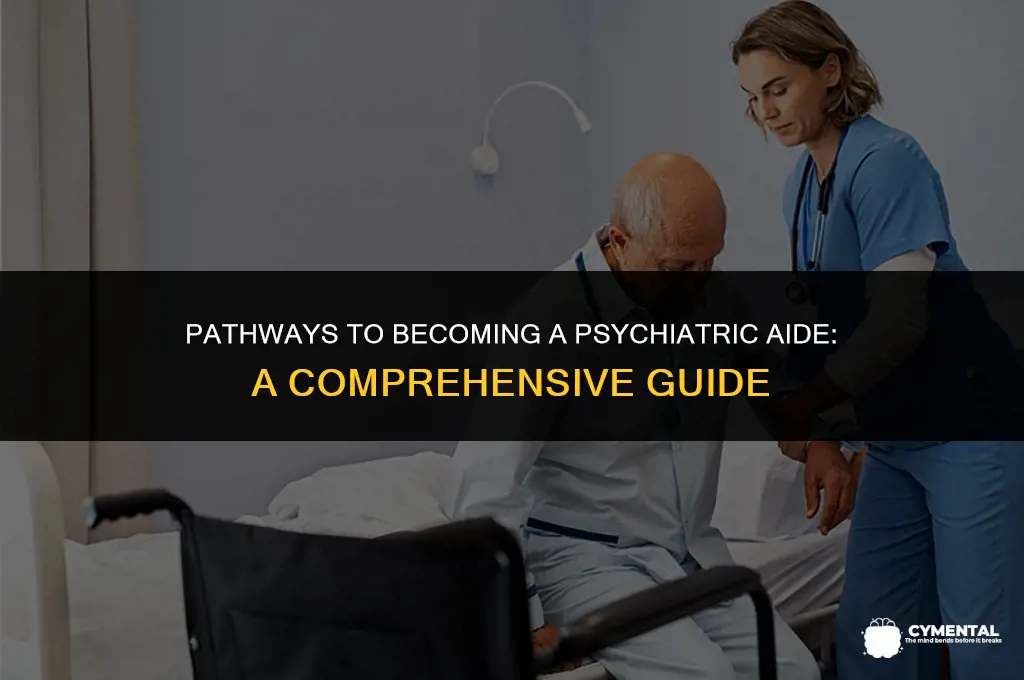
Becoming a psychiatric aide is a rewarding career path that involves supporting individuals with mental health conditions in various settings such as hospitals, clinics, and residential facilities. Psychiatric aides play a crucial role in providing direct care, assisting with daily living activities, and implementing treatment plans under the supervision of mental health professionals. To embark on this career, one typically needs a high school diploma or equivalent, along with specialized training or certification in psychiatric care. Key qualities for a psychiatric aide include empathy, patience, strong communication skills, and the ability to remain calm under pressure. The field offers opportunities for growth and advancement, with the potential to specialize in areas such as crisis intervention, substance abuse treatment, or working with specific populations like children or the elderly.
Explore related products


What You'll Learn
- Education and Training: Obtain a high school diploma, complete a psychiatric aide training program, and gain relevant experience
- Licensure and Certification: Meet state-specific licensing requirements, pass a certification exam, and maintain credentials through continuing education
- Job Responsibilities: Assist patients with daily living activities, monitor behavior, and provide emotional support and companionship
- Work Environment: Psychiatric aides work in hospitals, clinics, and residential facilities, often in high-stress and demanding environments
- Career Advancement: With experience, psychiatric aides can advance to supervisory roles, specialize in specific areas, or pursue further education in mental health

Education and Training: Obtain a high school diploma, complete a psychiatric aide training program, and gain relevant experience
To embark on a career as a psychiatric aide, one must first lay a solid educational foundation. This journey begins with obtaining a high school diploma, which is a prerequisite for most psychiatric aide training programs. High school courses in psychology, biology, and health can provide a helpful background for understanding the complexities of mental health care.
Following high school, aspiring psychiatric aides must complete a specialized training program. These programs are typically offered by community colleges, vocational schools, or healthcare facilities and can range from a few months to a year in duration. Coursework often includes topics such as psychiatric disorders, crisis intervention, medication management, and therapeutic communication techniques. Practical experience, such as internships or clinical rotations, is also a crucial component of these programs, allowing students to apply their knowledge in real-world settings.
In addition to formal education and training, gaining relevant experience is essential for psychiatric aides. This can be achieved through volunteering at mental health organizations, working as a mental health technician or orderly, or participating in shadowing programs. Such experiences not only enhance one's resume but also provide valuable insights into the day-to-day responsibilities and challenges of the role.
Throughout their education and training, aspiring psychiatric aides should also focus on developing key skills such as empathy, patience, and strong communication abilities. These interpersonal skills are vital for building trust with patients and effectively collaborating with other healthcare professionals.
Upon completion of their training and experience requirements, psychiatric aides may be required to obtain certification or licensure, depending on their state's regulations. This typically involves passing a standardized exam and meeting certain continuing education requirements to maintain their credentials.
In conclusion, becoming a psychiatric aide requires a combination of formal education, specialized training, and hands-on experience. By following this path, individuals can acquire the necessary knowledge, skills, and credentials to embark on a rewarding career in mental health care.
Understanding Islamic Perspectives on Mental Disability and the Afterlife
You may want to see also
Explore related products


Licensure and Certification: Meet state-specific licensing requirements, pass a certification exam, and maintain credentials through continuing education
To become a psychiatric aide, one must navigate the complex landscape of licensure and certification, which varies significantly from state to state. The first step is to research and meet the specific licensing requirements of the state in which you intend to practice. This may include completing a certain number of hours of supervised work experience, obtaining a high school diploma or equivalent, and passing a state-administered exam.
Once you have met the state licensing requirements, you will need to pass a certification exam to become a certified psychiatric aide. This exam will test your knowledge and skills in areas such as psychiatric disorders, treatment plans, and patient care. To prepare for the exam, you may want to enroll in a certification preparation course or study on your own using resources such as textbooks and online materials.
Maintaining your credentials as a psychiatric aide requires ongoing education and professional development. Most states require psychiatric aides to complete a certain number of hours of continuing education each year to maintain their licensure. This may include attending workshops, seminars, or online courses on topics such as new treatment approaches, medication management, and crisis intervention.
In addition to meeting the educational requirements, psychiatric aides must also adhere to strict ethical standards and professional codes of conduct. This includes maintaining patient confidentiality, respecting patients' rights, and avoiding conflicts of interest. Failure to comply with these standards can result in disciplinary action, including revocation of licensure.
As a psychiatric aide, you will also need to stay up-to-date on the latest research and developments in the field of mental health. This may involve reading professional journals, attending conferences, and networking with other mental health professionals. By staying informed and engaged, you can provide the best possible care to your patients and contribute to the advancement of the field.
In conclusion, becoming a psychiatric aide requires a significant investment of time and effort, but it can be a rewarding and fulfilling career for those who are passionate about helping others. By meeting the state-specific licensing requirements, passing the certification exam, and maintaining your credentials through continuing education, you can embark on a career that makes a real difference in the lives of individuals struggling with mental health issues.
Approaching Your Boss About Mental Health Struggles: A Guide
You may want to see also
Explore related products


Job Responsibilities: Assist patients with daily living activities, monitor behavior, and provide emotional support and companionship
As a psychiatric aide, your primary role is to support patients in their daily lives, ensuring they can perform essential activities and maintain their well-being. This involves assisting with tasks such as bathing, dressing, and grooming, as well as helping patients with their meals and medication management. By providing this hands-on support, you enable patients to focus on their recovery and improve their quality of life.
In addition to physical assistance, monitoring patient behavior is a crucial aspect of your job. This includes observing and documenting any changes in mood, appetite, or sleep patterns, as well as noting any unusual or concerning behaviors. By staying vigilant and reporting these observations to the healthcare team, you can help ensure that patients receive the appropriate care and interventions in a timely manner.
Providing emotional support and companionship is another key responsibility of a psychiatric aide. This may involve simply being present and listening to patients, offering words of encouragement, or engaging in activities together to promote social interaction and mental stimulation. By building trust and rapport with patients, you can create a supportive environment that fosters their emotional well-being and helps them feel more connected and understood.
To excel in this role, it's essential to have strong communication skills, empathy, and patience. You must be able to work collaboratively with other healthcare professionals and adapt to the unique needs and challenges of each patient. Additionally, staying up-to-date with best practices and continuing your education can help you provide the highest level of care and support to those in your charge.
Nurturing Resilience: A Guide to Raising Mentally Strong Children
You may want to see also
Explore related products


Work Environment: Psychiatric aides work in hospitals, clinics, and residential facilities, often in high-stress and demanding environments
Psychiatric aides often find themselves working in a variety of settings, including hospitals, clinics, and residential facilities. These environments can be challenging, with high-stress situations that require a unique set of skills and resilience. Understanding the nuances of each setting is crucial for anyone looking to enter this field.
In hospitals, psychiatric aides may work on acute wards where patients are experiencing severe mental health crises. This setting demands quick thinking, the ability to de-escalate tense situations, and a high level of empathy. Aides must be prepared to work closely with patients who may be disoriented, agitated, or withdrawn. They need to be able to provide immediate support while also collaborating with a multidisciplinary team of healthcare professionals.
Clinics offer a different set of challenges. Here, psychiatric aides may work with patients on an outpatient basis, providing ongoing support and monitoring. This setting requires strong organizational skills, as aides must manage multiple cases and ensure that patients receive consistent care. They may also need to be adept at navigating insurance and healthcare systems to help patients access the resources they need.
Residential facilities, on the other hand, provide a more stable environment where patients live on-site. Psychiatric aides in these settings often have the opportunity to build long-term relationships with patients and play a significant role in their recovery process. However, this can also mean working in a more isolated environment, which may require aides to be self-motivated and able to work independently.
Regardless of the specific setting, psychiatric aides must be able to adapt to changing circumstances and remain calm under pressure. They need to be compassionate, patient, and understanding, while also maintaining professional boundaries. This balance can be difficult to achieve, but it is essential for providing effective care and ensuring the safety of both patients and staff.
In conclusion, the work environment for psychiatric aides is diverse and demanding. Each setting presents its own unique challenges, but also offers opportunities for growth and making a meaningful impact on patients' lives. By understanding the specific demands of hospitals, clinics, and residential facilities, aspiring psychiatric aides can better prepare themselves for the realities of this important and rewarding profession.
Mastering the Social Security Disability Mental Exam: Tips and Strategies
You may want to see also
Explore related products


Career Advancement: With experience, psychiatric aides can advance to supervisory roles, specialize in specific areas, or pursue further education in mental health
Psychiatric aides play a crucial role in the mental health field, providing essential support to patients and healthcare professionals alike. As they gain experience, aides have several avenues for career advancement. One such path is moving into supervisory roles, where they can oversee other aides and contribute to the management of mental health facilities. This progression not only increases their responsibilities but also their earning potential.
Specialization is another key area for career growth. Psychiatric aides can focus on specific patient populations, such as children, adolescents, or the elderly, or they can specialize in particular mental health conditions like substance abuse or eating disorders. By honing their expertise in these areas, aides can become invaluable resources to their teams and may even be sought after for consultation or training purposes.
Pursuing further education is also a viable option for career advancement. Many psychiatric aides choose to enroll in programs to become licensed practical nurses (LPNs), registered nurses (RNs), or even advanced practice registered nurses (APRNs). Others may opt for degrees in psychology, social work, or counseling. These educational pursuits not only enhance their knowledge and skills but also open doors to new roles and opportunities within the mental health field.
In addition to these formal paths, psychiatric aides can also advance their careers through professional development workshops, certifications, and memberships in professional organizations. These activities help them stay current with the latest research and best practices, network with peers and industry leaders, and demonstrate their commitment to their profession.
Ultimately, the key to successful career advancement for psychiatric aides lies in their dedication to continuous learning and their willingness to take on new challenges. By doing so, they can not only improve their own career prospects but also contribute to the overall quality of care in the mental health field.
Unveiling the Scars: A Guide to Recognizing and Proving Mental Abuse
You may want to see also
Frequently asked questions
Typically, a high school diploma or equivalent is required. Some employers may prefer or require a postsecondary nonaward certificate or associate's degree in a related field.
Essential skills include strong communication abilities, empathy, patience, and the ability to remain calm in stressful situations. Additionally, basic knowledge of mental health disorders and treatment protocols is crucial.
The job outlook is generally positive, with an expected growth rate of about 15% from 2022 to 2032, which is faster than the average for all occupations. This growth is driven by an increasing demand for mental health services.
Psychiatric aides assist patients with daily living activities, monitor their behavior and vital signs, and provide support during therapy sessions. They also help maintain a safe and clean environment for patients and staff.