Madison Cole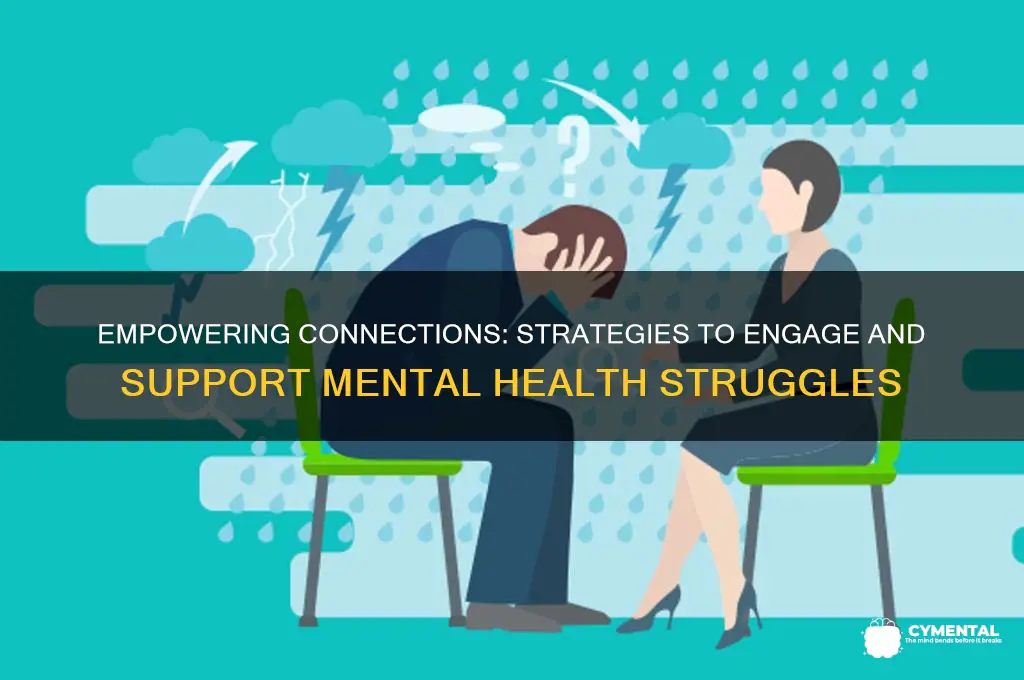
Engaging with someone experiencing mental health issues requires empathy, patience, and a non-judgmental approach. It’s essential to create a safe and supportive environment where the individual feels heard and understood, without pressure to share more than they’re comfortable with. Start by actively listening, using open-ended questions, and validating their feelings, as this helps build trust and shows genuine concern. Avoid offering unsolicited advice or minimizing their experiences, and instead, focus on acknowledging their struggles. Encourage professional help if needed, but respect their autonomy and pace. Small gestures, like checking in regularly or offering to accompany them to appointments, can make a significant difference in fostering connection and support.
Explore related products


$15.83 $16.99


What You'll Learn
- Active Listening: Show empathy, focus fully, avoid interruptions, validate feelings, and reflect back to understand
- Non-Judgmental Support: Offer acceptance, avoid criticism, respect boundaries, and prioritize kindness in every interaction
- Encouraging Open Dialogue: Use open-ended questions, share relatable experiences, and create a safe, non-threatening space
- Practical Assistance: Help with daily tasks, provide resources, and assist in accessing professional mental health services
- Consistent Presence: Be reliable, check in regularly, and maintain patience, even if progress seems slow

Active Listening: Show empathy, focus fully, avoid interruptions, validate feelings, and reflect back to understand
Engaging with someone experiencing mental health challenges requires more than good intentions—it demands active listening, a skill often overlooked yet profoundly impactful. Unlike passive hearing, active listening involves a conscious effort to understand, empathize, and respond thoughtfully. It begins with showing genuine empathy, which means setting aside personal biases and judgments to connect on a human level. For instance, instead of saying, “It could be worse,” try, “I can see how difficult this must be for you.” This simple shift acknowledges their experience without minimizing it, fostering trust and openness.
Focusing fully is the next critical step, and it’s harder than it sounds. In a world of distractions, giving someone your undivided attention communicates respect and care. Turn off notifications, maintain eye contact (when culturally appropriate), and use nonverbal cues like nodding to show engagement. For example, if someone is sharing their anxiety about work, avoid glancing at your phone or interrupting with unrelated stories. This level of attentiveness creates a safe space where they feel heard and valued.
Validation is a cornerstone of active listening, yet it’s often misunderstood. Validating feelings doesn’t mean agreeing with every statement; it means recognizing the legitimacy of their emotions. Phrases like, “It makes sense that you’d feel that way,” or, “Anyone in your situation might feel the same,” can be transformative. For instance, a teenager struggling with depression might say, “I’m just being dramatic.” Instead of dismissing this, respond with, “Your feelings are real, and they matter.” This reinforces that their emotions are valid, even if they don’t align with external expectations.
Reflecting back is a technique that deepens understanding and ensures clarity. Paraphrase what the person has said to confirm your interpretation and encourage further exploration. For example, if someone shares, “I feel like I’m drowning in responsibilities,” you might say, “It sounds like you’re overwhelmed with everything on your plate.” This not only shows you’re listening but also invites them to elaborate, potentially uncovering underlying issues. Be cautious, though—reflection should feel natural, not robotic. Overdoing it can make the conversation feel clinical rather than supportive.
Mastering active listening takes practice, but its benefits are immeasurable. It transforms superficial conversations into meaningful connections, helping individuals feel understood and less alone. For caregivers, friends, or family members, this approach can be a lifeline, offering support without judgment or pressure. Remember, the goal isn’t to fix their problems but to create a space where they feel safe to express themselves. In doing so, you become a source of comfort and strength, fostering resilience in their mental health journey.
Supporting Your Partner Through Mental Health Challenges: A Compassionate Guide
You may want to see also
Explore related products


Non-Judgmental Support: Offer acceptance, avoid criticism, respect boundaries, and prioritize kindness in every interaction
Engaging with someone experiencing mental health challenges requires a delicate balance of empathy and respect. Non-judgmental support forms the cornerstone of this approach, fostering an environment where individuals feel safe to express themselves without fear of condemnation. This begins with acceptance, a powerful tool that communicates, "You are enough, just as you are." When interacting with someone struggling with mental health, acknowledge their feelings and experiences without attempting to minimize or dismiss them. For instance, instead of saying, "It could be worse," try, "I can see how difficult this must be for you." This simple shift in language validates their emotions, encouraging openness and trust.
Avoiding criticism is equally vital, as it can inadvertently deepen feelings of shame or inadequacy. Mental health issues often come with a heavy burden of self-criticism, and external judgment can exacerbate this. Consider the impact of your words: a well-intentioned but critical remark like, "You should just try to be more positive," might suggest that their struggle is a matter of choice, undermining the complexity of their experience. Instead, focus on active listening and offering support. Phrases such as, "I'm here for you," or "How can I help?" provide reassurance without imposing expectations or solutions.
Respecting boundaries is an essential aspect of non-judgmental support, ensuring that your assistance is welcomed rather than intrusive. Everyone has different limits when it comes to sharing personal struggles, and these boundaries may shift over time. Pay attention to verbal and non-verbal cues; if the person seems hesitant to discuss certain topics or appears uncomfortable, gently change the subject or offer them space. For example, if they become quiet when you ask about their therapy sessions, respect their silence and perhaps say, "It's okay if you don't want to talk about it. I'm here whenever you're ready." This approach demonstrates that you value their autonomy and comfort.
Kindness should permeate every interaction, serving as the foundation of your support system. Small acts of kindness can have a profound impact on someone's day, especially when they are navigating mental health challenges. Send a thoughtful message, offer to help with a task, or simply be present without distractions. For instance, if you know they struggle with anxiety, a text saying, "Thinking of you, and I'm here if you need anything," can provide a sense of security and care. Consistency in kindness builds trust and reinforces the message that your support is unwavering.
In practice, non-judgmental support involves a continuous effort to understand and adapt to the individual's needs. It requires self-awareness to recognize and set aside personal biases and assumptions. By offering acceptance, refraining from criticism, respecting boundaries, and leading with kindness, you create a supportive environment that encourages healing and growth. Remember, the goal is not to fix or change the person but to provide a safe space where they feel accepted and valued, fostering their own journey towards mental well-being. This approach is a powerful tool in building meaningful connections and offering effective support.
Understanding the Prevalence of Mental Health Issues in Society
You may want to see also
Explore related products


Encouraging Open Dialogue: Use open-ended questions, share relatable experiences, and create a safe, non-threatening space
Engaging someone with mental health issues requires a delicate balance of empathy, patience, and strategy. One of the most effective ways to foster connection is by encouraging open dialogue, which begins with the questions we ask. Open-ended questions, such as *“How have you been feeling lately?”* or *“What’s been on your mind?”*, invite deeper reflection rather than a simple yes or no response. These questions signal that you’re genuinely interested in their perspective and willing to listen without judgment. Avoid interrogative tones; instead, use a calm, gentle voice to create a sense of ease. For instance, pairing a question with a statement like *“I’ve noticed you seem a bit quieter lately, and I’m here if you want to talk”* can open the door for meaningful conversation.
Sharing relatable experiences can also bridge the gap between you and the person struggling. Vulnerability is a powerful tool—it humanizes the conversation and shows that you’ve faced challenges too. For example, saying *“I’ve had days where I felt overwhelmed, and talking about it really helped me”* can normalize their feelings and encourage them to share. However, it’s crucial to avoid overshadowing their experience with your own. Keep the focus on them by following up with a question like *“Does that resonate with you at all?”* or *“How do you usually cope when you feel this way?”* This approach fosters a sense of solidarity without minimizing their unique struggles.
Creating a safe, non-threatening space is the foundation of any productive conversation about mental health. Start by choosing a quiet, private setting where the person feels comfortable. Turn off distractions like phones or TVs to show you’re fully present. Nonverbal cues matter too—maintain open body language, avoid crossing your arms, and use eye contact (while respecting cultural norms). If the person hesitates to open up, reassure them with phrases like *“You don’t have to share anything you’re not ready to”* or *“I’m here to listen, not to judge.”* Consistency is key; let them know you’re available for future conversations, even if they’re not ready to talk now.
Practical tips can further enhance the dialogue. For instance, if the person struggles to articulate their feelings, suggest journaling as a way to organize thoughts before sharing. If they’re more comfortable writing than speaking, offer to exchange messages instead of talking face-to-face. For younger individuals (teens or early 20s), using analogies or pop culture references can make abstract emotions more tangible. For example, *“It’s like when your favorite show has a cliffhanger—you’re left hanging, unsure what’s next”* can help them describe anxiety. Tailoring your approach to their age, communication style, and comfort level ensures the conversation feels accessible and relevant.
The ultimate goal of encouraging open dialogue is to build trust and provide a supportive outlet for expression. It’s not about fixing their problems but about letting them know they’re not alone. Over time, consistent, empathetic engagement can help reduce stigma and foster a sense of safety. Remember, progress is gradual—some conversations may yield more than others, and that’s okay. By using open-ended questions, sharing relatable experiences, and creating a safe space, you’re laying the groundwork for meaningful connection and understanding. This approach doesn’t require expertise, just a willingness to listen and care.
Navigating Mental Health: Strategies for Awareness, Support, and Healing
You may want to see also
Explore related products


$11.97 $14.95


Practical Assistance: Help with daily tasks, provide resources, and assist in accessing professional mental health services
Mental health struggles often manifest in a person’s ability to manage daily tasks, from cooking meals to paying bills. Offering practical assistance in these areas isn’t just helpful—it’s a tangible way to show support and reduce the overwhelming burden they may feel. For instance, helping with grocery shopping or meal prep can ensure they have nutritious food without the stress of planning. Similarly, offering to organize paperwork or set up automatic bill payments can alleviate financial anxiety. These actions don’t require expertise in mental health; they simply require empathy and a willingness to step in where needed.
Consider the resources available in your community that could benefit someone struggling with mental health. Local support groups, low-cost therapy options, or online platforms like 7 Cups or Crisis Text Line can provide immediate relief. For example, if the person is uninsured or on a tight budget, research sliding-scale clinics or telehealth services like BetterHelp, which offer therapy sessions starting at $60 per week. Additionally, apps like Calm or Headspace can introduce mindfulness practices for as little as $5 per month. Providing these resources, along with clear instructions on how to access them, empowers the individual to take small, manageable steps toward healing.
Assisting someone in accessing professional mental health services can be a game-changer, but it requires sensitivity and patience. Start by normalizing the conversation around therapy—mention how common it is and share statistics, like the fact that 1 in 5 adults in the U.S. experiences mental illness annually. If they’re open to it, offer to help research therapists or psychiatrists who specialize in their specific concerns, such as anxiety, depression, or trauma. You can even accompany them to the first appointment if they feel more comfortable with support. Remember, the goal isn’t to push but to remove barriers, whether that’s finding transportation, filling out intake forms, or simply being a reassuring presence.
Practical assistance isn’t just about doing things for someone—it’s about fostering independence and resilience. For example, instead of taking over their responsibilities, teach them time management techniques or introduce them to tools like habit-tracking apps (e.g., Habitica) to build routines. If they’re struggling with medication adherence, suggest a pill organizer or set daily reminders on their phone. The key is to strike a balance between helping and enabling, ensuring they feel supported without becoming reliant. By combining immediate assistance with long-term strategies, you’re not just addressing their current needs but also equipping them with skills to navigate future challenges.
Compassionate Communication: Supporting Individuals with Mental Health Challenges
You may want to see also
Explore related products

$17.7 $18.99


![Effective Communication [3-in-1]: 115 Techniques to Connect With People by Mastering the Power of Words. Build Better Relationships by Conveying Your Message With Skill, Clarity, and Eloquence](https://m.media-amazon.com/images/I/61Z8ICHaEbL._AC_UY218_.jpg)


Consistent Presence: Be reliable, check in regularly, and maintain patience, even if progress seems slow
One of the most powerful ways to support someone with mental health issues is through consistent presence. This doesn’t mean smothering them with attention but rather establishing a reliable pattern of engagement. For instance, committing to a weekly check-in call or a monthly coffee date creates a sense of stability in their often unpredictable world. Consistency communicates that you’re a safe, dependable figure, which can be particularly grounding for individuals experiencing anxiety or depression. A study by the American Psychological Association highlights that regular social contact reduces feelings of isolation, a common trigger for mental health deterioration.
However, consistency isn’t just about showing up—it’s about showing up *thoughtfully*. Tailor your check-ins to the person’s needs. For someone with PTSD, a brief text asking, “How’s your day going?” might be less overwhelming than a lengthy phone call. For a person with bipolar disorder, a structured check-in during manic or depressive episodes can provide a sense of routine. The key is to observe what works best for them and adapt accordingly. Remember, the goal isn’t to fix their problems but to remind them they’re not alone.
Patience is the cornerstone of consistent presence. Mental health recovery is rarely linear; progress can be slow, and setbacks are common. Imagine supporting someone learning to walk after an injury—you wouldn’t rush them or express frustration if they stumbled. Similarly, avoid phrases like, “You’re still struggling with this?” or “You should be better by now.” Instead, acknowledge their effort with statements like, “I see how hard you’re working, and I’m here for you.” This reinforces resilience and fosters trust.
A practical tip for maintaining patience is to manage your own expectations. Set small, achievable goals for your engagement, such as listening without interrupting or offering one word of encouragement per conversation. This prevents burnout on your end and ensures your support remains sustainable. Additionally, educate yourself about their specific condition to better understand their challenges. For example, knowing that someone with schizophrenia may experience auditory hallucinations can help you respond with empathy rather than confusion.
Finally, consistent presence doesn’t mean you’re solely responsible for their well-being. Encourage professional help while continuing to be a steady presence in their life. For instance, if they’re in therapy, ask how sessions are going without prying. If they’re on medication, gently inquire about side effects or effectiveness. By integrating your support with their broader care plan, you become a valuable part of their recovery network. In the end, consistent presence is about showing up authentically, patiently, and persistently—a quiet but profound act of solidarity.
Empathetic Strategies for Communicating with Individuals Facing Mental Health Challenges
You may want to see also
Frequently asked questions
Approach them in a calm, non-judgmental way, and express genuine concern. Use open-ended questions like, "How are you feeling lately?" or "Is there something on your mind?" Listen actively without interrupting and validate their feelings.
Let them know you’re there for them by saying, "I’m here if you need to talk." Offer practical help, like assisting with daily tasks, and respect their boundaries if they’re not ready to open up. Avoid pressuring them and focus on being present.
Frame it as a suggestion rather than a demand, such as, "Have you considered talking to someone about this? I think it could really help." Offer to assist with finding resources or accompany them to an appointment if they’re comfortable. Emphasize that seeking help is a sign of strength.