Ava Ramirez
The mental abacus is a powerful tool for performing arithmetic calculations in your head. It's based on the principles of the traditional abacus, but instead of using physical beads, you visualize them mentally. This technique can help you quickly and accurately perform addition, subtraction, multiplication, and division without relying on a calculator. To get started with the mental abacus, you'll need to understand the basic concepts and then practice regularly to build your skills. With time and dedication, you'll be able to perform complex calculations with ease and confidence.
Explore related products



What You'll Learn
- Introduction to Mental Abacus: Understanding the concept and benefits of using a mental abacus for calculations
- Setting Up Your Mental Abacus: Choosing the right number of beads and configuring your mental abacus for optimal use
- Basic Operations on Mental Abacus: Learning addition, subtraction, multiplication, and division using a mental abacus
- Advanced Techniques for Mental Abacus: Mastering square roots, percentages, and decimal calculations with a mental abacus
- Practice and Memory Techniques: Developing memory skills and practicing regularly to enhance mental abacus proficiency

Introduction to Mental Abacus: Understanding the concept and benefits of using a mental abacus for calculations
The mental abacus is a powerful tool that allows individuals to perform complex calculations in their heads with remarkable speed and accuracy. This ancient technique, originating from East Asia, has been used for centuries by mathematicians, merchants, and scholars to streamline their computational processes. At its core, the mental abacus involves visualizing a physical abacus in the mind and manipulating its beads to represent numbers and perform arithmetic operations.
One of the primary benefits of using a mental abacus is the significant improvement in mental arithmetic skills. By regularly practicing with a mental abacus, individuals can enhance their ability to quickly and accurately perform calculations, which can be particularly advantageous in academic and professional settings. Additionally, the mental abacus can help develop better concentration, memory, and cognitive flexibility, as it requires the user to hold multiple pieces of information in their working memory while simultaneously performing calculations.
Another unique aspect of the mental abacus is its ability to facilitate understanding of mathematical concepts. By visualizing the physical movement of beads on an abacus, users can gain a deeper insight into the underlying principles of arithmetic operations, such as addition, subtraction, multiplication, and division. This can be especially beneficial for students who struggle with abstract mathematical concepts, as the mental abacus provides a concrete and tangible way to represent and manipulate numbers.
In conclusion, the mental abacus is a valuable tool for improving mental arithmetic skills, enhancing cognitive abilities, and facilitating a deeper understanding of mathematical concepts. By mastering the techniques of the mental abacus, individuals can unlock a powerful and efficient method for performing calculations, which can have far-reaching benefits in both academic and professional contexts.
Understanding the Duration of Mental Health Crises: A Guide
You may want to see also
Explore related products

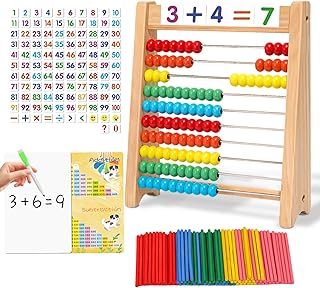


Setting Up Your Mental Abacus: Choosing the right number of beads and configuring your mental abacus for optimal use
To set up your mental abacus effectively, it's crucial to select the appropriate number of beads. A traditional abacus typically has 100 beads, but for mental calculation, you might want to start with a smaller number to avoid overwhelming your working memory. Begin with a 20-bead abacus, which is sufficient for basic arithmetic operations. As you become more proficient, you can gradually increase the number of beads to enhance your computational capabilities.
Configuring your mental abacus involves visualizing the beads in a clear and organized manner. Imagine the abacus in your mind's eye, with each rod containing a specific number of beads. Assign a value to each bead, starting from the rightmost bead as the units place, moving left to the tens, hundreds, and so on. This spatial arrangement is essential for performing calculations accurately and efficiently.
Practice is key to mastering the mental abacus. Start with simple addition and subtraction problems, using the beads to represent the numbers visually. As you gain confidence, progress to more complex operations like multiplication and division. Remember to maintain a clear mental image of the abacus throughout each calculation, adjusting the beads as needed to reflect the changes in value.
One common mistake when using a mental abacus is losing track of the bead positions, especially during lengthy calculations. To avoid this, develop a system for keeping the abacus aligned in your mind. For example, you can use a mental anchor, such as a specific object or phrase, to help you maintain the correct orientation of the abacus.
In addition to choosing the right number of beads and configuring the abacus properly, it's essential to cultivate a calm and focused mindset. Mental calculation can be challenging, and distractions can easily disrupt your concentration. Practice mindfulness techniques, such as deep breathing and visualization, to help you stay centered and attentive during your mental abacus exercises.
By following these guidelines and dedicating time to practice, you can set up your mental abacus for optimal use and unlock the full potential of this powerful computational tool.
Exploring Psychoactive Drugs: A Guide to Substances That Slow Mental and Physical Activity
You may want to see also
Explore related products


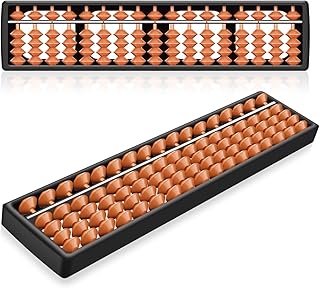
Basic Operations on Mental Abacus: Learning addition, subtraction, multiplication, and division using a mental abacus
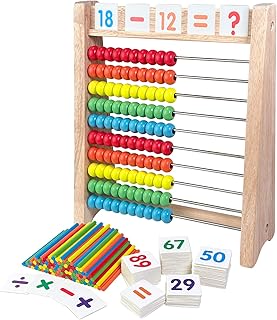
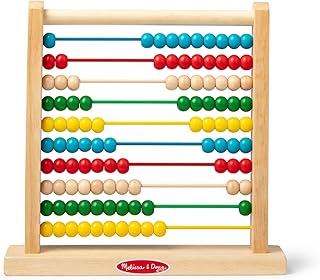
To perform basic operations on a mental abacus, it's essential to first understand the layout and functionality of this virtual tool. A mental abacus consists of two beads on each rod, representing units and fives. The rods are organized in a specific order, typically starting with the units place on the right and moving left to the tens, hundreds, and so on.
Addition on a mental abacus involves moving beads to the right to increase their value. For example, to add 3 to 7, you would start with the beads in the units place, moving one bead to the right to represent 8. If you need to add more than 9, you'll need to carry over to the next place value.
Subtraction requires moving beads to the left. To subtract 4 from 9, you would move one bead to the left in the units place, leaving 5. If you need to subtract a larger number, you may need to borrow from the next place value.
Multiplication on a mental abacus can be more complex. One method is to use the distributive property, breaking down the multiplication into smaller, more manageable parts. For instance, to multiply 6 by 7, you could think of it as 6 times 5 plus 6 times 2, moving the beads accordingly for each part.
Division involves separating the beads into groups. To divide 18 by 3, you would group the beads in the tens and units place into three equal parts, moving them to the appropriate rods. This process may require some trial and error to find the correct grouping.
As you practice these basic operations, you'll become more comfortable with the mental abacus and be able to perform calculations more quickly and efficiently. Remember to start with simple problems and gradually work your way up to more complex ones. With time and practice, you'll be able to use your mental abacus for a wide range of mathematical tasks.
Unveiling the Mind: Understanding the Psychological Impact of Life's Challenges
You may want to see also
Explore related products


Advanced Techniques for Mental Abacus: Mastering square roots, percentages, and decimal calculations with a mental abacus
To master advanced techniques for mental abacus, it's essential to first understand the basics of how a mental abacus works. A mental abacus is a tool that allows you to perform arithmetic calculations in your head by visualizing a physical abacus. The key to mastering square roots, percentages, and decimal calculations with a mental abacus lies in understanding how to manipulate the beads on the abacus in your mind.
For square roots, the process involves finding the prime factors of the number and then using the abacus to calculate the square root of each factor. For example, to find the square root of 144, you would first factor it into 12 x 12. Then, you would use the abacus to calculate the square root of 12, which is 3.464. Finally, you would square 3.464 to get the approximate square root of 144, which is 12.
Percentages can be calculated using a mental abacus by first converting the percentage to a decimal and then multiplying it by the number you want to find the percentage of. For example, to find 25% of 200, you would first convert 25% to 0.25. Then, you would use the abacus to multiply 0.25 by 200, which gives you 50.
Decimal calculations with a mental abacus can be challenging, but they can be simplified by using a technique called "decimalization." This involves multiplying the decimal number by a power of 10 to convert it to a whole number, performing the calculation, and then dividing the result by the same power of 10. For example, to add 0.45 and 0.78, you would first multiply both numbers by 100 to get 45 and 78. Then, you would use the abacus to add 45 and 78, which gives you 123. Finally, you would divide 123 by 100 to get the result, which is 1.23.
Mastering these advanced techniques for mental abacus requires practice and patience. It's important to start with simple calculations and gradually work your way up to more complex ones. With time and effort, you can develop the skills to perform advanced arithmetic calculations in your head with ease.
Exploring the Intricacies: Mental and Emotional Well-being Unveiled
You may want to see also
Explore related products


Practice and Memory Techniques: Developing memory skills and practicing regularly to enhance mental abacus proficiency
To enhance mental abacus proficiency, it's crucial to develop robust memory skills and engage in consistent practice. One effective technique is the method of loci, also known as the memory palace technique. This involves visualizing a familiar place, such as your home, and associating each room or object with a specific piece of information you want to remember. For example, you could imagine a mental abacus in your living room and visualize the beads moving as you perform calculations.
Another memory technique is chunking, which involves grouping information into smaller, more manageable pieces. When learning to use a mental abacus, you can chunk the abacus into smaller sections and focus on mastering one section at a time. This approach can help reduce cognitive load and make it easier to recall information during calculations.
Regular practice is also essential for improving mental abacus skills. Set aside dedicated time each day to practice mental calculations using your abacus. Start with simple addition and subtraction problems and gradually increase the complexity as you become more comfortable. It's important to practice consistently, even if it's just for a few minutes each day.
In addition to these techniques, it's helpful to incorporate mnemonic devices into your practice routine. Mnemonics are memory aids that help you associate new information with something you already know. For example, you could use the acronym PEMDAS (Parentheses, Exponents, Multiplication and Division, Addition and Subtraction) to remember the order of operations when performing mental calculations.
Finally, consider using visualization techniques to enhance your mental abacus proficiency. Visualization involves mentally rehearsing the steps of a calculation before actually performing it. This can help solidify the information in your memory and improve your overall calculation speed and accuracy.
By incorporating these memory techniques and regular practice into your routine, you can significantly enhance your mental abacus proficiency and improve your ability to perform complex calculations quickly and accurately.
Exploring the Intricacies of Mental Processes: A Deep Dive
You may want to see also