 Ava Ramirez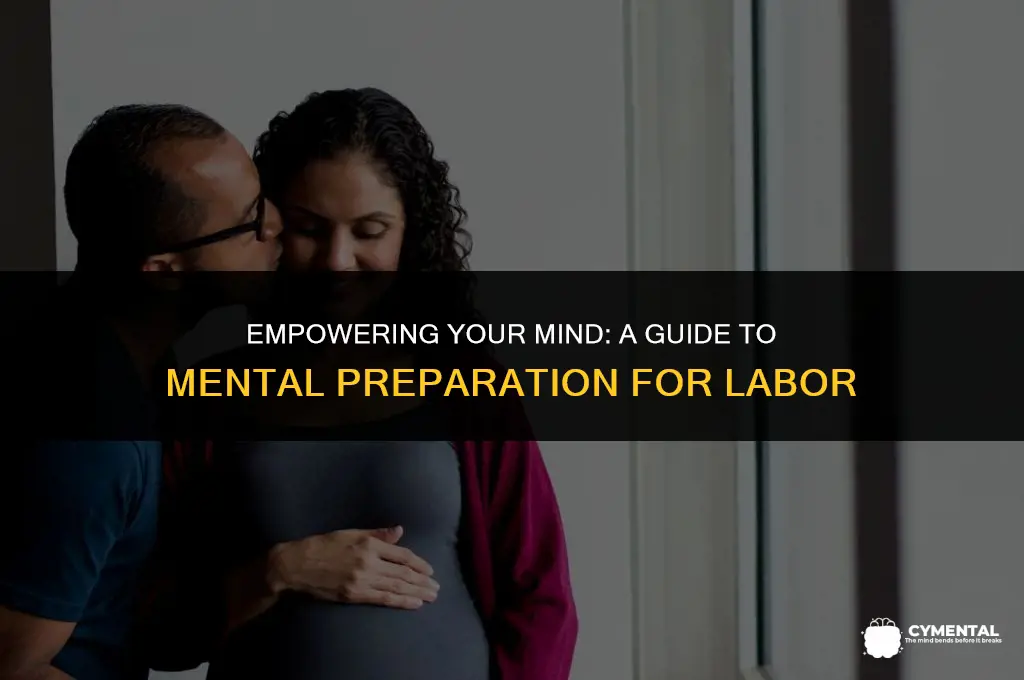
Preparing mentally for labor is a crucial aspect of the childbirth process that is often overlooked. It involves cultivating a positive mindset, managing fears and anxieties, and developing coping strategies to handle the challenges of labor. This preparation can significantly impact a person's experience and outcome during childbirth. By focusing on mental readiness, individuals can enhance their resilience, reduce stress, and approach labor with confidence. Techniques such as visualization, deep breathing exercises, and mindfulness practices can be instrumental in achieving a state of mental preparedness. Additionally, understanding the stages of labor and what to expect can alleviate uncertainty and empower individuals to make informed decisions throughout the process.
Explore related products


What You'll Learn
- Breathing Techniques: Practice deep, rhythmic breathing to manage pain and anxiety during labor
- Visualization: Imagine a smooth, successful labor and delivery to build confidence and reduce fear
- Relaxation Methods: Use techniques like progressive muscle relaxation to stay calm and focused
- Positive Affirmations: Repeat encouraging statements to yourself to maintain a positive mindset
- Education: Learn about the labor process to understand what to expect and make informed decisions

Breathing Techniques: Practice deep, rhythmic breathing to manage pain and anxiety during labor
Deep, rhythmic breathing is a powerful tool that can help manage pain and anxiety during labor. This technique, often referred to as diaphragmatic breathing, involves taking slow, deep breaths that engage the diaphragm, a large muscle located beneath the lungs. When practiced regularly, this type of breathing can help reduce stress, promote relaxation, and even alleviate physical discomfort.
To practice diaphragmatic breathing, find a comfortable position, either sitting or lying down. Place one hand on your abdomen and the other on your chest. Inhale slowly through your nose, allowing your abdomen to rise while keeping your chest relatively still. This ensures that you are using your diaphragm to breathe deeply. Hold the breath for a few seconds, and then exhale slowly through your mouth, allowing your abdomen to fall. Repeat this process several times, focusing on the sensation of your breath and the movement of your diaphragm.
During labor, this breathing technique can be particularly helpful in managing pain and anxiety. When you feel a contraction coming on, try to maintain your deep, rhythmic breathing. This can help you stay relaxed and focused, which in turn can reduce the intensity of the pain. Additionally, deep breathing can help increase oxygen flow to your body, which is beneficial for both you and your baby.
It's important to note that while deep breathing can be very effective, it may not eliminate pain entirely. However, it can help you cope with the discomfort and stay calm during the labor process. Practicing this technique regularly in the weeks leading up to labor can help you develop the skill and make it easier to use during the actual event.
In summary, deep, rhythmic breathing is a simple yet powerful technique that can help manage pain and anxiety during labor. By practicing this technique regularly, you can develop the skill to use it effectively when you need it most. Remember, staying calm and focused during labor can have a positive impact on both you and your baby, so it's worth taking the time to practice this valuable skill.
Understanding Mental Load: The Invisible Weight We Carry
You may want to see also
Explore related products


Visualization: Imagine a smooth, successful labor and delivery to build confidence and reduce fear
Visualization is a powerful tool that can significantly impact your mental preparation for labor. By vividly imagining a smooth and successful labor and delivery, you can build confidence and reduce fear, setting a positive tone for the entire experience. This technique involves creating a mental movie of your ideal childbirth scenario, complete with all the sights, sounds, and sensations you would like to experience.
To begin, find a quiet and comfortable place where you can relax without distractions. Close your eyes and take a few deep breaths to center yourself. Once you feel calm and focused, start to visualize your labor and delivery. Imagine yourself in a peaceful environment, surrounded by supportive people who are there to help you. See yourself progressing through labor with ease, using your breathing techniques and coping strategies effectively.
As you visualize, pay attention to the details. Picture the room where you will give birth, the clothes you will wear, and even the music you might listen to. Imagine your baby moving down the birth canal and the moment of delivery, focusing on the joy and relief you will feel when you finally hold your baby in your arms. By creating a vivid and positive mental image, you can help to reduce anxiety and increase your sense of control over the birthing process.
Visualization can also be a useful tool for addressing specific fears or concerns you may have about labor. For example, if you are worried about pain management, you can visualize yourself using different techniques to cope with discomfort, such as breathing exercises, massage, or medication. By mentally rehearsing these strategies, you can build confidence in your ability to handle whatever challenges may arise during labor.
In addition to reducing fear and building confidence, visualization can also help you to communicate more effectively with your healthcare provider. By having a clear mental picture of your ideal labor and delivery, you can better articulate your preferences and needs to your doctor or midwife. This can lead to a more personalized and satisfying birthing experience.
Remember, visualization is a skill that takes practice. Set aside time each day to work on your mental imagery, and be patient with yourself as you develop this skill. With consistent effort, you can use visualization to create a positive and empowering mindset for your labor and delivery.
Mind Over Matter: Your Guide to Mental Prep for Surgery
You may want to see also
Explore related products


Relaxation Methods: Use techniques like progressive muscle relaxation to stay calm and focused
Progressive muscle relaxation (PMR) is a technique that can be incredibly beneficial for expectant mothers preparing for labor. This method involves tensing and relaxing different muscle groups in a systematic way to release physical tension and promote mental calmness. To practice PMR, find a comfortable position, either seated or lying down, and begin by taking a few deep breaths to center yourself. Start with your feet and work your way up, tensing each muscle group for about five seconds before releasing and moving on to the next. This process can help you become more aware of your body and better able to manage the physical sensations associated with labor.
In addition to PMR, visualization techniques can also be helpful in staying calm and focused during labor. Visualization involves creating mental images of positive outcomes and scenarios, which can help to reduce anxiety and build confidence. To practice visualization, close your eyes and imagine yourself in a peaceful, relaxing environment, such as a beach or a forest. Picture yourself feeling calm and in control, and visualize the labor process going smoothly. This technique can be particularly useful during moments of intense physical sensation or when facing challenges during labor.
Another relaxation method to consider is mindfulness meditation. Mindfulness involves being present in the moment and observing your thoughts and feelings without judgment. This practice can help you to stay grounded and focused during labor, even when faced with unexpected situations. To practice mindfulness meditation, find a quiet and comfortable place to sit or lie down, and focus on your breath. When your mind begins to wander, gently bring your attention back to your breath. This simple yet powerful technique can help you to cultivate a sense of inner peace and resilience that can be invaluable during labor.
It's also important to consider the role of breathing techniques in relaxation and mental preparation for labor. Deep, slow breathing can help to reduce stress and anxiety, and can also aid in managing pain during labor. To practice deep breathing, sit or lie down in a comfortable position, and inhale slowly through your nose, allowing your belly to rise. Exhale slowly through your mouth, feeling your body relax as you release the breath. This technique can be used throughout labor to help you stay calm and focused.
Finally, don't underestimate the power of positive self-talk and affirmations. Speaking to yourself in a kind and supportive way can help to build confidence and reduce anxiety. Create a list of positive affirmations related to labor and childbirth, such as "I am strong and capable," "I can handle whatever comes my way," and "I am excited to meet my baby." Repeat these affirmations to yourself regularly, especially during moments of doubt or fear. This simple practice can help to shift your mindset and promote a more positive outlook on the labor process.
Exploring In-Service Education: Enhancing Skills Within the Workplace
You may want to see also
Explore related products


Positive Affirmations: Repeat encouraging statements to yourself to maintain a positive mindset
During labor, maintaining a positive mindset can significantly impact your experience and outcome. One effective way to achieve this is through the practice of positive affirmations. Affirmations are encouraging statements that you repeat to yourself, which can help to boost your confidence, reduce anxiety, and promote a sense of calm and control.
To get started with positive affirmations, find a quiet and comfortable space where you can focus on your breathing and the statements you'll be repeating. Begin by choosing a few affirmations that resonate with you, such as "I am strong and capable," "I can do this," or "My body is designed for this." You can also create your own affirmations that are specific to your fears or concerns about labor.
Repeat your chosen affirmations to yourself regularly, ideally several times a day. You can say them out loud or silently to yourself, whichever feels more comfortable. As you repeat the affirmations, try to visualize yourself successfully navigating labor and bringing your baby into the world. This can help to reinforce the positive messages and create a mental image of success.
It's important to note that positive affirmations are not a magic solution, and they may not eliminate all of your fears or anxieties about labor. However, they can be a helpful tool in your mental preparation toolkit, and they can help you to approach labor with a more positive and empowered mindset.
In addition to practicing positive affirmations, there are other ways to mentally prepare for labor. These may include attending childbirth education classes, creating a birth plan, and discussing your fears and concerns with your healthcare provider. By combining these strategies with positive affirmations, you can develop a comprehensive approach to mental preparation that can help you feel more confident and in control as you approach labor.
Understanding Masculine Development: At What Age Do Men Reach Mental Maturity?
You may want to see also
Explore related products


Education: Learn about the labor process to understand what to expect and make informed decisions
Understanding the labor process is crucial for expectant mothers as it empowers them to make informed decisions and better manage their expectations. Education about labor can significantly reduce anxiety and fear, leading to a more positive and proactive approach to childbirth. This knowledge can be gained through various sources such as childbirth education classes, online resources, books, and discussions with healthcare providers.
Childbirth education classes are often the most comprehensive source of information. These classes cover a wide range of topics including the stages of labor, pain management techniques, breathing exercises, and the role of the support person. They also provide an opportunity for expectant mothers to ask questions and address any concerns they may have. Online resources and books can offer additional information and are particularly useful for those who prefer self-paced learning. However, it is important to ensure that the information obtained from these sources is credible and evidence-based.
Healthcare providers are another valuable resource for learning about the labor process. They can provide personalized advice based on the individual's health status and medical history. Discussions with healthcare providers can also help clarify any misconceptions and provide reassurance.
In addition to understanding the labor process, it is also important for expectant mothers to be aware of their rights and options in childbirth. This includes knowledge about different birthing positions, the use of medical interventions such as epidurals and inductions, and the possibility of a cesarean section. Being informed about these options allows mothers to make decisions that align with their preferences and values.
Ultimately, education about the labor process is a key component of mental preparation for childbirth. It helps expectant mothers to set realistic expectations, develop coping strategies, and feel more in control of their birthing experience. By investing time in learning about labor, mothers can approach childbirth with confidence and a sense of empowerment.
Understanding Mental Competence: A Comprehensive Guide
You may want to see also
Frequently asked questions
Effective relaxation techniques include deep breathing exercises, progressive muscle relaxation, visualization, and meditation. These practices can help reduce stress and anxiety, promoting a sense of calm and control.
Mental preparation for labor pain involves developing a positive mindset, setting realistic expectations, and practicing coping strategies such as distraction techniques, affirmations, and focusing on the end goal of meeting your baby.
A strong support system, including partners, family, and friends, can provide emotional encouragement, practical assistance, and help in decision-making during labor. Having trusted individuals by your side can significantly enhance your mental readiness and overall birthing experience.


