Ava Ramirez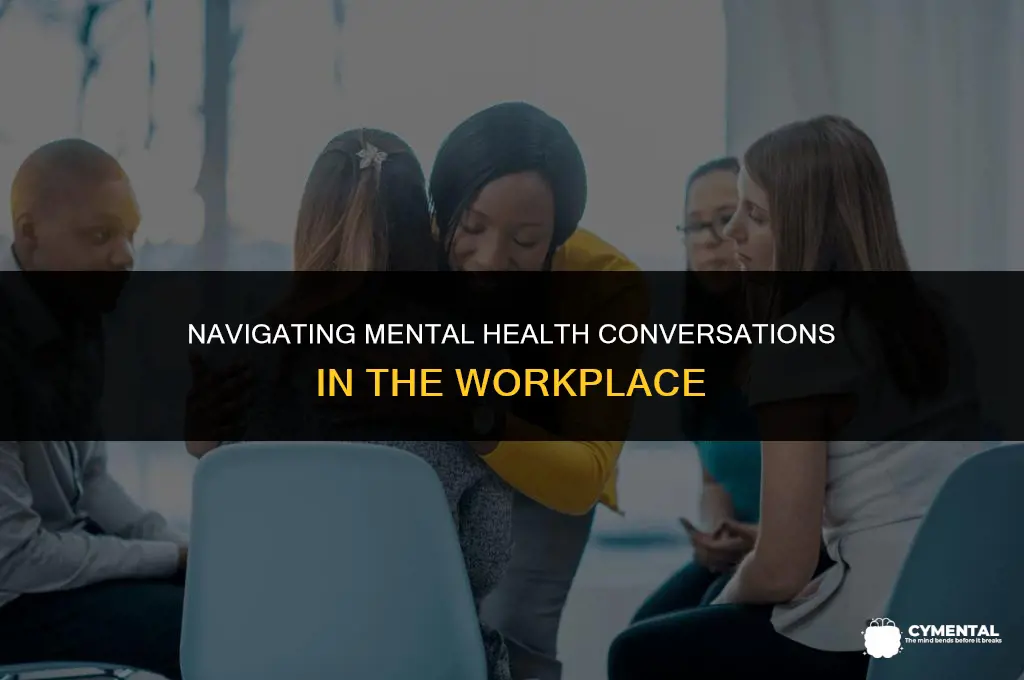
Talking about mental health at work can be a challenging yet crucial conversation. It's important to approach the topic with sensitivity and an open mind. Begin by acknowledging the stigma that often surrounds mental health discussions and express a commitment to creating a supportive and inclusive work environment. Highlight the benefits of addressing mental health issues in the workplace, such as increased productivity, improved employee well-being, and stronger team dynamics. Encourage employees to share their experiences and concerns, and be prepared to listen actively and offer resources or support. Remember to maintain confidentiality and respect each individual's privacy. By fostering a culture of openness and understanding, you can help break down barriers and promote a healthier, more positive work atmosphere.
Explore related products


What You'll Learn
- Recognizing Signs: Learn to identify common mental health issues like depression, anxiety, and burnout in colleagues
- Creating Safe Spaces: Foster an open and non-judgmental environment where employees feel comfortable discussing their mental health
- Active Listening: Develop skills to listen attentively and empathetically when colleagues share their mental health concerns
- Offering Support: Provide resources and guidance, such as EAPs (Employee Assistance Programs) or mental health professionals
- Reducing Stigma: Challenge negative perceptions and promote a culture that values mental well-being and seeks to destigmatize mental illness

Recognizing Signs: Learn to identify common mental health issues like depression, anxiety, and burnout in colleagues
Recognizing the signs of mental health issues in colleagues is a crucial step in fostering a supportive work environment. Depression, anxiety, and burnout are common conditions that can affect anyone, and being able to identify these issues early can make a significant difference in helping those affected seek the support they need.
One of the key indicators of depression in a colleague might be a persistent change in mood or behavior. This could manifest as increased irritability, withdrawal from social interactions, or a noticeable decline in productivity. Anxiety, on the other hand, may present as excessive worry or fear, restlessness, or difficulty concentrating. Burnout, often resulting from prolonged stress, can lead to emotional exhaustion, cynicism about work, and reduced performance.
To effectively recognize these signs, it's important to maintain open lines of communication with your colleagues. Regular check-ins, both formal and informal, can provide opportunities to observe changes in behavior and mood. Additionally, fostering a culture of trust and empathy can encourage colleagues to share their struggles openly.
When you notice potential signs of mental health issues, it's essential to approach the situation with sensitivity and without judgment. Offering support and resources, such as information about the company's Employee Assistance Program (EAP) or suggesting they speak with a healthcare professional, can be helpful. Remember, your role is not to diagnose or treat, but to provide guidance and support in accessing the appropriate resources.
In conclusion, being vigilant about the mental health of your colleagues is a vital aspect of creating a healthy and productive workplace. By recognizing the signs of common mental health issues and responding with empathy and support, you can contribute to a culture that values and prioritizes the well-being of its employees.
Exploring Clonidine's Role in Mental Health Treatment
You may want to see also
Explore related products


$7.94 $15.95


Creating Safe Spaces: Foster an open and non-judgmental environment where employees feel comfortable discussing their mental health
To foster an open and non-judgmental environment where employees feel comfortable discussing their mental health, it's crucial to establish clear guidelines and expectations. Start by creating a mental health policy that outlines the company's commitment to supporting employees' mental wellbeing. This policy should include information on available resources, such as counseling services or employee assistance programs, and emphasize the importance of confidentiality and non-discrimination.
Another key step is to train managers and supervisors to recognize the signs of mental health issues and to have open, empathetic conversations with employees. This training should cover active listening skills, how to ask open-ended questions, and how to provide support without judgment. By equipping managers with these skills, you can ensure that employees feel safe approaching their supervisors with concerns about their mental health.
It's also important to promote a culture of transparency and openness throughout the organization. This can be achieved by hosting regular town hall meetings or workshops on mental health topics, where employees can share their experiences and ask questions. Additionally, consider creating an anonymous feedback system where employees can voice their concerns or suggestions about the company's mental health initiatives.
To further foster a safe space, consider implementing flexible work arrangements, such as remote work options or flexible hours, to accommodate employees who may be struggling with mental health issues. This can help reduce stress and improve overall wellbeing.
Finally, it's essential to regularly evaluate and improve your mental health initiatives. Solicit feedback from employees and make adjustments as needed to ensure that your programs are effective and meeting the needs of your workforce. By continuously refining your approach, you can create a workplace where employees feel supported and comfortable discussing their mental health.
Navigating Mental Health Conversations: When Loved Ones Resist Treatment
You may want to see also
Explore related products


Active Listening: Develop skills to listen attentively and empathetically when colleagues share their mental health concerns
To develop active listening skills, it's essential to understand the difference between hearing and listening. Hearing is a passive process where sound waves enter our ears, while listening is an active process that involves our full attention and engagement. When a colleague shares their mental health concerns, they are not just looking for someone to hear them; they are seeking someone who will listen deeply and empathetically. This means putting aside distractions, maintaining eye contact, and focusing on the speaker's words and emotions.
One effective technique for active listening is to use reflective listening, where you paraphrase what the speaker has said to show that you understand their perspective. For example, if a colleague says, "I'm feeling overwhelmed with my workload," you could respond with, "It sounds like you're under a lot of pressure at the moment." This simple act of reflection can help the speaker feel heard and validated, which is crucial when discussing sensitive topics like mental health.
Another important aspect of active listening is to ask open-ended questions that encourage the speaker to share more about their thoughts and feelings. Closed-ended questions, which can be answered with a simple "yes" or "no," often lead to a dead end in the conversation. Instead, try asking questions like, "How does that make you feel?" or "What do you think might help you cope with that situation?" These types of questions can help the speaker explore their emotions and find potential solutions to their problems.
It's also essential to be aware of your own body language and nonverbal cues when listening to a colleague. Leaning forward, nodding your head, and maintaining eye contact can all signal that you are engaged and empathetic. On the other hand, crossing your arms, looking away, or interrupting the speaker can create a barrier to effective communication. By being mindful of your own body language, you can create a safe and supportive environment for your colleague to share their concerns.
Finally, remember that active listening is not about offering advice or trying to fix the problem. It's about being present, empathetic, and supportive. Sometimes, all a colleague needs is someone to listen without judgment or interruption. By developing these skills, you can become a valuable ally and support system for your colleagues, helping to foster a more open and compassionate workplace culture.
Taking the First Step: Self-Admission to a Mental Health Facility
You may want to see also
Explore related products

$9.87 $37


Offering Support: Provide resources and guidance, such as EAPs (Employee Assistance Programs) or mental health professionals
One effective way to support employees' mental health is by providing access to Employee Assistance Programs (EAPs). These programs offer confidential counseling services, typically free of charge, to help employees manage personal and professional challenges. EAPs can be a valuable resource for employees struggling with mental health issues, as they provide a safe space to discuss concerns and develop coping strategies. To ensure employees are aware of these resources, it's essential to communicate the availability and benefits of EAPs through regular announcements, training sessions, or inclusion in employee handbooks.
In addition to EAPs, connecting employees with mental health professionals can be a crucial step in supporting their well-being. This can involve partnering with local therapists or psychiatrists to offer on-site counseling sessions, or providing a list of recommended mental health providers in the area. When employees have easy access to professional support, they are more likely to seek help when needed, leading to improved mental health outcomes and increased job satisfaction.
Another important aspect of offering support is providing guidance on how to recognize and respond to mental health issues in the workplace. This can include training managers and employees on how to identify signs of distress, approach colleagues who may be struggling, and offer appropriate support. By fostering a culture of awareness and understanding, organizations can create an environment where employees feel comfortable discussing their mental health and seeking help when needed.
To further enhance support offerings, organizations can also consider implementing wellness initiatives, such as stress management workshops, mindfulness training, or fitness programs. These initiatives can help employees develop healthy coping mechanisms and improve their overall well-being, reducing the risk of mental health issues and increasing productivity.
Ultimately, offering comprehensive support for employees' mental health requires a multifaceted approach that includes providing access to professional resources, fostering a culture of awareness and understanding, and implementing wellness initiatives. By taking these steps, organizations can create a supportive work environment that promotes mental health and well-being, benefiting both employees and the organization as a whole.
Understanding the Duration of a Mental Health Evaluation: A Comprehensive Guide
You may want to see also
Explore related products


Reducing Stigma: Challenge negative perceptions and promote a culture that values mental well-being and seeks to destigmatize mental illness
One effective strategy for reducing stigma around mental health in the workplace is to incorporate mental health awareness into regular training sessions. This can help normalize discussions about mental well-being and ensure that all employees understand the importance of seeking help when needed. For example, a company might include a module on mental health in its onboarding process for new employees, covering topics such as recognizing signs of mental illness, understanding the impact of stigma, and learning how to support colleagues who may be struggling.
Another approach is to encourage open conversations about mental health by creating safe spaces for employees to share their experiences. This could involve organizing small group discussions, anonymous online forums, or one-on-one meetings with trained mental health advocates. By providing opportunities for employees to talk about their mental health challenges, companies can help break down the barriers that prevent people from seeking help and foster a culture of empathy and support.
Leaders and managers also play a crucial role in reducing stigma by modeling positive behaviors and attitudes towards mental health. When leaders openly discuss their own mental health struggles or prioritize their well-being, it sends a powerful message to employees that it is okay to do the same. Additionally, managers can help reduce stigma by ensuring that mental health is treated as a legitimate reason for time off or accommodations, rather than something to be ashamed of or hidden.
Finally, companies can work to reduce stigma by partnering with mental health organizations and experts to provide resources and support for employees. This might include offering access to mental health professionals, providing educational materials, or sponsoring events that promote mental health awareness. By demonstrating a commitment to mental well-being, companies can help create a workplace culture that values and supports the mental health of all employees.
Exploring Lamotrigine's Role in Mental Health Treatment
You may want to see also
Frequently asked questions
Starting a conversation about mental health at work can be as simple as asking a colleague how they're doing and showing genuine interest in their response. You could also share your own experiences or feelings to create a supportive environment. Remember to choose a private and comfortable setting to ensure the conversation is confidential and respectful.
If a colleague discloses they are struggling with their mental health, it's important to listen without judgment and offer your support. You can say something like, "I'm here for you" or "How can I help?" Avoid giving unsolicited advice or trying to fix the problem. Instead, focus on being a compassionate listener and encourage them to seek professional help if needed.
Creating a more mentally healthy workplace involves fostering a culture of openness, support, and understanding. You can contribute by promoting work-life balance, recognizing and rewarding employees' efforts, and providing resources such as mental health training or access to counseling services. Additionally, encouraging regular breaks, physical activity, and social connections can help improve overall well-being in the workplace.