Ava Ramirez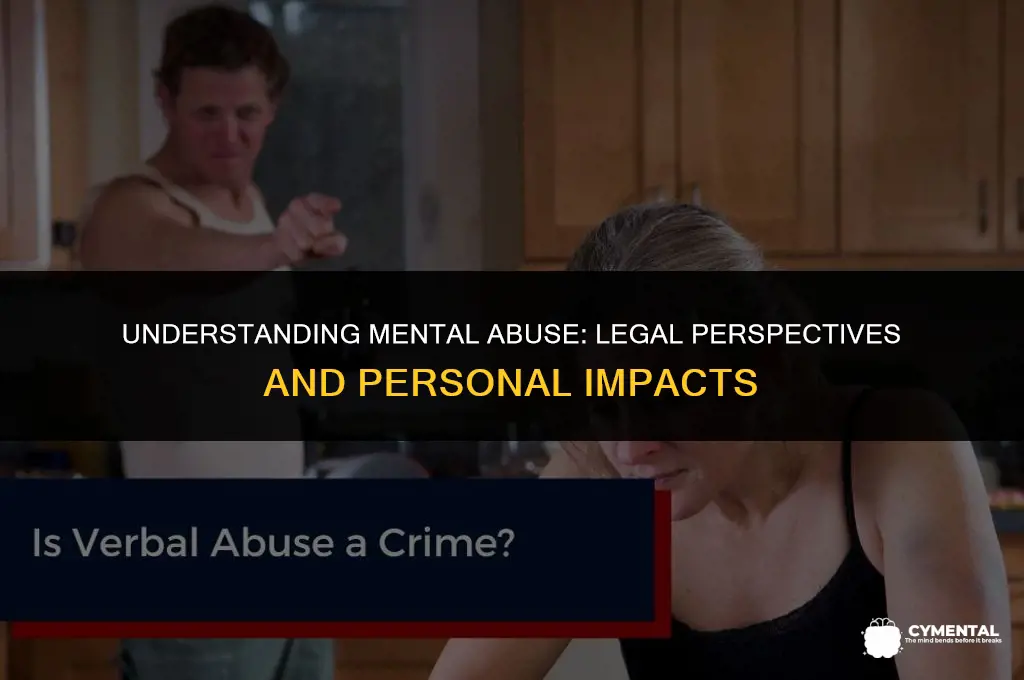
Mental abuse, also known as psychological abuse or emotional abuse, is a form of abuse characterized by the use of tactics that cause psychological trauma to the victim. This can include behaviors such as verbal aggression, intimidation, manipulation, isolation, and gaslighting. While mental abuse can have severe and long-lasting effects on a person's mental health and well-being, the question of whether it constitutes a crime is complex and varies depending on the jurisdiction. In many places, mental abuse is not explicitly criminalized, but it may be considered a form of domestic violence or harassment, which are illegal. However, proving mental abuse can be challenging, as it often leaves no physical evidence and can be difficult to distinguish from other forms of interpersonal conflict. As a result, victims of mental abuse may face significant barriers in seeking legal recourse and protection.
| Characteristics | Values |
|---|---|
| Legal Definition | Mental abuse is not explicitly defined as a crime in many jurisdictions, but it can fall under broader categories of abuse or neglect. |
| Jurisdictional Variations | Laws regarding mental abuse vary significantly by country and even by state within countries. Some places have specific statutes addressing mental abuse, while others do not. |
| Forms of Mental Abuse | Includes verbal abuse, emotional manipulation, gaslighting, isolation, and other forms of psychological mistreatment. |
| Impact on Victims | Can lead to severe psychological trauma, anxiety, depression, post-traumatic stress disorder (PTSD), and other mental health issues. |
| Reporting Mechanisms | Victims can report mental abuse to local authorities, mental health professionals, or support hotlines, though the process and support available vary by location. |
| Prosecution Challenges | Prosecuting mental abuse can be difficult due to the lack of physical evidence and the subjective nature of psychological harm. |
| Penalties | If convicted, perpetrators may face fines, counseling, probation, or in severe cases, imprisonment, depending on the jurisdiction and severity of the abuse. |
| Prevention Strategies | Education and awareness campaigns, mental health support services, and legal protections for victims are key strategies in preventing mental abuse. |
| Support for Victims | Includes therapy, counseling, support groups, and legal assistance to help victims recover and rebuild their lives. |
| Societal Attitudes | There is growing recognition of mental abuse as a serious issue, but stigma and lack of understanding persist in many communities. |
| Research and Statistics | Research on mental abuse is ongoing, with studies focusing on its prevalence, impact, and effective interventions. Statistics vary widely due to differences in reporting and data collection. |
| International Perspectives | Mental abuse is recognized as a human rights violation by various international bodies, but enforcement of these protections remains challenging. |
Explore related products


What You'll Learn
- Definition of Mental Abuse: Understanding the psychological manipulation and emotional harm inflicted on victims
- Legal Recognition: Exploring whether mental abuse is explicitly criminalized under current laws
- Impact on Victims: Discussing the long-term effects of mental abuse on a person's well-being
- Challenges in Prosecution: Addressing the difficulties in proving mental abuse cases in court
- Support and Resources: Highlighting available help and resources for those suffering from mental abuse

Definition of Mental Abuse: Understanding the psychological manipulation and emotional harm inflicted on victims
Mental abuse, also known as psychological abuse or emotional abuse, is a form of abuse characterized by the infliction of emotional and psychological harm on a victim. This type of abuse can take many forms, including verbal abuse, manipulation, intimidation, and isolation. It is often used as a means of controlling and dominating another person, and can have severe and long-lasting effects on the victim's mental health and well-being.
One of the key aspects of mental abuse is the use of psychological manipulation. This can involve tactics such as gaslighting, where the abuser tries to make the victim doubt their own perceptions and sanity, or love bombing, where the abuser showers the victim with excessive attention and affection in order to gain their trust and loyalty. These tactics can be extremely effective in breaking down the victim's defenses and making them more susceptible to further abuse.
Another common form of mental abuse is verbal abuse, which can include name-calling, insults, and threats. This type of abuse can be particularly damaging, as it can erode the victim's self-esteem and confidence over time. In addition, mental abuse can also involve physical actions, such as withholding food, medication, or sleep, or isolating the victim from friends and family.
The effects of mental abuse can be severe and long-lasting, and can include anxiety, depression, post-traumatic stress disorder (PTSD), and even suicidal thoughts and behaviors. Victims of mental abuse may also experience physical symptoms, such as headaches, stomachaches, and sleep disturbances. It is important to recognize the signs of mental abuse and to seek help if you or someone you know is experiencing it.
In conclusion, mental abuse is a serious form of abuse that can have severe and long-lasting effects on the victim's mental and physical health. It is important to be aware of the signs of mental abuse and to seek help if you or someone you know is experiencing it. Remember, you are not alone, and there is help available.
Understanding Mental Crashes: A Guide to Recognizing and Recovering
You may want to see also
Explore related products




Legal Recognition: Exploring whether mental abuse is explicitly criminalized under current laws
In the realm of legal recognition, the explicit criminalization of mental abuse varies significantly across jurisdictions. While some countries have specific statutes addressing mental abuse, others may prosecute such cases under broader laws related to assault, battery, or emotional distress. For instance, in the United States, mental abuse is not a standalone federal crime, but it can be prosecuted under state laws that vary widely in their definitions and penalties.
One of the challenges in criminalizing mental abuse is the difficulty in defining and proving its occurrence. Unlike physical abuse, which often leaves visible marks, mental abuse can be more insidious and harder to detect. Prosecutors must rely on the testimony of victims, which can be influenced by the psychological impact of the abuse itself. Additionally, the subjective nature of mental abuse means that what one person considers abusive, another might not.
Despite these challenges, there is a growing recognition of the need to address mental abuse within legal frameworks. Some countries, such as the United Kingdom, have introduced specific offenses related to controlling or coercive behavior, which can encompass mental abuse. These laws aim to provide victims with greater protection and support, as well as to hold perpetrators accountable for their actions.
In exploring the legal recognition of mental abuse, it is also important to consider the role of mental health professionals in identifying and documenting abuse. These professionals often serve as the first line of defense against mental abuse, and their expertise can be crucial in building legal cases against perpetrators. However, there can be ethical and legal complexities involved in their involvement, such as issues related to patient confidentiality and the potential for false accusations.
Ultimately, the legal recognition of mental abuse is a complex and evolving area of law. While there have been significant strides in recent years, there is still much work to be done to ensure that victims of mental abuse receive the protection and support they deserve. This includes ongoing efforts to refine legal definitions, improve the training of legal and mental health professionals, and raise awareness about the prevalence and impact of mental abuse.
Understanding Mental Competence: A Comprehensive Guide
You may want to see also
Explore related products





Impact on Victims: Discussing the long-term effects of mental abuse on a person's well-being
Mental abuse can have profound and long-lasting effects on a person's well-being, often extending far beyond the immediate impact of the abuse itself. Victims may experience a range of psychological, emotional, and even physical consequences that can significantly alter their quality of life. One of the most common long-term effects is the development of mental health disorders such as depression, anxiety, and post-traumatic stress disorder (PTSD). These conditions can be debilitating, making it difficult for victims to function in their daily lives, maintain relationships, or hold down a job.
In addition to mental health issues, victims of mental abuse may also struggle with a diminished sense of self-worth and self-esteem. The constant barrage of criticism, belittling, and manipulation can erode a person's confidence and make them feel worthless or incapable. This can lead to a range of negative behaviors, including self-harm, substance abuse, and suicidal ideation. Furthermore, the impact of mental abuse can extend to physical health, with victims often reporting chronic pain, sleep disturbances, and a weakened immune system.
The long-term effects of mental abuse can also be seen in the way victims interact with others. They may become withdrawn and isolated, fearing further abuse or rejection. Alternatively, they may develop unhealthy attachment styles, either becoming overly dependent on others or avoiding intimacy altogether. This can make it difficult for victims to form and maintain healthy relationships, which is essential for their overall well-being.
It is important to note that the impact of mental abuse can vary greatly from person to person, depending on factors such as the severity and duration of the abuse, the victim's age and developmental stage, and their individual resilience and coping mechanisms. However, regardless of these factors, mental abuse is a serious issue that can have far-reaching consequences for victims. It is essential that we recognize the signs of mental abuse and provide support and resources to those who have been affected.
In conclusion, mental abuse is a crime that can have devastating long-term effects on a person's well-being. Victims may experience a range of psychological, emotional, and physical consequences that can significantly alter their quality of life. It is crucial that we take mental abuse seriously and provide support and resources to those who have been affected, in order to help them heal and rebuild their lives.
Unlock Your Potential: Guide to Becoming a Certified Mental Performance Consultant
You may want to see also
Explore related products






Challenges in Prosecution: Addressing the difficulties in proving mental abuse cases in court
Prosecuting mental abuse cases presents a myriad of challenges that often hinder the successful conviction of perpetrators. One of the primary difficulties lies in the intangible nature of mental abuse, which lacks the physical evidence typically associated with other forms of assault. This absence of concrete proof makes it challenging for prosecutors to build a compelling case that can withstand the scrutiny of a courtroom.
Another significant obstacle is the subjective experience of mental abuse, which can vary greatly from one individual to another. What may be perceived as abusive by one person might be dismissed as mere stress or pressure by another. This subjectivity complicates the process of establishing a clear and consistent definition of mental abuse that can be applied universally in legal proceedings.
Furthermore, mental abuse often occurs in private settings, making it difficult to obtain eyewitness testimony or other forms of corroborating evidence. Victims may also be reluctant to come forward due to fear of retaliation, shame, or disbelief that their experiences will be taken seriously by the legal system. This reluctance can further undermine the prosecution's ability to build a strong case.
To address these challenges, prosecutors must rely on a combination of expert testimony, psychological evaluations, and careful documentation of the victim's experiences. They must also be adept at navigating the complex emotional and psychological dynamics involved in mental abuse cases, in order to effectively communicate the severity of the crime to judges and juries.
Ultimately, the successful prosecution of mental abuse cases requires a nuanced understanding of the psychological impact of such abuse, as well as a strategic approach to gathering and presenting evidence. By addressing these challenges head-on, prosecutors can work towards ensuring that perpetrators of mental abuse are held accountable for their actions and that victims receive the justice they deserve.
Empowering Minds: Mental Preparation for a C-Section Journey
You may want to see also
Explore related products




Support and Resources: Highlighting available help and resources for those suffering from mental abuse
Victims of mental abuse often feel isolated and unsure of where to turn for help. It's crucial to recognize that support is available and that there are resources designed specifically to aid those suffering from this form of abuse. One of the first steps towards recovery is reaching out to a trusted friend or family member, but professional help is also essential. Mental health professionals, such as therapists and counselors, are trained to recognize the signs of mental abuse and can provide a safe space for victims to discuss their experiences and develop coping strategies.
In addition to individual therapy, support groups can be incredibly beneficial for victims of mental abuse. These groups provide a sense of community and allow individuals to share their experiences with others who have gone through similar situations. Support groups can be found through local mental health organizations, online platforms, or by contacting a national helpline. It's important to note that these groups are typically confidential, ensuring that participants feel comfortable sharing their stories without fear of judgment or retaliation.
Legal resources are also available for victims of mental abuse. While mental abuse can be difficult to prove, it is a recognized form of domestic violence in many jurisdictions, and victims may be eligible for legal protections such as restraining orders or counseling services. It's essential to consult with a legal professional who specializes in domestic violence cases to understand the available options and to develop a plan for seeking justice and protection.
Finally, self-care is a critical component of recovery from mental abuse. Victims should prioritize their physical and emotional well-being by engaging in activities that promote relaxation and stress reduction, such as exercise, meditation, or spending time in nature. It's also important to establish healthy boundaries and to practice self-compassion. Remember, recovery from mental abuse is a journey, and it's okay to take things one step at a time.
Everyday Good Deeds: Making a Positive Impact One Action at a Time
You may want to see also
Frequently asked questions
Yes, mental abuse is considered a crime in many jurisdictions. It falls under the category of psychological abuse and can be charged as a form of assault or battery, depending on the specific laws of the region.
Mental abuse can include a range of behaviors such as verbal abuse, emotional manipulation, gaslighting, intimidation, and isolation. It often involves a pattern of behavior that is intended to control, belittle, or demean the victim.
Mental abuse can be proven in court through a combination of evidence, including witness testimony, documentation of incidents, and expert testimony from mental health professionals. It is important to have a thorough understanding of the specific laws and requirements in your jurisdiction to effectively pursue a case involving mental abuse.