Madison Cole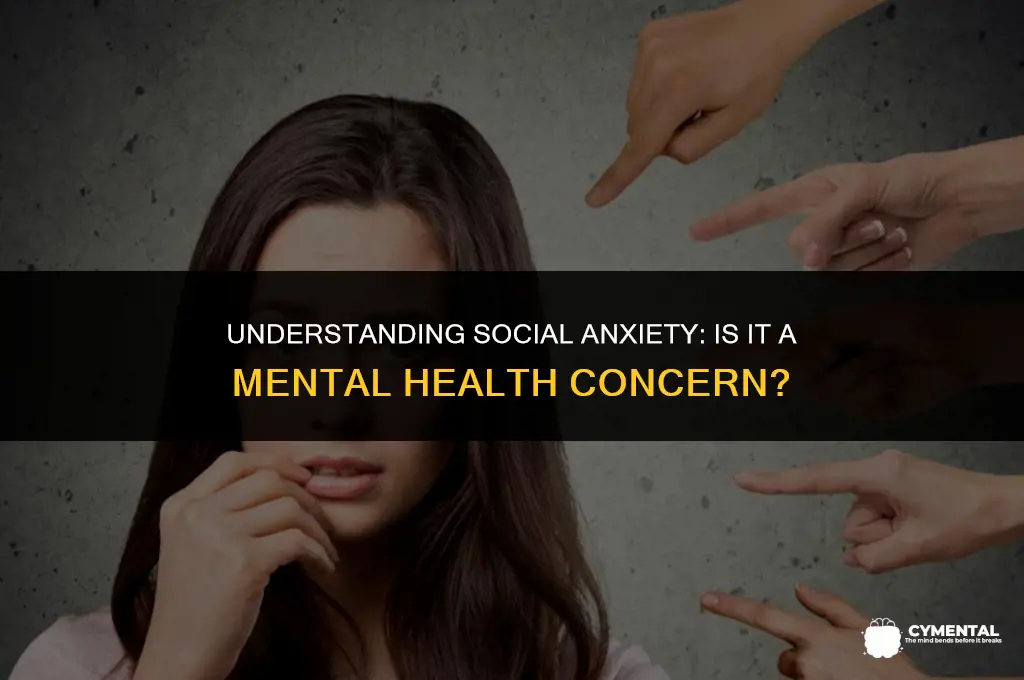
Social anxiety is a prevalent mental health issue characterized by an excessive and persistent fear of social situations. It goes beyond typical shyness or nervousness, significantly impacting an individual's daily life and interactions. People with social anxiety disorder often avoid social gatherings, experience intense anxiety in performance situations, and struggle with forming and maintaining relationships. This condition can lead to feelings of isolation, low self-esteem, and even depression if left untreated. Understanding social anxiety as a mental health issue is crucial for providing appropriate support and interventions to those affected.
| Characteristics | Values |
|---|---|
| Definition | Social anxiety is a common anxiety disorder where a person has an excessive and unreasonable fear of social situations. |
| Symptoms | Avoidance of social situations, intense anxiety in social settings, physical symptoms like sweating and trembling. |
| Causes | Genetic predisposition, environmental factors, and learned behaviors. |
| Diagnosis | Typically diagnosed by a mental health professional through clinical evaluation and possibly questionnaires. |
| Treatment | Cognitive-behavioral therapy (CBT), medication, and lifestyle changes. |
| Prognosis | Generally positive with effective treatment, though it may be a long-term condition requiring ongoing management. |
| Impact on Daily Life | Can significantly affect daily functioning, relationships, and overall quality of life. |
| Commonality | It is one of the most common anxiety disorders, affecting millions of people worldwide. |
| Age of Onset | Often begins in adolescence, but can occur at any age. |
| Comorbidities | Frequently occurs with other mental health issues such as depression and substance abuse disorders. |
Explore related products


What You'll Learn
- Definition and Symptoms: Understanding what social anxiety is and recognizing its common symptoms
- Causes and Risk Factors: Exploring potential causes and identifying risk factors that contribute to social anxiety
- Impact on Daily Life: Discussing how social anxiety can affect relationships, work, and overall quality of life
- Diagnosis and Treatment Options: Learning about diagnostic criteria and available treatment options for social anxiety
- Coping Strategies and Support: Finding ways to manage social anxiety through coping strategies and seeking support

Definition and Symptoms: Understanding what social anxiety is and recognizing its common symptoms
Social anxiety is a pervasive mental health condition characterized by an intense and persistent fear of social situations. It goes beyond mere shyness or nervousness, significantly impacting an individual's ability to function in daily life. People with social anxiety disorder (SAD) often avoid social interactions or experience severe distress in them, which can lead to isolation and a diminished quality of life.
Recognizing the symptoms of social anxiety is crucial for early intervention and treatment. Common symptoms include excessive sweating, trembling, nausea, rapid heartbeat, and difficulty breathing in social situations. Individuals may also experience intense fear of being watched or judged by others, avoidance of eye contact, and a tendency to withdraw from social engagements. These symptoms can manifest in various social contexts, such as public speaking, meeting new people, or even in everyday interactions like grocery shopping or using public transportation.
It's important to note that social anxiety can manifest differently in different individuals. Some may experience generalized anxiety in most social situations, while others may have specific phobias related to certain contexts, such as public speaking or eating in public. Understanding these nuances is essential for accurate diagnosis and effective treatment planning.
In addition to the emotional and psychological symptoms, social anxiety can also have physical manifestations. Chronic stress and anxiety can lead to a range of physical health issues, including headaches, muscle tension, and gastrointestinal problems. These physical symptoms can further exacerbate the emotional distress associated with social anxiety, creating a vicious cycle that can be challenging to break without proper intervention.
Seeking professional help is crucial for individuals struggling with social anxiety. Mental health professionals can provide a comprehensive assessment and develop a tailored treatment plan that may include cognitive-behavioral therapy (CBT), medication, or a combination of both. With the right support and treatment, individuals with social anxiety can learn to manage their symptoms and improve their overall well-being.
Supporting Mental Health: Effective Strategies for Managing and Empowering Individuals
You may want to see also
Explore related products

$60


Causes and Risk Factors: Exploring potential causes and identifying risk factors that contribute to social anxiety
Social anxiety disorder, also known as social phobia, is a complex mental health condition influenced by a variety of factors. Research suggests that genetic predisposition plays a significant role, with studies indicating that individuals with a family history of anxiety disorders are more likely to develop social anxiety. Additionally, brain structure and function, particularly in regions associated with fear and emotional regulation, may contribute to the development of this condition.
Environmental factors also play a crucial role in the onset of social anxiety. Traumatic experiences, such as bullying, abuse, or neglect, can lead to the development of anxiety disorders. Furthermore, social and cultural factors, including societal expectations and norms, can exacerbate feelings of anxiety and self-consciousness in social situations. For example, individuals from cultures that place a high value on social harmony and conformity may be more prone to social anxiety.
Personality traits, such as introversion and neuroticism, have been linked to an increased risk of developing social anxiety disorder. Individuals with these traits may be more susceptible to feelings of anxiety and self-doubt in social situations. Moreover, learned behaviors and coping mechanisms, such as avoidance and safety-seeking behaviors, can reinforce and perpetuate social anxiety.
It is also important to consider the role of cognitive factors in the development and maintenance of social anxiety. Negative thought patterns, such as catastrophizing and self-criticism, can contribute to feelings of anxiety and self-consciousness. Additionally, attentional biases, where individuals focus on potential threats or negative stimuli in social situations, can exacerbate anxiety symptoms.
In conclusion, social anxiety disorder is a multifaceted condition influenced by a combination of genetic, environmental, personality, and cognitive factors. Understanding these factors can help individuals and mental health professionals develop effective strategies for preventing and treating social anxiety.
Healing Minds: Practical Steps to Overcome Mental Health Challenges
You may want to see also
Explore related products


Impact on Daily Life: Discussing how social anxiety can affect relationships, work, and overall quality of life
Social anxiety can have a profound impact on an individual's daily life, affecting various aspects such as relationships, work, and overall quality of life. One of the most significant ways social anxiety can manifest is through difficulties in forming and maintaining relationships. Individuals with social anxiety may struggle to initiate conversations, attend social gatherings, or express themselves openly, leading to feelings of isolation and loneliness. This can result in a lack of close friendships and romantic relationships, which are essential for emotional support and well-being.
In the workplace, social anxiety can hinder professional growth and job performance. Individuals may avoid networking events, meetings, or presentations due to fear of judgment or embarrassment, limiting their opportunities for advancement. Social anxiety can also lead to difficulties in collaborating with colleagues, asking for help, or asserting oneself, which can result in decreased productivity and job satisfaction. Furthermore, the constant worry and self-doubt associated with social anxiety can lead to physical symptoms such as headaches, stomachaches, and sleep disturbances, which can further impact work performance and overall health.
The impact of social anxiety on daily life can also be seen in the way individuals engage with their community and environment. Avoidance behaviors can lead to a restricted lifestyle, where individuals limit their activities and experiences due to fear of social situations. This can result in a lack of exposure to new ideas, cultures, and opportunities, which can stifle personal growth and development. Additionally, social anxiety can lead to a heightened sense of self-awareness, where individuals become overly conscious of their actions and appearance, leading to increased self-criticism and negative self-talk.
It is essential to recognize that social anxiety is a treatable condition, and seeking professional help can significantly improve an individual's quality of life. Cognitive-behavioral therapy (CBT) is a highly effective treatment for social anxiety, which focuses on identifying and challenging negative thought patterns and behaviors. Medications such as selective serotonin reuptake inhibitors (SSRIs) can also be beneficial in reducing symptoms of social anxiety. By addressing social anxiety, individuals can learn to manage their fears and develop the skills necessary to build fulfilling relationships, succeed in their careers, and engage fully in their daily lives.
Addressing Campus Mental Health: Strategies for Student Well-being and Support
You may want to see also
Explore related products


Diagnosis and Treatment Options: Learning about diagnostic criteria and available treatment options for social anxiety
Social anxiety disorder, also known as social phobia, is characterized by an excessive and unreasonable fear of social situations. Diagnosis typically involves a combination of clinical interviews, self-report measures, and sometimes observational assessments. Mental health professionals look for specific criteria such as persistent fear or anxiety about being watched or judged by others, avoidance of social situations, and significant distress or impairment in daily functioning.
Treatment options for social anxiety disorder are varied and can include psychotherapy, medication, or a combination of both. Cognitive-behavioral therapy (CBT) is a common and effective form of psychotherapy that helps individuals identify and challenge negative thought patterns and behaviors. Exposure therapy, a component of CBT, gradually exposes individuals to feared social situations to help them build confidence and reduce anxiety.
Medications such as selective serotonin reuptake inhibitors (SSRIs) and benzodiazepines are often prescribed to help manage symptoms of social anxiety. SSRIs like paroxetine and sertraline are typically started at low doses and gradually increased to minimize side effects. Benzodiazepines, such as clonazepam, can provide rapid relief but are generally used short-term due to the risk of dependence.
In addition to traditional treatments, there are several adjunctive therapies that can be beneficial. Mindfulness-based therapies, which focus on increasing awareness and acceptance of the present moment, have shown promise in reducing symptoms of social anxiety. Relaxation techniques, such as deep breathing and progressive muscle relaxation, can also help individuals manage anxiety in social situations.
It's important for individuals with social anxiety to work closely with their healthcare providers to develop a personalized treatment plan. This may involve trying different therapies or medications, as well as making lifestyle changes such as improving sleep habits, exercising regularly, and practicing stress management techniques. With the right combination of treatments and support, many people with social anxiety disorder can experience significant improvement in their symptoms and quality of life.
Understanding Same-Sex Attraction: A Mental Health Perspective
You may want to see also
Explore related products


Coping Strategies and Support: Finding ways to manage social anxiety through coping strategies and seeking support
Social anxiety can be a debilitating condition, but there are numerous coping strategies and support systems available to help manage its symptoms. One effective approach is cognitive-behavioral therapy (CBT), which involves identifying and challenging negative thought patterns and gradually exposing oneself to feared social situations. This can help individuals develop more positive self-perceptions and improve their ability to cope with anxiety-provoking scenarios.
In addition to CBT, medication can be a useful tool in managing social anxiety. Selective serotonin reuptake inhibitors (SSRIs) and benzodiazepines are commonly prescribed to help reduce symptoms. However, it's important to note that medication should be used in conjunction with therapy and under the guidance of a healthcare professional, as it can have side effects and may not be suitable for everyone.
Lifestyle changes can also play a significant role in managing social anxiety. Regular exercise, a balanced diet, and adequate sleep can help reduce overall stress levels and improve mood. Additionally, practicing relaxation techniques such as deep breathing, meditation, or yoga can help individuals better manage their anxiety symptoms.
Seeking support from friends, family, or support groups can also be beneficial. Sharing experiences and feelings with others who understand can provide a sense of validation and help individuals feel less isolated. Online resources and forums can also be helpful for those who prefer to seek support anonymously.
Finally, it's important to remember that managing social anxiety is an ongoing process. It may take time to find the right combination of coping strategies and support systems, but with persistence and patience, individuals can learn to better manage their symptoms and improve their quality of life.
Biden's Mental Health: Fact-Checking Concerns and Political Narratives
You may want to see also
Frequently asked questions
Yes, social anxiety is classified as a mental health issue. It is a common anxiety disorder where a person has an excessive and unreasonable fear of social situations.
Symptoms of social anxiety include avoiding social situations, feeling nervous or anxious in social settings, worrying about being judged or embarrassed, and experiencing physical symptoms like sweating, trembling, or nausea.
Social anxiety can significantly impact daily life by causing individuals to avoid social interactions, limit their activities, and experience distress in situations that involve being around others. It can affect relationships, work, and overall well-being.
Effective treatments for social anxiety include cognitive-behavioral therapy (CBT), medication such as selective serotonin reuptake inhibitors (SSRIs), and relaxation techniques like deep breathing and mindfulness.
While there is no definitive cure for social anxiety, it can be effectively managed with treatment. Many individuals experience significant improvement in their symptoms and quality of life with the right combination of therapy, medication, and self-help strategies.