Caleb Wright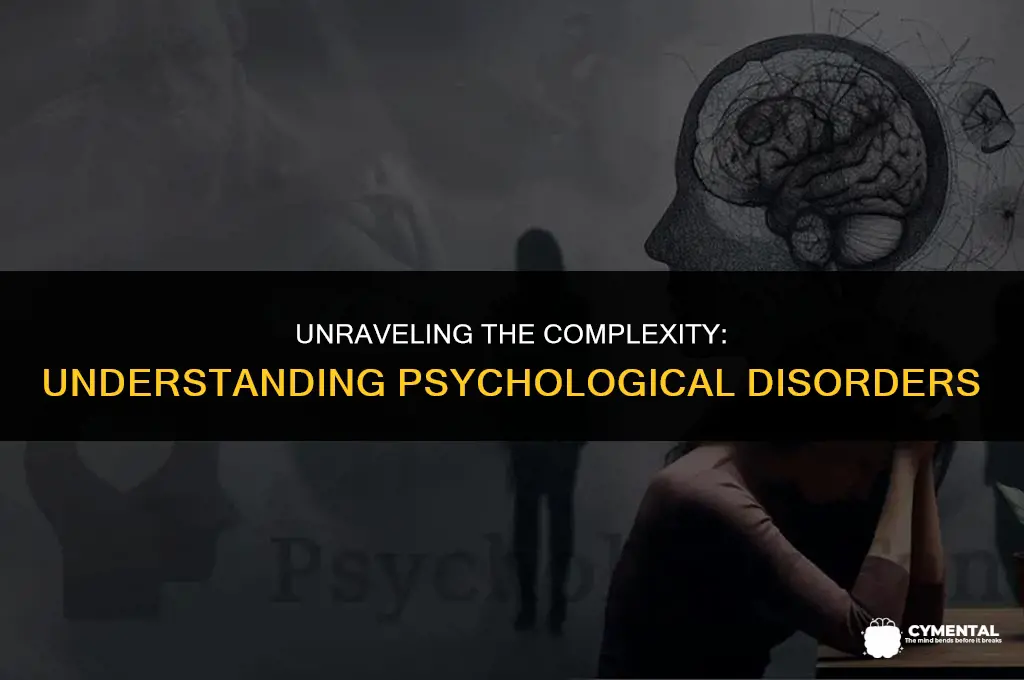
A psychological disorder, also known as a mental disorder, is a condition that affects a person's thinking, feeling, or behavior, causing distress or impairment in their daily life. These disorders can manifest in various ways, such as anxiety, depression, bipolar disorder, schizophrenia, and many others. They are often characterized by symptoms that deviate from normal behavior or thought patterns, and can be caused by a combination of genetic, environmental, and psychological factors. Understanding psychological disorders is crucial for providing effective treatment and support to those affected, as well as for reducing stigma and promoting mental health awareness.
Explore related products


What You'll Learn
- Definition and Classification: Understanding what constitutes a psychological disorder and how they are categorized
- Types of Disorders: Overview of common psychological disorders such as anxiety, depression, and schizophrenia
- Symptoms and Diagnosis: Recognizing symptoms and the process of diagnosing psychological disorders
- Causes and Risk Factors: Exploring potential causes and risk factors associated with developing psychological disorders
- Treatment and Management: Discussing various approaches to treating and managing psychological disorders

Definition and Classification: Understanding what constitutes a psychological disorder and how they are categorized
Psychological disorders are conditions that affect an individual's thinking, feeling, and behavior, causing distress or impairment in daily functioning. These disorders are defined by specific criteria outlined in diagnostic manuals, such as the Diagnostic and Statistical Manual of Mental Disorders (DSM-5) published by the American Psychiatric Association. The DSM-5 provides a standardized framework for diagnosing psychological disorders, ensuring consistency and accuracy across different healthcare settings.
Classification of psychological disorders involves grouping them into categories based on shared characteristics and symptoms. The DSM-5 organizes disorders into several broad categories, including neurodevelopmental disorders, schizophrenia spectrum and other psychotic disorders, bipolar and related disorders, depressive disorders, anxiety disorders, obsessive-compulsive and related disorders, trauma- and stressor-related disorders, dissociative disorders, somatic symptom and related disorders, and personality disorders. Each category has specific diagnostic criteria and subtypes, allowing clinicians to tailor treatment plans to the individual's unique needs.
Understanding the classification system is crucial for mental health professionals, as it guides diagnosis, treatment, and research efforts. For example, knowing that a patient's symptoms align with the criteria for major depressive disorder informs the choice of antidepressant medication and psychotherapy approaches. Furthermore, classification helps identify patterns and risk factors, enabling early intervention and prevention strategies.
However, it's important to note that classification systems are not without limitations. They are based on consensus among experts and may not fully capture the complexity of human experience. Additionally, cultural and societal factors can influence how symptoms are expressed and interpreted, potentially leading to misdiagnosis or underreporting of certain disorders.
In conclusion, the definition and classification of psychological disorders provide a structured approach to understanding and addressing mental health issues. While these systems have their limitations, they serve as valuable tools for clinicians, researchers, and individuals seeking help for psychological distress.
Exploring Organic Disorders: A Dive into Mental Health Classifications
You may want to see also
Explore related products


Types of Disorders: Overview of common psychological disorders such as anxiety, depression, and schizophrenia
Psychological disorders encompass a wide range of conditions that affect an individual's mental health and well-being. Among the most common are anxiety disorders, which manifest as excessive and persistent worry or fear that interferes with daily life. Generalized anxiety disorder, panic disorder, and social anxiety disorder are notable examples, each with distinct symptoms and triggers.
Depressive disorders are another prevalent category, characterized by persistent feelings of sadness, hopelessness, and a lack of interest in activities. Major depressive disorder, also known as clinical depression, is the most well-known form, but other types include persistent depressive disorder and seasonal affective disorder. These conditions can significantly impact a person's mood, behavior, and physical health.
Schizophrenia is a severe mental disorder that affects an individual's perception of reality, often leading to hallucinations, delusions, and disorganized thinking. It typically emerges in late adolescence or early adulthood and can be a lifelong condition. The exact cause of schizophrenia is unknown, but it is believed to involve a combination of genetic, environmental, and neurochemical factors.
Other common psychological disorders include bipolar disorder, which involves extreme mood swings between mania and depression; attention deficit hyperactivity disorder (ADHD), characterized by inattention, hyperactivity, and impulsivity; and post-traumatic stress disorder (PTSD), which can develop after experiencing or witnessing a traumatic event. Each of these disorders has unique diagnostic criteria and treatment approaches, often involving a combination of medication and psychotherapy.
Understanding these disorders is crucial for promoting mental health awareness and reducing stigma. Early diagnosis and intervention can significantly improve outcomes for individuals affected by these conditions, enabling them to lead fulfilling and productive lives.
Exploring Mental Health Through the Lens of Scripture
You may want to see also
Explore related products


Symptoms and Diagnosis: Recognizing symptoms and the process of diagnosing psychological disorders
Recognizing the symptoms of a psychological disorder is often the first step toward diagnosis and treatment. Symptoms can vary widely depending on the specific disorder, but common signs may include persistent feelings of sadness or anxiety, changes in appetite or sleep patterns, difficulty concentrating, and withdrawal from social activities. It's important to note that experiencing some of these symptoms does not necessarily mean a person has a psychological disorder; however, if symptoms persist and interfere with daily life, seeking professional help is advisable.
The process of diagnosing a psychological disorder typically involves a thorough evaluation by a mental health professional, such as a psychologist or psychiatrist. This evaluation may include a physical examination to rule out underlying medical conditions, a review of the patient's medical and psychiatric history, and a psychological assessment using standardized tests and interviews. The mental health professional will use the information gathered to determine if the patient's symptoms meet the criteria for a specific psychological disorder as outlined in diagnostic manuals such as the DSM-5.
In some cases, diagnosis may be straightforward if symptoms clearly align with a known disorder. However, psychological disorders can be complex, and symptoms may overlap between different conditions, making diagnosis more challenging. It's not uncommon for a patient to receive multiple diagnoses or for a diagnosis to change over time as more information becomes available or symptoms evolve.
Once a diagnosis is made, the mental health professional will work with the patient to develop a treatment plan tailored to their specific needs. This plan may include psychotherapy, medication, lifestyle changes, or a combination of these approaches. The goal of treatment is to alleviate symptoms, improve the patient's quality of life, and help them develop coping strategies to manage their condition.
It's important for individuals to be proactive in seeking help if they suspect they may have a psychological disorder. Early diagnosis and treatment can significantly improve outcomes and help prevent the progression of symptoms. Additionally, reducing stigma around mental health and promoting open conversations about psychological disorders can encourage more people to seek the help they need.
Understanding the Nuances: Is a Disorder a Disease?
You may want to see also
Explore related products


$49.95 $49.95


Causes and Risk Factors: Exploring potential causes and risk factors associated with developing psychological disorders
Genetic Predisposition: Research indicates that psychological disorders often have a genetic component. Certain genes can increase an individual's susceptibility to developing conditions such as schizophrenia, bipolar disorder, and major depressive disorder. For instance, a family history of mental illness can significantly elevate one's risk. Identical twins, who share 100% of their genes, are more likely to both develop a psychological disorder compared to fraternal twins or non-twin siblings.
Environmental Factors: While genetics play a crucial role, environmental factors are equally important. Traumatic experiences, such as physical or emotional abuse, neglect, or witnessing violence, can trigger psychological disorders. Chronic stress, whether from poverty, discrimination, or other sources, can also contribute to the development of mental health issues. Furthermore, substance abuse and addiction can exacerbate or even cause psychological disorders, as drugs and alcohol can alter brain chemistry and function.
Neurobiological Factors: The brain's structure and function are critical in understanding psychological disorders. Neurotransmitters, which are chemicals that facilitate communication between brain cells, can be imbalanced in individuals with mental health issues. For example, low levels of serotonin are often associated with depression. Additionally, abnormalities in brain regions such as the amygdala, hippocampus, and prefrontal cortex have been linked to various psychological disorders, including anxiety and mood disorders.
Psychological Factors: Cognitive and behavioral patterns can also contribute to the development of psychological disorders. Negative thought patterns, such as those characterized by pessimism and self-criticism, can lead to depression and anxiety. Maladaptive coping mechanisms, like avoidance or substance use, can further perpetuate these disorders. Moreover, personality traits, such as neuroticism, can increase an individual's vulnerability to developing psychological issues.
Social and Cultural Factors: The social and cultural environment in which an individual lives can also impact their mental health. Societal pressures, cultural norms, and discrimination can contribute to the development of psychological disorders. For example, individuals from marginalized communities may experience higher levels of stress and trauma, increasing their risk for mental health issues. Additionally, the stigma associated with mental illness can prevent individuals from seeking help, exacerbating their conditions.
Preventive Measures: Understanding these causes and risk factors is crucial for developing preventive measures. Early intervention, such as providing support and resources to individuals experiencing trauma or chronic stress, can help mitigate the development of psychological disorders. Promoting healthy coping mechanisms, fostering social support networks, and reducing stigma around mental health can also play a significant role in prevention. Furthermore, genetic counseling and research into the genetic basis of psychological disorders can help identify at-risk individuals and develop targeted interventions.
Exploring Rapunzel's Mental Health: A Tale of Tangles and Trauma
You may want to see also
Explore related products


$45.54 $59.95

$13.99 $13.99


Treatment and Management: Discussing various approaches to treating and managing psychological disorders
Psychological disorders are complex conditions that often require a multifaceted approach to treatment and management. One of the primary methods used is psychotherapy, which involves talking with a trained mental health professional to identify and change negative thought patterns and behaviors. Cognitive-behavioral therapy (CBT) is a particularly effective form of psychotherapy that focuses on modifying dysfunctional thoughts and behaviors to improve mood and functioning.
Medication is another common treatment option for psychological disorders. Antidepressants, anti-anxiety drugs, and mood stabilizers are among the medications that may be prescribed to help manage symptoms. It's important to note that medication should be used in conjunction with psychotherapy whenever possible, as this combination often yields the best results.
In addition to traditional treatments, there are also alternative and complementary approaches that can be helpful in managing psychological disorders. These may include mindfulness meditation, yoga, acupuncture, and herbal remedies. While these methods may not be as widely studied as conventional treatments, many people find them to be beneficial in reducing stress and improving overall well-being.
Lifestyle changes can also play a significant role in managing psychological disorders. Regular exercise, a healthy diet, and adequate sleep are all important factors in maintaining mental health. Social support is another crucial element, as connecting with friends and family can help reduce feelings of isolation and improve mood.
Finally, it's important to recognize that managing a psychological disorder is an ongoing process that requires patience and persistence. Treatment may need to be adjusted over time as symptoms change, and it's essential to work closely with a mental health professional to develop an individualized treatment plan that meets one's specific needs.
Understanding Neurodivergence: A Mental Health Perspective
You may want to see also
Frequently asked questions
A psychological disorder, also known as a mental disorder, is a condition that affects a person's thinking, feeling, behavior, or mood. These disorders can cause significant distress or impairment in social, occupational, or other important areas of functioning.
Psychological disorders are typically diagnosed by mental health professionals, such as psychiatrists, psychologists, or licensed therapists. Diagnosis often involves a combination of clinical interviews, psychological assessments, and sometimes medical tests to rule out underlying physical causes.
Some common types of psychological disorders include anxiety disorders (such as generalized anxiety disorder and panic disorder), mood disorders (such as depression and bipolar disorder), personality disorders (such as borderline personality disorder and narcissistic personality disorder), and psychotic disorders (such as schizophrenia).
Treatments for psychological disorders can include psychotherapy (talk therapy), medication, or a combination of both. Other interventions might include lifestyle changes, support groups, and alternative therapies like mindfulness or art therapy. The specific treatment plan depends on the individual's diagnosis, symptoms, and personal preferences.
While it's not always possible to prevent psychological disorders, there are steps that can be taken to reduce the risk. These include maintaining a healthy lifestyle, managing stress, seeking support from friends and family, and getting professional help when needed. Early intervention and treatment can also improve outcomes and reduce the severity of symptoms.