Caleb Wright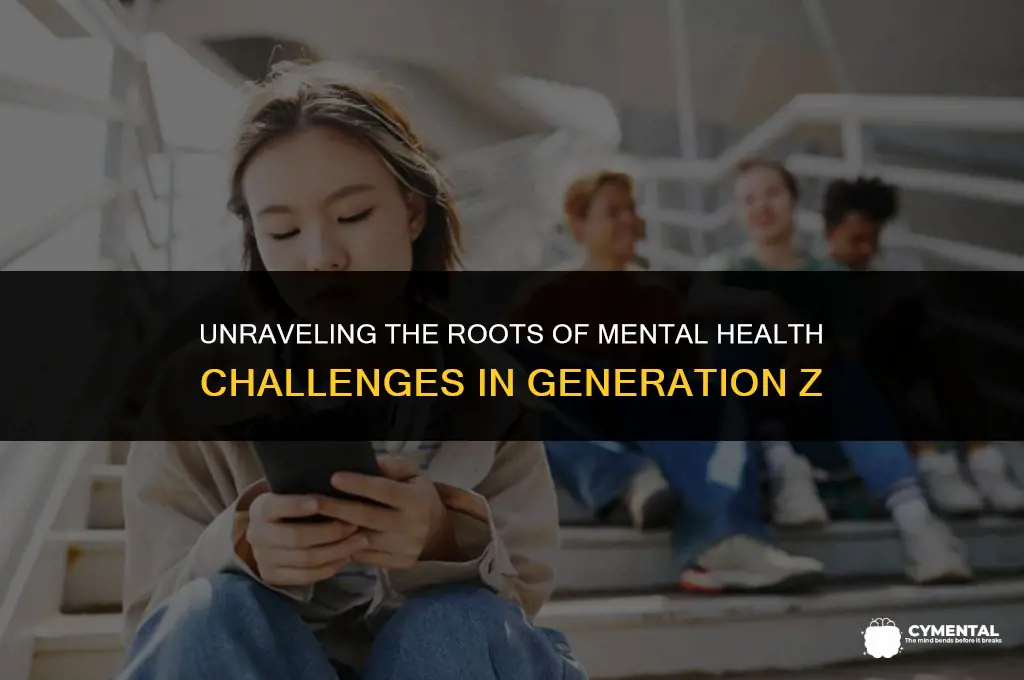
Mental health issues among Generation Z have become a pressing concern in recent years. This generation, born between the mid-1990s and early 2010s, is facing an unprecedented array of challenges that impact their psychological well-being. From the rise of social media and its associated pressures to the increasing demands of academic and professional life, Gen Z is navigating a complex world that often prioritizes productivity and connectivity over mental health. Additionally, the COVID-19 pandemic has exacerbated these issues, leading to heightened levels of anxiety, depression, and isolation among young people. It is crucial to understand the underlying causes of these mental health challenges in order to develop effective strategies for support and intervention.
Explore related products


What You'll Learn
- Social Media Impact: Excessive use leading to comparison, cyberbullying, and FOMO (Fear of Missing Out)
- Academic Pressure: High expectations, rigorous workloads, and the pursuit of perfection contributing to stress and anxiety
- Economic Uncertainty: Financial instability, student debt, and job market concerns causing worry and hopelessness
- Lack of Social Connection: Increased isolation, decreased face-to-face interactions, and loneliness affecting emotional well-being
- Trauma and Resilience: Exposure to traumatic events, both personal and global, and the struggle to cope and build resilience

Social Media Impact: Excessive use leading to comparison, cyberbullying, and FOMO (Fear of Missing Out)
The pervasive influence of social media on Generation Z's mental health is multifaceted, with excessive use often leading to detrimental effects such as comparison, cyberbullying, and FOMO. Research indicates that prolonged exposure to curated online personas can foster an environment of constant comparison, where individuals measure their self-worth against the highlight reels of others. This relentless comparison can result in diminished self-esteem and a skewed perception of reality, as users fail to recognize that what they see online is often an edited and idealized version of life.
Cyberbullying is another significant concern, with social media platforms providing a breeding ground for harassment and abuse. The anonymity afforded by the internet can embolden perpetrators, leading to a rise in incidents of online aggression. Victims of cyberbullying often experience severe emotional distress, including anxiety, depression, and in extreme cases, suicidal ideation. The impact of cyberbullying is further exacerbated by the 24/7 nature of social media, where harmful content can spread rapidly and be difficult to contain.
Fear of Missing Out (FOMO) is a pervasive anxiety that arises from the constant stream of updates and events shared on social media. This phenomenon can lead to feelings of inadequacy and exclusion, as individuals are bombarded with images and posts depicting social gatherings, achievements, and experiences they are not a part of. FOMO can drive compulsive social media use, as individuals feel pressured to stay connected and up-to-date with the latest happenings. This cycle of constant connectivity can contribute to increased stress levels, decreased productivity, and a diminished sense of well-being.
To mitigate these negative impacts, it is essential for individuals to adopt healthy social media habits. This may include setting boundaries for usage, limiting exposure to triggering content, and engaging in offline activities to foster a sense of balance and perspective. Additionally, promoting digital literacy and empathy can help to create a more supportive online environment, where users are better equipped to navigate the challenges posed by social media. By addressing these issues proactively, we can work towards fostering a healthier relationship between social media and mental health for Generation Z.
Exploring the Intersection of Supremacy and Mental Health
You may want to see also
Explore related products

$18.04 $18.99





Academic Pressure: High expectations, rigorous workloads, and the pursuit of perfection contributing to stress and anxiety
The relentless pursuit of academic excellence is a significant contributor to the mental health challenges faced by Generation Z. This pressure manifests in various forms, including high expectations from parents and educators, rigorous workloads, and an often unattainable pursuit of perfection. These factors collectively create an environment where stress and anxiety thrive, impacting the well-being of young individuals.
One of the primary sources of academic pressure is the high expectations placed on students by their parents and educators. These expectations can be unrealistic, pushing students to achieve grades and academic milestones that may not align with their individual abilities or interests. This constant push for excellence can lead to a fear of failure, which in turn fuels anxiety and stress.
Rigorous workloads further exacerbate this issue. Students are often overwhelmed with a multitude of assignments, projects, and exams, leaving them with little time for rest and relaxation. This chronic stress can have detrimental effects on mental health, leading to burnout and a decreased sense of well-being.
The pursuit of perfection is another significant factor contributing to academic pressure. Students may feel compelled to achieve flawless grades, excel in every subject, and participate in numerous extracurricular activities. This relentless drive for perfection can create a sense of inadequacy and self-doubt, as students may feel that they are never good enough.
To mitigate these issues, it is essential to adopt a more balanced approach to education. This includes setting realistic expectations, providing adequate support and resources for students, and encouraging a healthy work-life balance. By addressing these underlying causes of academic pressure, we can help alleviate the mental health challenges faced by Generation Z and foster a more positive and supportive educational environment.
Mental Health and Sustainability: A Crucial Link for a Resilient Future
You may want to see also
Explore related products


Economic Uncertainty: Financial instability, student debt, and job market concerns causing worry and hopelessness
The weight of economic uncertainty is a significant contributor to the mental health challenges faced by Generation Z. Financial instability, burgeoning student debt, and an unpredictable job market are creating a perfect storm of worry and hopelessness among young adults. This section delves into the unique aspects of these economic pressures and their profound impact on the mental well-being of Gen Z.
Financial instability is a pervasive concern, with many young adults struggling to make ends meet. The rising cost of living, coupled with stagnant wages, has led to a situation where even those with full-time jobs may find it difficult to afford basic necessities. This constant financial strain can result in chronic stress, anxiety, and a sense of being overwhelmed, all of which are detrimental to mental health.
Student debt is another major issue, with the cost of higher education skyrocketing in recent years. The burden of loans can be crushing, leading to feelings of guilt, shame, and despair. Many Gen Z individuals find themselves trapped in a cycle of debt, working multiple jobs to try and pay off their loans while also struggling to save for the future. This financial limbo can contribute to a sense of hopelessness and a lack of direction.
The job market is also a source of significant anxiety for Gen Z. With the rise of automation and the gig economy, traditional career paths are becoming increasingly uncertain. Young adults may feel pressure to constantly upskill and adapt, which can be both exhausting and demoralizing. The lack of job security and the prevalence of precarious work arrangements can lead to feelings of instability and vulnerability.
To address these economic pressures, it is essential to provide Gen Z with the tools and support they need to navigate the current financial landscape. This may include financial literacy education, access to affordable mental health services, and policy changes aimed at reducing student debt and improving job security. By taking a proactive approach to these issues, we can help alleviate the mental health burden that economic uncertainty is placing on young adults.
Is Depression a Mental Issue? Understanding the Complex Reality
You may want to see also
Explore related products


Lack of Social Connection: Increased isolation, decreased face-to-face interactions, and loneliness affecting emotional well-being
Social media platforms, while designed to connect people, have paradoxically contributed to a sense of isolation among Gen Z. The curated highlight reels of others' lives can lead to feelings of inadequacy and disconnection. Furthermore, the shift towards remote work and online education has reduced opportunities for spontaneous social interactions and the development of deep, meaningful relationships.
The pandemic has exacerbated this issue, with prolonged periods of lockdown and social distancing measures. This has resulted in a significant decrease in face-to-face interactions, which are crucial for emotional well-being. The lack of physical touch, shared experiences, and communal activities has left many feeling lonely and disconnected from their peers.
Research has shown that social isolation can have a profound impact on mental health, leading to increased rates of depression, anxiety, and even suicidal ideation. The absence of social support systems can make it difficult for individuals to cope with stress and adversity, further compounding mental health issues.
To address this, it's essential to encourage Gen Z to engage in activities that promote social connection. This could include joining clubs or organizations, participating in community events, or simply making an effort to meet friends in person regularly. Additionally, parents, educators, and policymakers should work together to create environments that foster social interaction and emotional well-being.
Ultimately, the key to mitigating the mental health issues caused by lack of social connection lies in recognizing the importance of human interaction and taking proactive steps to build and maintain strong relationships. By doing so, we can help Gen Z navigate the challenges of modern life and cultivate a sense of belonging and emotional resilience.
ED: Mental Health Struggle or Hidden Vitamin Deficiency?
You may want to see also
Explore related products


Trauma and Resilience: Exposure to traumatic events, both personal and global, and the struggle to cope and build resilience
Exposure to traumatic events has become an increasingly prevalent issue among Generation Z, contributing significantly to their mental health challenges. This generation has grown up in a world marked by global crises, from the COVID-19 pandemic to climate change and geopolitical conflicts. Such large-scale events can lead to collective trauma, affecting individuals' sense of security and well-being.
On a personal level, Gen Z individuals may face trauma from various sources, including family dynamics, social media, and personal experiences of loss or abuse. The constant connectivity provided by technology can exacerbate the impact of these traumatic events, as individuals are often exposed to graphic content and distressing news cycles.
Building resilience in the face of such trauma is crucial for mental health. Resilience involves the ability to adapt and cope with adversity, and it can be fostered through various strategies. One approach is cognitive-behavioral therapy (CBT), which helps individuals reframe negative thoughts and develop coping mechanisms. Mindfulness practices, such as meditation and yoga, can also aid in reducing stress and promoting emotional regulation.
Moreover, social support plays a vital role in resilience. Gen Z individuals can benefit from strong relationships with family, friends, and community members, which provide a sense of belonging and emotional support. Engaging in activities that promote a sense of purpose and accomplishment, such as volunteering or pursuing hobbies, can also contribute to resilience.
In conclusion, addressing trauma and building resilience are essential components in tackling the mental health issues faced by Gen Z. By providing access to therapeutic interventions, promoting mindfulness practices, and fostering strong social connections, we can help this generation navigate the challenges they face and develop the resilience needed to thrive.
Addressing Campus Mental Health: Strategies for Student Well-being and Support
You may want to see also
Frequently asked questions
Several factors are contributing to the mental health challenges faced by Generation Z, including the widespread use of social media, which can lead to feelings of isolation and inadequacy, increased academic and social pressures, and the ongoing global issues such as climate change and economic uncertainty.
Social media can have a significant negative impact on the mental well-being of Gen Z individuals by fostering a culture of comparison, leading to feelings of loneliness and depression, and disrupting sleep patterns due to excessive screen time.
Societal pressures, such as the expectation to succeed academically and professionally, coupled with the challenges of navigating a rapidly changing world, can exacerbate anxiety and stress levels among Gen Z individuals, contributing to a decline in their mental health.