Madison Cole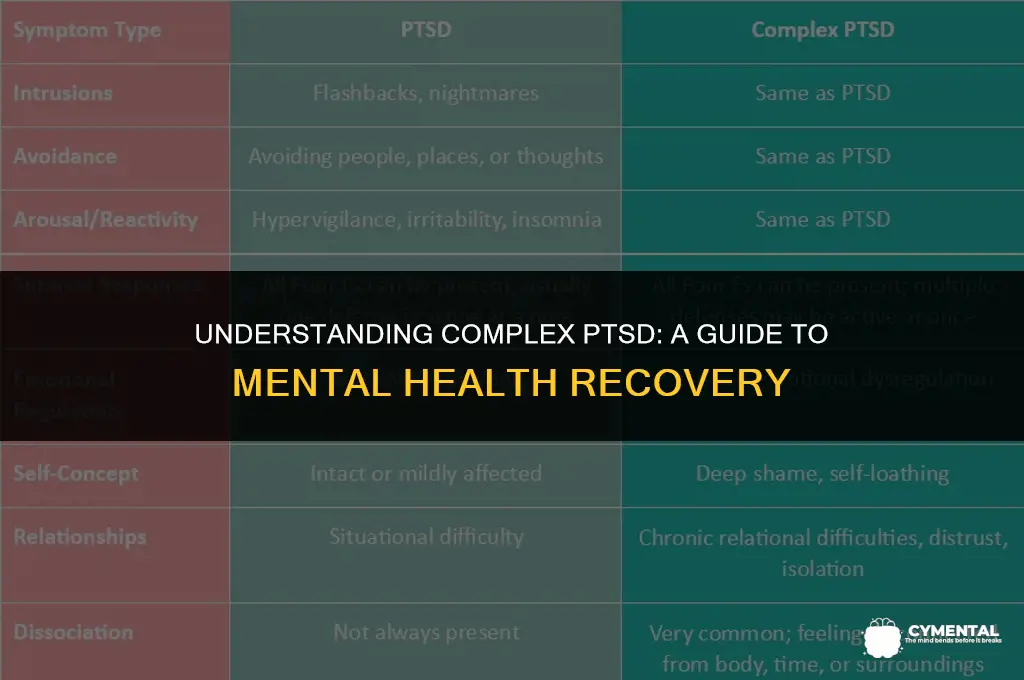
Complex Post-Traumatic Stress Disorder (CPTSD) is a mental health condition that can develop in individuals who have experienced prolonged or repeated traumatic events. It is characterized by a range of symptoms that can significantly impact a person's daily life and well-being. These symptoms may include severe anxiety, flashbacks, nightmares, avoidance of reminders of the trauma, and difficulties with emotional regulation. CPTSD can also lead to changes in a person's beliefs about themselves and others, as well as their sense of safety and trust in the world. Understanding CPTSD is crucial for providing effective support and treatment to those affected by this challenging condition.
| Characteristics | Values |
|---|---|
| Definition | Complex Post-Traumatic Stress Disorder (CPTSD) is a psychological disorder that can develop in individuals who have experienced prolonged and repeated traumatic events. |
| Symptoms | Intrusive memories, flashbacks, nightmares, emotional numbing, detachment, hypervigilance, exaggerated startle response, sleep disturbances, concentration difficulties, irritability, anger, guilt, shame, and suicidal thoughts. |
| Causes | Prolonged exposure to traumatic events such as childhood abuse, domestic violence, war, torture, or natural disasters. |
| Risk Factors | History of trauma, genetic predisposition, lack of social support, substance abuse, and pre-existing mental health conditions. |
| Diagnosis | Diagnosed by a mental health professional through a combination of clinical interviews, psychological assessments, and review of medical history. |
| Treatment | Treatment typically involves a combination of psychotherapy (such as Cognitive Behavioral Therapy and Trauma-Focused Therapy), medication (such as antidepressants and anti-anxiety drugs), and support groups. |
| Prognosis | With appropriate treatment, individuals with CPTSD can experience significant improvement in symptoms and quality of life, although recovery may be a long and challenging process. |
| Comorbidities | CPTSD often co-occurs with other mental health conditions such as depression, anxiety disorders, substance use disorders, and dissociative disorders. |
| Impact on Daily Life | CPTSD can significantly impact daily functioning, relationships, and overall well-being, making it difficult for individuals to maintain employment, engage in social activities, and form healthy relationships. |
| Prevention | While CPTSD cannot be prevented, early intervention and support for individuals who have experienced trauma can help reduce the risk of developing the disorder. |
| Research | Ongoing research is focused on better understanding the neurobiological mechanisms underlying CPTSD, developing more effective treatments, and improving outcomes for individuals with the disorder. |
| Support Resources | Various support resources are available for individuals with CPTSD, including mental health professionals, support groups, online resources, and helplines. |
Explore related products

$16.25 $8.99


What You'll Learn
- Definition: CPSD stands for Complex Post-Traumatic Stress Disorder, a severe mental health condition
- Symptoms: Includes flashbacks, nightmares, emotional instability, and avoidance behaviors triggered by traumatic events
- Causes: Often results from prolonged or repeated trauma, such as abuse, neglect, or combat exposure
- Diagnosis: Diagnosed through clinical interviews and assessments by mental health professionals
- Treatment: Typically involves psychotherapy, medication, and support groups to manage symptoms and improve quality of life

Definition: CPSD stands for Complex Post-Traumatic Stress Disorder, a severe mental health condition
Complex Post-Traumatic Stress Disorder (CPSD) is a severe mental health condition that develops in response to prolonged, repeated, or multiple traumatic events. Unlike Post-Traumatic Stress Disorder (PTSD), which is often associated with a single traumatic incident, CPSD is characterized by a more pervasive and enduring impact on an individual's psychological and emotional well-being. This condition can result from various forms of trauma, including physical abuse, emotional neglect, war, natural disasters, or captivity.
One of the key features of CPSD is the presence of persistent and intense emotional dysregulation. Individuals with CPSD may experience extreme mood swings, irritability, and a heightened sense of anxiety or fear. They may also struggle with dissociation, which can manifest as feelings of detachment from oneself or the surrounding environment. Additionally, people with CPSD often have difficulties with impulse control, leading to risky or self-destructive behaviors.
Another critical aspect of CPSD is the impact on interpersonal relationships. Sufferers may have trouble forming and maintaining healthy attachments, often experiencing mistrust, emotional numbing, or a sense of isolation. They may also exhibit a pattern of seeking out or becoming involved in abusive or toxic relationships, as a result of their underlying psychological distress.
CPSD can also affect an individual's sense of identity and self-worth. People with this condition may struggle with feelings of shame, guilt, or self-blame, which can lead to a negative self-image and a diminished sense of purpose or meaning in life. Furthermore, they may experience somatic symptoms, such as chronic pain, fatigue, or gastrointestinal problems, which can exacerbate their overall distress and impairment.
Treatment for CPSD typically involves a combination of psychotherapy, medication, and support groups. Cognitive-behavioral therapy (CBT) and eye movement desensitization and reprocessing (EMDR) are two common therapeutic approaches used to address the symptoms of CPSD. Medications such as antidepressants, mood stabilizers, and anti-anxiety drugs may also be prescribed to help manage the emotional and psychological aspects of the condition. Support groups can provide a sense of community and validation for individuals with CPSD, helping them to feel less isolated and more understood.
In conclusion, Complex Post-Traumatic Stress Disorder is a severe and debilitating mental health condition that requires comprehensive and compassionate treatment. By understanding the unique features and challenges of CPSD, mental health professionals and caregivers can better support individuals affected by this condition, helping them to reclaim their lives and find a path towards healing and recovery.
Navigating Mental Health: The Power of Care Coordination
You may want to see also
Explore related products


Symptoms: Includes flashbacks, nightmares, emotional instability, and avoidance behaviors triggered by traumatic events
Complex Post-Traumatic Stress Disorder (CPTSD) is a mental health condition that can develop after experiencing or witnessing a traumatic event. One of the key aspects of CPTSD is the presence of intrusive symptoms, such as flashbacks and nightmares. These symptoms can be intensely distressing and may cause individuals to feel as though they are reliving the traumatic event. Emotional instability is another common symptom, characterized by rapid and intense mood swings that can be difficult to manage. Avoidance behaviors are also a significant feature of CPTSD, where individuals may go to great lengths to avoid reminders of the trauma, including people, places, or activities that may trigger their symptoms.
The symptoms of CPTSD can have a profound impact on an individual's daily life, affecting their relationships, work, and overall well-being. Flashbacks and nightmares can disrupt sleep patterns and make it difficult to concentrate during the day. Emotional instability can lead to conflicts with others and may result in feelings of isolation or detachment. Avoidance behaviors, while initially providing some relief, can ultimately reinforce the trauma and prevent individuals from fully processing and healing from their experiences.
It is important to note that CPTSD is a distinct condition from Post-Traumatic Stress Disorder (PTSD), although they share some similarities. CPTSD is often associated with prolonged or repeated trauma, such as childhood abuse, domestic violence, or captivity. The symptoms of CPTSD can be more pervasive and may include additional features such as dissociation, identity disturbances, and somatic symptoms.
Treatment for CPTSD typically involves a combination of psychotherapy, medication, and self-care strategies. Cognitive-behavioral therapy (CBT) and eye movement desensitization and reprocessing (EMDR) are two common therapeutic approaches that can help individuals process their traumatic experiences and reduce their symptoms. Medications such as antidepressants and anti-anxiety drugs may also be prescribed to help manage symptoms. Self-care strategies, including mindfulness practices, exercise, and social support, can be essential in promoting overall well-being and resilience.
In conclusion, CPTSD is a complex and challenging mental health condition that requires a comprehensive and individualized approach to treatment. By understanding the symptoms and their impact, individuals can take the first step towards seeking help and reclaiming their lives from the effects of trauma.
Empowering Voices: A Guide to Becoming a Mental Health Advocate
You may want to see also
Explore related products


$13.95


Causes: Often results from prolonged or repeated trauma, such as abuse, neglect, or combat exposure
Complex post-traumatic stress disorder (CPTSD) is a mental health condition that can develop after experiencing prolonged or repeated trauma. This type of trauma can include physical or emotional abuse, neglect, or exposure to combat situations. Unlike acute traumatic stress, which may resolve within a few weeks or months, CPTSD is characterized by long-lasting symptoms that can persist for years if left untreated.
One of the key factors contributing to the development of CPTSD is the duration and intensity of the traumatic experience. For example, individuals who have been subjected to chronic abuse or neglect during childhood are at a higher risk of developing CPTSD later in life. Similarly, military personnel who have been deployed in combat zones for extended periods may also be more susceptible to this condition.
Another important factor is the nature of the trauma itself. Traumatic events that involve a sense of helplessness, horror, or extreme fear are more likely to lead to CPTSD. This can include situations where the individual feels trapped or unable to escape, such as being held hostage or living in a war zone. Additionally, trauma that is inflicted by a caregiver or someone in a position of authority can be particularly damaging and increase the risk of developing CPTSD.
It is also important to note that CPTSD can affect individuals of all ages, including children and adolescents. In these cases, the traumatic experience may be more difficult to process and cope with, as the child's brain is still developing and may not have the necessary coping mechanisms in place. As a result, children who experience trauma may be more likely to develop CPTSD and may require specialized treatment to address their unique needs.
In conclusion, CPTSD is a complex mental health condition that can result from prolonged or repeated trauma. The duration, intensity, and nature of the traumatic experience all play a role in the development of this disorder. Understanding these factors can help mental health professionals better diagnose and treat CPTSD, and can also aid in the development of prevention strategies to reduce the risk of this condition in vulnerable populations.
Understanding Booty Juice Mental Health: A Comprehensive Guide
You may want to see also
Explore related products

$10.21 $18.95

$8.5 $19.99


$14.15 $20


Diagnosis: Diagnosed through clinical interviews and assessments by mental health professionals
Complex post-traumatic stress disorder (CPTSD) is diagnosed through a comprehensive process involving clinical interviews and assessments conducted by mental health professionals. This process is crucial in distinguishing CPTSD from other mental health conditions and tailoring appropriate treatment plans.
During clinical interviews, mental health professionals gather detailed information about the individual's experiences, symptoms, and personal history. These interviews often involve open-ended questions that allow the individual to describe their traumatic experiences and the impact these experiences have had on their daily life. Mental health professionals pay close attention to the individual's emotional responses, coping mechanisms, and any dissociation or avoidance behaviors that may be present.
In addition to clinical interviews, mental health professionals use various assessment tools to evaluate the individual's symptoms and functioning. These tools may include standardized questionnaires, psychological tests, and observational assessments. For example, the Clinician-Administered PTSD Scale (CAPS) is a commonly used assessment tool that measures the severity of PTSD symptoms, including intrusion, avoidance, negative alterations in cognition and mood, and hyperarousal.
Mental health professionals also consider the individual's medical history, family history, and any previous mental health diagnoses when making a diagnosis of CPTSD. They may consult with other healthcare providers, such as primary care physicians or specialists, to gather additional information and ensure a comprehensive understanding of the individual's overall health.
Once the assessment process is complete, mental health professionals use the information gathered to determine whether the individual meets the diagnostic criteria for CPTSD. These criteria are outlined in the Diagnostic and Statistical Manual of Mental Disorders (DSM-5) and include symptoms such as flashbacks, nightmares, avoidance of reminders of the trauma, negative alterations in cognition and mood, and hyperarousal.
In conclusion, the diagnosis of CPTSD involves a thorough and collaborative process between mental health professionals and the individual. By using clinical interviews and assessments, mental health professionals can accurately diagnose CPTSD and develop effective treatment plans that address the unique needs of each individual.
Unveiling the Palette of Mental Health: A Colorful Exploration
You may want to see also
Explore related products


Treatment: Typically involves psychotherapy, medication, and support groups to manage symptoms and improve quality of life
Complex post-traumatic stress disorder (CPTSD) is a mental health condition that can develop after experiencing prolonged or repeated traumatic events. Treatment for CPTSD typically involves a combination of psychotherapy, medication, and support groups to manage symptoms and improve quality of life.
Psychotherapy for CPTSD often involves trauma-focused cognitive behavioral therapy (TF-CBT), which helps individuals process and reframe their traumatic experiences. This type of therapy can help reduce symptoms such as flashbacks, nightmares, and avoidance behaviors. Medication may also be prescribed to help manage symptoms of CPTSD, such as antidepressants to treat depression and anxiety, or sleep aids to improve sleep quality.
Support groups can also be an important part of treatment for CPTSD, as they provide a safe and supportive environment for individuals to share their experiences and connect with others who have gone through similar traumas. These groups can help reduce feelings of isolation and shame, and provide a sense of community and understanding.
In addition to these traditional treatment approaches, there are also newer therapies being developed for CPTSD, such as eye movement desensitization and reprocessing (EMDR) and somatic experiencing (SE). These therapies focus on helping individuals process and release stored trauma energy, and can be particularly effective for those who have not responded well to traditional talk therapies.
It's important to note that treatment for CPTSD is highly individualized, and what works for one person may not work for another. A mental health professional can help determine the best course of treatment based on an individual's specific needs and circumstances. With the right treatment approach, individuals with CPTSD can learn to manage their symptoms and improve their overall quality of life.
Understanding the Financial Impact of Inpatient Mental Health Care
You may want to see also
Frequently asked questions
CPSD stands for Complex Post-Traumatic Stress Disorder.
CPSD is a more severe and complex form of PTSD, often resulting from prolonged or repeated trauma. It involves additional symptoms such as emotional dysregulation, interpersonal difficulties, and a heightened sense of threat.
Common symptoms of CPSD include flashbacks, nightmares, avoidance behaviors, hypervigilance, emotional instability, and difficulties in forming and maintaining relationships.
Individuals who have experienced prolonged or repeated traumatic events, such as abuse, neglect, or combat, are at a higher risk of developing CPSD. It can affect people of all ages and backgrounds.
Treatment for CPSD typically involves a combination of psychotherapy, medication, and support groups. Cognitive-behavioral therapy (CBT) and eye movement desensitization and reprocessing (EMDR) are commonly used therapeutic approaches. Medications such as antidepressants and anti-anxiety drugs may also be prescribed to help manage symptoms.