Harper Lewis
A mental status examination (MSE) is a comprehensive evaluation of an individual's cognitive, emotional, and behavioral functioning. It is a crucial tool used by healthcare professionals, particularly psychiatrists, psychologists, and nurses, to assess a patient's mental health and identify potential issues. The MSE typically involves a series of questions and tasks designed to measure various aspects of mental functioning, including orientation, memory, attention, language, and thought processes. By conducting an MSE, clinicians can gain valuable insights into a patient's mental state, which can inform diagnosis, treatment planning, and ongoing care.
Explore related products


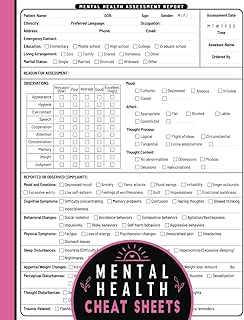



What You'll Learn
- Appearance: Observation of physical presentation, attire, and grooming
- Behavior: Assessment of actions, reactions, and interactions during the exam
- Speech: Evaluation of language use, tone, and content of speech
- Thought Process: Examination of cognitive functions, including perception and reasoning
- Mood and Affect: Analysis of emotional state and expression

Appearance: Observation of physical presentation, attire, and grooming
The assessment of appearance in a mental status examination is a critical component that provides valuable insights into a patient's overall well-being and mental health. This evaluation encompasses the observation of physical presentation, attire, and grooming, each of which can offer clues about the individual's emotional state, self-care habits, and cognitive functioning.
Physical presentation is the first aspect of appearance that is typically assessed. This includes observing the patient's posture, facial expression, and general demeanor. A slouched posture or averted gaze may indicate feelings of sadness or anxiety, while a rigid posture could suggest tension or agitation. Facial expressions can also be telling; for instance, a flat affect may be associated with depression or schizophrenia, whereas an overly animated expression could point to mania or psychosis.
Attire is another important element of appearance that can reveal much about a person's mental state. The choice of clothing, its cleanliness, and how well it fits can all be indicative of the individual's self-esteem, attention to detail, and overall functioning. For example, a patient who is dressed in disheveled or ill-fitting clothes may be experiencing neglect or a lack of motivation, which could be symptoms of depression or other mental health disorders.
Grooming habits are closely related to attire and can provide additional information about a patient's mental health. Observations about hair care, facial hair, and nail hygiene can all be relevant. Poor grooming may suggest a lack of self-care, which can be a sign of various mental health conditions, including depression, psychosis, or cognitive impairment. Conversely, meticulous grooming could indicate an excessive preoccupation with appearance, which might be seen in conditions such as body dysmorphic disorder.
In conducting this aspect of the mental status examination, it is essential for the clinician to approach the assessment with sensitivity and objectivity. The observations should be made without judgment and should focus solely on what is visible and relevant to the patient's mental health. By carefully noting these details, the clinician can gain a more comprehensive understanding of the patient's condition and tailor their treatment approach accordingly.
Exploring the Elusive Mental Region: A Journey into Cognitive Frontiers
You may want to see also
Explore related products




Behavior: Assessment of actions, reactions, and interactions during the exam
During a mental status examination, the assessment of behavior is crucial as it provides insight into a patient's actions, reactions, and interactions. This evaluation is typically conducted in a clinical setting and involves observing the patient's demeanor, body language, and responses to various stimuli. The examiner may note the patient's level of cooperation, attention span, and ability to follow instructions. Additionally, the patient's emotional state, such as anxiety, agitation, or depression, may be observed and documented.
The assessment of behavior during the exam can reveal important information about the patient's cognitive and emotional functioning. For example, a patient who is unable to maintain eye contact or exhibits excessive fidgeting may be experiencing anxiety or discomfort. Conversely, a patient who is overly talkative or displays grandiose behavior may be exhibiting signs of mania or psychosis. The examiner may also observe the patient's ability to engage in social interactions, such as initiating conversation or responding appropriately to questions.
It is essential for the examiner to approach the assessment of behavior in a systematic and objective manner. This may involve using standardized rating scales or checklists to document the patient's behavior during the exam. Additionally, the examiner should be aware of cultural and individual differences that may influence the patient's behavior and avoid making assumptions based on these factors.
The assessment of behavior during the mental status examination can have significant implications for the patient's diagnosis and treatment plan. For example, a patient who exhibits aggressive behavior may require a different approach to treatment than a patient who is withdrawn and isolative. Therefore, it is crucial for the examiner to carefully document and interpret the patient's behavior during the exam to ensure that the patient receives appropriate care.
In conclusion, the assessment of behavior during the mental status examination is a critical component of the evaluation process. It provides valuable information about the patient's cognitive and emotional functioning and can inform the development of an effective treatment plan. By approaching this assessment in a systematic and objective manner, examiners can ensure that they are providing the best possible care for their patients.
Unlocking Cognitive Flexibility: The Power of Mental Agility
You may want to see also
Explore related products


$19.45 $29.99


Speech: Evaluation of language use, tone, and content of speech
During a mental status examination, the evaluation of speech is a critical component that provides valuable insights into a patient's cognitive and emotional state. This assessment involves a detailed analysis of the patient's language use, tone, and content of speech. Language use is evaluated by observing the patient's vocabulary, grammar, and syntax. A clinician may note any difficulties in word-finding, sentence construction, or the use of abstract concepts. Tone of speech is another important aspect, as it can reveal underlying emotional states. For example, a monotone voice may indicate depression, while a rapid, pressured speech pattern could be a sign of mania.
The content of speech is also carefully assessed for its coherence, relevance, and the presence of any delusions or hallucinations. Clinicians may look for signs of thought disorders, such as tangentiality, circumstantiality, or derailment. Additionally, the patient's ability to engage in abstract thinking and problem-solving is evaluated through their speech. This can involve asking the patient to explain proverbs, interpret metaphors, or discuss hypothetical situations.
In conducting this evaluation, clinicians must be mindful of cultural and linguistic differences that may influence a patient's speech patterns. They should also consider the patient's educational background and any potential language barriers. The goal of this assessment is to gain a comprehensive understanding of the patient's mental state and to identify any areas of impairment or abnormality. By carefully evaluating the patient's speech, clinicians can gather valuable information that can inform diagnosis and treatment planning.
Overall, the evaluation of speech in a mental status examination is a multifaceted process that requires careful observation, analysis, and interpretation. It is a crucial tool in the assessment of mental health and can provide important insights into a patient's cognitive, emotional, and psychological well-being.
Exploring Your Mental Age: A Journey Beyond Chronological Years
You may want to see also
Explore related products




Thought Process: Examination of cognitive functions, including perception and reasoning
The examination of cognitive functions, including perception and reasoning, is a critical component of a mental status examination. This assessment aims to evaluate an individual's ability to process information, make judgments, and engage in logical thinking. One approach to examining cognitive functions is through the use of standardized neuropsychological tests, which can provide objective measures of various cognitive domains.
For instance, the Mini-Mental State Examination (MMSE) is a widely used tool that assesses orientation, attention, memory, language, and visuospatial skills. Another example is the Montreal Cognitive Assessment (MoCA), which includes tasks that evaluate executive functions, such as planning and problem-solving, in addition to memory and attention. These tests can help clinicians identify cognitive impairments that may be indicative of underlying neurological or psychiatric conditions.
In addition to standardized tests, clinicians may also use more informal methods to assess cognitive functions during a mental status examination. This can include observing the patient's behavior, asking open-ended questions, and evaluating their ability to engage in conversation and follow instructions. For example, a clinician might ask a patient to describe a recent event or to explain a complex concept in their own words. This can provide valuable insights into the patient's thought processes and ability to reason.
The assessment of perception is another important aspect of a mental status examination. This involves evaluating an individual's ability to accurately perceive and interpret sensory information from their environment. Clinicians may use various techniques to assess perception, such as asking patients to identify objects or faces, or to describe the characteristics of a particular stimulus. For example, a clinician might show a patient a series of images and ask them to identify any differences between the images. This can help evaluate the patient's visual perception and attention to detail.
Overall, the examination of cognitive functions, including perception and reasoning, is a complex and multifaceted process that requires a combination of standardized tests and more informal assessments. By carefully evaluating these cognitive domains, clinicians can gain a better understanding of a patient's mental status and identify potential areas of impairment that may require further investigation or intervention.
Understanding Mental Hygiene Warrants: A Comprehensive Guide
You may want to see also
Explore related products


Mood and Affect: Analysis of emotional state and expression
The assessment of mood and affect is a critical component of the mental status examination, providing valuable insights into an individual's emotional state and capacity for emotional expression. This evaluation involves a nuanced understanding of the patient's subjective experience and observable emotional responses. Clinicians must be adept at recognizing subtle cues and differentiating between various emotional states to form an accurate diagnosis and treatment plan.
One approach to analyzing mood and affect involves the use of standardized rating scales, such as the Beck Depression Inventory or the Young Mania Rating Scale. These tools allow for a quantitative assessment of the patient's emotional state, helping to identify the presence and severity of symptoms like sadness, irritability, or euphoria. However, it is essential to complement these scales with qualitative observations, as they may not fully capture the complexity of an individual's emotional experience.
Observing the patient's facial expressions, body language, and tone of voice can provide additional information about their emotional state. For example, a patient with a flat affect may exhibit a lack of emotional responsiveness, while someone with an irritable mood may display restlessness or agitation. Clinicians must also consider the context in which these emotional states are expressed, as certain situations may exacerbate or mitigate symptoms.
In addition to these observational techniques, clinicians may also utilize projective tests, such as the Rorschach inkblot test, to gain a deeper understanding of the patient's emotional functioning. These tests can help to uncover underlying emotional conflicts or defense mechanisms that may not be immediately apparent through direct observation or self-report measures.
Ultimately, the analysis of mood and affect in the mental status examination requires a multifaceted approach that incorporates both quantitative and qualitative data. By combining these methods, clinicians can develop a comprehensive understanding of the patient's emotional state, which is essential for accurate diagnosis and effective treatment planning.
Exploring Mental Processes: Unveiling the Truth Behind Cognitive Functions
You may want to see also
Frequently asked questions
A mental status examination (MSE) is a structured assessment used by healthcare professionals to evaluate a patient's mental state and cognitive functioning. It typically involves observing and interviewing the patient to gather information about their mood, thoughts, perceptions, and behavior.
The key components of an MSE include assessing the patient's appearance and behavior, mood and affect, speech and language, thought processes, perceptions, cognitive abilities, and insight and judgment. The examination may also involve evaluating the patient's memory, attention, and problem-solving skills.
Mental status examinations can be performed by a variety of healthcare professionals, including psychiatrists, psychologists, social workers, and nurses. They may also be conducted by other professionals such as occupational therapists, speech therapists, and neuropsychologists, depending on the context and the patient's needs.
The purpose of an MSE is to gather information about a patient's mental state and cognitive functioning in order to diagnose and treat mental health conditions. The examination can help healthcare professionals identify symptoms of mental illness, assess the severity of those symptoms, and develop an appropriate treatment plan. It can also be used to monitor the patient's progress over time and to evaluate the effectiveness of treatment interventions.