Noah Parker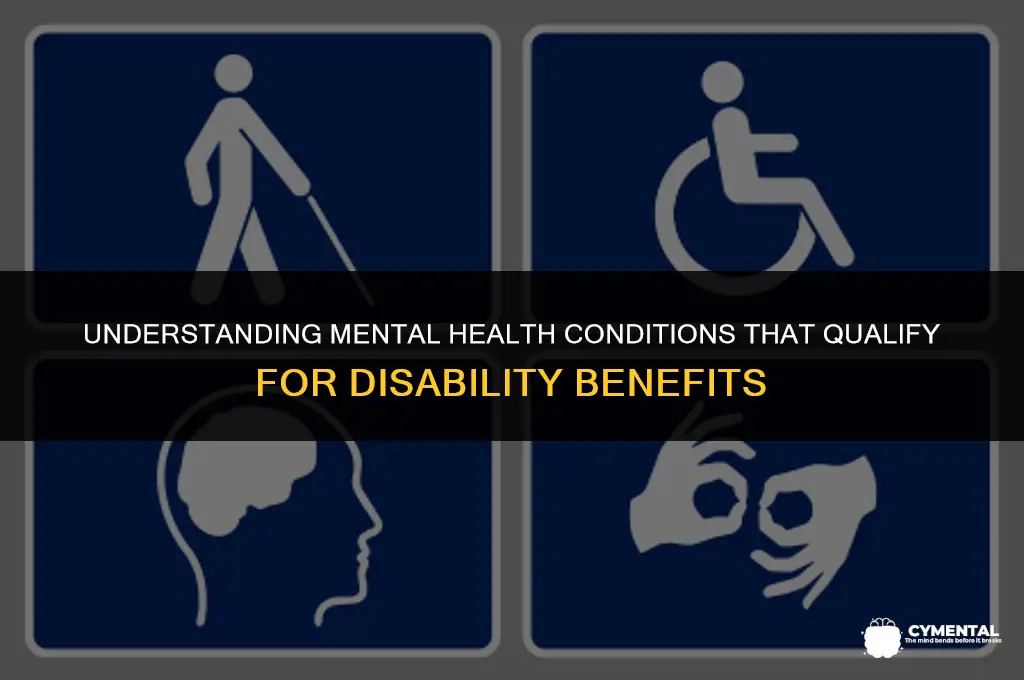
Mental conditions that qualify for disability benefits can vary widely depending on the specific criteria set by different governmental and private organizations. Generally, to qualify, a mental condition must significantly impact an individual's ability to perform daily tasks, maintain employment, or interact socially. Conditions such as schizophrenia, bipolar disorder, major depressive disorder, anxiety disorders, and post-traumatic stress disorder (PTSD) are commonly recognized as potentially qualifying for disability benefits. However, the severity and specific symptoms of each condition must be assessed on a case-by-case basis to determine eligibility. It's important for individuals seeking disability benefits to consult with a healthcare professional and understand the specific requirements of the program they are applying to.
| Characteristics | Values |
|---|---|
| Condition | Schizophrenia, Bipolar Disorder, Major Depressive Disorder, Anxiety Disorders, Post-Traumatic Stress Disorder, Obsessive-Compulsive Disorder, Eating Disorders, Autism Spectrum Disorder, Intellectual Disability, Personality Disorders, Substance Use Disorders, Attention Deficit Hyperactivity Disorder (ADHD) |
| Severity | Must significantly limit daily activities, social interactions, or the ability to concentrate, persist, or pace oneself |
| Duration | Generally must have lasted or be expected to last for at least one year |
| Impact on Work | Must substantially impair the ability to perform job-related tasks or functions |
| Medical Evidence | Must be supported by medical documentation from a licensed healthcare professional |
| Functional Limitations | Must result in marked restrictions in areas such as thinking, concentrating, interacting with others, or managing oneself |
| Age of Onset | Can vary, but some conditions must have an onset before a certain age (e.g., Autism Spectrum Disorder) |
| Treatment | May require ongoing treatment, therapy, or medication to manage symptoms |
| Prognosis | Varies depending on the condition, but must be chronic or long-term |
| Social Impact | May affect social relationships, communication, and the ability to participate in community activities |
Explore related products


What You'll Learn
- Depressive Disorders: Major depressive disorder, persistent depressive disorder, and bipolar disorder
- Anxiety Disorders: Generalized anxiety disorder, panic disorder, and obsessive-compulsive disorder
- Psychotic Disorders: Schizophrenia, schizoaffective disorder, and delusional disorder
- Neurodevelopmental Disorders: Autism spectrum disorder, ADHD, and intellectual disability
- Trauma-Related Disorders: Post-traumatic stress disorder (PTSD) and complex PTSD

Depressive Disorders: Major depressive disorder, persistent depressive disorder, and bipolar disorder
Major depressive disorder (MDD), persistent depressive disorder (PDD), and bipolar disorder are serious mental health conditions that can significantly impact an individual's ability to function in daily life. These disorders are characterized by persistent feelings of sadness, hopelessness, and a lack of interest in activities that were once enjoyable. In severe cases, they can lead to suicidal thoughts and behaviors.
To qualify for disability benefits, individuals with these conditions must demonstrate that their symptoms are severe enough to interfere with their ability to perform substantial gainful activity (SGA). This typically involves providing medical evidence, such as diagnoses, treatment records, and statements from healthcare providers, that detail the severity and impact of their condition.
The Social Security Administration (SSA) uses a set of criteria to evaluate the severity of depressive disorders. These criteria include the presence of symptoms such as persistent sad, empty, or irritable mood; loss of interest in activities; significant weight loss or gain; insomnia or hypersomnia; psychomotor agitation or retardation; fatigue or loss of energy; feelings of worthlessness or guilt; diminished ability to think or concentrate; and recurrent thoughts of death or suicide.
Individuals with bipolar disorder may also experience episodes of mania, which are characterized by elevated mood, increased energy, and impulsive behaviors. These episodes can be just as debilitating as depressive episodes and are also considered when evaluating eligibility for disability benefits.
It is important to note that the SSA does not provide benefits for temporary conditions or those that are expected to improve within a reasonable period. Therefore, individuals seeking disability benefits for depressive disorders must demonstrate that their condition is chronic and ongoing, with symptoms that are expected to last for at least 12 months.
In conclusion, depressive disorders such as MDD, PDD, and bipolar disorder can be debilitating conditions that may qualify individuals for disability benefits. However, the SSA has strict criteria that must be met, and individuals must provide substantial medical evidence to support their claims.
Preparing Your Mind: A Guide to Mental Readiness for Incarceration
You may want to see also
Explore related products


Anxiety Disorders: Generalized anxiety disorder, panic disorder, and obsessive-compulsive disorder
Generalized anxiety disorder (GAD), panic disorder, and obsessive-compulsive disorder (OCD) are among the most common anxiety disorders that can significantly impact an individual's daily life and functioning. These conditions are characterized by persistent and excessive worry, fear, and anxiety that interfere with normal activities and relationships.
GAD is marked by chronic, exaggerated worry and tension that persists for months or even years. Individuals with GAD may experience restlessness, fatigue, difficulty concentrating, irritability, and sleep disturbances. Panic disorder, on the other hand, involves recurrent panic attacks—sudden episodes of intense fear or discomfort that peak within minutes and are accompanied by physical symptoms such as palpitations, sweating, and shortness of breath. OCD is characterized by unwanted and intrusive thoughts (obsessions) that often lead to repetitive behaviors (compulsions) aimed at reducing anxiety or preventing a feared outcome.
These anxiety disorders can be debilitating and may qualify individuals for disability benefits, depending on the severity and impact on their ability to work and perform daily tasks. To qualify for disability, individuals typically need to provide medical evidence of their condition, including diagnoses, treatment records, and statements from healthcare providers detailing the limitations imposed by their anxiety disorder.
In addition to medical evidence, individuals may need to undergo evaluations by mental health professionals to assess the severity of their symptoms and the extent to which they affect their ability to function. This may involve psychological testing, interviews, and observations of daily activities. It is essential for individuals seeking disability benefits for anxiety disorders to work closely with their healthcare providers and legal representatives to ensure they have the necessary documentation and support to successfully navigate the disability application process.
In conclusion, anxiety disorders such as GAD, panic disorder, and OCD can have a profound impact on an individual's life and may qualify them for disability benefits. By understanding the specific symptoms and challenges associated with these conditions, individuals can better advocate for themselves and seek the support and resources they need to manage their anxiety and improve their overall well-being.
Understanding Mental Breakdown: Signs, Causes, and Recovery Strategies
You may want to see also
Explore related products


Psychotic Disorders: Schizophrenia, schizoaffective disorder, and delusional disorder
Schizophrenia, schizoaffective disorder, and delusional disorder are severe mental health conditions that can significantly impact an individual's ability to function in daily life. These psychotic disorders are characterized by symptoms such as hallucinations, delusions, disorganized thinking, and impaired social functioning. Due to the profound effect these conditions can have on a person's life, they are often considered qualifying conditions for disability benefits.
Schizophrenia is a chronic brain disorder that affects how a person thinks, feels, and behaves. People with schizophrenia may experience symptoms such as hearing voices that are not there, believing things that are not true, and having trouble concentrating or making decisions. These symptoms can make it difficult for individuals to maintain employment, care for themselves, or engage in social activities.
Schizoaffective disorder is a condition that combines symptoms of schizophrenia with those of a mood disorder, such as depression or bipolar disorder. Individuals with schizoaffective disorder may experience the same types of hallucinations and delusions as those with schizophrenia, but they also have periods of mania or depression. This combination of symptoms can further complicate the ability to function in daily life and may require more intensive treatment and support.
Delusional disorder, also known as paranoid personality disorder, is characterized by the presence of delusions without any other symptoms of schizophrenia or a mood disorder. People with delusional disorder may have persistent, irrational beliefs that are not based in reality, such as thinking they are being followed or that someone is plotting against them. These delusions can lead to social isolation, difficulty trusting others, and impaired ability to work or engage in relationships.
Qualifying for disability benefits with a psychotic disorder typically requires a thorough evaluation by a mental health professional. The individual must demonstrate that their condition significantly limits their ability to perform basic work activities and that these limitations are expected to last for at least 12 months. Documentation of the individual's symptoms, treatment history, and functional impairments will be crucial in supporting their claim for disability benefits.
In conclusion, psychotic disorders such as schizophrenia, schizoaffective disorder, and delusional disorder can have a profound impact on an individual's life and may qualify them for disability benefits. Understanding the symptoms and challenges associated with these conditions is essential for providing appropriate support and resources to those affected.
Mastering Mental Multiplication: Strategies for Quick Calculations
You may want to see also
Explore related products


$73.14 $76.99


Neurodevelopmental Disorders: Autism spectrum disorder, ADHD, and intellectual disability
Autism spectrum disorder (ASD), attention deficit hyperactivity disorder (ADHD), and intellectual disability are neurodevelopmental disorders that can significantly impact an individual's daily functioning and qualify them for disability benefits. These conditions are characterized by specific patterns of behavior, cognitive functioning, and developmental milestones that differ from typical development.
ASD is a complex disorder that affects social interaction, communication, and behavior. Individuals with ASD may have difficulty understanding social cues, engaging in reciprocal conversations, and adapting to changes in their environment. They may also exhibit repetitive behaviors, such as hand flapping or rocking, and have intense interests in specific topics. Diagnosis of ASD typically occurs in early childhood, and early intervention can significantly improve outcomes.
ADHD is characterized by inattention, hyperactivity, and impulsivity. Individuals with ADHD may have difficulty sustaining attention, following instructions, and completing tasks. They may also exhibit impulsive behaviors, such as interrupting others or acting without thinking. ADHD can affect individuals of all ages, and while it is often diagnosed in childhood, many adults also experience symptoms. Treatment for ADHD may include medication, behavioral therapy, or a combination of both.
Intellectual disability is a condition characterized by significant limitations in cognitive functioning and adaptive behavior. Individuals with intellectual disability may have difficulty with problem-solving, abstract thinking, and learning new information. They may also struggle with daily living skills, such as personal care, communication, and social interactions. Intellectual disability can be caused by a variety of factors, including genetic conditions, brain injuries, or infections.
Qualifying for disability benefits with these conditions typically requires a thorough evaluation by a healthcare professional, who will assess the individual's symptoms, functional limitations, and ability to perform daily tasks. The evaluation may include psychological testing, medical exams, and interviews with the individual and their caregivers. If the individual meets the criteria for disability benefits, they may be eligible for financial assistance, healthcare coverage, and other support services.
It is important to note that each of these conditions has its own unique set of challenges and strengths, and individuals with these conditions should be treated with respect and dignity. With appropriate support and accommodations, many individuals with neurodevelopmental disorders can lead fulfilling and meaningful lives.
Transforming Angst into Bliss: A Journey to Emotional Wellness
You may want to see also
Explore related products

$15.99 $19.99


Trauma-Related Disorders: Post-traumatic stress disorder (PTSD) and complex PTSD
Post-traumatic stress disorder (PTSD) and complex PTSD are both trauma-related disorders that can significantly impact an individual's daily life and functioning. PTSD is characterized by symptoms such as intrusive memories, flashbacks, nightmares, and intense emotional distress following exposure to a traumatic event. Complex PTSD, on the other hand, is a more severe and chronic form of PTSD that often results from prolonged or repeated trauma, such as childhood abuse or captivity.
Individuals with PTSD and complex PTSD may experience a range of symptoms that can interfere with their ability to work, maintain relationships, and perform daily tasks. These symptoms can include hypervigilance, exaggerated startle response, difficulty concentrating, and feelings of guilt or shame. In order to qualify for disability benefits, individuals with PTSD or complex PTSD must demonstrate that their symptoms are severe enough to prevent them from engaging in substantial gainful activity.
The process of applying for disability benefits for PTSD or complex PTSD can be complex and challenging. Applicants must provide extensive documentation of their symptoms, including medical records, therapy notes, and statements from friends and family members. They may also be required to undergo a psychological evaluation to assess the severity of their symptoms and their impact on daily functioning.
It is important for individuals with PTSD or complex PTSD to seek professional help and support throughout the disability application process. This can include working with a mental health provider, a disability attorney, or a veterans' service organization. By seeking assistance, individuals can increase their chances of successfully obtaining the disability benefits they need to support themselves and improve their quality of life.
In conclusion, PTSD and complex PTSD are serious mental health conditions that can have a profound impact on an individual's ability to work and function in daily life. For those who are unable to work due to their symptoms, disability benefits can provide essential financial support. However, the application process can be challenging, and it is important for individuals to seek professional help and guidance to navigate the complexities of the system.
Mastering the Mindset: Your Guide to Interview Preparation
You may want to see also
Frequently asked questions
Common mental health conditions that may qualify for disability benefits include major depressive disorder, bipolar disorder, schizophrenia, obsessive-compulsive disorder (OCD), post-traumatic stress disorder (PTSD), anxiety disorders, and autism spectrum disorder (ASD).
The severity of a mental health condition plays a crucial role in determining eligibility for disability benefits. To qualify, the condition must significantly limit a person's ability to perform basic work activities, such as concentrating, remembering, or interacting with others. The condition must also be expected to last for at least one year or result in death.
To apply for disability benefits based on a mental health condition, individuals typically need to provide medical documentation that includes a diagnosis, treatment history, and statements from healthcare providers regarding the severity and impact of the condition on their ability to work. Additionally, personal statements and information about work history and education may be required.