Madison Cole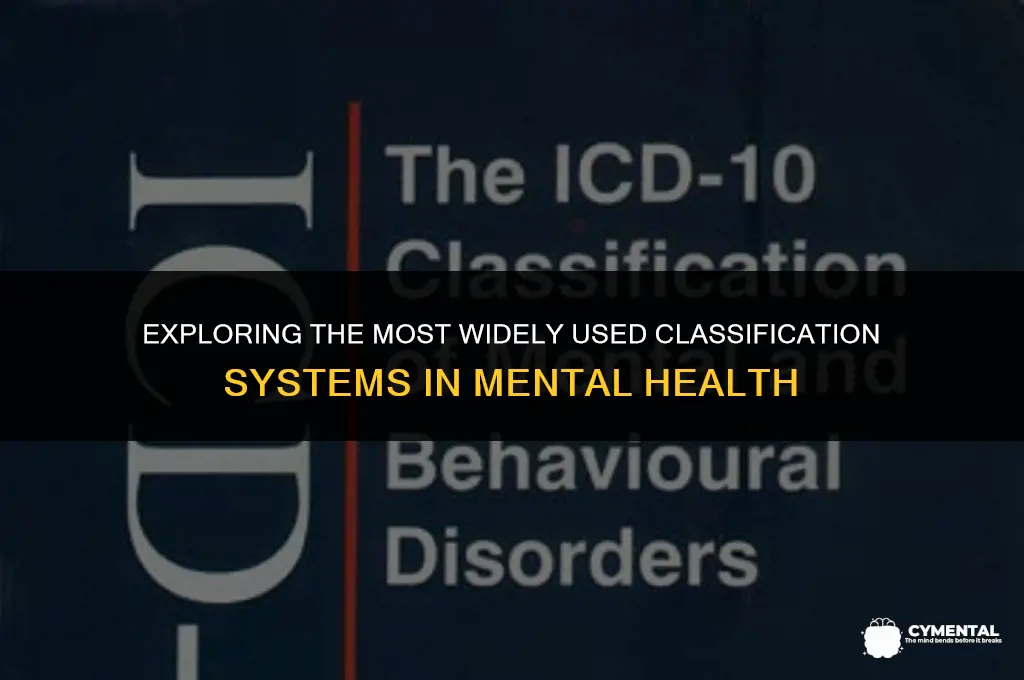
The classification system most widely used in mental health is the Diagnostic and Statistical Manual of Mental Disorders (DSM). Published by the American Psychiatric Association, the DSM provides a standardized framework for diagnosing mental health conditions. It includes detailed criteria for various disorders, facilitating communication among mental health professionals and ensuring consistency in diagnosis and treatment planning. The DSM has undergone several revisions, with the latest edition, DSM-5, released in 2013, incorporating updated research and clinical perspectives. While other classification systems exist, such as the International Classification of Diseases (ICD) by the World Health Organization, the DSM remains the predominant tool in the field of mental health, particularly in the United States.
| Characteristics | Values |
|---|---|
| Widely Used | Yes |
| International | Yes |
| Diagnostic Tool | Yes |
| Classification | Mental Disorders |
| Update Frequency | Periodic |
| Evidence-Based | Yes |
| Clinical Utility | High |
| Research Utility | High |
| Educational Tool | Yes |
| Standardization | High |
Explore related products


What You'll Learn
- DSM-5: Widely used in the United States, it provides a standardized system for diagnosing mental disorders
- ICD-11: International classification system used globally, offering a comprehensive framework for mental health conditions
- Comparison: DSM-5 focuses more on clinical utility, while ICD-11 emphasizes global applicability and integration with other health systems
- Criticisms: Both systems face critiques regarding cultural sensitivity, validity, and the potential for over-diagnosis
- Alternatives: Other classification systems like the Psychodynamic Diagnostic Manual (PDM) offer different perspectives on mental health diagnosis

DSM-5: Widely used in the United States, it provides a standardized system for diagnosing mental disorders
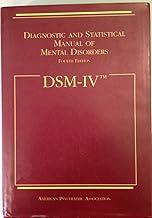
The DSM-5, or the Diagnostic and Statistical Manual of Mental Disorders, Fifth Edition, is a widely recognized and utilized classification system in the field of mental health, particularly in the United States. Published by the American Psychiatric Association (APA), this manual provides a comprehensive framework for diagnosing mental disorders, making it an indispensable tool for clinicians, researchers, and policymakers.
One of the key strengths of the DSM-5 lies in its standardized approach to diagnosis. By providing clear criteria for each mental disorder, the manual helps ensure consistency and accuracy in clinical practice. This standardization is crucial for effective communication among healthcare professionals, facilitating appropriate treatment planning and resource allocation. Moreover, the DSM-5's criteria are designed to be evidence-based, reflecting the latest research findings and clinical expertise in the field.
The DSM-5 also plays a significant role in shaping mental health policy and insurance coverage. Many insurance companies and government agencies rely on the manual's classifications to determine the scope of covered mental health services. This influence extends to the legal system as well, where the DSM-5's definitions may be used to inform decisions related to mental health law, such as involuntary commitment and disability benefits.
Despite its widespread use, the DSM-5 is not without its critics. Some argue that the manual's categorical approach to diagnosis oversimplifies the complex nature of mental health, potentially leading to misdiagnosis or overdiagnosis. Others contend that the DSM-5's focus on symptom-based criteria neglects the broader social and cultural contexts that can influence mental health. These criticisms have sparked ongoing debates within the mental health community, highlighting the need for continued refinement and improvement of diagnostic classification systems.
In conclusion, the DSM-5 serves as a critical tool in the mental health field, providing a standardized framework for diagnosing mental disorders. Its influence extends beyond clinical practice to shape policy, insurance coverage, and legal decisions. However, the manual's limitations and criticisms underscore the importance of ongoing dialogue and research to enhance our understanding of mental health classification systems.
Unlocking Mental Wellness: The Surprising Factors That Shape Your Mind
You may want to see also
Explore related products


ICD-11: International classification system used globally, offering a comprehensive framework for mental health conditions
The International Classification of Diseases, 11th Revision (ICD-11) is a globally recognized system that provides a comprehensive framework for classifying mental health conditions. It is the latest iteration of the ICD, which has been in use since 1949 and is regularly updated to reflect advances in medical science and changes in societal understanding of health and illness.
ICD-11 is used by healthcare professionals, researchers, and policymakers around the world to diagnose and treat mental health disorders, allocate resources, and monitor trends in mental health. The system is designed to be user-friendly and accessible, with a focus on ensuring that it is culturally sensitive and applicable across diverse populations and settings.
One of the key features of ICD-11 is its dimensional approach to classification, which allows for a more nuanced and personalized understanding of mental health conditions. This approach recognizes that mental health disorders often exist on a spectrum and can vary in severity and impact on an individual's life. ICD-11 also includes a number of new disorders that were not previously recognized, such as gaming disorder and burnout, reflecting the evolving nature of mental health challenges in the modern world.
In addition to its clinical utility, ICD-11 plays a critical role in shaping mental health policy and research. By providing a standardized language for describing mental health conditions, ICD-11 facilitates communication and collaboration among researchers, clinicians, and policymakers, ultimately leading to better outcomes for individuals with mental health disorders.
Overall, ICD-11 is a vital tool for understanding and addressing mental health issues on a global scale. Its comprehensive and dimensional approach to classification, combined with its cultural sensitivity and applicability across diverse populations, makes it an indispensable resource for anyone working in the field of mental health.
Unveiling the Connection: Green and Mental Health Awareness
You may want to see also
Explore related products


Comparison: DSM-5 focuses more on clinical utility, while ICD-11 emphasizes global applicability and integration with other health systems
The DSM-5 and ICD-11 are two prominent classification systems used in mental health, each with distinct focuses and applications. The DSM-5, developed by the American Psychiatric Association, is primarily used in the United States and has a strong emphasis on clinical utility. This means that it is designed to be practical and useful for clinicians in diagnosing and treating mental disorders. The DSM-5 includes detailed criteria for each disorder, which helps clinicians make accurate diagnoses and develop effective treatment plans.
On the other hand, the ICD-11, developed by the World Health Organization, is used internationally and places a greater emphasis on global applicability and integration with other health systems. This means that the ICD-11 is designed to be used across different countries and cultures, and to fit seamlessly with other health classification systems. The ICD-11 includes a broader range of disorders than the DSM-5, and it also provides more detailed information on the social and environmental factors that contribute to mental health problems.
One of the key differences between the DSM-5 and ICD-11 is their approach to diagnosis. The DSM-5 uses a categorical approach, where each disorder is seen as a distinct entity with specific criteria. In contrast, the ICD-11 uses a dimensional approach, where disorders are seen as existing on a spectrum and are defined by a range of symptoms and severity levels. This difference in approach has implications for how clinicians diagnose and treat mental disorders, and for how mental health services are organized and delivered.
Another important difference between the DSM-5 and ICD-11 is their level of detail. The DSM-5 provides more detailed criteria for each disorder, which can be helpful for clinicians in making accurate diagnoses. However, this level of detail can also make the DSM-5 more complex and difficult to use, especially for clinicians who are not familiar with it. The ICD-11, on the other hand, provides a more general overview of each disorder, which can make it easier to use for clinicians who are working in different countries and cultures.
In conclusion, the DSM-5 and ICD-11 are both valuable classification systems that serve different purposes in mental health. The DSM-5 is focused on clinical utility and is primarily used in the United States, while the ICD-11 is focused on global applicability and integration with other health systems and is used internationally. Understanding the differences between these two systems can help clinicians choose the most appropriate system for their practice and improve the quality of mental health care worldwide.
Navigating Recovery: Understanding the Role of Halfway Houses in Mental Health
You may want to see also
Explore related products


Criticisms: Both systems face critiques regarding cultural sensitivity, validity, and the potential for over-diagnosis
The criticisms leveled against the two predominant mental health classification systems, the DSM-5 and ICD-11, are multifaceted and significant. One major concern is cultural sensitivity. Both systems have been accused of being ethnocentric, primarily reflecting Western psychiatric concepts and practices. This can lead to misdiagnosis or inappropriate treatment for individuals from diverse cultural backgrounds. For instance, certain symptoms or behaviors that are considered pathological in Western cultures might be viewed as normal or even desirable in other societies.
Validity is another key issue. Critics argue that the criteria used in both systems are often subjective and can vary widely depending on the clinician's interpretation. This subjectivity can result in inconsistent diagnoses and treatment plans. Furthermore, the systems are periodically revised, which can lead to confusion and a lack of continuity in patient care.
Over-diagnosis is a third major criticism. The increasing specificity and detail in both systems can sometimes lead to the medicalization of normal human experiences. For example, grief, which is a natural response to loss, can be diagnosed as a depressive disorder under certain circumstances. This can result in unnecessary treatment and potentially harmful interventions.
In addition to these criticisms, there are concerns about the potential for both systems to be used in ways that stigmatize or marginalize certain groups. For instance, the DSM-5 includes a diagnosis for "antisocial personality disorder," which some argue can be used to criminalize individuals who do not conform to societal norms.
Despite these criticisms, both the DSM-5 and ICD-11 remain widely used and influential in the field of mental health. They provide a common language for clinicians and researchers, and they help to guide treatment decisions and resource allocation. However, it is important for mental health professionals to be aware of the limitations and potential biases of these systems and to use them in a way that is sensitive to the individual needs and cultural contexts of their patients.
Addressing the Absence: Why Women's Mental Health Month is Missing
You may want to see also
Explore related products


Alternatives: Other classification systems like the Psychodynamic Diagnostic Manual (PDM) offer different perspectives on mental health diagnosis
While the Diagnostic and Statistical Manual of Mental Disorders (DSM) is widely recognized and utilized in the field of mental health, it is not the only classification system available. The Psychodynamic Diagnostic Manual (PDM), for instance, offers a distinct perspective on mental health diagnosis. Developed by the American Psychoanalytic Association, the PDM emphasizes the importance of understanding the underlying psychodynamic processes that contribute to mental health issues.
One of the key differences between the DSM and PDM lies in their approach to diagnosis. The DSM primarily focuses on categorizing mental health disorders based on observable symptoms and behaviors, whereas the PDM takes into account the patient's subjective experience, interpersonal relationships, and unconscious processes. This psychodynamic approach aims to provide a more comprehensive understanding of the individual's mental health, rather than simply identifying a specific disorder.
The PDM also places a strong emphasis on the therapeutic relationship between the clinician and the patient. It suggests that the diagnostic process should be collaborative and involve active engagement with the patient, rather than relying solely on the clinician's observations. This approach can help to foster a more trusting and open relationship, which can be particularly beneficial in the treatment of mental health disorders.
Despite its unique perspective, the PDM is not as widely used as the DSM in clinical practice. One reason for this may be that the PDM is more complex and requires a higher level of training and expertise to use effectively. Additionally, the PDM's focus on unconscious processes and the therapeutic relationship may not be as easily quantifiable or replicable as the DSM's symptom-based approach.
However, the PDM continues to be an important resource for mental health professionals who are interested in exploring alternative approaches to diagnosis and treatment. Its emphasis on the subjective experience of the patient and the importance of the therapeutic relationship can provide valuable insights that can enhance the overall quality of care.
Understanding the Duration of a Mental Health Evaluation: A Comprehensive Guide
You may want to see also
Frequently asked questions
The Diagnostic and Statistical Manual of Mental Disorders (DSM) is the most widely used classification system in mental health globally. It is published by the American Psychiatric Association and provides a standardized set of criteria for diagnosing mental disorders.
The primary purpose of the DSM is to provide a common language and standardized criteria for mental health professionals to diagnose and communicate about mental disorders. It helps ensure consistency and accuracy in diagnosis, treatment planning, and research.
Yes, the International Classification of Diseases (ICD) is another significant classification system used in mental health. It is published by the World Health Organization and provides a global standard for classifying diseases, including mental and behavioral disorders.
The DSM focuses primarily on providing detailed diagnostic criteria for mental disorders, while the ICD provides a broader classification system that includes mental and behavioral disorders as well as other medical conditions. The DSM is more detailed and specific in its diagnostic criteria, while the ICD is more general and used for coding and billing purposes in addition to diagnosis.