Harper Lewis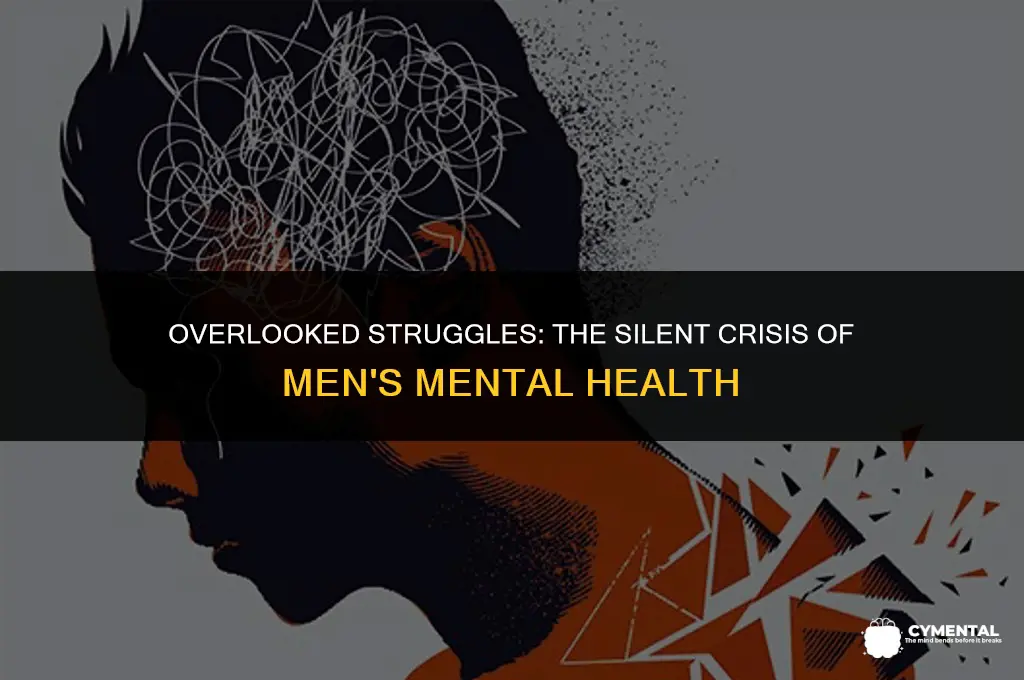
Men's mental health is often overlooked due to a combination of societal expectations, stigma, and lack of awareness. Traditionally, men have been conditioned to suppress their emotions and maintain a stoic facade, which can lead to reluctance in seeking help for mental health issues. Additionally, the stigma surrounding mental illness can deter men from openly discussing their struggles, fearing judgment or emasculation. This silence is further perpetuated by a lack of representation and resources specifically tailored to men's mental health needs. As a result, many men suffer in silence, leading to alarming rates of depression, anxiety, and suicide. It is crucial to address these barriers and promote a culture that encourages men to prioritize their mental well-being.
Explore related products

$7.84 $14.99


What You'll Learn
- Societal Expectations: Men are often expected to be strong and stoic, discouraging them from seeking help
- Stigma: Fear of being judged or labeled as weak prevents men from discussing their mental health
- Lack of Resources: Insufficient mental health services tailored to men's specific needs
- Cultural Norms: Some cultures view mental health issues as a sign of masculinity failure
- Economic Factors: Men may prioritize work and financial responsibilities over their mental well-being

Societal Expectations: Men are often expected to be strong and stoic, discouraging them from seeking help
Men are often socialized to embody strength and stoicism, traits that are traditionally associated with masculinity. This societal expectation can be detrimental to men's mental health, as it discourages them from expressing emotions or seeking help when they are struggling. The pressure to conform to these ideals can lead to a sense of isolation and shame, preventing men from reaching out for support and exacerbating mental health issues.
One of the ways in which societal expectations impact men's mental health is by creating a stigma around vulnerability. Men who express emotions or admit to struggling are often viewed as weak or inadequate, which can deter them from seeking professional help or even talking to friends and family about their problems. This stigma is reinforced by media portrayals of men as strong, silent figures who are able to handle any challenge on their own.
Another consequence of these expectations is that men may be less likely to recognize the signs of mental health issues in themselves. They may attribute feelings of sadness, anxiety, or hopelessness to temporary setbacks or personal failures, rather than acknowledging them as symptoms of a larger problem. This lack of awareness can delay treatment and make it more difficult for men to recover from mental health issues.
In order to address these issues, it is important to challenge societal expectations and promote a more nuanced understanding of masculinity. This can be done through education and awareness campaigns, as well as by encouraging open conversations about mental health. By creating a culture in which men feel comfortable expressing emotions and seeking help, we can work towards reducing the stigma surrounding mental health issues and improving outcomes for men who are struggling.
Establishing Hope: A Guide to Opening a Mental Health Facility
You may want to see also
Explore related products

$6.79 $14.99

$12.9 $16.99


Stigma: Fear of being judged or labeled as weak prevents men from discussing their mental health
The fear of being judged or labeled as weak is a significant barrier preventing men from discussing their mental health. This stigma is deeply rooted in societal expectations of masculinity, which often equate emotional vulnerability with weakness. As a result, men may feel compelled to suppress their feelings and suffer in silence, rather than seeking help and support.
One of the key factors contributing to this stigma is the way mental health issues are often portrayed in the media and popular culture. Men are frequently depicted as stoic and unemotional, and those who do express their feelings are often ridiculed or ostracized. This reinforces the harmful stereotype that men should be tough and resilient, and that seeking help for mental health issues is a sign of weakness.
Another factor is the lack of education and awareness about mental health issues among men. Many men may not recognize the signs and symptoms of mental health problems, or may not know where to turn for help. This lack of knowledge can contribute to feelings of shame and embarrassment, further preventing men from seeking support.
To address this stigma, it is essential to promote a more nuanced and compassionate understanding of masculinity. This includes challenging harmful stereotypes and encouraging open and honest conversations about mental health. Additionally, increasing education and awareness about mental health issues among men can help to reduce feelings of shame and embarrassment, and encourage more men to seek help and support.
Ultimately, breaking down the stigma surrounding men's mental health is a critical step in ensuring that all individuals have access to the care and support they need. By promoting a more inclusive and understanding culture, we can help to create a world where men feel comfortable discussing their mental health and seeking help when they need it.
Establishing Hope: A Guide to Starting Your Mental Health Clinic
You may want to see also
Explore related products


$13.29 $16.99


Lack of Resources: Insufficient mental health services tailored to men's specific needs
Men's mental health is often overlooked due to a significant lack of resources specifically tailored to their needs. While mental health services are available, they frequently fail to address the unique challenges and societal pressures that men face. This gap in targeted support can lead to men feeling misunderstood or inadequately assisted, further exacerbating the stigma surrounding mental health issues.
One of the primary reasons for this lack of resources is the prevailing societal expectation that men should be strong and stoic. This stereotype discourages men from seeking help and creates a barrier to accessing mental health services. As a result, many men suffer in silence, afraid to admit vulnerability or weakness.
Moreover, the mental health services that are available often adopt a one-size-fits-all approach, which can be ineffective for men. For instance, therapy sessions may focus on issues that are more commonly associated with women, such as relationship dynamics or emotional expression, rather than addressing the specific stressors and concerns that men experience. This misalignment can lead to men feeling disconnected from the support they receive, ultimately hindering their progress towards better mental health.
To address this issue, it is crucial to develop and promote mental health resources that are specifically designed for men. These resources should take into account the unique challenges that men face, such as societal pressures to conform to traditional masculine norms, the impact of trauma, and the specific mental health conditions that are more prevalent among men. By providing targeted support, we can help to break down the barriers that prevent men from seeking help and improve their overall mental well-being.
In conclusion, the lack of resources tailored to men's specific needs is a significant contributing factor to the neglect of men's mental health. By recognizing this gap and taking steps to address it, we can work towards creating a more inclusive and supportive mental health landscape for all individuals.
Exploring UMR's Mental Health Coverage: What You Need to Know
You may want to see also
Explore related products


Cultural Norms: Some cultures view mental health issues as a sign of masculinity failure
In many societies, mental health issues in men are often stigmatized as a sign of weakness or failure to uphold traditional masculine ideals. This cultural norm can be particularly damaging, as it discourages men from seeking help and perpetuates a cycle of silence and suffering. The expectation for men to be strong, stoic, and self-reliant can lead to a reluctance to admit vulnerability or seek support, even when it is desperately needed.
This stigma is deeply rooted in historical and societal constructs of masculinity. From a young age, boys are often taught to suppress emotions, to be tough, and to never show weakness. These messages are reinforced through media, peer groups, and family dynamics, creating a pervasive culture that values emotional resilience over mental well-being. As a result, men may feel ashamed or embarrassed about experiencing mental health issues, fearing that they will be judged or ostracized if they speak out.
The consequences of this stigma are severe. Men are less likely to seek professional help for mental health concerns, leading to higher rates of untreated depression, anxiety, and other psychological disorders. This can result in a range of negative outcomes, including substance abuse, social isolation, and even suicide. In fact, suicide is a leading cause of death among men in many countries, and the stigma surrounding mental health is a significant contributing factor.
To address this issue, it is crucial to challenge and dismantle the harmful cultural norms that equate mental health issues with masculinity failure. This can be done through education, awareness campaigns, and efforts to promote a more inclusive and supportive definition of masculinity. By encouraging open conversations about mental health and emphasizing the importance of seeking help when needed, we can work towards creating a society where men feel empowered to prioritize their mental well-being without fear of judgment or ridicule.
Ultimately, changing these cultural norms requires a collective effort from individuals, communities, and institutions. By fostering a culture of empathy, understanding, and support, we can help to break down the barriers that prevent men from accessing the mental health care they need and deserve.
Understanding the Cost of Mental Health Evaluations: A Comprehensive Guide
You may want to see also
Explore related products


Economic Factors: Men may prioritize work and financial responsibilities over their mental well-being
Men's mental health is often overshadowed by economic pressures, leading many to prioritize work and financial responsibilities over their psychological well-being. This phenomenon is deeply rooted in societal expectations and gender roles, where men are traditionally seen as breadwinners and providers. As a result, they may feel compelled to suppress their emotional struggles and focus solely on their professional obligations.
The consequences of this prioritization can be severe. Men who neglect their mental health in favor of economic pursuits may experience increased stress, anxiety, and depression. These conditions can further exacerbate physical health problems, such as cardiovascular disease and substance abuse, which are already prevalent among men. Moreover, the relentless pursuit of financial success can lead to social isolation, strained relationships, and a diminished sense of purpose beyond monetary achievement.
To address this issue, it is crucial to challenge and redefine traditional gender roles. Society must recognize that mental health is not a luxury but a necessity, and that seeking help is a sign of strength, not weakness. Employers can also play a role by promoting work-life balance, offering mental health resources, and fostering a supportive work environment. Additionally, men must be encouraged to engage in open conversations about their emotional struggles and to seek professional help when needed.
Ultimately, the economic factors contributing to men's mental health issues are complex and multifaceted. However, by raising awareness, challenging societal norms, and providing accessible resources, we can begin to mitigate these pressures and promote a healthier, more balanced approach to work and life.
Unveiling the Vital Role of Mental Health Nurses: A Comprehensive Guide
You may want to see also
Frequently asked questions
Men's mental health is often ignored due to societal expectations and stereotypes that view men as strong and invulnerable. These norms can discourage men from seeking help and lead to a lack of awareness and support for their mental health needs.
Ignoring men's mental health can have severe consequences, including increased rates of depression, anxiety, substance abuse, and suicide. It can also lead to strained relationships, workplace issues, and overall decreased quality of life.
Addressing this issue requires a multifaceted approach. It involves challenging harmful stereotypes, increasing awareness and education about men's mental health, providing accessible mental health services, and encouraging open conversations about emotions and well-being.
Media and popular culture often reinforce stereotypes of masculinity and emotional suppression, which can contribute to the stigma surrounding men's mental health. By portraying men as stoic and unemotional, these platforms can inadvertently discourage men from expressing their feelings and seeking help when needed.