Caleb Wright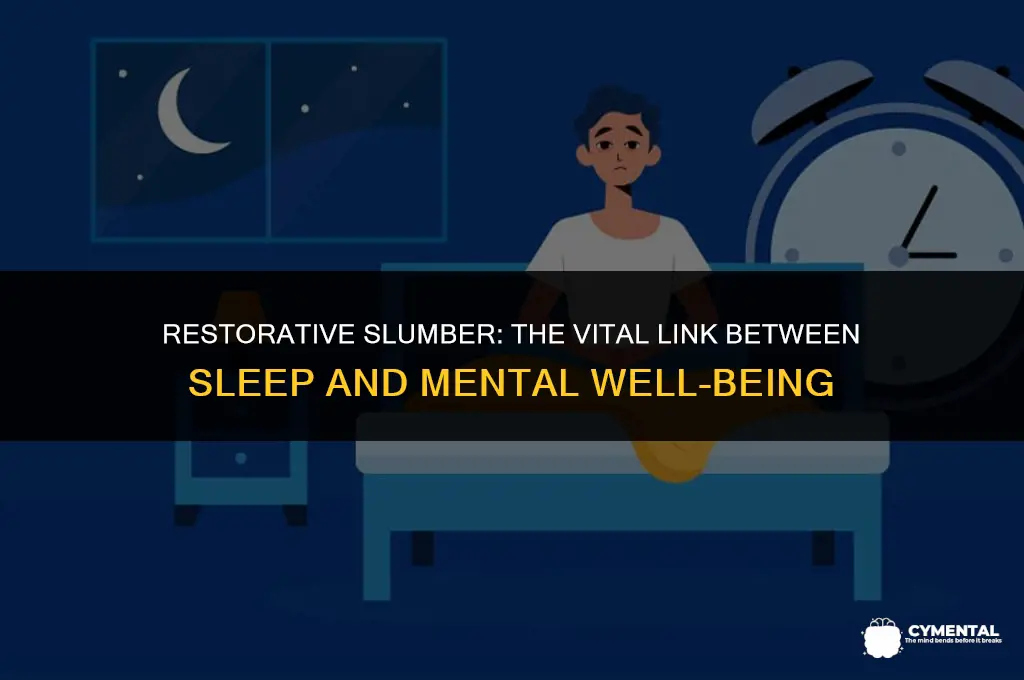
Sleep plays a crucial role in maintaining mental health. During sleep, the brain undergoes essential processes that help regulate emotions, consolidate memories, and reduce stress. Lack of sleep can lead to increased anxiety, depression, and cognitive impairment. It is important to prioritize sleep as part of a healthy lifestyle to support overall mental well-being.
Explore related products





What You'll Learn
- Brain Restoration: Sleep allows the brain to repair and rejuvenate itself, consolidating memories and clearing waste
- Mood Regulation: Adequate sleep helps maintain emotional balance, reducing the risk of mood disorders like depression and anxiety
- Cognitive Function: Sleep is crucial for cognitive processes such as attention, decision-making, and problem-solving abilities
- Stress Reduction: Quality sleep can lower stress levels by regulating cortisol, the body's stress hormone
- Overall Well-being: Sleep impacts overall mental health by improving resilience, self-esteem, and the ability to cope with challenges

Brain Restoration: Sleep allows the brain to repair and rejuvenate itself, consolidating memories and clearing waste
During sleep, the brain undergoes a series of restorative processes that are crucial for maintaining mental health. One of the key functions of sleep is to consolidate memories, transferring them from short-term to long-term storage. This process, known as synaptic plasticity, strengthens the connections between neurons, ensuring that memories are retained and can be easily accessed when needed. Without adequate sleep, these connections may weaken, leading to difficulties in memory recall and cognitive impairment.
Sleep also plays a vital role in clearing waste from the brain. The glymphatic system, a network of glial cells, works to remove toxins and debris that accumulate during waking hours. This waste clearance is essential for preventing the buildup of harmful substances that can lead to neurodegenerative diseases such as Alzheimer's. Studies have shown that sleep deprivation can disrupt this process, allowing waste to accumulate and potentially causing long-term damage to brain cells.
Furthermore, sleep is necessary for the repair and rejuvenation of brain cells. During deep sleep, the body produces growth hormones that stimulate cell repair and regeneration. This process helps to maintain the health and functionality of brain cells, ensuring that they can perform their tasks efficiently. Chronic sleep deprivation can lead to a decrease in the production of these growth hormones, resulting in impaired cognitive function and an increased risk of mental health disorders.
In addition to these restorative functions, sleep also helps to regulate emotions and reduce stress. The amygdala, a region of the brain responsible for processing emotions, is highly active during sleep. This activity helps to dampen emotional responses, reducing the intensity of feelings such as anxiety and depression. Adequate sleep can therefore help to improve emotional resilience and reduce the risk of developing mental health problems.
Overall, the restorative processes that occur during sleep are essential for maintaining mental health. By consolidating memories, clearing waste, repairing cells, and regulating emotions, sleep plays a critical role in ensuring that the brain functions optimally. It is therefore important to prioritize sleep and to seek help if sleep disturbances are affecting mental well-being.
Unveiling the Salary Potential for Mental Health Counselors
You may want to see also
Explore related products





Mood Regulation: Adequate sleep helps maintain emotional balance, reducing the risk of mood disorders like depression and anxiety
Adequate sleep plays a crucial role in maintaining emotional balance and reducing the risk of mood disorders such as depression and anxiety. During sleep, the brain processes and consolidates emotional experiences, helping to regulate mood and prevent the escalation of negative emotions. Research has shown that sleep deprivation can lead to increased irritability, emotional reactivity, and a heightened risk of developing mood disorders.
One of the key mechanisms by which sleep helps regulate mood is through the modulation of neurotransmitters such as serotonin and norepinephrine. These neurotransmitters are essential for maintaining emotional balance, and sleep deprivation has been shown to disrupt their normal functioning. Additionally, sleep helps to reduce stress levels by promoting the release of stress hormones such as cortisol. Chronic sleep deprivation can lead to elevated cortisol levels, which can contribute to the development of mood disorders.
Furthermore, sleep plays a critical role in cognitive function, including attention, memory, and problem-solving abilities. These cognitive processes are essential for managing stress and maintaining emotional balance. Sleep deprivation can impair cognitive function, making it more difficult to cope with stressors and increasing the risk of mood disorders.
In conclusion, adequate sleep is essential for maintaining emotional balance and reducing the risk of mood disorders. By promoting the regulation of neurotransmitters, reducing stress levels, and supporting cognitive function, sleep plays a critical role in protecting mental health. It is important to prioritize sleep as part of a healthy lifestyle to support overall well-being.
Empowering Men: A Guide to Observing Mental Health Day
You may want to see also
Explore related products


Cognitive Function: Sleep is crucial for cognitive processes such as attention, decision-making, and problem-solving abilities
Sleep plays a pivotal role in maintaining cognitive function, which encompasses various mental processes essential for daily life. One of the primary cognitive processes affected by sleep is attention. Research indicates that adequate sleep enhances the ability to focus and concentrate, thereby improving overall productivity and performance in tasks that require sustained attention. Conversely, sleep deprivation can lead to attentional lapses, making it challenging to stay focused on tasks, which can result in decreased efficiency and increased errors.
Decision-making is another critical cognitive process that is significantly influenced by sleep. Studies have shown that well-rested individuals tend to make better decisions, demonstrating improved judgment and risk assessment. Sleep deprivation, on the other hand, can impair decision-making abilities, leading to impulsive choices and a higher likelihood of engaging in risky behaviors. This is particularly concerning in situations that require quick and accurate decision-making, such as driving or operating heavy machinery.
Problem-solving abilities are also closely linked to sleep. During sleep, the brain consolidates information and processes complex problems, often leading to insights and solutions that may not have been apparent during wakefulness. This is why many people find that they can solve problems more effectively after a good night's sleep. Sleep deprivation can hinder this process, making it more difficult to think creatively and find innovative solutions to problems.
In addition to these cognitive processes, sleep also plays a role in emotional regulation and memory consolidation. Adequate sleep helps to regulate emotions, reducing the likelihood of mood swings and irritability. It also aids in the consolidation of memories, ensuring that information learned during the day is stored and retrieved effectively. Sleep deprivation can disrupt these processes, leading to emotional instability and memory impairments.
Overall, the importance of sleep for cognitive function cannot be overstated. By prioritizing sleep and maintaining a consistent sleep schedule, individuals can enhance their cognitive abilities, leading to improved performance in various aspects of life. It is essential to recognize the signs of sleep deprivation and take steps to address them, such as creating a conducive sleep environment, practicing good sleep hygiene, and seeking professional help if necessary.
Unveiling the Origins: Mental Health Awareness Month's Journey
You may want to see also
Explore related products


Stress Reduction: Quality sleep can lower stress levels by regulating cortisol, the body's stress hormone
Cortisol, often referred to as the "stress hormone," plays a crucial role in the body's response to stress. When we experience stress, our adrenal glands release cortisol into the bloodstream, which helps us cope with the immediate threat. However, chronic stress can lead to persistently high cortisol levels, which can have detrimental effects on our mental and physical health. Quality sleep is essential for regulating cortisol levels and reducing stress.
During sleep, our body undergoes various restorative processes, including the regulation of hormone levels. Research has shown that adequate sleep can help normalize cortisol levels, reducing the negative impact of stress on our bodies. In contrast, sleep deprivation can lead to increased cortisol levels, making us more susceptible to stress and its associated health problems.
One of the ways sleep helps regulate cortisol is by promoting the release of growth hormone, which is essential for tissue repair and regeneration. Growth hormone also helps to balance cortisol levels, ensuring that our body is better equipped to handle stress. Additionally, sleep helps to support the immune system, which can be compromised by chronic stress and high cortisol levels.
To maximize the stress-reducing benefits of sleep, it's essential to prioritize good sleep hygiene. This includes maintaining a consistent sleep schedule, creating a relaxing bedtime routine, and ensuring that your sleep environment is conducive to restful sleep. By making sleep a priority, you can help regulate your cortisol levels and reduce the negative impact of stress on your mental and physical health.
In conclusion, quality sleep is a powerful tool for stress reduction. By regulating cortisol levels and supporting the body's restorative processes, sleep can help us cope with stress more effectively and improve our overall well-being. By prioritizing good sleep hygiene and making sleep a priority, we can harness the stress-reducing benefits of sleep and live healthier, happier lives.
Where to Purchase Mental Health Awareness Ribbons: A Comprehensive Guide
You may want to see also
Explore related products


Overall Well-being: Sleep impacts overall mental health by improving resilience, self-esteem, and the ability to cope with challenges
Sleep plays a crucial role in enhancing overall mental health by significantly improving resilience, self-esteem, and the ability to cope with challenges. Resilience, the capacity to recover quickly from difficulties, is bolstered by adequate sleep as it allows the brain to process and consolidate emotional experiences, leading to better emotional regulation. This, in turn, enables individuals to bounce back more effectively from setbacks and stressors.
Self-esteem, which is the degree to which one feels confident and valuable, is also positively influenced by sleep. During sleep, the brain undergoes processes that reinforce positive self-regard and diminish negative self-perceptions. This results in a more stable and positive self-image, which is essential for mental well-being. Moreover, sufficient sleep helps in maintaining a balanced perspective on life's challenges, preventing the magnification of failures and promoting a growth mindset.
The ability to cope with challenges is another critical aspect of mental health that is enhanced by sleep. When well-rested, individuals are better equipped to handle stress and adversity. Sleep deprivation, on the other hand, can lead to heightened anxiety, irritability, and a decreased ability to problem-solve effectively. This can result in feeling overwhelmed by challenges, which may further exacerbate mental health issues.
In conclusion, prioritizing sleep is essential for fostering resilience, self-esteem, and coping mechanisms, all of which are vital components of overall mental health. By ensuring adequate and quality sleep, individuals can significantly improve their ability to navigate life's challenges with greater ease and confidence.
Understanding ASAM: A Comprehensive Guide to Mental Health Assessment
You may want to see also
Frequently asked questions
Sleep plays a vital role in mental health by allowing the brain to process and consolidate emotions, memories, and experiences. During sleep, the brain undergoes essential maintenance and repair processes, which help to regulate mood, reduce stress, and improve cognitive function. Lack of sleep can disrupt these processes, leading to increased vulnerability to mental health issues such as anxiety, depression, and mood disorders.
Sleep deprivation can have significant negative effects on mental health. It can lead to increased stress levels, anxiety, and irritability. Prolonged sleep deprivation can also contribute to the development of more severe mental health conditions, such as depression and psychosis. Additionally, sleep deprivation can impair cognitive function, making it difficult to concentrate, make decisions, and process information effectively.
Improving sleep quality can have a positive impact on mental health. Some strategies for enhancing sleep quality include maintaining a consistent sleep schedule, creating a relaxing bedtime routine, ensuring a comfortable sleep environment, limiting exposure to screens before bedtime, and engaging in regular physical activity. Additionally, practicing stress management techniques, such as meditation or deep breathing exercises, can help to promote relaxation and improve sleep quality.
Sleep plays a critical role in emotional regulation and mood stability. During sleep, the brain processes and consolidates emotional experiences, which helps to regulate mood and reduce emotional reactivity. Lack of sleep can disrupt this process, leading to increased emotional sensitivity, mood swings, and difficulty managing emotions. Adequate sleep, on the other hand, can help to improve emotional resilience and promote a more stable mood.