Caleb Wright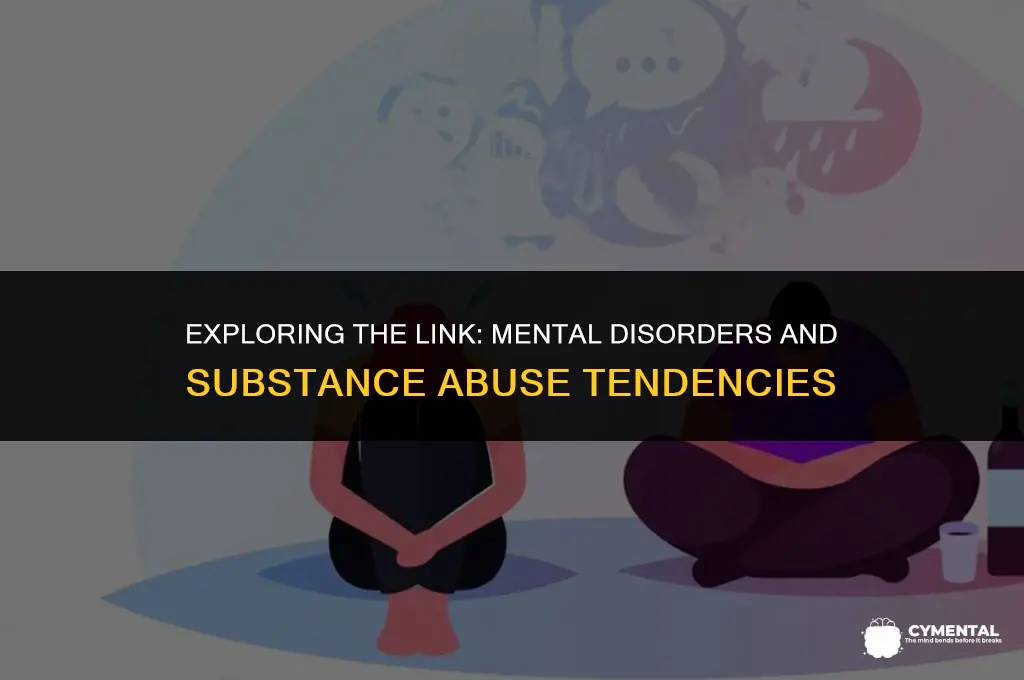
The relationship between mental disorders and substance abuse is complex and multifaceted. Research indicates that individuals with certain mental health conditions may be more prone to abusing specific drugs as a form of self-medication or coping mechanism. For instance, those with anxiety disorders might turn to benzodiazepines or alcohol to alleviate their symptoms, while individuals with depression may seek out stimulants like cocaine or methamphetamine to temporarily boost their mood. Additionally, the presence of a mental disorder can influence an individual's susceptibility to addiction, as well as their response to treatment. Understanding these connections is crucial for developing effective prevention and intervention strategies in the field of mental health and substance abuse.
Explore related products


$31.54 $59.99


What You'll Learn
- Correlation Between Mental Disorders and Substance Abuse: Exploring the statistical relationship between specific mental health conditions and drug abuse patterns
- Dual Diagnosis: Understanding the phenomenon where individuals suffer from both mental illness and substance use disorders simultaneously
- Self-Medication Hypothesis: Investigating the theory that individuals with mental disorders may use drugs as a form of self-medication to alleviate symptoms
- Neurobiological Factors: Examining how underlying brain chemistry and function might influence both mental health and substance abuse tendencies
- Environmental and Social Influences: Analyzing how social factors, such as peer pressure and socioeconomic status, might contribute to the development of both mental disorders and drug abuse

Correlation Between Mental Disorders and Substance Abuse: Exploring the statistical relationship between specific mental health conditions and drug abuse patterns
Individuals with bipolar disorder are often found to have higher rates of substance abuse compared to the general population. The manic phases of bipolar disorder can lead to impulsive behaviors, including drug use, while the depressive phases may drive individuals to seek solace in substances. Studies have shown that approximately 50% of individuals with bipolar disorder will experience a substance use disorder at some point in their lives.
Schizophrenia is another mental health condition that is frequently associated with substance abuse. The symptoms of schizophrenia, such as hallucinations and delusions, can sometimes be exacerbated by drug use, particularly stimulants and hallucinogens. Conversely, individuals with schizophrenia may turn to substances as a way to cope with their symptoms or the side effects of their medication. Research indicates that around 50% of individuals with schizophrenia will also develop a substance use disorder.
Post-traumatic stress disorder (PTSD) is often linked to substance abuse as well. Individuals with PTSD may use drugs or alcohol as a means of self-medication to alleviate their symptoms, such as anxiety, flashbacks, and nightmares. The numbing effects of substances can provide temporary relief from the emotional pain associated with PTSD. Studies have found that up to 50% of individuals with PTSD also struggle with substance abuse.
Attention deficit hyperactivity disorder (ADHD) is another condition that has been linked to substance abuse. The impulsivity and risk-taking behaviors associated with ADHD can make individuals more susceptible to drug use. Additionally, some individuals with ADHD may turn to substances as a way to cope with the stress and frustration of managing their symptoms. Research suggests that individuals with ADHD are more likely to develop a substance use disorder, with rates ranging from 20% to 40%.
It is important to note that while there is a correlation between mental disorders and substance abuse, this does not necessarily imply causation. The relationship between the two is complex and can be influenced by a variety of factors, including genetics, environment, and individual circumstances. Treatment for both mental health conditions and substance abuse should be comprehensive and address the unique needs of each individual.
Exploring Canine Mental Health: Do Dogs Experience Disorders?
You may want to see also
Explore related products


Dual Diagnosis: Understanding the phenomenon where individuals suffer from both mental illness and substance use disorders simultaneously
Individuals suffering from dual diagnosis face a complex interplay between their mental health condition and substance use disorder. This phenomenon is not merely a coincidence but often a result of underlying neurobiological, psychological, and social factors that contribute to the development and maintenance of both conditions. For instance, someone with depression may turn to alcohol or drugs as a form of self-medication to alleviate their symptoms, while the substance use itself can exacerbate or even trigger mental health issues.
One of the challenges in addressing dual diagnosis is the need for an integrated treatment approach that tackles both the mental illness and the substance use disorder simultaneously. Traditional treatment methods that focus on one condition at a time may not be effective in this case, as the untreated condition can undermine the progress made in the other. Integrated treatment plans often involve a combination of medication, psychotherapy, and support groups, tailored to the individual's specific needs and circumstances.
Another critical aspect of dual diagnosis is the increased risk of relapse and the potential for one condition to worsen the other. For example, a person with schizophrenia who also struggles with opioid addiction may experience more severe psychotic symptoms when they relapse into drug use. Similarly, someone with bipolar disorder may find that their manic or depressive episodes are triggered or intensified by substance abuse. This highlights the importance of ongoing support and monitoring for individuals with dual diagnosis, even after they have completed initial treatment.
In terms of specific mental disorders and their relationship to substance abuse, research has shown that certain conditions are more likely to co-occur with addiction. For instance, individuals with borderline personality disorder, post-traumatic stress disorder (PTSD), and attention deficit hyperactivity disorder (ADHD) are at a higher risk of developing substance use disorders. This may be due to the fact that these conditions often involve impulsivity, emotional dysregulation, and a tendency to engage in risky behaviors, which can increase the likelihood of substance abuse.
Understanding the unique challenges faced by individuals with dual diagnosis is crucial for developing effective treatment strategies and improving outcomes. By recognizing the complex interplay between mental illness and substance use disorders, healthcare providers can offer more comprehensive and compassionate care to those struggling with these co-occurring conditions. This includes not only addressing the immediate symptoms of each disorder but also working to identify and address the underlying factors that contribute to the development and maintenance of both conditions.
Unraveling the Mind of a Monster: Jeff Dahmer's Psychological Profile
You may want to see also
Explore related products


Self-Medication Hypothesis: Investigating the theory that individuals with mental disorders may use drugs as a form of self-medication to alleviate symptoms
Individuals with mental disorders often face a complex interplay of symptoms that can be challenging to manage. The self-medication hypothesis proposes that these individuals may turn to drugs as a means of alleviating their symptoms, potentially leading to substance abuse. This theory suggests that the use of drugs might be an attempt to cope with the distressing effects of mental illness, such as anxiety, depression, or psychosis.
Research has shown that certain mental disorders are indeed associated with a higher likelihood of substance abuse. For example, individuals with bipolar disorder or schizophrenia may use drugs to mitigate the side effects of their medication or to cope with the emotional turmoil associated with their condition. Similarly, those with post-traumatic stress disorder (PTSD) might turn to substances as a way to numb the emotional pain and flashbacks they experience.
However, the relationship between mental disorders and substance abuse is not straightforward. While some individuals may use drugs as a form of self-medication, others may develop substance abuse issues independently of their mental health condition. Furthermore, the use of drugs can exacerbate mental health symptoms, creating a vicious cycle that is difficult to break.
Investigating the self-medication hypothesis requires a nuanced approach that takes into account the complex interactions between mental health, substance use, and individual circumstances. By understanding the underlying motivations for drug use in individuals with mental disorders, we can develop more effective treatment strategies that address both the mental health condition and the substance abuse issue simultaneously.
Ultimately, the self-medication hypothesis highlights the importance of addressing mental health issues comprehensively, including providing access to appropriate psychiatric care and substance abuse treatment. By doing so, we can help individuals with mental disorders manage their symptoms effectively and reduce the risk of substance abuse and its associated consequences.
Unraveling the Genetic Links: Mental Disorders and Hereditary Factors
You may want to see also
Explore related products


Neurobiological Factors: Examining how underlying brain chemistry and function might influence both mental health and substance abuse tendencies
The intricate relationship between neurobiological factors and substance abuse tendencies is a critical area of study within the realm of mental health. Research indicates that underlying brain chemistry and function play a significant role in influencing both mental health conditions and the propensity for substance abuse. For instance, imbalances in neurotransmitters such as dopamine, serotonin, and norepinephrine have been linked to various mental disorders, including depression, anxiety, and schizophrenia. These same neurotransmitters are also implicated in the brain's reward system, which can be hijacked by substance abuse, leading to addiction.
One of the key neurobiological factors contributing to substance abuse tendencies is the concept of self-medication. Individuals with mental health disorders may turn to substances as a way to alleviate their symptoms, albeit temporarily. For example, someone with depression might use stimulants to boost their mood, while an individual with anxiety might resort to alcohol to reduce their stress levels. This self-medication hypothesis suggests that the underlying neurobiological mechanisms of mental health disorders drive individuals to seek out substances that can provide symptomatic relief, even if such substances ultimately exacerbate their condition.
Furthermore, genetic predispositions can also influence the interplay between mental health and substance abuse. Studies have shown that certain genetic variations can increase the risk of developing both mental health disorders and substance abuse problems. For instance, genes involved in the metabolism of neurotransmitters or in the regulation of the brain's reward system may contribute to an individual's susceptibility to addiction. Environmental factors, such as early life trauma or chronic stress, can also impact neurobiological development and increase the likelihood of both mental health issues and substance abuse.
Understanding these neurobiological factors is crucial for developing effective treatment strategies for individuals struggling with co-occurring mental health and substance abuse disorders. Integrated treatment approaches that address both the mental health condition and the substance abuse problem simultaneously are often more successful than treating each issue in isolation. Such approaches may include a combination of pharmacotherapy, psychotherapy, and behavioral interventions tailored to the individual's specific neurobiological profile and needs.
In conclusion, the examination of neurobiological factors provides valuable insights into the complex relationship between mental health and substance abuse tendencies. By recognizing the underlying brain chemistry and function that contribute to these issues, we can better design interventions that target the root causes of these problems, ultimately improving outcomes for those affected.
Understanding PTSD: Is Post-Traumatic Stress Disorder a Mental Illness?
You may want to see also
Explore related products


Environmental and Social Influences: Analyzing how social factors, such as peer pressure and socioeconomic status, might contribute to the development of both mental disorders and drug abuse
Peer pressure is a significant social factor that can contribute to the development of mental disorders and drug abuse. Adolescents and young adults are particularly vulnerable to peer influence, as they often seek acceptance and validation from their social groups. When peers encourage or normalize drug use, individuals may be more likely to engage in substance abuse, which can exacerbate underlying mental health issues or even lead to the development of new disorders. For example, a teenager with anxiety may start using marijuana to cope with social situations, but this could ultimately worsen their anxiety and lead to dependence on the drug.
Socioeconomic status is another crucial social factor that can impact mental health and substance abuse. Individuals from lower socioeconomic backgrounds may face increased stress due to financial instability, lack of access to healthcare, and exposure to violence or trauma. These stressors can contribute to the development of mental disorders such as depression and post-traumatic stress disorder (PTSD). Additionally, individuals from lower socioeconomic backgrounds may be more likely to use drugs as a coping mechanism or to self-medicate, which can lead to substance abuse and addiction. For instance, a person struggling with unemployment and financial insecurity may turn to opioids to numb the emotional pain, but this could quickly spiral into a dangerous addiction.
Cultural and societal norms also play a role in shaping attitudes towards drug use and mental health. In some cultures, drug use may be more accepted or even encouraged, while in others it may be stigmatized. Similarly, mental health issues may be viewed differently across cultures, with some societies placing more emphasis on seeking help and others prioritizing self-reliance. These cultural and societal factors can influence an individual's likelihood of developing a mental disorder or engaging in drug abuse. For example, a person from a culture that views drug use as a normal part of socializing may be more likely to experiment with substances, while someone from a culture that stigmatizes mental illness may be less likely to seek help for their symptoms.
Environmental factors, such as access to drugs and exposure to trauma, can also contribute to the development of mental disorders and drug abuse. Individuals who live in areas with high drug availability may be more likely to experiment with substances, while those who have experienced trauma may be more susceptible to developing mental health issues such as PTSD or depression. For instance, a person who has witnessed violence in their community may turn to drugs as a way to cope with the emotional aftermath, but this could ultimately lead to addiction and worsen their mental health symptoms.
In conclusion, social and environmental factors play a complex and interconnected role in the development of mental disorders and drug abuse. Peer pressure, socioeconomic status, cultural norms, and environmental factors can all contribute to an individual's likelihood of engaging in substance abuse or developing a mental health issue. By understanding these factors, we can better address the root causes of mental illness and addiction, and develop more effective prevention and treatment strategies.
Cultural Influences on Mental Health: A Comprehensive Exploration
You may want to see also
Frequently asked questions
Yes, individuals with depression are at a higher risk for substance abuse, particularly with drugs like alcohol, opioids, and stimulants, as they may seek to alleviate their symptoms.
Indeed, people with anxiety disorders often turn to drugs such as benzodiazepines, alcohol, and opioids to manage their anxiety, which can lead to abuse and dependency.
Research indicates that individuals with ADHD are more likely to abuse drugs, especially stimulants like cocaine and amphetamines, as well as nicotine and alcohol, possibly due to the impulsivity and risk-taking behaviors associated with the disorder.
Yes, substance abuse is prevalent among individuals with bipolar disorder. They may use drugs to stabilize their mood swings or to cope with the side effects of their medication, often leading to abuse of substances like alcohol, cocaine, and prescription medications.
Certain mental disorders, such as obsessive-compulsive disorder (OCD), may decrease the likelihood of drug abuse due to the individual's tendency towards rigid control and avoidance of behaviors that could lead to loss of control or negative consequences.