Noah Parker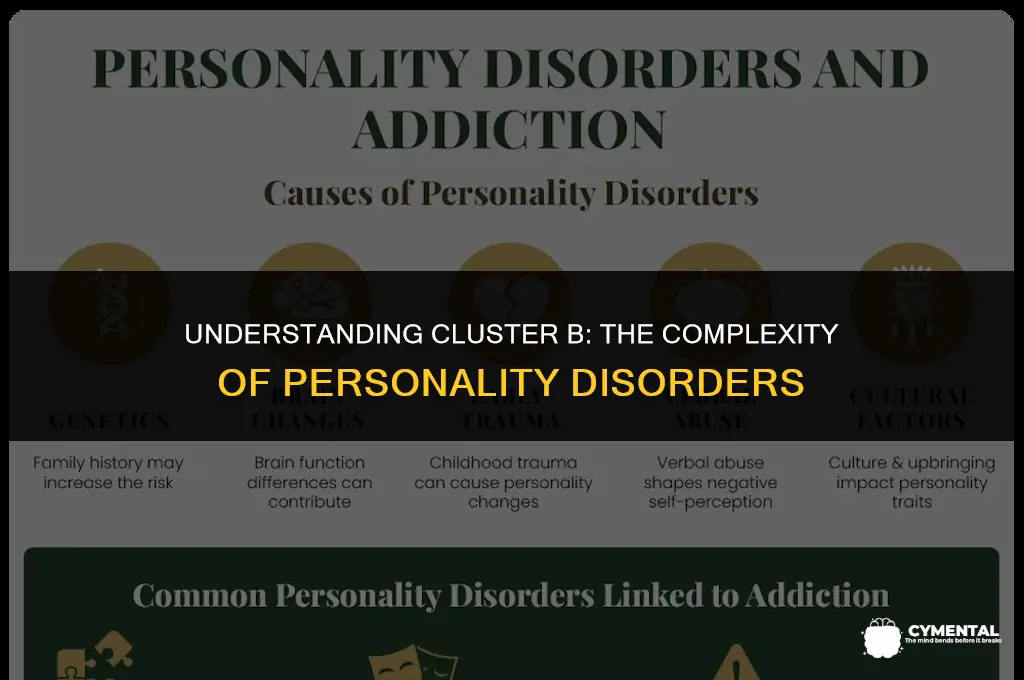
Cluster B personality disorders, which include antisocial, borderline, histrionic, and narcissistic personality disorders, are indeed recognized as mental illnesses. These conditions are characterized by pervasive patterns of behavior and interpersonal functioning that deviate significantly from societal norms and expectations. Individuals with Cluster B personality disorders often experience difficulties in forming and maintaining relationships, regulating emotions, and adapting to changes in their environment. While these disorders can be challenging to treat, various therapeutic approaches, such as dialectical behavior therapy and cognitive-behavioral therapy, have shown promise in helping individuals manage their symptoms and improve their quality of life. It is essential to approach these disorders with empathy and understanding, recognizing that they are legitimate mental health conditions that require support and treatment.
| Characteristics | Values |
|---|---|
| Definition | Cluster B personality disorders are a group of mental health conditions characterized by dramatic, emotional, or erratic behavior. |
| Types | Includes Antisocial Personality Disorder, Borderline Personality Disorder, Histrionic Personality Disorder, and Narcissistic Personality Disorder. |
| Prevalence | Estimated to affect around 1-3% of the general population, with varying rates for each specific disorder. |
| Symptoms | Common symptoms include impulsivity, emotional instability, manipulative behavior, and a lack of empathy. |
| Causes | Believed to be caused by a combination of genetic, environmental, and psychological factors. |
| Diagnosis | Diagnosed through clinical evaluation, often using criteria from the Diagnostic and Statistical Manual of Mental Disorders (DSM-5). |
| Treatment | Treatment typically involves psychotherapy, with medication sometimes used to manage associated symptoms. |
| Prognosis | Prognosis varies by disorder and individual, but with appropriate treatment, many people can lead fulfilling lives. |
| Impact on Relationships | These disorders can significantly impact personal and professional relationships due to the behavioral and emotional challenges they present. |
| Stigma | There is often stigma associated with personality disorders, which can hinder diagnosis and treatment. |
| Research | Ongoing research aims to better understand the underlying causes and develop more effective treatments for Cluster B personality disorders. |
| Support | Support groups and resources are available for individuals and families affected by these disorders. |
Explore related products

$13.99 $13.99

$16.77 $29.99


What You'll Learn
- Definition and Classification: Understanding what Cluster B personality disorders are and how they're categorized in mental health frameworks
- Types of Cluster B Disorders: Exploring the specific disorders within Cluster B, such as Antisocial, Borderline, Histrionic, and Narcissistic
- Symptoms and Diagnosis: Recognizing the common symptoms and criteria used to diagnose Cluster B personality disorders
- Causes and Risk Factors: Investigating the potential genetic, environmental, and psychological factors that contribute to the development of these disorders
- Treatment and Management: Discussing the various therapeutic approaches and strategies used to treat and manage Cluster B personality disorders

Definition and Classification: Understanding what Cluster B personality disorders are and how they're categorized in mental health frameworks
Cluster B personality disorders are a group of mental health conditions characterized by dramatic, emotional, or erratic behavior. These disorders are part of the Diagnostic and Statistical Manual of Mental Disorders (DSM-5), which is the standard reference used by mental health professionals to diagnose and classify mental illnesses. The DSM-5 categorizes personality disorders into three clusters: Cluster A, Cluster B, and Cluster C. Each cluster includes several specific personality disorders with distinct features.
The four personality disorders that fall under Cluster B are:
- Antisocial Personality Disorder (ASPD): Individuals with ASPD often disregard the rights of others and may engage in criminal behavior. They may lie, cheat, or manipulate others for personal gain and show a lack of remorse for their actions.
- Borderline Personality Disorder (BPD): People with BPD typically experience intense emotional instability and have a fear of abandonment. They may engage in self-harming behaviors, have suicidal thoughts, and exhibit impulsive actions.
- Histrionic Personality Disorder (HPD): Those with HPD are known for their dramatic and attention-seeking behavior. They may exaggerate their emotions and physical symptoms to gain attention from others.
- Narcissistic Personality Disorder (NPD): Individuals with NPD have an inflated sense of self-importance and may exhibit arrogant behavior. They often require admiration from others and may take advantage of people to achieve their own goals.
Understanding the classification of Cluster B personality disorders is crucial for mental health professionals to provide accurate diagnoses and effective treatment plans. Each disorder within this cluster has unique symptoms and requires a tailored approach to therapy. For example, Dialectical Behavior Therapy (DBT) is often used to treat BPD, while Cognitive Behavioral Therapy (CBT) may be more effective for individuals with ASPD.
In conclusion, Cluster B personality disorders are a distinct group of mental health conditions that are characterized by dramatic and emotional behavior. Accurate classification and diagnosis are essential for providing appropriate treatment and support to individuals affected by these disorders.
Understanding Anxiety: Is It a Mental Health Disorder?
You may want to see also
Explore related products

$14.99


Types of Cluster B Disorders: Exploring the specific disorders within Cluster B, such as Antisocial, Borderline, Histrionic, and Narcissistic
Cluster B personality disorders encompass a range of conditions characterized by dramatic, emotional, or erratic behavior. Within this cluster, four distinct disorders are identified: Antisocial, Borderline, Histrionic, and Narcissistic. Each disorder presents unique challenges and manifests in different ways, impacting an individual's daily life and relationships.
Antisocial Personality Disorder (ASPD) is marked by a disregard for the rights of others and a tendency to violate social norms. Individuals with ASPD may engage in criminal behavior, lie, and manipulate others for personal gain. They often lack empathy and remorse, which can lead to strained relationships and legal troubles.
Borderline Personality Disorder (BPD) is characterized by intense emotional instability and a fear of abandonment. People with BPD may experience rapid mood swings, engage in self-harming behaviors, and have difficulty maintaining stable relationships. They often struggle with a sense of identity and may impulsively engage in risky behaviors.
Histrionic Personality Disorder (HPD) involves a pattern of excessive emotionality and attention-seeking behavior. Individuals with HPD may be overly dramatic, flirtatious, and suggestible. They often crave approval and validation from others, which can lead to difficulties in forming genuine connections.
Narcissistic Personality Disorder (NPD) is defined by an inflated sense of self-importance and a need for admiration. People with NPD may be preoccupied with their own success and status, and they often exploit others to achieve their goals. They may lack empathy and have difficulty handling criticism or setbacks.
Understanding these disorders is crucial for providing appropriate treatment and support. Each disorder requires a tailored approach, often involving psychotherapy and, in some cases, medication. By recognizing the unique characteristics of each Cluster B disorder, mental health professionals can help individuals manage their symptoms and improve their quality of life.
Unveiling the Psychological Symbolism Behind Disney Princesses
You may want to see also
Explore related products


$11.99

$10.45 $19.95


Symptoms and Diagnosis: Recognizing the common symptoms and criteria used to diagnose Cluster B personality disorders
Cluster B personality disorders, which include antisocial, borderline, histrionic, and narcissistic personality disorders, are characterized by dramatic, emotional, or erratic behavior. Recognizing the symptoms of these disorders is crucial for accurate diagnosis and effective treatment. Common symptoms across Cluster B disorders include a tendency towards impulsivity, emotional instability, and difficulties in maintaining healthy relationships.
For antisocial personality disorder, symptoms may include a disregard for the rights of others, a tendency to lie or manipulate, and a lack of remorse for harmful actions. Borderline personality disorder is often marked by intense emotional swings, a fear of abandonment, and self-harming behaviors. Histrionic personality disorder typically presents with excessive emotionality, a need for attention, and dramatic or theatrical behavior. Narcissistic personality disorder is characterized by an inflated sense of self-importance, a need for admiration, and a lack of empathy for others.
Diagnosis of Cluster B personality disorders is based on a combination of clinical interviews, behavioral observations, and psychological assessments. Mental health professionals use criteria outlined in the Diagnostic and Statistical Manual of Mental Disorders (DSM-5) to determine if an individual meets the specific diagnostic criteria for a Cluster B disorder. This process involves a thorough evaluation of the individual's symptoms, personal history, and current functioning.
It is important to note that diagnosing personality disorders can be complex, as symptoms often overlap and individuals may exhibit traits from multiple disorders. Additionally, personality disorders are often comorbid with other mental health conditions, such as depression or anxiety, which can further complicate the diagnostic process. Accurate diagnosis is essential, however, as it guides treatment planning and helps individuals receive the appropriate care for their specific needs.
In conclusion, recognizing the symptoms and criteria used to diagnose Cluster B personality disorders is a critical step in understanding and addressing these mental health conditions. By identifying the unique characteristics of each disorder and using standardized diagnostic criteria, mental health professionals can provide accurate diagnoses and effective treatment plans for individuals struggling with these challenging conditions.
Understanding Anger: Is It a Mental Disorder?
You may want to see also
Explore related products


$14.2 $24.95



Causes and Risk Factors: Investigating the potential genetic, environmental, and psychological factors that contribute to the development of these disorders
Recent studies have identified several genetic markers that may predispose individuals to Cluster B personality disorders, such as variations in the genes responsible for serotonin regulation and impulse control. While no single gene can definitively cause these disorders, the interplay of multiple genetic factors can significantly increase an individual's vulnerability.
Environmental factors also play a crucial role in the development of Cluster B personality disorders. Childhood trauma, neglect, and inconsistent parenting can contribute to the formation of maladaptive coping mechanisms and interpersonal difficulties characteristic of these disorders. Additionally, exposure to chronic stress or adversity in adulthood can exacerbate underlying vulnerabilities and trigger the onset of symptoms.
Psychological factors, such as cognitive biases and emotional dysregulation, are also implicated in the development of Cluster B personality disorders. Individuals with these disorders often exhibit difficulties in accurately perceiving and interpreting social cues, leading to impaired interpersonal functioning. Furthermore, emotional instability and impulsivity can contribute to the erratic and unpredictable behavior patterns observed in these disorders.
It is important to note that the causes and risk factors for Cluster B personality disorders are complex and multifaceted, involving the interplay of genetic, environmental, and psychological factors. A comprehensive understanding of these factors is essential for developing effective prevention and treatment strategies.
Understanding Sociopathy: A Complex Personality Disorder Explained
You may want to see also
Explore related products


Treatment and Management: Discussing the various therapeutic approaches and strategies used to treat and manage Cluster B personality disorders
Therapeutic approaches for Cluster B personality disorders, which include antisocial, borderline, histrionic, and narcissistic personality disorders, are multifaceted and often require a combination of psychotherapy and medication. One of the primary goals of treatment is to help individuals manage their symptoms, improve their ability to function in daily life, and enhance their overall quality of life.
Psychotherapy, particularly cognitive-behavioral therapy (CBT) and dialectical behavior therapy (DBT), is often the first line of treatment for Cluster B personality disorders. CBT helps individuals identify and change negative thought patterns and behaviors, while DBT focuses on teaching skills such as mindfulness, emotion regulation, and interpersonal effectiveness. In some cases, other forms of psychotherapy, such as psychodynamic therapy or schema-focused therapy, may also be beneficial.
Medication can be used in conjunction with psychotherapy to help manage specific symptoms. For example, antidepressants may be prescribed to help with depression or anxiety, while mood stabilizers may be used to help with emotional dysregulation. In some cases, antipsychotic medications may be prescribed to help with symptoms such as paranoia or dissociation.
In addition to psychotherapy and medication, other strategies may be used to help manage Cluster B personality disorders. These may include self-help techniques, such as journaling or meditation, as well as support groups or family therapy. It is also important for individuals with Cluster B personality disorders to have a strong support system and to work closely with their healthcare providers to develop a comprehensive treatment plan.
Overall, the treatment and management of Cluster B personality disorders require a collaborative effort between the individual, their healthcare providers, and their support system. With the right combination of psychotherapy, medication, and other strategies, individuals with Cluster B personality disorders can learn to manage their symptoms and improve their overall quality of life.
Understanding Mental Health Disorders: A Comprehensive Guide
You may want to see also
Frequently asked questions
Yes, Cluster B personality disorders are recognized as mental health conditions. They are characterized by dramatic, emotional, or erratic behavior and include disorders such as antisocial, borderline, histrionic, and narcissistic personality disorders.
Common symptoms of Cluster B personality disorders vary by specific disorder but generally include intense emotional instability, impulsivity, manipulative behavior, and a lack of empathy. For example, individuals with borderline personality disorder may experience rapid mood swings and fear of abandonment, while those with narcissistic personality disorder may exhibit grandiosity and a need for admiration.
Diagnosis of Cluster B personality disorders typically involves a thorough psychological evaluation and assessment by a mental health professional. Treatment often includes psychotherapy, such as cognitive-behavioral therapy or dialectical behavior therapy, and in some cases, medication may be prescribed to manage associated symptoms like depression or anxiety.