Caleb Wright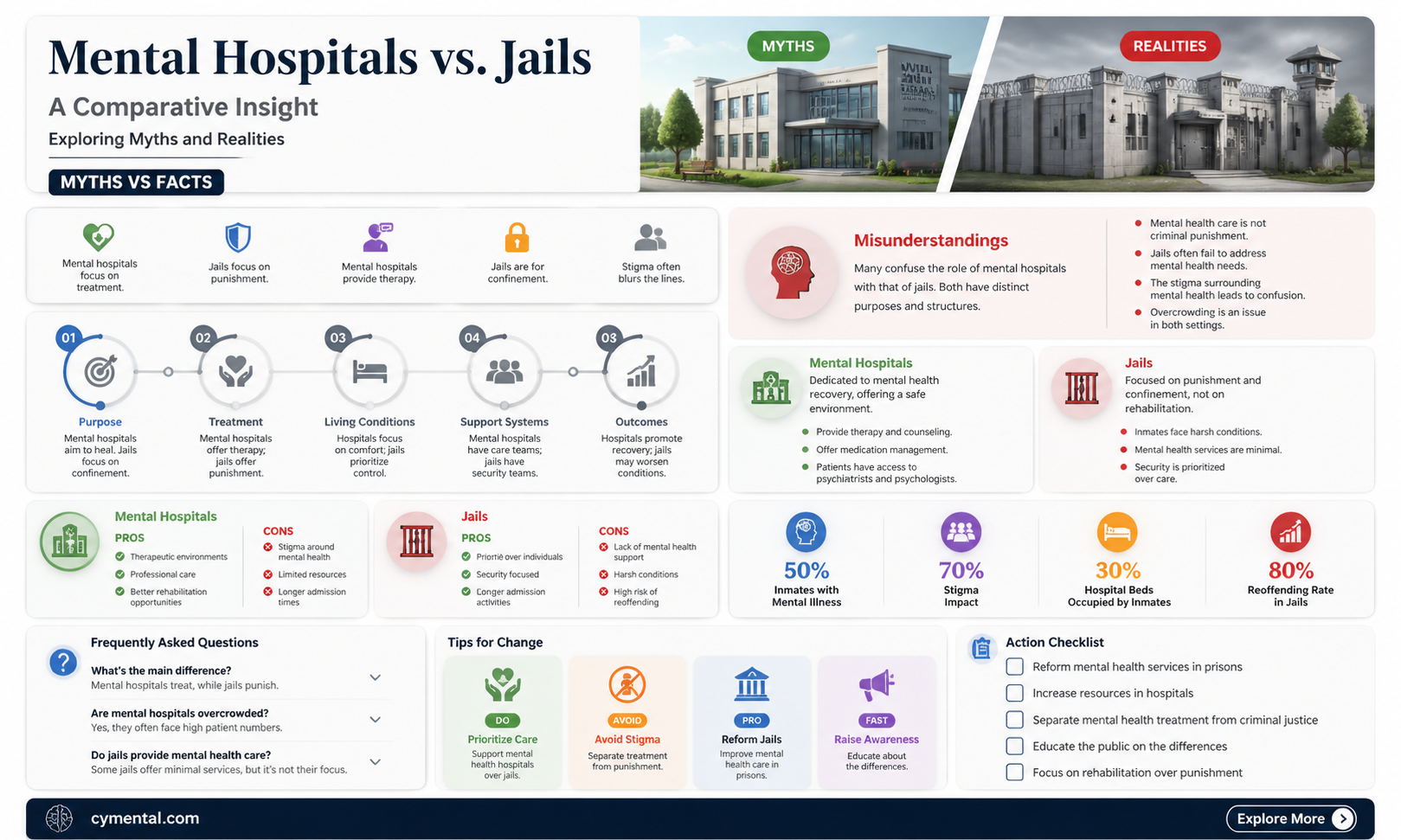
Mental hospitals and jails serve fundamentally different purposes within society, despite sometimes appearing similar in terms of structure and security. Mental hospitals, also known as psychiatric hospitals, are healthcare facilities designed to provide treatment and care for individuals suffering from mental health disorders. These institutions focus on therapeutic interventions, medication management, and creating a supportive environment that fosters recovery and rehabilitation. In contrast, jails are correctional facilities intended to incarcerate individuals who have committed crimes, with the primary goals being punishment, deterrence, and maintaining public safety. While both types of facilities may have controlled access, surveillance, and rules governing behavior, the underlying philosophies and objectives are distinct. This distinction is crucial in understanding the differences in the experiences of individuals within these institutions and the broader implications for mental health care and criminal justice systems.
Explore related products


What You'll Learn
- Security Measures: Mental hospitals have security protocols similar to jails to ensure patient and staff safety
- Patient Rights: Patients in mental hospitals have rights comparable to inmates, including legal representation and due process
- Living Conditions: The living environments in mental hospitals are often regulated and structured akin to correctional facilities
- Treatment vs. Punishment: Mental hospitals focus on treatment and rehabilitation, differing from the punitive approach of jails
- Stigma and Perception: Both mental hospitals and jails face societal stigma, affecting public perception and policy

Security Measures: Mental hospitals have security protocols similar to jails to ensure patient and staff safety
Mental hospitals employ a range of security measures that are indeed reminiscent of those found in jails, primarily to ensure the safety of both patients and staff. These protocols are designed to prevent incidents of violence, self-harm, and escape, which are critical concerns in such facilities. One of the key security measures is the use of locked wards and rooms, which restrict patient movement and access to potentially dangerous areas. Additionally, mental hospitals often have security personnel on site, including guards and surveillance systems, to monitor activities and respond to emergencies.
Another significant security protocol in mental hospitals is the implementation of strict access controls. This includes the use of keycard systems, biometric scanners, and other technologies to limit entry to authorized personnel only. Visitors are typically required to go through a thorough screening process, which may involve background checks and searches, to ensure they do not pose a threat to patients or staff. Furthermore, mental hospitals often have emergency response plans in place, which outline procedures for handling various types of incidents, such as hostage situations, riots, or medical emergencies.
The security measures in mental hospitals also extend to the management of patient belongings and personal items. Patients may be subject to searches, and their possessions may be limited or monitored to prevent the introduction of contraband or dangerous objects into the facility. Additionally, mental hospitals often have policies regarding the use of restraints, such as handcuffs or straitjackets, in situations where a patient poses an immediate risk to themselves or others. These measures are typically used as a last resort and are subject to strict guidelines and oversight.
In conclusion, the security measures in mental hospitals are comprehensive and multifaceted, designed to address the unique challenges and risks associated with caring for individuals with mental health issues. While these protocols may seem similar to those found in jails, they are tailored to the specific needs of a mental health setting, with a focus on providing a safe and therapeutic environment for patients while also protecting staff and visitors.
Understanding Mental Health Care Options for Children Under 12
You may want to see also
Explore related products


Patient Rights: Patients in mental hospitals have rights comparable to inmates, including legal representation and due process
Patients in mental hospitals are afforded a range of rights that are designed to protect them from abuse and ensure they are treated with dignity and respect. These rights are comparable to those of inmates in the criminal justice system, including the right to legal representation and due process. This means that patients have the right to a fair hearing before a judge or tribunal, the right to be represented by a lawyer, and the right to appeal decisions made about their care.
In addition to these fundamental legal rights, patients in mental hospitals also have the right to be informed about their treatment plans, including the medications they are being prescribed and the therapies they are receiving. They have the right to refuse treatment, although this may be overridden in certain circumstances if it is deemed necessary for their safety or the safety of others. Patients also have the right to privacy and confidentiality, and their personal information should not be shared without their consent.
One of the key differences between mental hospitals and jails is that patients in mental hospitals are not presumed guilty of any crime. They are being treated for a medical condition, and their rights are designed to ensure that they receive appropriate care and are not subjected to unnecessary harm or suffering. In contrast, inmates in jails are presumed guilty and are subject to a different set of rights and protections.
Despite these differences, there are some similarities between mental hospitals and jails. Both institutions are designed to confine individuals who are deemed to be a risk to themselves or others, and both institutions have rules and regulations that govern the behavior of those who are confined. However, the purpose of mental hospitals is to provide treatment and care, while the purpose of jails is to punish and rehabilitate.
In conclusion, patients in mental hospitals have a range of rights that are designed to protect them and ensure they receive appropriate care. These rights are comparable to those of inmates in jails, but there are key differences between the two institutions. Mental hospitals are designed to provide treatment and care, while jails are designed to punish and rehabilitate.
Orson's Enigmatic Encounter: Unraveling the Mental Hospital Mystery
You may want to see also
Explore related products


Living Conditions: The living environments in mental hospitals are often regulated and structured akin to correctional facilities
The living conditions in mental hospitals are often highly regulated and structured, bearing a resemblance to those found in correctional facilities. This comparison is not merely superficial; it reflects deeper systemic issues within the mental health care system. Patients in mental hospitals may find themselves subjected to strict rules and schedules, with limited personal autonomy. The environment can be stark and institutional, with an emphasis on control and order rather than comfort and rehabilitation.
One of the key similarities between mental hospitals and jails is the use of physical restraints and seclusion. In both settings, these measures are employed to manage behavior and maintain order. However, the justification for their use in mental hospitals is often rooted in the patients' mental health status, rather than criminal behavior. This raises ethical questions about the treatment of individuals with mental illness and whether such practices are truly therapeutic or merely punitive.
Another aspect of the living conditions in mental hospitals that mirrors those in correctional facilities is the lack of privacy. Patients may be subjected to constant surveillance, with little to no personal space. This can be particularly distressing for individuals who are already vulnerable due to their mental health conditions. The invasive nature of such an environment can exacerbate feelings of anxiety and paranoia, potentially hindering the recovery process.
Furthermore, the social dynamics within mental hospitals can also be reminiscent of those in jails. There may be a hierarchical structure among patients, with some individuals asserting dominance over others. This can lead to bullying and intimidation, creating an unsafe and hostile environment for those who are already struggling. Staff members may also contribute to this dynamic, either through overt actions or by turning a blind eye to patient interactions.
In conclusion, the living conditions in mental hospitals are often starkly similar to those in correctional facilities, with an emphasis on control, order, and security. This raises important questions about the treatment of individuals with mental illness and whether such an environment is conducive to healing and recovery. It is crucial that we reevaluate our approach to mental health care, prioritizing compassion, dignity, and therapeutic support over punitive measures and institutional control.
Exploring Havenwyck: A Comprehensive Review of Its Mental Health Services
You may want to see also
Explore related products


Treatment vs. Punishment: Mental hospitals focus on treatment and rehabilitation, differing from the punitive approach of jails
Mental hospitals and jails serve fundamentally different purposes in society, despite both being institutions where individuals are confined. The primary distinction lies in their approach to the individuals they house: mental hospitals focus on treatment and rehabilitation, while jails emphasize punishment and deterrence.
In mental hospitals, the primary goal is to provide therapeutic care to individuals suffering from mental health disorders. This includes a range of treatments such as psychotherapy, medication, and behavioral therapy. The aim is to help patients recover or manage their conditions so they can eventually reintegrate into society. The environment in mental hospitals is typically designed to be supportive and non-threatening, with an emphasis on creating a healing atmosphere.
In contrast, jails are designed to punish individuals who have committed crimes and to deter others from engaging in criminal behavior. The focus is on retribution and maintaining public safety. Jails often have a more restrictive and austere environment, with limited access to therapeutic services. While some jails do offer mental health care, it is generally not the primary focus, and the quality of care can vary significantly.
One key difference between the two institutions is the legal framework governing them. Mental hospitals operate under mental health laws, which prioritize the well-being of patients and often require a court order for involuntary commitment. Jails, on the other hand, are governed by criminal law, and individuals are typically confined following a conviction or while awaiting trial.
Another important distinction is the length of stay. In mental hospitals, the duration of treatment is determined by the patient's clinical needs and progress, and can vary widely. In jails, the length of confinement is dictated by the sentence imposed by the court, which is based on the severity of the crime and other factors such as the defendant's criminal history.
In conclusion, while both mental hospitals and jails involve confinement, they serve distinct purposes and operate under different principles. Mental hospitals are focused on providing therapeutic care and promoting recovery, while jails are designed to punish criminal behavior and protect public safety. Understanding these differences is crucial for developing effective policies and ensuring that individuals receive appropriate care and treatment.
Understanding Insurance Coverage for Mental Hospital Stays: A Comprehensive Guide
You may want to see also
Explore related products


Stigma and Perception: Both mental hospitals and jails face societal stigma, affecting public perception and policy
The societal stigma surrounding mental hospitals and jails significantly impacts public perception and policy. This stigma often stems from a lack of understanding and fear of the unknown, leading to negative stereotypes and misconceptions. For mental hospitals, the stigma can result in individuals being reluctant to seek treatment, fearing they will be labeled as "crazy" or "insane." This reluctance can exacerbate mental health issues, leading to more severe consequences. In the case of jails, the stigma can lead to a lack of empathy for inmates, with society often viewing them as irredeemable criminals rather than individuals who have made mistakes and are capable of rehabilitation.
One of the key ways to combat this stigma is through education and awareness campaigns. By providing accurate information about mental health and the criminal justice system, we can dispel myths and reduce the fear and misunderstanding that fuels stigma. Additionally, media representation plays a crucial role in shaping public perception. Portraying mental hospitals and jails in a more nuanced and realistic light can help to humanize the individuals involved and challenge negative stereotypes.
Policy changes can also play a significant role in addressing stigma. For example, implementing more humane and rehabilitative approaches in both mental hospitals and jails can help to shift public perception away from punishment and towards treatment and recovery. This includes providing access to mental health services, education, and vocational training programs that can help individuals reintegrate into society successfully.
Furthermore, involving individuals with lived experience in the development of policies and programs can help to ensure that their needs and perspectives are taken into account. This can lead to more effective and compassionate solutions that address the root causes of stigma and promote a more inclusive and understanding society.
In conclusion, addressing the stigma surrounding mental hospitals and jails requires a multifaceted approach that includes education, awareness, media representation, policy changes, and the involvement of individuals with lived experience. By working together to challenge negative stereotypes and promote a more compassionate and understanding view of these institutions, we can help to create a society that is more supportive and inclusive of all individuals.
Exploring the Possibility of Long-Term Mental Hospital Residency
You may want to see also
Frequently asked questions
Mental hospitals and jails both have security measures in place, but they serve different purposes. Mental hospitals focus on therapeutic security to ensure the safety of patients and staff, while jails emphasize punitive security to prevent escape and maintain order.
Mental hospitals generally offer more freedom than jails. Patients in mental hospitals may have access to outdoor areas, recreational activities, and personal belongings, whereas inmates in jails often have limited access to these privileges.
Living conditions in mental hospitals are typically designed to be more comfortable and supportive than those in jails. Mental hospitals aim to provide a healing environment, while jails focus on confinement and discipline.
Mental hospitals usually have higher staff-to-patient ratios compared to jails. This is because mental hospitals require more specialized staff to provide intensive care and therapy, whereas jails may have fewer staff members per inmate due to the focus on security and confinement.
The lengths of stay in mental hospitals and jails can vary greatly. Mental hospital stays are often shorter and based on individual treatment needs, while jail sentences are predetermined by the legal system and can range from days to years.


![Asylum [DVD]](https://m.media-amazon.com/images/I/71eeddLT5YL._AC_UY218_.jpg)