Harper Lewis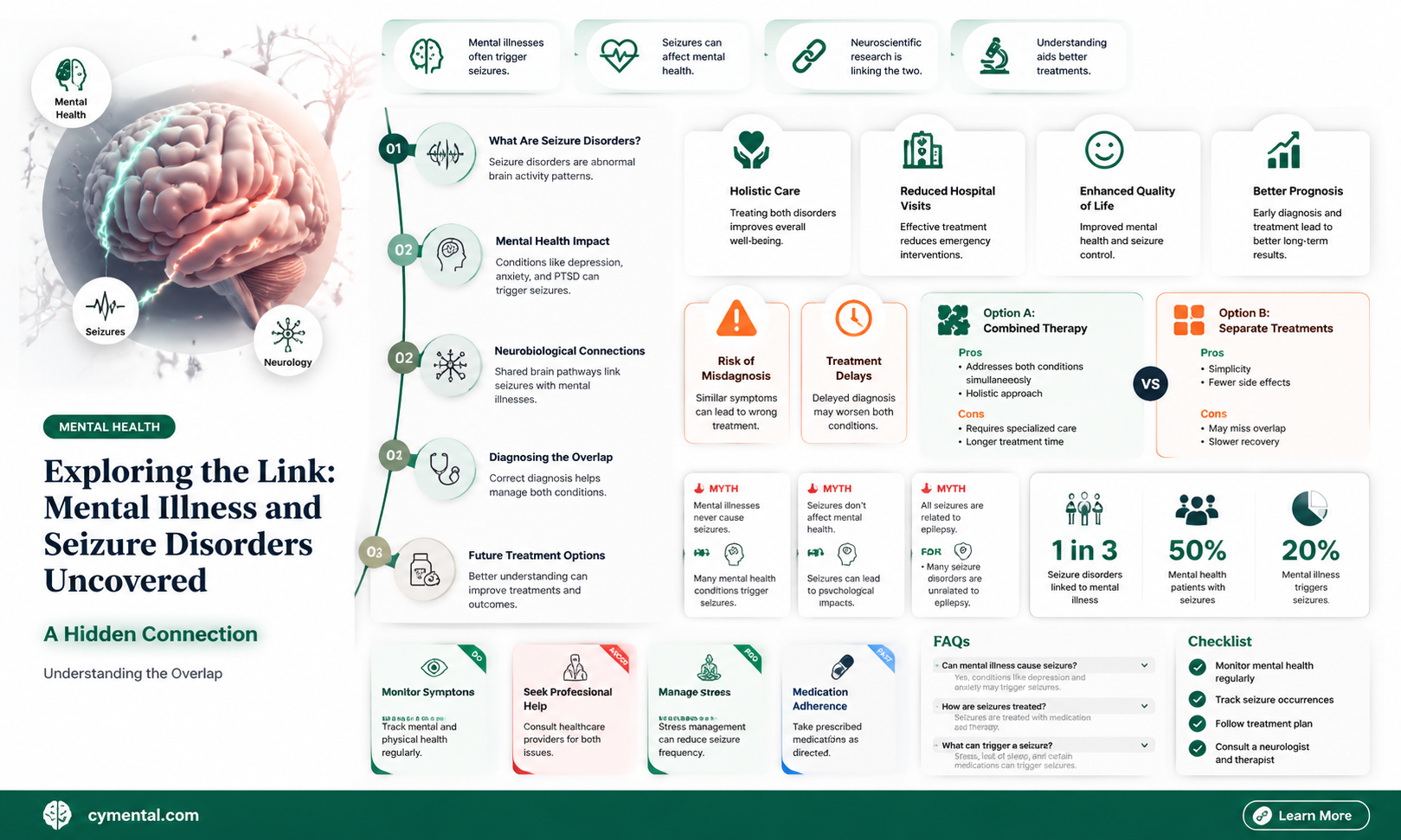
Seizures are a neurological condition characterized by sudden, uncontrolled electrical discharges in the brain, leading to physical symptoms such as convulsions or loss of consciousness. While seizures are often associated with epilepsy, they can also occur in individuals without this condition. Mental illness, on the other hand, refers to a broad range of psychological disorders that affect mood, thinking, and behavior. Although seizures and mental illness are distinct conditions, there is some overlap between the two. Certain mental health disorders, such as depression or anxiety, can increase the risk of developing seizures, and conversely, seizures can sometimes trigger or exacerbate mental health symptoms. However, it is important to note that seizures are not directly caused by mental illness; rather, they are a result of abnormal brain activity. Understanding the complex relationship between seizures and mental health is crucial for providing comprehensive care to individuals affected by these conditions.
Explore related products


What You'll Learn
- Overview of Seizures: Brief explanation of seizures, their causes, and how they manifest
- Mental Illness and Seizures: Discussion on how mental health conditions can influence seizure activity
- Psychogenic Seizures: Information on seizures triggered by psychological factors rather than neurological issues
- Diagnosis and Treatment: Guidance on diagnosing seizure causes and appropriate treatment options, including therapy
- Myths and Facts: Common misconceptions about seizures and mental illness, with evidence-based clarifications

Overview of Seizures: Brief explanation of seizures, their causes, and how they manifest
Seizures are sudden, uncontrolled electrical discharges in the brain that can cause a range of physical and mental symptoms. They are a common neurological condition, affecting approximately 1% of the global population. While seizures can be triggered by various factors, including genetic predisposition, brain injury, and infections, they are not typically caused by mental illness. However, there is a complex relationship between seizures and mental health, as individuals with certain mental health conditions may be more prone to experiencing seizures.
The manifestation of seizures can vary widely depending on the type and severity. Some seizures may be characterized by convulsions and loss of consciousness, while others may involve more subtle symptoms such as staring spells, muscle twitching, or sensory disturbances. Seizures can be classified into different categories, including focal seizures, which affect a specific area of the brain, and generalized seizures, which involve the entire brain. Understanding the different types of seizures and their symptoms is crucial for accurate diagnosis and effective treatment.
It is important to note that while mental illness may not directly cause seizures, certain psychiatric conditions can increase the risk of seizure activity. For example, individuals with bipolar disorder or schizophrenia may be more likely to experience seizures, particularly if they are taking certain medications or have a history of substance abuse. Additionally, stress and anxiety can exacerbate seizure symptoms in some individuals. Therefore, a comprehensive approach to managing seizures often involves addressing both neurological and mental health factors.
In conclusion, while seizures are primarily a neurological condition, there is a significant interplay between seizures and mental health. Understanding this relationship is essential for providing holistic care to individuals with seizure disorders. By addressing both the physical and mental aspects of seizures, healthcare professionals can help improve the quality of life for those affected by this condition.
Unseen Scars: The Mental and Emotional Toll of Restraints
You may want to see also
Explore related products


Mental Illness and Seizures: Discussion on how mental health conditions can influence seizure activity
While mental illness and seizures are distinct medical conditions, research has shown that they can influence each other in complex ways. For instance, individuals with certain mental health disorders may be more prone to experiencing seizures, and conversely, seizure activity can impact mental health. This interplay is thought to be due to the shared neural pathways and neurotransmitter systems involved in both mental health regulation and seizure activity.
One significant area of overlap is between epilepsy and mental health conditions such as depression and anxiety. Studies have found that individuals with epilepsy are at a higher risk of developing depression, which can in turn exacerbate seizure frequency and severity. This relationship is bidirectional; not only can depression increase the likelihood of seizures, but the stress and emotional toll of managing epilepsy can also contribute to the development of depressive symptoms.
Another important consideration is the role of stress in seizure activity. Stress is a well-known trigger for seizures in many individuals with epilepsy, and it can also contribute to the development of mental health issues. Chronic stress, in particular, has been linked to changes in brain structure and function that can increase the risk of both seizures and mental health disorders. Therefore, managing stress levels is crucial for individuals with epilepsy, not only to reduce seizure frequency but also to maintain overall mental well-being.
Furthermore, the social and psychological impact of living with epilepsy should not be underestimated. The stigma and discrimination often faced by individuals with epilepsy can lead to feelings of isolation, low self-esteem, and anxiety, all of which can negatively impact mental health. Addressing these psychosocial factors is an essential component of comprehensive epilepsy care, as it can help to improve quality of life and reduce the burden of both epilepsy and associated mental health conditions.
In conclusion, the relationship between mental illness and seizures is multifaceted and bidirectional. Understanding this complex interplay is crucial for providing effective care to individuals with epilepsy, as it highlights the importance of addressing both the neurological and psychological aspects of the condition. By taking a holistic approach that considers the impact of mental health on seizure activity and vice versa, healthcare providers can help to improve outcomes and enhance the overall well-being of individuals with epilepsy.
Exploring the Link: Can Herpes Impact Mental Health?
You may want to see also
Explore related products


Psychogenic Seizures: Information on seizures triggered by psychological factors rather than neurological issues
Psychogenic seizures are a type of seizure that is triggered by psychological factors rather than neurological issues. These seizures are often misdiagnosed as epilepsy, but they do not respond to anticonvulsant medications. Instead, they require a different approach that addresses the underlying psychological causes.
One of the most common causes of psychogenic seizures is stress. When a person experiences a high level of stress, it can trigger a seizure. This is because stress affects the brain's ability to regulate its own activity, leading to abnormal electrical discharges that cause seizures. Other psychological factors that can trigger seizures include anxiety, depression, and trauma.
It is important to note that psychogenic seizures are not the same as seizures caused by mental illness. While mental illness can sometimes contribute to the development of psychogenic seizures, the two are not synonymous. Psychogenic seizures are a distinct condition that requires a specific diagnosis and treatment approach.
Diagnosing psychogenic seizures can be challenging, as they often mimic the symptoms of epilepsy. However, there are some key differences that can help clinicians make an accurate diagnosis. For example, psychogenic seizures are often shorter and less severe than epileptic seizures. They may also be more responsive to suggestion, meaning that they can be triggered or stopped by the person's thoughts or feelings.
Treatment for psychogenic seizures typically involves a combination of psychological and medical interventions. Cognitive-behavioral therapy (CBT) is often used to help patients identify and manage the psychological factors that trigger their seizures. Medications such as antidepressants and anti-anxiety drugs may also be prescribed to help manage symptoms. In some cases, hypnosis or other relaxation techniques may be used to help patients gain better control over their seizures.
Living with psychogenic seizures can be challenging, but there are resources available to help. Support groups and online forums can provide a valuable source of information and encouragement for people with psychogenic seizures. Additionally, working with a healthcare provider who specializes in seizure disorders can help ensure that patients receive the most effective treatment possible.
Exploring the Link: Childhood Head Injuries and Mental Health
You may want to see also
Explore related products



Diagnosis and Treatment: Guidance on diagnosing seizure causes and appropriate treatment options, including therapy
Diagnosing the cause of seizures is a complex process that involves a thorough medical evaluation. Healthcare professionals typically begin by taking a detailed medical history and performing a physical examination. They may also order diagnostic tests such as electroencephalography (EEG), magnetic resonance imaging (MRI), or computed tomography (CT) scans to help identify the underlying cause. In some cases, blood tests or genetic testing may be necessary to rule out certain conditions.
Once the cause of the seizures has been identified, treatment can be tailored to the individual's specific needs. For many people, anticonvulsant medications are the first line of treatment. These medications work by reducing the abnormal electrical activity in the brain that causes seizures. However, they can have side effects, and some people may not respond well to them. In such cases, other treatment options may be considered, such as surgery to remove the part of the brain that is causing the seizures, or implanting a device such as a vagus nerve stimulator to help control the seizures.
In addition to medical treatments, therapy can also play an important role in managing seizures. Cognitive-behavioral therapy (CBT) can help individuals learn how to cope with the emotional and psychological impact of seizures. It can also teach them strategies for managing stress and anxiety, which can be triggers for seizures. Other forms of therapy, such as biofeedback or relaxation techniques, may also be helpful in reducing the frequency and severity of seizures.
It's important to note that while mental illness can sometimes be a contributing factor to seizures, it is not the sole cause. Seizures can also be caused by a variety of physical conditions, such as epilepsy, brain tumors, or infections. Therefore, it's crucial to approach diagnosis and treatment with a comprehensive understanding of the individual's overall health and medical history. By doing so, healthcare professionals can develop a treatment plan that addresses the underlying cause of the seizures and provides the best possible outcome for the patient.
Exploring the Link Between Mental Illnesses and Chemical Imbalances
You may want to see also
Explore related products


Myths and Facts: Common misconceptions about seizures and mental illness, with evidence-based clarifications
Seizures are often misunderstood as a symptom solely of mental illness, but this is a significant misconception. While mental health conditions can sometimes contribute to seizure activity, the majority of seizures are caused by neurological conditions such as epilepsy, brain tumors, or stroke. In fact, according to the World Health Organization, epilepsy is the most common cause of seizures, affecting approximately 50 million people worldwide.
Another common myth is that seizures are always accompanied by convulsions or dramatic physical movements. However, seizures can manifest in various ways, including subtle changes in behavior, consciousness, or sensory perception. For instance, absence seizures, which are common in children, may present as brief periods of staring or daydreaming. Similarly, focal seizures can cause localized symptoms such as muscle twitching or numbness without affecting the entire body.
It's also important to clarify that seizures are not contagious and cannot be transmitted from one person to another. This misconception may stem from the dramatic portrayal of seizures in media, which can lead to fear and stigma surrounding the condition. In reality, witnessing a seizure does not pose any risk to bystanders, and the focus should be on providing appropriate support and care to the individual experiencing the seizure.
Furthermore, contrary to popular belief, people with epilepsy or other seizure disorders are not inherently more prone to mental illness than the general population. While there may be a higher prevalence of mental health conditions among individuals with epilepsy, this is likely due to the shared underlying neurological mechanisms rather than a causal relationship. In other words, the same brain abnormalities that contribute to seizure activity may also increase the risk of developing mental health conditions.
Lastly, it's crucial to address the misconception that seizures can be cured through psychological means alone. While stress management and lifestyle modifications can play a role in seizure prevention, they are not a substitute for medical treatment. Antiepileptic medications, surgery, and other interventions are often necessary to effectively manage seizure disorders. Therefore, it's essential to seek professional medical advice and follow a comprehensive treatment plan tailored to the individual's specific needs.
Exploring the Link Between Mental Health and Menstrual Hemorrhages
You may want to see also
Frequently asked questions
No, seizures are not always caused by mental illness. They can be caused by a variety of factors including neurological conditions, genetic predispositions, brain injuries, infections, and metabolic imbalances.
Yes, certain mental illnesses such as depression, anxiety, and post-traumatic stress disorder (PTSD) can increase the risk of seizures. However, it's important to note that mental illness is not a direct cause of seizures but can contribute to the risk factors.
Seizures are not extremely common in people with mental illness, but the prevalence is higher compared to the general population. For example, people with depression have a slightly increased risk of developing seizures.
Symptoms of a seizure can vary widely depending on the type and severity. Common symptoms include sudden, uncontrolled movements of the body, loss of consciousness, confusion, sensory disturbances such as seeing flashing lights or hearing strange sounds, and in some cases, convulsions.
Seizures are typically diagnosed through a combination of medical history, physical examination, and diagnostic tests such as electroencephalography (EEG), which measures the electrical activity of the brain. Imaging tests like CT scans or MRIs may also be used to look for structural abnormalities in the brain.