Caleb Wright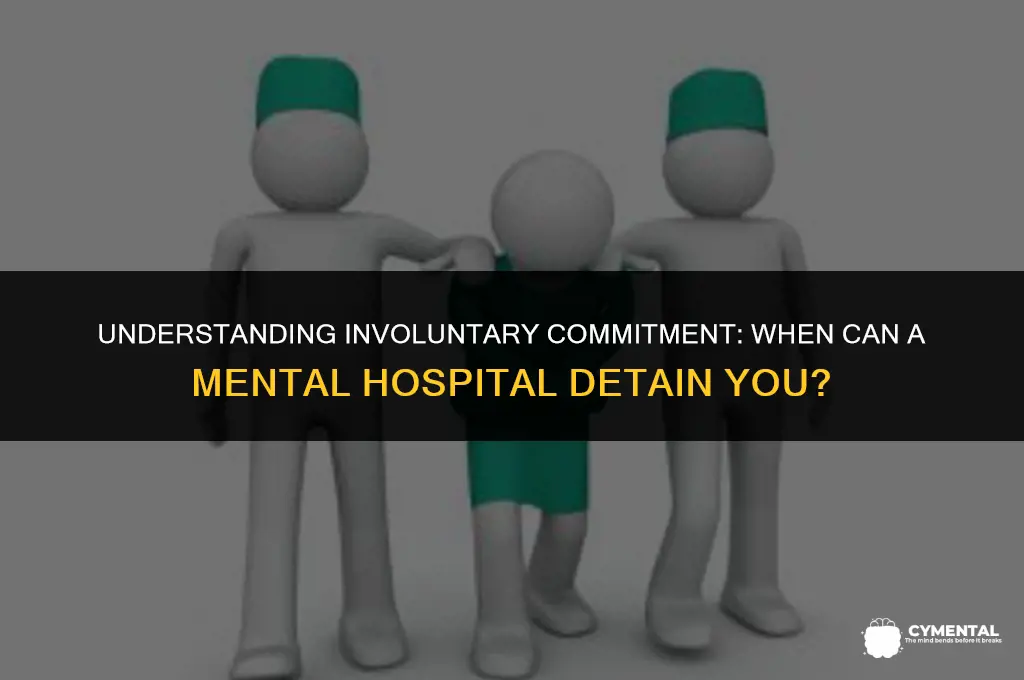
The question of whether a mental hospital can take someone by force is a complex and sensitive issue that intersects with legal, ethical, and medical considerations. In many jurisdictions, mental health facilities are authorized to involuntarily admit individuals who are deemed to be a danger to themselves or others, or who are unable to care for their own needs due to a mental health condition. However, the specific criteria and procedures for involuntary commitment vary widely by location, and are often subject to strict legal safeguards to protect the rights of the individual. This topic is further complicated by the stigma surrounding mental illness and the historical abuses that have occurred in psychiatric institutions. As such, it is essential to approach this question with a nuanced understanding of the relevant laws, policies, and ethical principles.
Explore related products


What You'll Learn

Legal requirements for involuntary commitment
Involuntary commitment to a mental health facility is a serious matter that is governed by specific legal requirements. These requirements vary by jurisdiction but generally involve a court order or a physician's certification that an individual poses a significant risk to themselves or others due to a mental health condition. The process typically begins with a petition filed by a concerned party, such as a family member, healthcare provider, or law enforcement officer, alleging that the person in question is in need of involuntary treatment.
Once a petition is filed, a hearing is usually scheduled to determine whether the individual meets the criteria for involuntary commitment. During this hearing, evidence is presented, and the person in question may be evaluated by mental health professionals. If the court finds that the individual is indeed a danger to themselves or others and that less restrictive alternatives have been exhausted, it may issue an order for involuntary commitment.
The duration of involuntary commitment can vary widely depending on the jurisdiction and the individual's circumstances. Some commitments may be short-term, lasting only a few days, while others may be long-term or even indefinite. In many cases, the committed individual will be required to undergo treatment and may be subject to regular reviews to assess their progress and determine if they can be safely discharged.
It is important to note that involuntary commitment is a complex and sensitive issue that raises significant ethical and legal concerns. While it can be a necessary measure to protect individuals who are unable to care for themselves or who pose a risk to others, it can also be seen as an infringement on personal liberties. As such, the legal requirements for involuntary commitment are designed to balance these competing interests and ensure that such measures are only taken when absolutely necessary.
Seeking Help: A Guide to Voluntary Mental Health Admission
You may want to see also
Explore related products


Process of involuntary hospitalization
In the context of mental health care, involuntary hospitalization refers to the process by which an individual is admitted to a psychiatric facility against their will. This procedure is typically initiated when a person is deemed to be a danger to themselves or others due to a mental health condition. The specific criteria and legal requirements for involuntary hospitalization vary by jurisdiction, but generally involve a formal assessment by mental health professionals and, in some cases, a court order.
The process often begins with an emergency evaluation, where a mental health professional assesses the individual's condition and determines if there is an immediate risk of harm. If the evaluator believes that the person meets the criteria for involuntary hospitalization, they may be taken to a psychiatric emergency room for further assessment and stabilization.
Once at the hospital, a more comprehensive evaluation is conducted by a team of mental health professionals, including psychiatrists, psychologists, and social workers. This evaluation may include a review of the individual's medical history, a mental status examination, and interviews with family members or other relevant parties.
If the hospital decides to admit the individual involuntarily, they are typically required to notify the patient of their rights and the reasons for the hospitalization. The patient may also be informed of the expected duration of their stay and the treatment plan that will be implemented.
In some cases, the individual may be able to appeal the decision to a court or request a hearing to contest the involuntary hospitalization. The legal process for doing so varies by jurisdiction and may involve the appointment of a legal representative or advocate to assist the individual in presenting their case.
Throughout the process of involuntary hospitalization, it is important to ensure that the individual's rights are protected and that they receive appropriate care and treatment. This includes providing them with access to legal counsel, ensuring that they are informed of their rights and the reasons for their hospitalization, and involving them in the development of their treatment plan whenever possible.
Exploring the Haunting Legacy of Byberry Mental Hospital's Buildings
You may want to see also
Patient rights during commitment
Individuals undergoing involuntary commitment to a mental health facility are entitled to certain fundamental rights. These rights are designed to protect patients from abuse and ensure they receive appropriate care. One of the primary rights is the right to a fair hearing. This hearing must occur promptly after the patient's admission, where a judge or magistrate will determine if the commitment is justified based on the patient's mental state and potential danger to themselves or others.
Another crucial right is the right to legal representation. Patients have the right to an attorney, and if they cannot afford one, the court will appoint a public defender. This ensures that the patient's interests are advocated for during the commitment proceedings. Additionally, patients have the right to be informed about their treatment plan, including any medications or therapies that will be administered. They must also be informed about the potential side effects and risks associated with these treatments.
Patients also retain the right to privacy and confidentiality. Their medical records and personal information must be kept confidential, and they should be afforded private spaces within the facility. Furthermore, patients have the right to communicate with the outside world, including family members and friends, unless such communication is deemed a risk to the patient's safety or the safety of others.
It is also important to note that patients have the right to be free from unnecessary restraints and seclusion. Restraints should only be used as a last resort when the patient poses an imminent danger to themselves or others. Similarly, seclusion should be used sparingly and only when other interventions have failed.
Finally, patients have the right to appeal their commitment. If they believe their rights have been violated or that they no longer meet the criteria for involuntary commitment, they can request a review of their case by a higher court. This ensures that the commitment process remains fair and just, and that patients are not held against their will without proper cause.
Navigating Visitation Rights: Felons and Mental Health Facilities
You may want to see also
Conditions justifying forced hospitalization
In the realm of mental health care, forced hospitalization is a complex and sensitive issue. While it is generally preferred to provide treatment on a voluntary basis, there are certain conditions under which involuntary commitment may be justified. These conditions typically revolve around the individual posing a significant risk to themselves or others due to their mental state.
One of the primary justifications for forced hospitalization is the presence of suicidal ideation or behavior. If a person is deemed to be at imminent risk of harming themselves, mental health professionals may opt for involuntary commitment to ensure their safety. This is often done in conjunction with a thorough assessment of the individual's mental health status and the implementation of appropriate treatment measures.
Another condition that may warrant forced hospitalization is the presence of homicidal ideation or behavior. If an individual is believed to pose a credible threat to the safety of others, they may be involuntarily committed to prevent potential harm. This is particularly relevant in cases where the individual has a history of violent behavior or has made specific threats against identifiable targets.
Additionally, forced hospitalization may be considered in situations where an individual is unable to care for themselves due to their mental health condition. This could include instances where the person is experiencing severe symptoms of a psychiatric disorder, such as schizophrenia or bipolar disorder, that impair their ability to function independently. In such cases, involuntary commitment may be necessary to provide the individual with the care and support they need to stabilize their condition.
It is important to note that the criteria for forced hospitalization vary by jurisdiction and are typically governed by specific laws and regulations. Mental health professionals must carefully consider the legal and ethical implications of involuntary commitment before making such a decision. Moreover, even in cases where forced hospitalization is deemed necessary, it is crucial to involve the individual in the treatment process as much as possible and to respect their rights and dignity throughout the course of their care.
Exploring Visitation Policies at Secure Psychiatric Facilities
You may want to see also
Alternatives to involuntary commitment
In the realm of mental health care, alternatives to involuntary commitment are crucial for respecting individuals' autonomy while ensuring they receive necessary treatment. One such alternative is voluntary outpatient treatment, where individuals agree to attend therapy sessions and take medication as prescribed. This approach is often more effective when individuals are motivated to improve their mental health and can be supported by family or friends.
Another alternative is crisis intervention services, which provide immediate support during a mental health crisis without the need for hospitalization. These services can include hotlines, mobile crisis teams, and short-term residential programs. They aim to de-escalate situations and connect individuals with ongoing care.
Assertive community treatment (ACT) is a comprehensive approach that involves a multidisciplinary team providing intensive support to individuals in their homes and communities. This model focuses on helping individuals manage their symptoms, improve their quality of life, and avoid hospitalization.
Peer support services are also valuable alternatives, where individuals with lived experience of mental illness provide support and guidance to others. These services can help reduce stigma, promote recovery, and provide a sense of community.
Lastly, advance directives allow individuals to plan for their mental health care in advance, specifying their preferences for treatment and support. This can help ensure that their wishes are respected and reduce the need for involuntary commitment.
By exploring these alternatives, individuals can receive the support they need while maintaining their autonomy and dignity.
Unveiling Privacy Rights: Mental Hospitals and Strip Searches
You may want to see also
Frequently asked questions
Generally, a mental hospital cannot take you by force unless there is a court order or a specific legal provision that allows for involuntary commitment. This typically requires a demonstration that the individual is a danger to themselves or others due to a mental health condition.
The legal requirements for involuntary commitment vary by jurisdiction but usually involve a court order based on a mental health professional's evaluation. The individual must be deemed a significant risk to themselves or others, and all less restrictive alternatives must have been considered and deemed insufficient.
If you are involuntarily committed, you have the right to legal representation, the right to a hearing within a certain timeframe, and the right to appeal the commitment. You also have the right to be informed of the reasons for your commitment and the treatment plan.
Preparing for a potential involuntary commitment situation involves understanding your rights, having a mental health advance directive in place, and designating a healthcare proxy. It's also important to maintain open communication with your mental health provider and to seek legal advice if you feel your rights are being threatened.