Ava Ramirez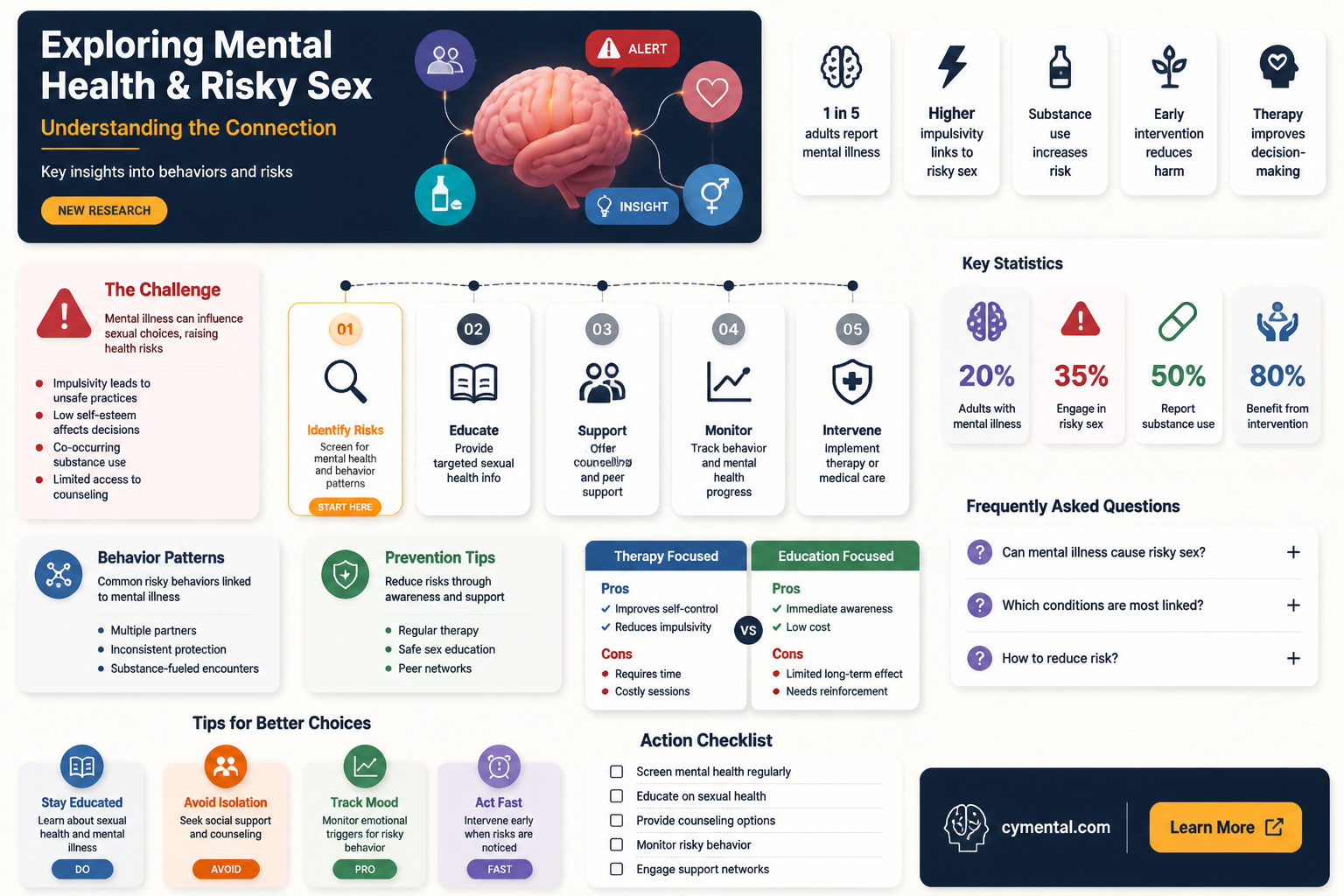
Mental illness can significantly impact an individual's sexual behavior, potentially leading to risky or unsafe practices. Conditions such as bipolar disorder, schizophrenia, and certain personality disorders may impair judgment, increase impulsivity, or alter perceptions of risk, contributing to unsafe sexual encounters. Additionally, some mental health medications can affect libido and sexual functioning, further complicating the issue. It is crucial for healthcare providers to address the intersection of mental health and sexual behavior to ensure comprehensive care and promote safer practices among patients.
| Characteristics | Values |
|---|---|
| Definition | Mental illness refers to a wide range of mental health conditions that affect mood, thinking, and behavior. Risky sexual behavior includes actions that may lead to negative consequences such as sexually transmitted infections (STIs), unintended pregnancies, or sexual violence. |
| Types of Mental Illness | Depression, anxiety disorders, bipolar disorder, schizophrenia, personality disorders, and substance use disorders are among the many types of mental illnesses that can potentially influence sexual behavior. |
| Impact on Sexual Behavior | Mental illness can affect sexual behavior in various ways, including changes in libido, impaired judgment, increased impulsivity, and a higher likelihood of engaging in unprotected sex or sex with multiple partners. |
| Risk Factors | Individuals with mental illness may face additional risk factors for risky sexual behavior, such as socioeconomic challenges, lack of access to healthcare, and social isolation. |
| Treatment and Prevention | Addressing mental illness through therapy, medication, and support groups can help reduce the likelihood of risky sexual behavior. Additionally, education and access to resources such as contraception and STI testing are crucial for prevention. |
| Statistics | Studies have shown that individuals with mental illness are more likely to engage in risky sexual behavior compared to the general population. For example, a study found that 40% of individuals with bipolar disorder reported a history of risky sexual behavior. |
| Case Studies | Real-life examples include individuals with schizophrenia who may experience delusions or hallucinations that influence their sexual behavior, or those with depression who may engage in risky sexual behavior as a form of self-medication. |
| Expert Opinions | Mental health professionals often emphasize the importance of addressing both mental illness and sexual health in treatment plans. They may also recommend integrating sexual health education into mental health services. |
| Societal Stigma | Stigma surrounding mental illness and sexuality can prevent individuals from seeking help and accessing resources, exacerbating the issue of risky sexual behavior. |
| Future Research | Further research is needed to better understand the complex relationship between mental illness and risky sexual behavior, including the development of more effective interventions and prevention strategies. |
Explore related products


What You'll Learn
- Impulsivity and Risk-Taking: Certain mental illnesses can increase impulsive behaviors, leading to risky sexual decisions
- Mania and Hypersexuality: Manic episodes in bipolar disorder may result in increased sexual drive and risky sexual behaviors
- Depression and Low Self-Esteem: Depression can lower self-esteem, making individuals more susceptible to engaging in risky sexual behaviors
- Anxiety and Stress: High levels of anxiety and stress may lead to risky sexual behaviors as a coping mechanism
- Psychosis and Disinhibition: Psychotic disorders can cause disinhibition, potentially resulting in risky sexual behaviors

Impulsivity and Risk-Taking: Certain mental illnesses can increase impulsive behaviors, leading to risky sexual decisions
Impulsivity and risk-taking behaviors are often heightened in individuals with certain mental illnesses, leading to a propensity for making risky sexual decisions. This increased impulsivity can be attributed to a variety of factors, including neurotransmitter imbalances, cognitive distortions, and emotional dysregulation. For instance, individuals with bipolar disorder may experience heightened impulsivity during manic episodes, which can lead to engaging in risky sexual behaviors without considering the potential consequences.
Research has shown that mental illnesses such as attention deficit hyperactivity disorder (ADHD), borderline personality disorder (BPD), and substance use disorders can also contribute to impulsive behaviors. In the context of risky sexual behavior, this impulsivity can manifest as a lack of inhibition, poor decision-making, and a disregard for potential risks such as sexually transmitted infections (STIs) or unintended pregnancy. It is essential to recognize that these behaviors are not simply a matter of poor judgment but are often symptoms of underlying mental health conditions that require treatment.
One effective approach to addressing impulsivity and risk-taking in mental illness is through cognitive-behavioral therapy (CBT). CBT helps individuals identify and challenge negative thought patterns and develop healthier coping mechanisms. Additionally, medication management can play a crucial role in stabilizing mood and reducing impulsive behaviors. For example, mood stabilizers such as lithium or valproate may be prescribed for individuals with bipolar disorder to help regulate their mood and decrease impulsivity.
It is also important to consider the social and environmental factors that can exacerbate impulsive behaviors. For instance, individuals with mental illnesses may be more susceptible to peer pressure or may find themselves in environments that encourage risky behaviors. Providing support and resources to help individuals navigate these challenges can be instrumental in reducing the likelihood of engaging in risky sexual behaviors.
In conclusion, understanding the relationship between mental illness and impulsivity is crucial in addressing risky sexual behaviors. By providing appropriate treatment and support, individuals with mental illnesses can learn to manage their impulsivity and make healthier decisions regarding their sexual health.
Unraveling the Genetic Links to Mental Disabilities: A Scientific Exploration
You may want to see also
Explore related products


$50.91 $66.99


Mania and Hypersexuality: Manic episodes in bipolar disorder may result in increased sexual drive and risky sexual behaviors
During manic episodes in bipolar disorder, individuals may experience an intense increase in sexual drive, often leading to hypersexuality. This heightened libido can result in risky sexual behaviors, such as unprotected sex, multiple sexual partners, or impulsive sexual encounters. The connection between mania and hypersexuality is complex, involving both psychological and physiological factors.
One possible explanation for this phenomenon is the increased levels of dopamine and other neurotransmitters during manic episodes. These chemicals play a crucial role in regulating mood, motivation, and reward, and their elevated levels can lead to a heightened sense of pleasure and desire. Additionally, the impulsivity and decreased inhibitions characteristic of manic episodes can contribute to the risky sexual behaviors observed in some individuals with bipolar disorder.
It is essential to recognize that hypersexuality during manic episodes is not a moral failing or a sign of promiscuity. Rather, it is a symptom of the underlying mental health condition that requires appropriate treatment and management. Healthcare professionals may recommend mood stabilizers, antipsychotics, or other medications to help regulate mood and reduce the risk of hypersexuality.
In addition to medication, psychoeducation and therapy can be valuable tools in managing hypersexuality and risky sexual behaviors. Cognitive-behavioral therapy (CBT) can help individuals identify and challenge negative thought patterns and develop healthier coping mechanisms. Family therapy can also be beneficial, as it can improve communication and support within the family unit.
Ultimately, understanding the relationship between mania and hypersexuality is crucial for providing effective treatment and support for individuals with bipolar disorder. By addressing this complex issue with compassion and knowledge, healthcare professionals can help their patients manage their symptoms and improve their overall quality of life.
Unraveling the Complexities: Do Mental Health Medications Address the Root Cause?
You may want to see also
Explore related products


Depression and Low Self-Esteem: Depression can lower self-esteem, making individuals more susceptible to engaging in risky sexual behaviors
Depression can significantly lower self-esteem, making individuals more susceptible to engaging in risky sexual behaviors. This lowered self-esteem can lead to a distorted self-image, where individuals may feel worthless or unattractive, increasing their vulnerability to exploitation or manipulation in sexual situations. Furthermore, depression can impair judgment and decision-making abilities, making it more challenging for individuals to assess the risks and consequences of their sexual behaviors accurately.
Research has shown that individuals with depression are more likely to engage in unprotected sex, have multiple sexual partners, or participate in other high-risk sexual activities. This increased risk can be attributed to several factors, including a decreased ability to experience pleasure, a heightened need for validation or attention, and a reduced capacity to form healthy attachments. Additionally, depression can lead to social isolation, which may further exacerbate the need for sexual connection or intimacy, potentially leading to risky choices.
It is essential to address the underlying mental health issues contributing to risky sexual behaviors to reduce the likelihood of engaging in such activities. Treatment for depression, such as therapy or medication, can help improve self-esteem and judgment, thereby reducing the risk of risky sexual behaviors. Moreover, education and awareness about the potential consequences of risky sexual behaviors can empower individuals to make healthier choices.
In conclusion, depression and low self-esteem can significantly increase the risk of engaging in risky sexual behaviors. Addressing these underlying mental health issues and providing education and awareness about the potential consequences of such behaviors can help reduce the risk and promote healthier sexual choices.
Unveiling the Link: Depression's Impact on Cognitive Clarity
You may want to see also
Explore related products





Anxiety and Stress: High levels of anxiety and stress may lead to risky sexual behaviors as a coping mechanism
High levels of anxiety and stress can significantly impact an individual's decision-making processes, particularly when it comes to sexual behaviors. In an attempt to cope with overwhelming feelings, some individuals may turn to risky sexual behaviors as a form of escape or self-soothing. This can manifest in various ways, such as engaging in unprotected sex, having multiple sexual partners, or participating in sexual activities that are outside of one's comfort zone.
Research has shown that there is a correlation between anxiety, stress, and risky sexual behaviors. One study found that individuals who experienced high levels of anxiety were more likely to engage in unprotected sex, while another study revealed that stress was a significant predictor of risky sexual behaviors among young adults. These findings suggest that mental health professionals should consider the potential impact of anxiety and stress on sexual behaviors when working with clients who are at risk for or have a history of risky sexual behaviors.
It is important to note that the relationship between anxiety, stress, and risky sexual behaviors is complex and multifaceted. While high levels of anxiety and stress may lead to risky sexual behaviors as a coping mechanism, it is also possible that risky sexual behaviors can contribute to increased anxiety and stress. This bidirectional relationship highlights the need for a comprehensive approach to addressing mental health and sexual behaviors, one that takes into account the interplay between these factors.
In terms of practical tips, individuals who are struggling with anxiety and stress can benefit from developing healthy coping mechanisms to manage their symptoms. This may include engaging in regular exercise, practicing mindfulness and meditation, seeking support from friends and family, and pursuing professional help when needed. By addressing the underlying issues of anxiety and stress, individuals can reduce their likelihood of engaging in risky sexual behaviors and improve their overall mental health and well-being.
Ultimately, the connection between anxiety, stress, and risky sexual behaviors underscores the importance of prioritizing mental health and seeking support when needed. By understanding the complex relationship between these factors, individuals can take steps to develop healthier coping mechanisms and reduce their risk of engaging in harmful behaviors.
Exploring the Link: Type 2 Diabetes and Mental Health
You may want to see also
Explore related products


Psychosis and Disinhibition: Psychotic disorders can cause disinhibition, potentially resulting in risky sexual behaviors
Psychosis, characterized by a disconnection from reality, can significantly impact an individual's behavior, including their sexual behavior. One of the key features of psychosis is disinhibition, which refers to a lack of restraint or control over one's impulses and actions. This disinhibition can lead to a range of risky behaviors, including unsafe sexual practices.
In the context of psychotic disorders, disinhibition may manifest as a disregard for social norms and boundaries, which can result in inappropriate or dangerous sexual behavior. For example, an individual experiencing psychosis may engage in promiscuous sex, have unprotected intercourse, or participate in sexual activities that they would not normally consider. This can increase the risk of sexually transmitted infections, unwanted pregnancies, and other negative consequences.
The link between psychosis and risky sexual behavior is complex and multifaceted. On one hand, the disinhibition associated with psychosis can lead to impulsive and reckless decisions. On the other hand, psychotic symptoms such as delusions or hallucinations may also influence an individual's sexual behavior. For instance, a person with schizophrenia may have delusions about their sexual attractiveness or may experience hallucinations that lead them to believe they are being sexually pursued.
It is important to note that not all individuals with psychotic disorders will exhibit risky sexual behavior. The presence of disinhibition and the specific symptoms of the disorder will vary from person to person. Additionally, the risk of risky sexual behavior can be mitigated through proper treatment and management of the psychotic disorder. This may include medication, therapy, and support from mental health professionals.
In conclusion, psychosis and disinhibition can indeed contribute to risky sexual behaviors. Understanding the complex interplay between these factors is crucial for developing effective interventions and support strategies for individuals with psychotic disorders. By addressing the underlying causes of disinhibition and providing appropriate treatment, it is possible to reduce the risk of harmful sexual behaviors and improve overall mental health outcomes.
Unraveling the Link: Mental Illness and Anger Outbursts Explained
You may want to see also
Frequently asked questions
Yes, certain mental illnesses can influence an individual's sexual behavior, potentially leading to risky or unsafe practices. Conditions such as bipolar disorder, schizophrenia, and some personality disorders may affect judgment, impulse control, and decision-making abilities, which can manifest in sexual behaviors.
Risky sexual behaviors can include unprotected sex, multiple sexual partners, sex with strangers, or engaging in sexual activities in unsafe environments. These behaviors can increase the risk of sexually transmitted infections (STIs), unwanted pregnancies, and physical or emotional harm.
Mental health professionals can address risky sexual behavior by incorporating sexual health education into treatment plans, discussing the potential risks and consequences of certain behaviors, and helping patients develop healthier coping mechanisms and decision-making skills. Therapy may also focus on improving self-esteem, addressing underlying trauma, and enhancing communication skills.
In some cases, medications may be prescribed to help manage symptoms of mental illness that contribute to risky sexual behavior. For example, mood stabilizers or antipsychotic medications may help regulate mood swings and reduce impulsivity. However, medication should typically be used in conjunction with therapy and other supportive interventions for the best results.