Madison Cole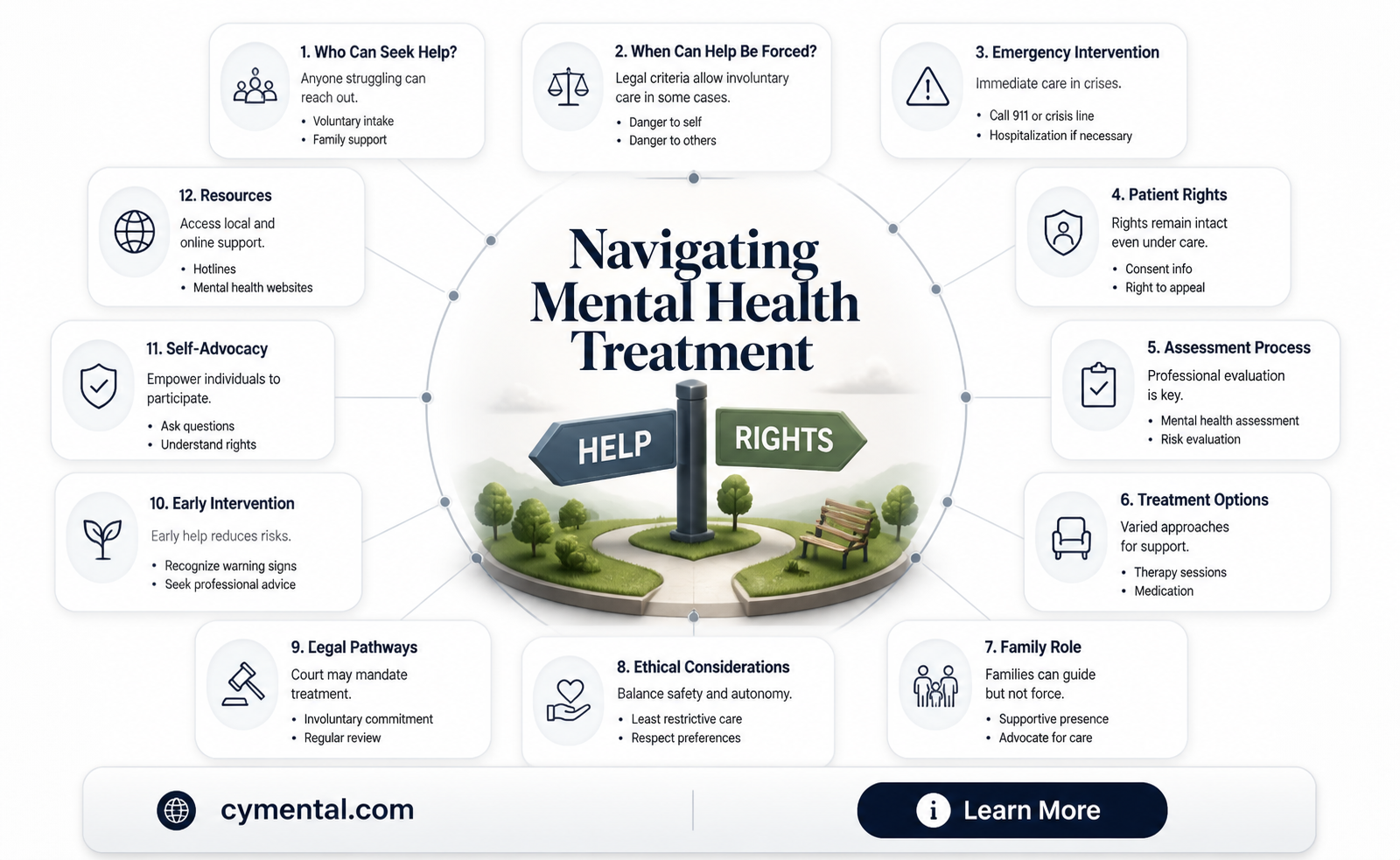
The question of whether a mentally ill person can be forced to receive treatment is a complex and sensitive issue that intersects with legal, ethical, and medical considerations. In many jurisdictions, laws exist that allow for involuntary commitment or treatment under certain circumstances, typically when an individual is deemed a danger to themselves or others due to their mental state. However, such measures are often controversial and raise concerns about civil liberties and the autonomy of individuals with mental health conditions. Medical professionals and advocates for mental health rights argue that involuntary treatment should be a last resort and that efforts should be made to provide support and resources that empower individuals to seek treatment voluntarily. The debate surrounding this issue highlights the need for a balanced approach that respects individual rights while also ensuring access to necessary care and support for those struggling with mental illness.
Explore related products


What You'll Learn
- Legal frameworks governing involuntary treatment for mental illness vary by jurisdiction
- Ethical considerations surrounding forced treatment, including autonomy and human rights
- Clinical perspectives on the effectiveness and risks of involuntary psychiatric interventions
- Advocacy and support systems for individuals facing involuntary treatment orders
- Societal attitudes and stigma towards mental illness and coercive treatment practices

Legal frameworks governing involuntary treatment for mental illness vary by jurisdiction
Legal frameworks governing involuntary treatment for mental illness vary significantly by jurisdiction, reflecting diverse societal values, healthcare systems, and legal traditions. In some countries, such as the United States, involuntary treatment is governed by state laws, which often require a court order based on a finding of probable cause that the individual is a danger to themselves or others. This process typically involves a petition filed by a mental health professional or a family member, followed by a hearing where evidence is presented to support the need for involuntary treatment.
In contrast, other jurisdictions, like the United Kingdom, have more centralized legal frameworks. The UK's Mental Health Act 1983, for example, allows for involuntary treatment under certain conditions, including the presence of a mental disorder and the belief that treatment is necessary to prevent deterioration of the person's condition or to protect others. The Act also establishes specific procedures for assessing and treating individuals, including the role of Approved Mental Health Professionals (AMHPs) who are responsible for making decisions about detention and treatment.
In Australia, the legal framework for involuntary treatment is outlined in state and territory mental health laws. These laws generally require that a person be deemed to have a mental illness and that there be a significant risk to their health or safety, or to the safety of others, before involuntary treatment can be administered. The process often involves a mental health tribunal or a similar body that reviews the case and makes a determination about the need for involuntary treatment.
The variations in legal frameworks across jurisdictions highlight the complex ethical and legal considerations involved in involuntary treatment. While some argue that involuntary treatment is necessary to protect individuals who may not have the capacity to make informed decisions about their care, others contend that it can be a violation of personal autonomy and human rights. As a result, legal frameworks often strive to balance these competing interests by establishing clear criteria and procedures for involuntary treatment, while also providing safeguards to protect the rights of individuals.
In practice, the implementation of these legal frameworks can have significant implications for individuals with mental illness, their families, and mental health professionals. Understanding the specific laws and procedures in a given jurisdiction is crucial for ensuring that individuals receive appropriate care while also respecting their rights and dignity. Moreover, ongoing debates about the ethics and effectiveness of involuntary treatment underscore the need for continued research and dialogue to inform policy and practice in this area.
Navigating the Journey to a Mental Health Diagnosis: A Comprehensive Guide
You may want to see also
Explore related products


$12.55 $16.95


Ethical considerations surrounding forced treatment, including autonomy and human rights
The ethical considerations surrounding forced treatment for mental illness are complex and multifaceted. At the heart of the debate lies the tension between protecting individual autonomy and ensuring the well-being of those who may be unable to make informed decisions about their own care. The Universal Declaration of Human Rights states that everyone has the right to make decisions about their own health, including the right to refuse medical treatment. However, in cases where a person's mental illness may impair their ability to make such decisions, the question arises of whether it is ethical to override their autonomy in order to provide potentially life-saving treatment.
One approach to this dilemma is to consider the principle of beneficence, which holds that healthcare providers have a duty to act in the best interests of their patients. In cases where a patient's mental illness is severe and their ability to make informed decisions is compromised, it may be argued that forced treatment is necessary to prevent harm and promote recovery. However, this approach must be balanced against the principle of non-maleficence, which prohibits causing harm to others. Forced treatment can be traumatic and may lead to long-term psychological distress, raising questions about whether the potential benefits outweigh the risks.
Another important consideration is the social and cultural context in which forced treatment occurs. In some societies, mental illness may be stigmatized, and forced treatment may be seen as a way to control and marginalize those who are deemed a threat to social order. In such cases, the ethical implications of forced treatment are further complicated by the need to address systemic discrimination and promote social justice.
Ultimately, the question of whether a mentally ill person can be forced to get treatment is not one that can be answered definitively. Each case must be considered on its own merits, taking into account the individual's specific circumstances, the potential benefits and risks of treatment, and the broader social and cultural context. What is clear, however, is that any decision to override a person's autonomy must be made with the utmost care and respect for their human rights.
Where to Get a Mental Health Assessment: A Comprehensive Guide
You may want to see also
Explore related products


Clinical perspectives on the effectiveness and risks of involuntary psychiatric interventions
Involuntary psychiatric interventions, such as forced medication or hospitalization, are often controversial and raise complex ethical questions. From a clinical perspective, these interventions can be effective in certain cases, particularly when a patient is experiencing a severe mental health crisis that impairs their ability to make informed decisions about their care. For example, a patient in the midst of a psychotic episode may not recognize the need for treatment and may refuse medication that could help alleviate their symptoms.
However, the effectiveness of involuntary interventions is not universally accepted. Some studies suggest that forced treatment can lead to increased resistance and decreased engagement with mental health services in the long term. Additionally, there are significant risks associated with these interventions, including the potential for physical harm, psychological trauma, and violations of patients' rights. For instance, the use of restraints or seclusion can result in physical injuries, while the experience of being forced into treatment can exacerbate feelings of stigma and mistrust towards mental health professionals.
Clinicians must carefully weigh the potential benefits and risks of involuntary interventions on a case-by-case basis. This involves considering factors such as the patient's diagnosis, the severity of their symptoms, their capacity to make informed decisions, and their past experiences with mental health treatment. It is also essential to involve the patient in the decision-making process as much as possible, even if they are not able to provide consent. This can include explaining the reasons for the intervention, discussing alternative treatment options, and addressing any concerns or fears the patient may have.
In addition to the individual risks and benefits, clinicians must also consider the broader implications of involuntary interventions for the mental health system as a whole. These interventions can be costly and resource-intensive, and may divert attention and resources away from other important areas of mental health care. Furthermore, the use of involuntary interventions can contribute to a culture of coercion and control within mental health services, which can be detrimental to the therapeutic relationship and the overall quality of care.
Ultimately, the decision to use involuntary psychiatric interventions should be made with great caution and should always be guided by the principles of beneficence, non-maleficence, and respect for patients' autonomy and dignity. Clinicians should strive to create a mental health system that prioritizes patient-centered care, promotes recovery and resilience, and minimizes the need for coercive interventions whenever possible.
Decoding the Internet: Understanding the 'Are You Mental Get the Net' GIF
You may want to see also
Explore related products


Advocacy and support systems for individuals facing involuntary treatment orders
Individuals facing involuntary treatment orders often find themselves in a vulnerable position, where their autonomy and rights may be compromised. Advocacy and support systems play a crucial role in ensuring that these individuals receive fair treatment and have their voices heard. One key aspect of advocacy is providing education and resources to help individuals understand their rights and the legal processes involved in involuntary treatment.
Support systems can take various forms, including peer support groups, legal aid services, and mental health professionals who are trained to work with individuals facing involuntary treatment. These systems can help individuals navigate the complex legal and mental health systems, providing them with the tools and knowledge they need to advocate for themselves effectively.
In addition to providing direct support to individuals, advocacy and support systems can also work to address systemic issues that contribute to the need for involuntary treatment. This may involve lobbying for changes to mental health laws, raising awareness about the stigma surrounding mental illness, and promoting alternative approaches to mental health care that prioritize individual autonomy and choice.
One important consideration in the context of advocacy and support systems is the need to balance the rights of individuals with the need to ensure public safety. While it is essential to protect the rights of individuals facing involuntary treatment, it is also important to recognize that in some cases, treatment may be necessary to prevent harm to the individual or others. Advocacy and support systems must therefore work to find a balance between these competing interests, ensuring that individuals receive the care they need while also respecting their rights and dignity.
Ultimately, effective advocacy and support systems are essential for ensuring that individuals facing involuntary treatment orders are treated fairly and have their voices heard. By providing education, resources, and support, these systems can help individuals navigate the complex legal and mental health systems, advocate for their rights, and work towards a more just and equitable approach to mental health care.
Nurturing Your Mind: A Guide to Improved Mental Health
You may want to see also
Explore related products


$139.99 $139.99


Societal attitudes and stigma towards mental illness and coercive treatment practices
Societal attitudes towards mental illness have historically been fraught with stigma, misunderstanding, and fear. This has led to the marginalization of individuals suffering from mental health issues and has perpetuated a cycle of silence and shame. Stigma can manifest in various ways, from overt discrimination to more subtle forms of prejudice, such as the belief that mental illness is a personal weakness or a lack of willpower.
Coercive treatment practices, which involve forcing individuals into treatment against their will, are often a reflection of these societal attitudes. Such practices can include involuntary hospitalization, forced medication, and other forms of treatment that disregard the individual's autonomy and rights. These methods are frequently justified under the guise of protecting the individual from harm or preventing them from being a danger to others. However, they can also lead to significant trauma, erode trust in the mental health system, and exacerbate existing symptoms.
The impact of stigma and coercive practices is multifaceted. For individuals, it can lead to a reluctance to seek help, fearing judgment or forced treatment. This can result in untreated mental health conditions, which can worsen over time and lead to more severe consequences. On a broader scale, stigma and coercive practices can perpetuate a culture of fear and misunderstanding, hindering efforts to promote mental health awareness and support.
Changing societal attitudes requires a concerted effort to educate the public about mental health, challenge misconceptions, and promote empathy and understanding. This includes providing accurate information about mental illness, its causes, and its treatments, as well as sharing personal stories and experiences to humanize the issue. Additionally, advocating for policies that protect the rights of individuals with mental health conditions and promote voluntary, person-centered treatment approaches is crucial.
In conclusion, societal attitudes and stigma towards mental illness play a significant role in shaping coercive treatment practices. Addressing these attitudes is essential for creating a more supportive and compassionate environment for individuals struggling with mental health issues. By fostering greater understanding and empathy, we can work towards a future where coercive practices are replaced with voluntary, effective, and humane treatments.
Navigating Emancipation: Mental Health Considerations for Children Seeking Independence
You may want to see also
Frequently asked questions
The answer to this question varies depending on the jurisdiction and specific circumstances. In many places, involuntary treatment is allowed under certain conditions, such as when a person poses a danger to themselves or others due to their mental illness. However, the process typically involves a court order and is subject to legal safeguards to protect the individual's rights.
Involuntary treatment might be considered when a mentally ill person is deemed a danger to themselves or others, is unable to care for themselves, or is experiencing a severe mental health crisis. This could include situations where the individual is suicidal, homicidal, or gravely disabled due to their mental illness.
The legal procedures for involuntary treatment vary by jurisdiction but generally involve a court order. A mental health professional or other authorized individual must petition the court, providing evidence that the person meets the criteria for involuntary treatment. The court will then hold a hearing to determine whether to issue an order for treatment. The individual has the right to legal representation and to contest the petition.


![Commitments [DVD]](https://m.media-amazon.com/images/I/51XY12QHHTL._AC_UY218_.jpg)


![The Commitments [Blu-ray]](https://m.media-amazon.com/images/I/81rJDGABK0L._AC_UY218_.jpg)