Ava Ramirez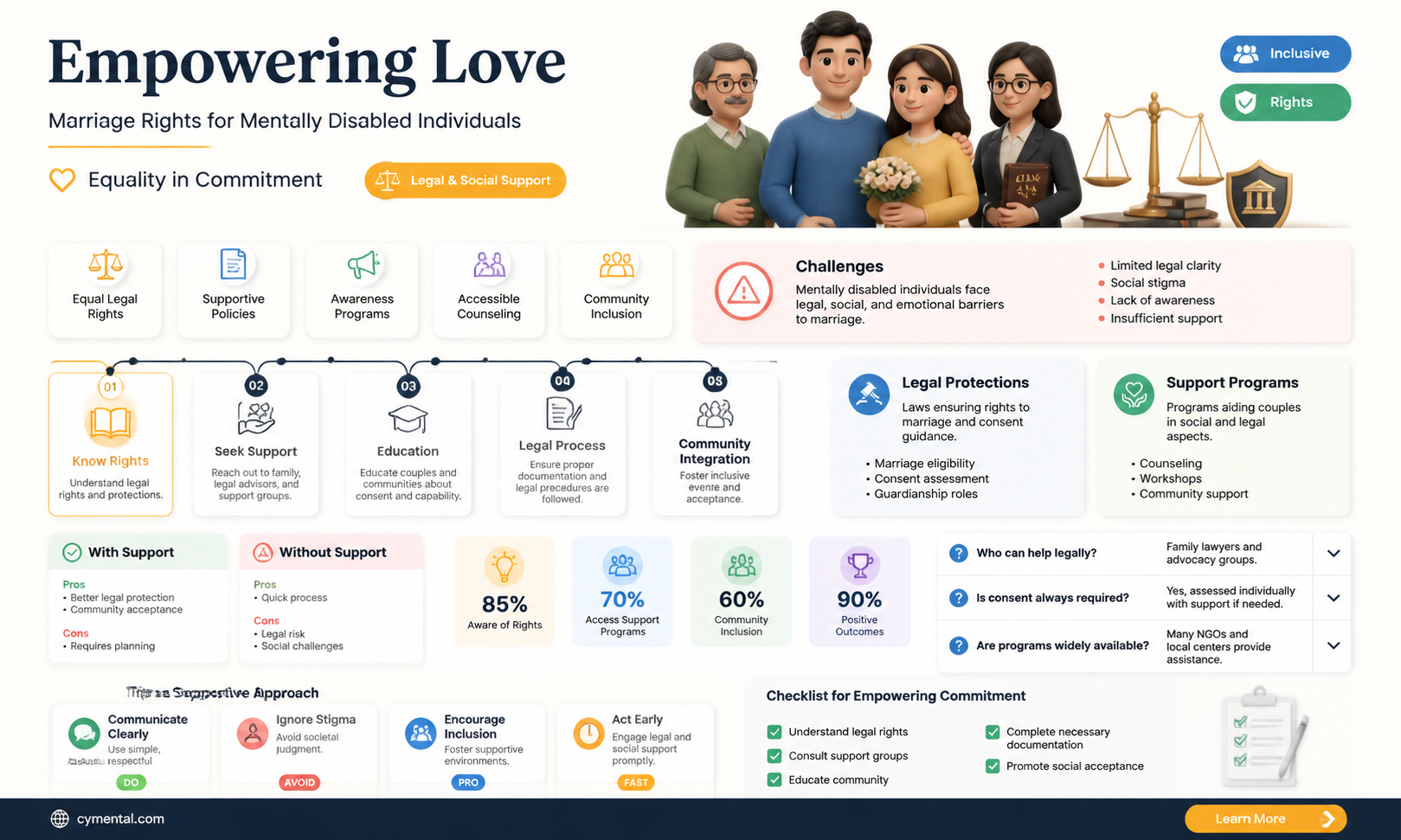
The question of whether a mentally disabled person can get married is a complex and sensitive topic that touches on legal, ethical, and social considerations. In many jurisdictions, the capacity to marry is determined by an individual's ability to understand the nature and consequences of the marriage contract. This means that individuals with certain mental disabilities may face challenges in demonstrating their capacity to marry. However, it is important to recognize that mental disability is a broad term that encompasses a wide range of conditions, and not all individuals with mental disabilities will lack the capacity to marry. Furthermore, denying the right to marry based solely on a mental disability can be seen as discriminatory and a violation of human rights. Therefore, it is crucial to approach this topic with nuance and to consider the specific circumstances and needs of each individual.
What You'll Learn
- Legal Requirements: Discusses the legal prerequisites for marriage, including consent and capacity to understand marital responsibilities
- Capacity to Consent: Explores the ability of mentally disabled individuals to give informed consent for marriage
- Support Systems: Highlights the importance of support networks and resources for mentally disabled individuals in marital relationships
- Challenges and Considerations: Addresses potential challenges and special considerations in marriages involving mentally disabled individuals
- Success Stories: Shares positive examples of mentally disabled individuals who have successfully navigated marriage with appropriate support

Legal Requirements: Discusses the legal prerequisites for marriage, including consent and capacity to understand marital responsibilities
To legally marry, all individuals must meet certain prerequisites, which include the capacity to consent and understand the responsibilities and implications of marriage. This is particularly relevant when considering the marriage of mentally disabled individuals. The legal system requires that both parties entering into a marriage contract have the mental capacity to comprehend the nature and consequences of their union. This means they must be able to understand the duties, rights, and responsibilities that come with marriage, including financial obligations, cohabitation, and potential parenthood.
In cases where one or both parties have a mental disability, additional considerations come into play. The law must ensure that the individual(s) are not being coerced or unduly influenced into the marriage. This often involves a thorough evaluation of the person's ability to make informed decisions. Legal guardians, family members, or healthcare professionals may be involved in this process to provide insight into the individual's capacity to consent.
The legal requirements for marriage also necessitate that both parties are of legal age to marry, which varies by jurisdiction. In some cases, individuals with mental disabilities may be emancipated, allowing them to marry at a younger age than the general legal requirement. However, this is subject to the same capacity to consent and understand marital responsibilities.
It's crucial to note that the legal system aims to protect the rights and well-being of all individuals, including those with mental disabilities. Therefore, while the process may be more complex for mentally disabled individuals, the ultimate goal is to ensure that their rights are upheld and that they are entering into the marriage voluntarily and with a full understanding of its implications.
In conclusion, the legal prerequisites for marriage, particularly for mentally disabled individuals, are designed to safeguard their autonomy and ensure that they are fully capable of consenting to and understanding the responsibilities of marriage. This involves a careful evaluation of their mental capacity and a consideration of their unique circumstances.
Taking a Mental Health Day: Understanding Your Rights and Employer's Policies
You may want to see also
Capacity to Consent: Explores the ability of mentally disabled individuals to give informed consent for marriage
The capacity to consent is a fundamental aspect of marriage, ensuring that both parties enter into the union voluntarily and with a full understanding of its implications. For mentally disabled individuals, this capacity can be complex and multifaceted, often requiring careful evaluation and consideration. It is essential to recognize that mental disability does not inherently negate a person's ability to consent, but rather, it may impact their capacity to make informed decisions.
In assessing the capacity to consent for marriage, it is crucial to consider the individual's cognitive abilities, emotional maturity, and understanding of the marital relationship. This evaluation should be conducted by qualified professionals, such as psychologists or psychiatrists, who can provide a comprehensive assessment of the person's mental state and decision-making capabilities. The assessment should take into account the individual's ability to communicate their wishes, understand the legal and social implications of marriage, and make decisions independently without undue influence or coercion.
One unique angle to explore in this context is the role of supported decision-making in enhancing the capacity to consent for mentally disabled individuals. Supported decision-making involves providing assistance and guidance to help individuals make informed choices, without substituting their will for that of the decision-maker. This approach can be particularly beneficial for individuals with mental disabilities, as it allows them to retain autonomy while receiving the necessary support to make complex decisions.
In addition to supported decision-making, it is important to consider the legal frameworks and safeguards in place to protect the rights of mentally disabled individuals in the context of marriage. Many jurisdictions have laws and regulations that govern the capacity to consent for marriage, and these should be carefully reviewed and understood by all parties involved. Legal professionals can play a crucial role in ensuring that the rights of mentally disabled individuals are protected and that their capacity to consent is not compromised.
Ultimately, the capacity to consent for marriage is a deeply personal and complex issue that requires careful consideration and respect for the individual's autonomy and dignity. By providing appropriate support, guidance, and legal protections, it is possible to ensure that mentally disabled individuals can make informed decisions about marriage and enjoy the same rights and opportunities as all individuals.
Recognizing the Signs: Am I Experiencing Mental Abuse?
You may want to see also
Support Systems: Highlights the importance of support networks and resources for mentally disabled individuals in marital relationships
Navigating marital relationships can be complex for anyone, but for mentally disabled individuals, the journey can present unique challenges. This is where the significance of robust support systems comes into play. Support networks and resources are not just beneficial; they are essential for ensuring that mentally disabled individuals can enter and maintain healthy, fulfilling marriages.
One critical aspect of these support systems is the provision of education and training. Mentally disabled individuals and their partners can greatly benefit from workshops and counseling sessions that address the specific dynamics of their relationships. These educational resources can cover a range of topics, from communication strategies to managing daily life together, and can be tailored to meet the unique needs of each couple.
Another vital component is the availability of mental health services. Access to therapy and psychiatric care can help mentally disabled individuals manage their conditions effectively, which in turn can positively impact their marital relationships. These services can also provide a safe space for couples to discuss their feelings and work through any issues that may arise.
In addition to professional support, peer support groups can be incredibly valuable. Connecting with others who have similar experiences can offer a sense of community and understanding that is hard to find elsewhere. These groups can provide a platform for sharing advice, venting frustrations, and celebrating successes, all of which can contribute to a stronger, more resilient marriage.
Finally, it is important to recognize the role of family and friends in these support systems. Loved ones can offer emotional support, practical assistance, and a listening ear when needed. They can also help to advocate for the needs of mentally disabled individuals and their partners, ensuring that they receive the care and resources they require to thrive in their relationships.
In conclusion, support systems are crucial for mentally disabled individuals in marital relationships. By providing education, mental health services, peer support, and a strong network of family and friends, these systems can help couples navigate the complexities of marriage and build a strong, lasting bond.
Mastering Mental Math: Strategies for Quick and Accurate Calculations
You may want to see also
Challenges and Considerations: Addresses potential challenges and special considerations in marriages involving mentally disabled individuals
Marriages involving mentally disabled individuals can present unique challenges and considerations that require careful attention and planning. One of the primary concerns is ensuring that both parties have the capacity to consent to the marriage and understand the implications of their commitment. This may involve legal evaluations and consultations with mental health professionals to determine the individual's ability to make informed decisions.
Another challenge is navigating the complex web of laws and regulations that govern marriage and disability rights. Depending on the jurisdiction, there may be specific requirements or restrictions related to the marriage of mentally disabled individuals, such as the need for parental consent or the involvement of a guardian. It is essential for couples and their families to be aware of these legal considerations and seek appropriate legal counsel to ensure that all necessary steps are taken.
In addition to legal and capacity-related issues, marriages involving mentally disabled individuals may also face social and emotional challenges. Stigma and discrimination can be significant barriers, and couples may need to develop strategies for coping with these issues and advocating for their rights. Communication and mutual understanding are crucial, and couples may benefit from counseling or therapy to help them navigate the complexities of their relationship.
Financial considerations are also important, as mentally disabled individuals may have limited earning capacity or require ongoing support. Couples should carefully plan their finances and explore available resources, such as government benefits or disability support programs, to ensure their long-term stability and well-being.
Finally, it is essential to recognize that each individual and relationship is unique, and there is no one-size-fits-all approach to addressing the challenges and considerations in marriages involving mentally disabled individuals. Flexibility, patience, and a willingness to adapt are key qualities for couples navigating this complex landscape. By seeking support, staying informed, and maintaining open communication, couples can work together to build a strong and fulfilling relationship.
Prioritizing Your Well-being: How to Get Time Off Work for Mental Health
You may want to see also
Success Stories: Shares positive examples of mentally disabled individuals who have successfully navigated marriage with appropriate support
Sarah and John's story is a testament to the power of love and support. Despite both having intellectual disabilities, they met at a community center and formed an unbreakable bond. With the help of their families and a dedicated support team, they navigated the complexities of marriage and built a life together. Their wedding day was a celebration of not just their love, but also the strength of their community.
Similarly, Emily and Michael's journey to marriage was filled with challenges, but also incredible moments of joy. Emily, who has Down syndrome, and Michael, who has autism, met through a mutual friend and quickly fell in love. However, they faced significant obstacles in their path to marriage, including concerns from family members and legal hurdles. With the support of a non-profit organization that specializes in helping individuals with disabilities navigate relationships and marriage, they were able to overcome these challenges and tie the knot.
These success stories highlight the importance of appropriate support for mentally disabled individuals who wish to get married. This support can come in many forms, including counseling, legal assistance, and help with daily living tasks. By providing the necessary resources and guidance, individuals with disabilities can successfully navigate marriage and build fulfilling lives with their partners.
It's also important to recognize that marriage is not the only path to happiness and fulfillment for individuals with disabilities. Many choose to pursue other goals and aspirations, such as careers, education, or personal hobbies. The key is to provide the necessary support and resources to help them achieve their goals, whatever they may be.
In conclusion, the success stories of Sarah and John, Emily and Michael, and many others demonstrate that with the right support, mentally disabled individuals can successfully navigate marriage and build happy, fulfilling lives. These stories serve as a reminder of the importance of inclusivity, acceptance, and support for all individuals, regardless of their abilities.
Nourishing Care: Feeding Practices in Mental Health Facilities
You may want to see also
Frequently asked questions
Yes, a mentally disabled person can get married, but the ability to do so may depend on the individual's specific circumstances and the laws of the country or state they reside in. In many places, the capacity to marry is determined by whether the individual can understand the nature and responsibilities of marriage.
Legal considerations may include ensuring that the individual has the capacity to consent to marriage, which often involves a court assessment. Additionally, it's important to consider any guardianship or conservatorship arrangements that may be in place, as these can impact the individual's right to marry. Prenuptial agreements and the potential for annulment should also be discussed with legal counsel.
Support systems can include family members, friends, mental health professionals, and support groups specifically for individuals with mental disabilities. These systems can provide emotional support, help with daily living tasks, and assist in navigating the complexities of marriage. Additionally, couples therapy and counseling can be beneficial for both partners to address any challenges that may arise in the relationship.