 Madison Cole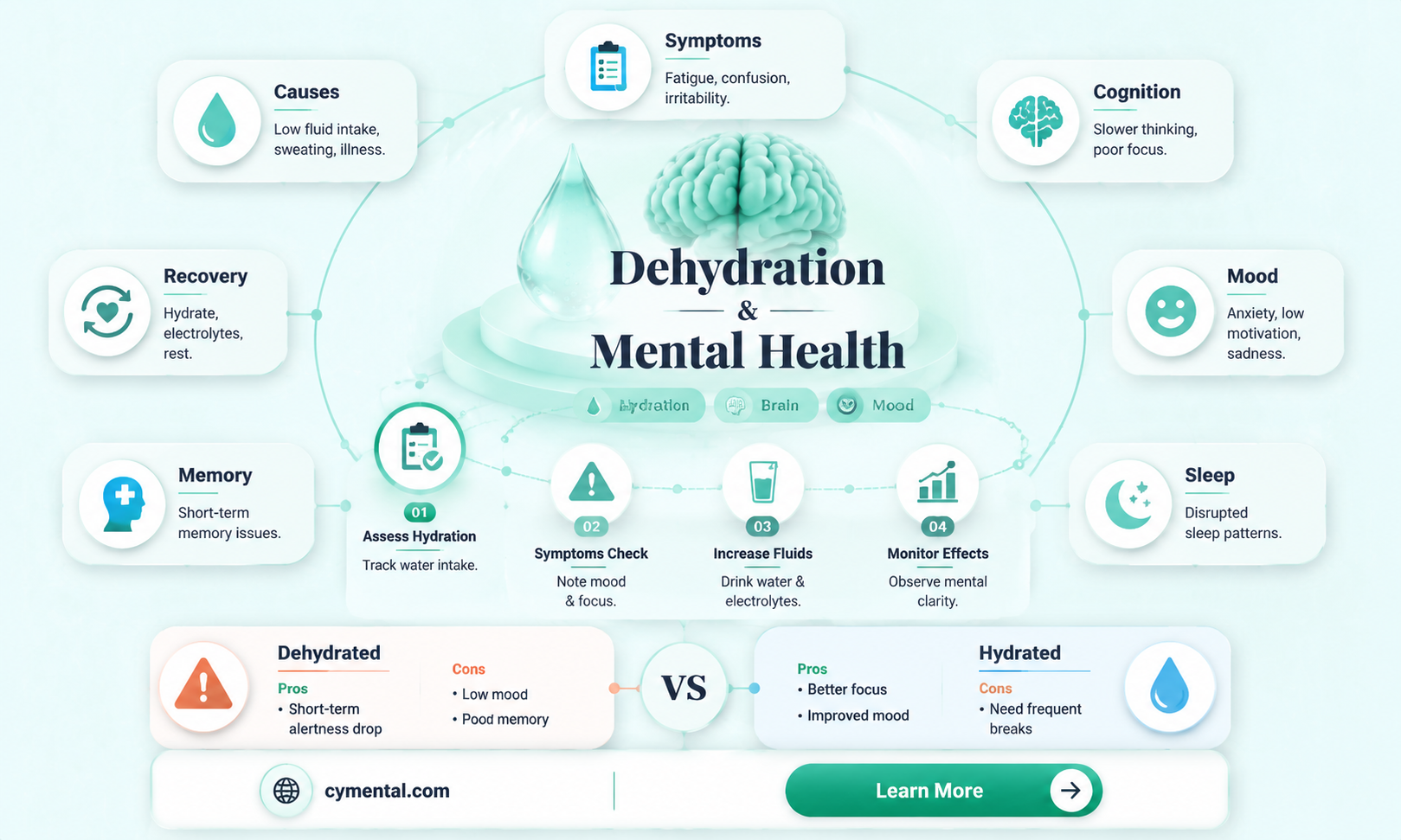
Dehydration, a common yet often overlooked condition, can have far-reaching effects on overall health, including mental well-being. Research suggests that even mild dehydration can impact cognitive function, mood, and emotional regulation. This introduction explores the intricate relationship between hydration levels and mental health, shedding light on the physiological mechanisms that underpin this connection and highlighting the importance of maintaining adequate hydration for optimal brain function.
| Characteristics | Values |
|---|---|
| Definition | Dehydration is a condition where the body lacks sufficient water to function properly. |
| Impact on Cognitive Function | Dehydration can impair cognitive functions such as attention, memory, and decision-making. |
| Emotional Effects | Dehydration may lead to increased feelings of anxiety, stress, and irritability. |
| Prevalence | Dehydration is common, affecting millions of people worldwide, with varying degrees of severity. |
| Risk Factors | Factors such as excessive sweating, inadequate water intake, and certain medical conditions can increase the risk of dehydration. |
| Symptoms | Common symptoms include thirst, dry mouth, fatigue, dizziness, and dark urine. |
| Treatment | Mild dehydration can be treated by increasing water intake, while severe cases may require medical attention and intravenous fluids. |
| Prevention | Regular water intake, monitoring urine color, and staying hydrated during physical activity can help prevent dehydration. |
| Research Findings | Studies have shown a link between dehydration and decreased mental performance, including reduced reaction times and impaired mood. |
| Public Awareness | Many people are unaware of the potential mental health impacts of dehydration, highlighting the need for increased public education. |
| Vulnerable Populations | Certain groups, such as the elderly, athletes, and individuals with chronic illnesses, may be more susceptible to dehydration and its mental health effects. |
| Long-term Consequences | Chronic dehydration can lead to persistent cognitive and emotional impairments, affecting overall quality of life. |
| Diagnostic Criteria | Diagnosis is typically based on physical examination, medical history, and laboratory tests to measure hydration levels. |
| Management Strategies | Lifestyle modifications, such as maintaining a balanced diet and avoiding excessive caffeine and alcohol intake, can help manage dehydration. |
| Healthcare Provider Role | Healthcare providers play a crucial role in educating patients about the importance of hydration and monitoring for signs of dehydration during routine check-ups. |
| Public Health Initiatives | Public health campaigns can help raise awareness about the risks of dehydration and promote healthy hydration habits. |
| Future Research Directions | Further research is needed to explore the underlying mechanisms of how dehydration affects mental health and to develop more effective prevention and treatment strategies. |
Explore related products


What You'll Learn
- Dehydration and Cognitive Function: Explore how dehydration impacts cognitive processes like memory, attention, and decision-making
- Mood Changes: Discuss the relationship between dehydration and mood alterations, including irritability and anxiety
- Dehydration and Stress: Examine how dehydration can exacerbate stress levels and affect stress response mechanisms
- Neurotransmitter Imbalance: Investigate how dehydration influences neurotransmitter function and balance, potentially leading to mental health issues
- Hydration Strategies: Present practical strategies for maintaining proper hydration to support mental health and well-being

Dehydration and Cognitive Function: Explore how dehydration impacts cognitive processes like memory, attention, and decision-making
Dehydration has a profound impact on cognitive function, affecting various mental processes essential for daily life. Research indicates that even mild dehydration can impair memory, attention, and decision-making abilities. For instance, a study published in the Journal of Nutrition found that dehydrated individuals performed worse on cognitive tasks compared to their hydrated counterparts. This impairment is believed to be due to the reduced blood flow to the brain, which can lead to a decrease in oxygen and nutrient delivery, thereby affecting neural function.
Memory is particularly susceptible to the effects of dehydration. The brain relies heavily on proper hydration to maintain the integrity of neural connections and support the formation and retrieval of memories. Dehydration can disrupt these processes, leading to difficulties in remembering information and forming new memories. In severe cases, prolonged dehydration can even contribute to the development of memory-related disorders such as dementia.
Attention is another cognitive process significantly affected by dehydration. The ability to focus and concentrate requires optimal brain function, which is compromised when the body is dehydrated. This can result in decreased productivity, increased fatigue, and a higher likelihood of making errors. Furthermore, dehydration can exacerbate symptoms of attention deficit hyperactivity disorder (ADHD), making it more challenging for individuals to manage their daily tasks and responsibilities.
Decision-making is also impaired by dehydration, as the brain's ability to process information and make rational choices is hindered. Dehydrated individuals may experience difficulty in evaluating options, weighing risks and benefits, and arriving at a decision. This can have serious consequences in both personal and professional settings, where sound decision-making is crucial.
To mitigate the cognitive effects of dehydration, it is essential to maintain proper hydration levels throughout the day. Drinking adequate amounts of water, consuming hydrating foods, and monitoring urine color can help ensure that the body and brain receive the necessary fluids to function optimally. Additionally, incorporating regular breaks for hydration during mentally demanding tasks can help maintain cognitive performance and prevent the negative impacts of dehydration on memory, attention, and decision-making.
The Unseen Struggle: How Mental Health Affects Us All
You may want to see also
Explore related products


Mood Changes: Discuss the relationship between dehydration and mood alterations, including irritability and anxiety
Dehydration has a profound impact on mood, often leading to irritability and anxiety. When the body is dehydrated, it triggers a stress response, releasing hormones like cortisol that can affect emotional well-being. Studies have shown that even mild dehydration can lead to increased feelings of tension, irritability, and fatigue.
One of the key reasons dehydration affects mood is its impact on brain function. The brain is highly sensitive to changes in hydration levels, and when dehydrated, it can lead to impaired cognitive function, difficulty concentrating, and mood disturbances. This is because dehydration can cause a decrease in the production of neurotransmitters like serotonin and dopamine, which are crucial for regulating mood.
Furthermore, dehydration can exacerbate existing mental health conditions. For individuals with anxiety disorders, dehydration can intensify symptoms such as racing thoughts, restlessness, and feelings of dread. Similarly, for those with depression, dehydration can worsen feelings of sadness, hopelessness, and lethargy.
It's also important to note that dehydration can lead to physical symptoms that can further contribute to mood changes. For example, dehydration can cause headaches, muscle cramps, and fatigue, all of which can negatively impact one's emotional state.
To mitigate these effects, it's crucial to stay properly hydrated. Drinking enough water throughout the day can help maintain optimal brain function and emotional well-being. Additionally, consuming foods with high water content, such as fruits and vegetables, can also contribute to overall hydration levels.
In conclusion, dehydration can have a significant impact on mood, leading to irritability, anxiety, and other emotional disturbances. By understanding the relationship between dehydration and mood changes, individuals can take proactive steps to stay hydrated and maintain their mental health.
The Hidden Impact: Bed Bugs and Mental Health Connection
You may want to see also
Explore related products


Dehydration and Stress: Examine how dehydration can exacerbate stress levels and affect stress response mechanisms
Dehydration can significantly exacerbate stress levels and affect the body's stress response mechanisms. When the body is dehydrated, it goes into a state of stress, triggering the release of stress hormones like cortisol. This can lead to a heightened state of alertness and anxiety, making it more difficult to cope with everyday stressors.
One of the key ways dehydration affects stress response mechanisms is by impairing the body's ability to regulate its internal temperature. When dehydrated, the body has less water to dissipate heat, leading to an increase in core body temperature. This can cause feelings of discomfort, irritability, and fatigue, all of which can contribute to increased stress levels.
Dehydration can also impact cognitive function, including memory, attention, and decision-making abilities. This can make it more challenging to manage stress effectively, as individuals may struggle to focus, prioritize tasks, or make rational decisions. Furthermore, dehydration can lead to physical symptoms such as headaches, muscle cramps, and dizziness, which can further contribute to feelings of stress and anxiety.
It is essential to stay properly hydrated to mitigate the effects of dehydration on stress levels and stress response mechanisms. Drinking adequate amounts of water throughout the day can help maintain optimal hydration levels and support overall mental and physical well-being. Additionally, incorporating stress management techniques such as deep breathing, meditation, and regular exercise can help individuals better cope with stress and reduce its impact on their health.
Emotional Resilience: Mastering the Art of Unfazed Living
You may want to see also
Explore related products





Neurotransmitter Imbalance: Investigate how dehydration influences neurotransmitter function and balance, potentially leading to mental health issues
Dehydration can significantly impact neurotransmitter function and balance in the brain, potentially leading to a range of mental health issues. Neurotransmitters are chemical messengers that transmit signals between neurons, playing a crucial role in regulating mood, cognition, and behavior. When the body is dehydrated, the concentration of these neurotransmitters can be altered, affecting their ability to function optimally.
One of the primary neurotransmitters affected by dehydration is serotonin. Serotonin is involved in regulating mood, appetite, and sleep, and low levels have been linked to depression and anxiety. Dehydration can lead to decreased serotonin production, as the body requires adequate hydration to synthesize this neurotransmitter. Additionally, dehydration can cause an increase in the breakdown of serotonin, further contributing to its depletion.
Another neurotransmitter impacted by dehydration is dopamine. Dopamine is involved in reward, motivation, and movement, and imbalances have been associated with conditions such as Parkinson's disease and attention deficit hyperactivity disorder (ADHD). Dehydration can lead to decreased dopamine production, as well as impaired dopamine receptor function, which can result in symptoms such as fatigue, apathy, and difficulty concentrating.
Furthermore, dehydration can also affect the balance of other neurotransmitters, such as norepinephrine and acetylcholine. Norepinephrine is involved in the body's stress response and attention, while acetylcholine plays a role in memory and learning. Imbalances in these neurotransmitters can contribute to symptoms such as anxiety, irritability, and cognitive impairment.
To mitigate the effects of dehydration on neurotransmitter function and balance, it is essential to maintain adequate hydration levels. This can be achieved by drinking plenty of water throughout the day, as well as consuming foods with high water content, such as fruits and vegetables. Additionally, limiting the consumption of diuretics, such as caffeine and alcohol, can help to prevent dehydration and support optimal neurotransmitter function.
In conclusion, dehydration can have a significant impact on neurotransmitter function and balance, potentially leading to a range of mental health issues. By maintaining adequate hydration levels and limiting the consumption of diuretics, individuals can support optimal neurotransmitter function and overall mental well-being.
Exploring the Link: Chlamydia's Impact on Mental Well-being
You may want to see also
Explore related products


Hydration Strategies: Present practical strategies for maintaining proper hydration to support mental health and well-being
Maintaining proper hydration is crucial for supporting mental health and well-being. Dehydration can lead to a range of mental health issues, including fatigue, irritability, anxiety, and even depression. To combat these effects, it's essential to develop effective hydration strategies that can be easily incorporated into daily life.
One practical strategy is to drink water regularly throughout the day, aiming for at least eight glasses of water per day. This can be achieved by setting reminders on your phone or placing water bottles in strategic locations around your home and workplace. Additionally, incorporating water-rich foods into your diet, such as fruits and vegetables, can also help to boost your hydration levels.
Another effective strategy is to monitor your urine color and frequency. If your urine is dark yellow or you're not urinating frequently enough, it's a sign that you're dehydrated and need to increase your water intake. Keeping a hydration journal can also be helpful in tracking your water consumption and identifying patterns or triggers that may lead to dehydration.
It's also important to be mindful of the beverages you consume. While caffeinated and alcoholic drinks may provide temporary relief from thirst, they can actually contribute to dehydration in the long run. Opting for water or other hydrating beverages, such as herbal tea or coconut water, is a better choice for maintaining proper hydration.
Finally, staying hydrated during physical activity is crucial. Drinking water before, during, and after exercise can help to prevent dehydration and support optimal mental and physical performance. By incorporating these practical hydration strategies into your daily routine, you can support your mental health and well-being, and reduce the risk of dehydration-related issues.
Exploring the Complex Relationship Between Cannabis and Mental Health
You may want to see also
Frequently asked questions
Yes, dehydration can significantly impact mental health. Studies have shown that even mild dehydration can lead to symptoms such as anxiety, fatigue, and difficulty concentrating.
Dehydration can impair cognitive function by reducing the brain's ability to process information efficiently. This can result in slower reaction times, decreased memory performance, and a decline in overall cognitive abilities.
Common mental health symptoms associated with dehydration include mood swings, irritability, anxiety, depression, and a general sense of malaise. In severe cases, dehydration can even lead to delirium or psychosis.
The recommended daily water intake varies depending on factors such as age, sex, weight, and activity level. However, a general guideline is to drink at least 8 cups (64 ounces) of water per day to maintain proper hydration and support mental health.
Yes, certain populations are more susceptible to the mental health effects of dehydration. These include older adults, individuals with pre-existing mental health conditions, and those who engage in strenuous physical activity or live in hot climates.


