Lucas Bennett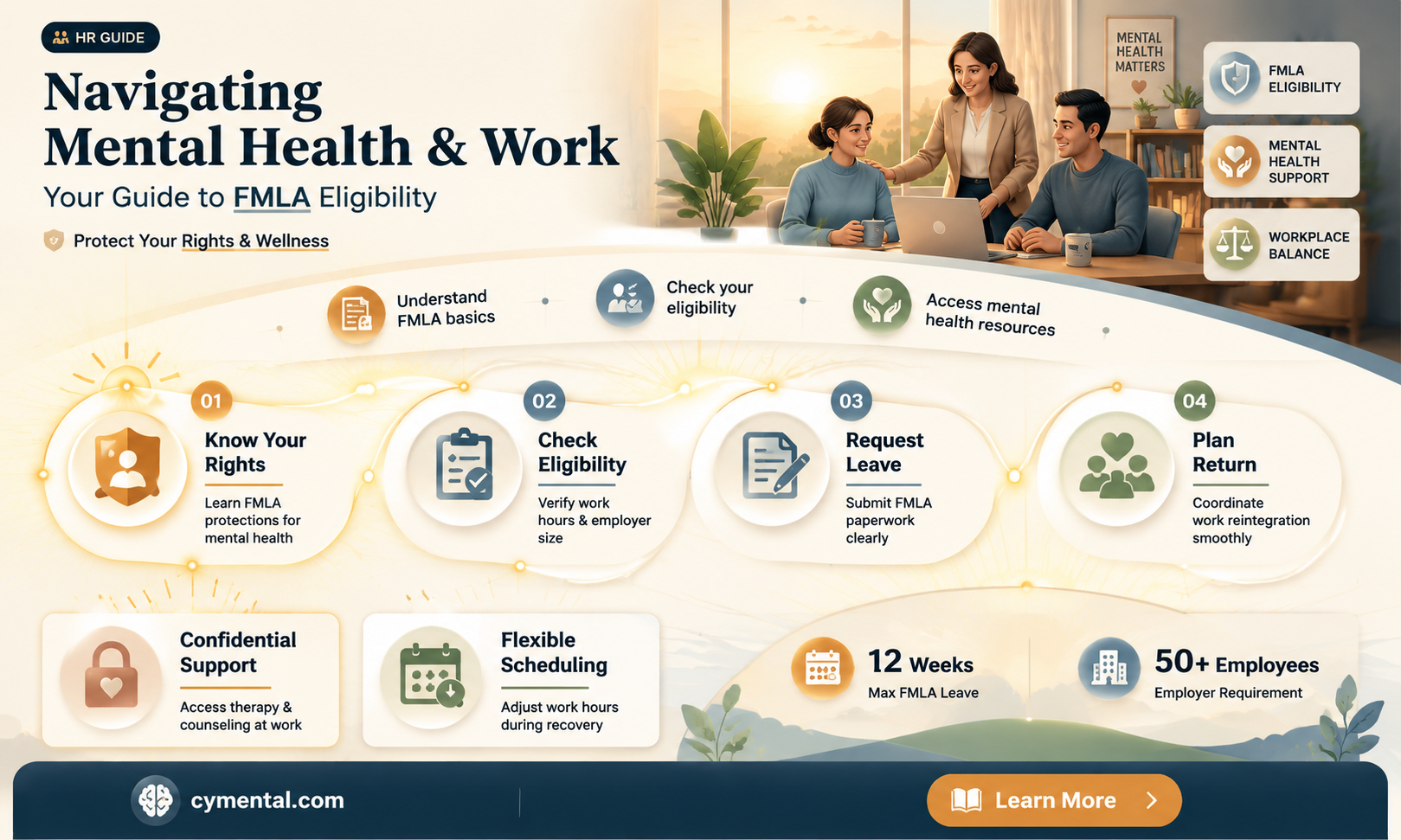
The Family and Medical Leave Act (FMLA) is a federal law that provides eligible employees with up to 12 weeks of unpaid leave per year for certain family and medical reasons. While FMLA does not specifically mention mental health conditions, it does cover serious health conditions that make an employee unable to perform their job duties. This can include mental health issues such as depression, anxiety, bipolar disorder, and other psychiatric conditions that are severe enough to impact an individual's ability to work. To qualify for FMLA for mental health reasons, an employee must provide medical certification from a healthcare provider, and the employer must determine that the condition meets the criteria for a serious health condition under the law. It's important to note that FMLA is not a guarantee of leave, and employers may have their own policies and procedures for handling such requests.
| Characteristics | Values |
|---|---|
| Eligibility | To qualify for FMLA (Family and Medical Leave Act) for mental health reasons, an employee must have a serious mental health condition that makes them unable to perform their job duties. This could include conditions like depression, anxiety, bipolar disorder, or schizophrenia. |
| Employer Coverage | Employers with 50 or more employees within a 75-mile radius are required to provide FMLA leave. Smaller employers may not be subject to FMLA regulations. |
| Employee Tenure | Employees must have worked for their employer for at least 12 months (which do not need to be consecutive) to be eligible for FMLA leave. |
| Leave Duration | Eligible employees can take up to 12 weeks of unpaid leave per year for mental health reasons. |
| Medical Certification | Employees may be required to provide medical certification from a healthcare provider to substantiate their need for FMLA leave due to a mental health condition. |
| Job Protection | FMLA provides job protection, meaning that employees cannot be fired for taking FMLA leave. Upon return, they must be reinstated to their previous position or an equivalent one. |
| Health Insurance | Employers must maintain the employee's health insurance coverage during FMLA leave under the same terms and conditions as if the employee had not taken leave. |
| Notice Requirements | Employees are generally required to provide 30 days' notice to their employer before taking FMLA leave. In cases of unforeseen circumstances, notice should be given as soon as possible. |
| Documentation | Employers may require employees to complete forms or provide documentation related to their FMLA leave request. |
| Confidentiality | Information related to an employee's mental health condition and FMLA leave should be kept confidential and only shared with authorized personnel. |
| State Laws | Some states have their own family and medical leave laws that may provide additional protections or benefits beyond federal FMLA requirements. |
| Resources | Employees seeking FMLA leave for mental health reasons may benefit from resources such as the National Alliance on Mental Illness (NAMI) or the U.S. Department of Labor's FMLA website for guidance and support. |
Explore related products


What You'll Learn
- Eligibility criteria: Understand the requirements to qualify for FMLA due to mental health conditions
- Documentation needed: Learn about the necessary medical certifications and paperwork to support your FMLA request
- Types of mental health conditions covered: Discover which mental health issues are typically eligible for FMLA protection
- Process of requesting FMLA: Get guidance on how to formally request FMLA from your employer
- Protections and benefits: Explore the legal protections and benefits you may be entitled to under FMLA for mental health reasons

Eligibility criteria: Understand the requirements to qualify for FMLA due to mental health conditions
To qualify for FMLA due to mental health conditions, an employee must meet several specific eligibility criteria. First and foremost, the employee must have worked for the employer for at least 12 months, which do not need to be consecutive. This requirement ensures that the employee has a sufficient work history with the company to be eligible for FMLA benefits. Additionally, the employee must have worked at least 1,250 hours during the 12-month period immediately preceding the start of the FMLA leave. This is roughly equivalent to working 24 hours per week for 52 weeks.
The mental health condition in question must also meet certain criteria. It must be a serious health condition that makes the employee unable to perform the essential functions of their job. This could include conditions such as depression, anxiety, bipolar disorder, or schizophrenia, among others. The condition must be documented by a healthcare provider, and the employee must provide this documentation to their employer to support their FMLA request.
Furthermore, the employee must provide their employer with at least 30 days' notice before taking FMLA leave, unless circumstances make this notice period impractical. This notice period allows the employer to make necessary arrangements to cover the employee's workload during their absence. If the employee's mental health condition is chronic or recurring, they may need to provide periodic updates to their employer regarding their condition and their ability to return to work.
It is also important to note that FMLA leave is unpaid, although employees may be eligible for short-term disability benefits or other forms of assistance during their leave. Employees should check with their employer's human resources department to determine what benefits are available to them during FMLA leave.
In summary, to qualify for FMLA due to mental health conditions, an employee must have a sufficient work history with their employer, must have worked a minimum number of hours in the preceding 12 months, must have a serious mental health condition that impacts their ability to work, and must provide appropriate documentation and notice to their employer. By understanding these eligibility criteria, employees can better navigate the FMLA process and ensure that they receive the necessary support and accommodations for their mental health needs.
Feline Mental Health: Understanding and Addressing Behavioral Issues in Cats
You may want to see also
Explore related products





Documentation needed: Learn about the necessary medical certifications and paperwork to support your FMLA request
To successfully request Family and Medical Leave Act (FMLA) for mental health reasons, it is crucial to understand the documentation requirements. The FMLA necessitates specific medical certifications to validate the need for leave. These certifications must be provided by a licensed healthcare provider and should include a detailed explanation of the mental health condition, the impact on the employee's ability to perform their job, and the expected duration of the leave.
The first step in obtaining the necessary documentation is to consult with a healthcare provider who can diagnose and treat mental health conditions. This provider must be licensed to practice in the state where the employee resides. During the consultation, the employee should discuss their symptoms, how these symptoms affect their work performance, and any treatment plans that may be necessary. The healthcare provider should then complete the required FMLA certification forms, which typically include information about the diagnosis, the severity of the condition, and the recommended course of treatment.
It is important to note that the FMLA requires the healthcare provider to certify that the employee's mental health condition is serious and that it substantially limits their ability to perform one or more essential functions of their job. This means that the documentation must clearly explain how the mental health condition impacts the employee's work capabilities. Additionally, the certification should include the dates of the employee's treatment and any anticipated future treatment needs.
Employees should also be aware that their employer may request additional documentation or clarification if the initial certification is incomplete or unclear. Therefore, it is essential to ensure that the healthcare provider provides thorough and detailed information in the certification. Furthermore, employees should keep a copy of all documentation related to their FMLA request for their records.
In summary, obtaining the necessary medical certifications and paperwork is a critical component of the FMLA request process for mental health reasons. Employees must consult with a licensed healthcare provider who can provide a detailed certification explaining the mental health condition, its impact on work performance, and the expected duration of the leave. By ensuring that the documentation is thorough and complete, employees can increase the likelihood of a successful FMLA request.
Navigating the Legal Process for a Court-Ordered Mental Health Evaluation
You may want to see also
Types of mental health conditions covered: Discover which mental health issues are typically eligible for FMLA protection
The Family and Medical Leave Act (FMLA) provides eligible employees with up to 12 weeks of unpaid leave per year for certain family and medical reasons. Mental health conditions are among the covered reasons, but not all mental health issues qualify. To be eligible for FMLA protection, a mental health condition must be considered a "serious health condition" that substantially limits one or more major life activities. This can include conditions such as depression, anxiety disorders, bipolar disorder, schizophrenia, and obsessive-compulsive disorder (OCD), among others. However, it's important to note that the mere diagnosis of a mental health condition does not automatically qualify an individual for FMLA leave. The condition must be severe enough to impact the individual's ability to perform daily tasks and responsibilities.
Determining whether a mental health condition is covered under FMLA can be complex and often requires input from a healthcare provider. The condition must be evaluated on a case-by-case basis, taking into account the individual's specific circumstances and the nature and severity of their symptoms. For example, a person with depression may be eligible for FMLA if their symptoms are severe enough to interfere with their ability to work, but someone with mild depression that does not impact their daily functioning may not qualify. Additionally, the condition must be chronic or long-term, or it must have a significant impact on the individual's ability to work for a period of at least three days.
It's also important to understand that FMLA leave for mental health conditions is not a guarantee. Employers have the right to request medical certification to verify the need for leave, and they may also require periodic recertifications to ensure that the condition continues to qualify. Furthermore, while FMLA leave is unpaid, it can be combined with other forms of leave, such as sick leave or vacation time, to provide some financial support during the leave period.
In conclusion, while FMLA does provide protections for certain mental health conditions, it's crucial to understand the specific criteria that must be met in order to qualify. Individuals seeking FMLA leave for mental health reasons should consult with their healthcare provider and their employer to determine their eligibility and to navigate the process effectively.
Navigating the Complex Process: Securing Disability Benefits for Mental Illness
You may want to see also
Process of requesting FMLA: Get guidance on how to formally request FMLA from your employer
To formally request FMLA from your employer for mental health reasons, you should first familiarize yourself with your company's specific policies and procedures regarding FMLA. This may involve reviewing your employee handbook or speaking with your human resources department. Once you have a clear understanding of the requirements, you can begin the process of requesting FMLA.
The next step is to obtain the necessary medical documentation to support your request. This will typically involve scheduling an appointment with your mental health provider to discuss your condition and its impact on your ability to work. Your provider will need to complete a medical certification form, which you can obtain from your employer or the U.S. Department of Labor website. This form will need to include specific details about your condition, treatment plan, and any limitations or restrictions that may affect your work performance.
After obtaining the medical certification, you should submit a formal request for FMLA to your employer. This request should be in writing and should include the following information: your name, employee ID number, the dates you are requesting FMLA, the reason for your request (including a brief explanation of your mental health condition), and the name and contact information of your healthcare provider. You should also attach the completed medical certification form to your request.
Your employer is required to respond to your request within five business days. If your request is approved, you will be notified in writing and provided with information about your FMLA rights and responsibilities. If your request is denied, you will also be notified in writing and provided with an explanation for the denial. You have the right to appeal the denial if you believe it was made in error.
Throughout the FMLA process, it is important to maintain open communication with your employer and to follow all of their policies and procedures. This will help ensure that your request is processed smoothly and that you are able to take the time you need to focus on your mental health.
Breaking Free from All-or-Nothing Thinking: A Guide to Balance
You may want to see also
Protections and benefits: Explore the legal protections and benefits you may be entitled to under FMLA for mental health reasons
Under the Family and Medical Leave Act (FMLA), eligible employees are entitled to certain protections and benefits when taking leave for mental health reasons. One key protection is the right to maintain their health insurance coverage during the leave period. Employers are required to continue providing health insurance under the same terms and conditions as if the employee had not taken leave. This ensures that employees can access necessary mental health treatment without worrying about losing their insurance coverage.
In addition to maintaining health insurance, employees on FMLA leave for mental health reasons may also be eligible for certain benefits. For example, they may be able to receive short-term disability benefits or workers' compensation if their mental health condition is related to their job. Furthermore, employees may be able to access employee assistance programs (EAPs) or other mental health resources provided by their employer.
It is important to note that FMLA leave is unpaid, meaning that employees will not receive their regular salary or wages during the leave period. However, they may be able to use accrued paid time off, such as vacation or sick leave, to cover some or all of the unpaid leave. Additionally, employees may be eligible for unemployment benefits if they are unable to work due to their mental health condition.
To access these protections and benefits, employees must follow certain procedures. They must provide their employer with written notice of their intent to take FMLA leave, along with supporting documentation from a healthcare provider. This documentation must certify that the employee has a serious health condition that requires leave. Employers are then required to respond in writing, informing the employee of their rights and responsibilities under FMLA.
Overall, the FMLA provides important protections and benefits for employees taking leave for mental health reasons. By understanding these rights and following the necessary procedures, employees can access the support they need to address their mental health concerns without jeopardizing their job or health insurance coverage.
Will Life Improve? A Journey Through Hard Times and Hope
You may want to see also
Frequently asked questions
Yes, you can get FMLA (Family and Medical Leave Act) for mental health conditions. The FMLA allows eligible employees to take unpaid leave for serious health conditions that make them unable to perform their job duties. This includes mental health conditions such as depression, anxiety, bipolar disorder, and others.
To qualify for FMLA for mental health, you need to meet certain criteria. First, you must work for an employer covered by the FMLA, which includes most employers with 50 or more employees. Second, you must have worked for your employer for at least 12 months and have completed at least 1,250 hours of service during the 12-month period immediately preceding the start of your leave. Third, you must have a serious mental health condition that makes you unable to perform your job duties. Finally, you must provide your employer with appropriate documentation, such as a doctor's note, to support your request for FMLA leave.
Under the FMLA, you can take up to 12 weeks of unpaid leave in a 12-month period for a serious mental health condition. This leave can be taken all at once or in increments, depending on your needs and your employer's policies. It's important to note that while the FMLA provides job protection during your leave, it does not require your employer to pay you during your time off. However, you may be eligible for other benefits, such as health insurance, during your FMLA leave.