Harper Lewis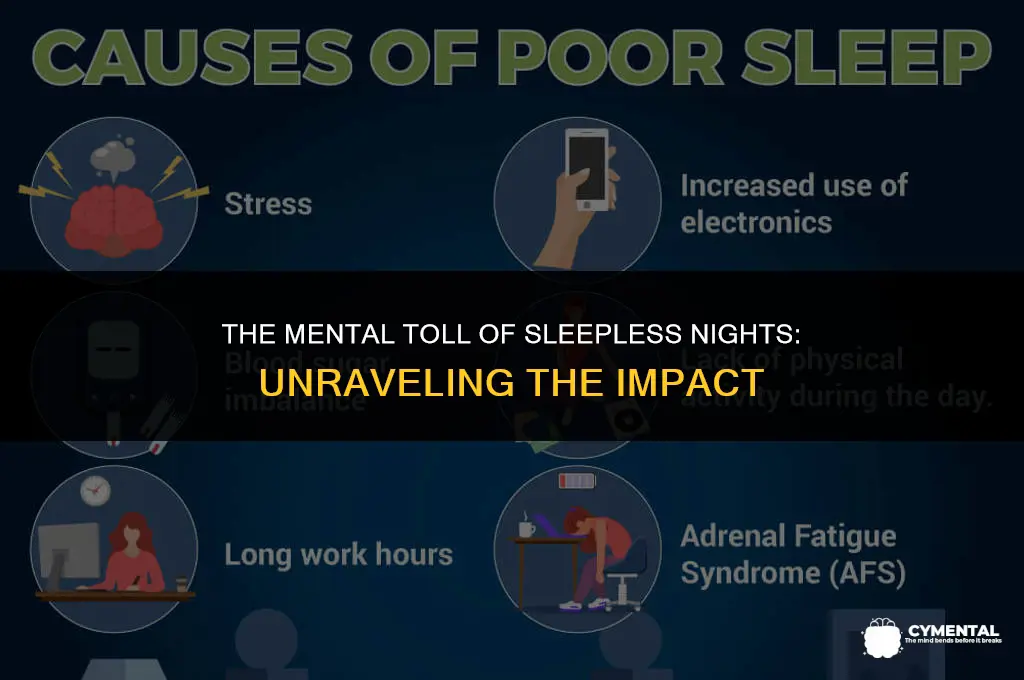
Sleep is a fundamental aspect of human health, playing a critical role in both physical and mental well-being. When we think about the impact of sleep deprivation, it's common to focus on the physical symptoms such as fatigue, decreased coordination, and impaired cognitive function. However, the mental health implications of chronic sleep loss are equally significant and can manifest in various ways. Lack of sleep can exacerbate existing mental health conditions, increase the risk of developing new ones, and negatively affect mood, emotional regulation, and overall psychological resilience. Understanding the intricate relationship between sleep and mental health is essential for promoting holistic well-being and addressing the complex challenges posed by sleep disorders.
Explore related products


What You'll Learn
- Cognitive Impairment: Lack of sleep can significantly reduce cognitive function, impacting memory, attention, and decision-making abilities
- Mood Disorders: Sleep deprivation is linked to mood swings, increased irritability, and a higher risk of developing depression and anxiety
- Psychosis Risk: Severe sleep deprivation can induce psychotic symptoms, such as hallucinations and paranoia, especially in vulnerable individuals
- Emotional Regulation: Without adequate sleep, the brain's ability to regulate emotions is compromised, leading to heightened emotional responses
- Neuroplasticity: Chronic sleep loss can negatively affect the brain's neuroplasticity, impairing its ability to adapt and learn new information

Cognitive Impairment: Lack of sleep can significantly reduce cognitive function, impacting memory, attention, and decision-making abilities
Chronic sleep deprivation has been shown to significantly impair cognitive function, affecting various aspects of mental performance. One of the primary areas impacted is memory. Research indicates that sleep plays a crucial role in memory consolidation, with lack of sleep leading to difficulties in forming and retaining new memories. This impairment can be particularly problematic in educational and professional settings, where the ability to remember information is essential.
In addition to memory, attention is another cognitive function that suffers from lack of sleep. Studies have demonstrated that sleep-deprived individuals exhibit reduced attention spans and increased distractibility. This can lead to difficulties in focusing on tasks, following conversations, and processing information effectively. The impact on attention can have far-reaching consequences, affecting everything from academic performance to workplace productivity and even driving safety.
Decision-making abilities are also significantly compromised by lack of sleep. Sleep deprivation has been shown to impair judgment, leading to poor decision-making and increased risk-taking behavior. This can be particularly concerning in situations that require critical thinking and sound judgment, such as medical decision-making or financial planning. Furthermore, the impairment in decision-making abilities can be exacerbated by the emotional dysregulation that often accompanies sleep deprivation, leading to impulsive and irrational choices.
The effects of sleep deprivation on cognitive function are not limited to these areas alone. Lack of sleep has also been linked to decreased problem-solving skills, reduced creativity, and impaired language function. These effects can be particularly detrimental in today's fast-paced, information-driven world, where cognitive abilities are essential for success in virtually every aspect of life.
It is important to note that the impact of sleep deprivation on cognitive function can vary depending on factors such as the duration and severity of sleep loss, as well as individual differences in sleep needs and resilience. However, the overall consensus is clear: lack of sleep can have a profound and detrimental effect on mental performance, highlighting the importance of prioritizing adequate sleep for optimal cognitive function.
Navigating Work Challenges: Mental Health Matters
You may want to see also
Explore related products



Mood Disorders: Sleep deprivation is linked to mood swings, increased irritability, and a higher risk of developing depression and anxiety
Sleep deprivation has a profound impact on mental health, particularly in the realm of mood disorders. Research indicates that individuals who consistently fail to get adequate sleep are more prone to mood swings, increased irritability, and a heightened risk of developing depression and anxiety. This connection is rooted in the brain's neurochemistry; sleep plays a critical role in regulating neurotransmitters such as serotonin and dopamine, which are essential for maintaining a stable mood.
One of the most immediate effects of sleep deprivation is the alteration of emotional responses. Studies have shown that even a single night of insufficient sleep can lead to increased emotional reactivity, making individuals more susceptible to feelings of anger, frustration, and sadness. This heightened emotional state can result in impulsive behaviors and strained interpersonal relationships, further exacerbating the negative impact on mental well-being.
Moreover, chronic sleep deprivation has been linked to a higher risk of developing clinical mood disorders. A longitudinal study published in the Journal of Psychiatric Research found that individuals with persistent sleep disturbances were significantly more likely to experience symptoms of depression and anxiety over a three-year period compared to those with regular sleep patterns. This suggests that sleep deprivation may not only worsen existing mood disorders but also contribute to their onset.
The mechanisms underlying this relationship are complex and multifaceted. Sleep deprivation disrupts the normal functioning of the hypothalamic-pituitary-adrenal (HPA) axis, leading to elevated levels of stress hormones such as cortisol. This hormonal imbalance can impair the brain's ability to regulate emotions and respond to stressors effectively, creating a vicious cycle that perpetuates mood disturbances.
In addition to its direct effects on mood, sleep deprivation can also exacerbate other mental health conditions. For example, individuals with bipolar disorder may experience more frequent and severe manic episodes when sleep is disrupted. Similarly, those with post-traumatic stress disorder (PTSD) may find that sleep deprivation intensifies their symptoms, including flashbacks and nightmares.
Given the significant impact of sleep deprivation on mental health, it is essential to prioritize sleep hygiene and seek professional help when necessary. Strategies such as maintaining a consistent sleep schedule, creating a relaxing bedtime routine, and limiting exposure to screens before bed can help improve sleep quality. For those struggling with persistent sleep disturbances or mood disorders, consulting a healthcare provider or mental health professional is crucial for developing an effective treatment plan.
Exploring the Surprising Link Between Viruses and Mental Health
You may want to see also
Explore related products




Psychosis Risk: Severe sleep deprivation can induce psychotic symptoms, such as hallucinations and paranoia, especially in vulnerable individuals
Severe sleep deprivation has been known to induce psychotic symptoms, such as hallucinations and paranoia, particularly in individuals who are already vulnerable. This phenomenon is often observed in patients with pre-existing mental health conditions, those who have experienced trauma, or individuals with a genetic predisposition to psychosis. The lack of sleep can exacerbate these underlying vulnerabilities, leading to a heightened risk of psychotic episodes.
Research has shown that prolonged sleep deprivation can alter brain function, affecting the areas responsible for perception, attention, and emotional regulation. This can result in the manifestation of psychotic symptoms, which can be distressing and potentially dangerous for the individual experiencing them. It is crucial for healthcare professionals to recognize the signs of sleep-related psychosis and provide appropriate interventions, such as sleep therapy or medication, to mitigate these symptoms and prevent further complications.
In addition to its impact on vulnerable individuals, severe sleep deprivation can also lead to psychotic symptoms in otherwise healthy people. Studies have demonstrated that extended periods of sleep loss can cause hallucinations, paranoia, and disorganized thinking in individuals without any prior history of mental illness. These symptoms can be temporary and may resolve once adequate sleep is restored, but they can also be a sign of a more serious underlying condition that requires medical attention.
It is important to note that the risk of psychosis induced by sleep deprivation is not limited to adults. Adolescents and young adults are also susceptible to the effects of sleep loss, and may experience psychotic symptoms as a result. This is particularly concerning given the high rates of sleep deprivation among young people, who often face pressures from school, work, and social activities that can lead to inadequate sleep.
To mitigate the risk of psychosis associated with sleep deprivation, it is essential to prioritize good sleep hygiene practices. This includes maintaining a consistent sleep schedule, creating a relaxing sleep environment, and avoiding stimulants such as caffeine and nicotine before bedtime. Additionally, individuals who are experiencing persistent sleep difficulties or symptoms of psychosis should seek professional help from a healthcare provider or mental health specialist.
In conclusion, severe sleep deprivation can have serious consequences for mental health, particularly in vulnerable individuals. By understanding the risks and taking steps to prioritize good sleep hygiene, it is possible to reduce the likelihood of sleep-related psychosis and promote overall well-being.
The Impact of Excessive Gaming on Mental Health: A Comprehensive Analysis
You may want to see also
Explore related products






Emotional Regulation: Without adequate sleep, the brain's ability to regulate emotions is compromised, leading to heightened emotional responses
The brain's ability to regulate emotions is significantly impaired without adequate sleep. This impairment manifests as heightened emotional responses, making it challenging to manage feelings effectively. Research indicates that sleep deprivation affects the amygdala, the brain's emotional center, leading to increased activity and reactivity. This heightened state can result in mood swings, irritability, and an exaggerated response to stressors.
One of the primary mechanisms by which sleep influences emotional regulation is through the consolidation of emotional memories. During sleep, the brain processes and consolidates memories, including those with emotional content. Without sufficient sleep, this process is disrupted, leading to difficulties in managing and recalling emotions appropriately. This disruption can contribute to anxiety, depression, and other mental health issues.
Moreover, sleep deprivation impacts the prefrontal cortex, which is responsible for executive functions, including emotional regulation. When this area is compromised, individuals may struggle with impulse control, decision-making, and managing their emotional responses to various situations. This can lead to behaviors that are out of character, such as sudden outbursts of anger or tears.
In addition to these neurological effects, the physical consequences of sleep deprivation can also exacerbate emotional dysregulation. Fatigue, for instance, can lower one's threshold for emotional responses, making it easier to become frustrated or overwhelmed. Furthermore, sleep deprivation can lead to physical symptoms like headaches and muscle tension, which can contribute to a heightened state of emotional distress.
To mitigate these effects, it is essential to prioritize sleep hygiene. This includes maintaining a consistent sleep schedule, creating a restful sleep environment, and avoiding stimulants before bedtime. Engaging in relaxation techniques, such as meditation or deep breathing exercises, can also help to manage emotional responses and improve sleep quality.
In conclusion, the impact of sleep deprivation on emotional regulation is profound and multifaceted. By understanding the underlying neurological mechanisms and physical consequences, individuals can take proactive steps to ensure they get the restorative sleep needed to maintain emotional balance and overall mental health.
Unraveling the Complex Link: Substance Abuse and Mental Health
You may want to see also
Explore related products




Neuroplasticity: Chronic sleep loss can negatively affect the brain's neuroplasticity, impairing its ability to adapt and learn new information
Chronic sleep deprivation has a profound impact on neuroplasticity, the brain's remarkable ability to reorganize and adapt in response to new experiences. This impairment can significantly hinder cognitive functions such as learning, memory, and problem-solving. Research indicates that sleep plays a critical role in consolidating memories and facilitating the formation of new neural connections. When sleep is consistently disrupted, the brain's capacity to undergo these essential processes is compromised.
One of the key mechanisms by which sleep affects neuroplasticity is through the regulation of synaptic plasticity. During sleep, the brain undergoes a process known as synaptic pruning, where weak or unnecessary synaptic connections are eliminated, and strong connections are reinforced. This process is vital for maintaining the brain's efficiency and adaptability. However, chronic sleep loss interferes with this natural pruning process, leading to an accumulation of weak synapses and a decrease in the brain's overall plasticity.
Furthermore, sleep deprivation has been shown to reduce the production of neurotrophic factors, such as brain-derived neurotrophic factor (BDNF), which are essential for the growth and survival of neurons. Lower levels of BDNF can impair the brain's ability to learn and remember new information, as well as increase the risk of neurodegenerative diseases. Studies have also found that chronic sleep loss can lead to inflammation in the brain, which can further disrupt neuroplasticity and contribute to cognitive decline.
The effects of sleep deprivation on neuroplasticity can have far-reaching consequences, impacting not only cognitive performance but also emotional well-being and overall health. For instance, impaired neuroplasticity can contribute to the development of mental health disorders such as depression and anxiety. Additionally, chronic sleep loss has been linked to an increased risk of conditions such as Alzheimer's disease and other forms of dementia, which are characterized by a decline in cognitive function and memory.
In conclusion, the relationship between sleep and neuroplasticity is complex and multifaceted. Chronic sleep deprivation can have a detrimental effect on the brain's ability to adapt and learn, leading to a range of cognitive and emotional impairments. Prioritizing adequate sleep is essential for maintaining optimal brain function and overall well-being.
The Impact of Peer Pressure on Mental Health: A Comprehensive Guide
You may want to see also
Frequently asked questions
Yes, lack of sleep can significantly affect your mental health. Chronic sleep deprivation has been linked to an increased risk of developing mental health disorders such as depression, anxiety, and bipolar disorder.
Sleep deprivation can impair cognitive function in several ways. It can affect attention, memory, and decision-making abilities. Lack of sleep can also lead to slower reaction times and decreased problem-solving skills.
Common mental health symptoms associated with sleep deprivation include irritability, mood swings, anxiety, depression, and increased stress levels. In severe cases, sleep deprivation can also lead to hallucinations and paranoia.
Yes, chronic sleep deprivation can lead to long-term mental health problems. Prolonged lack of sleep can increase the risk of developing mental health disorders such as depression and anxiety, and can also exacerbate existing mental health conditions.
The recommended amount of sleep for optimal mental health varies depending on age and individual needs. However, most adults should aim to get 7-9 hours of sleep per night to maintain good mental health and cognitive function.