 Madison Cole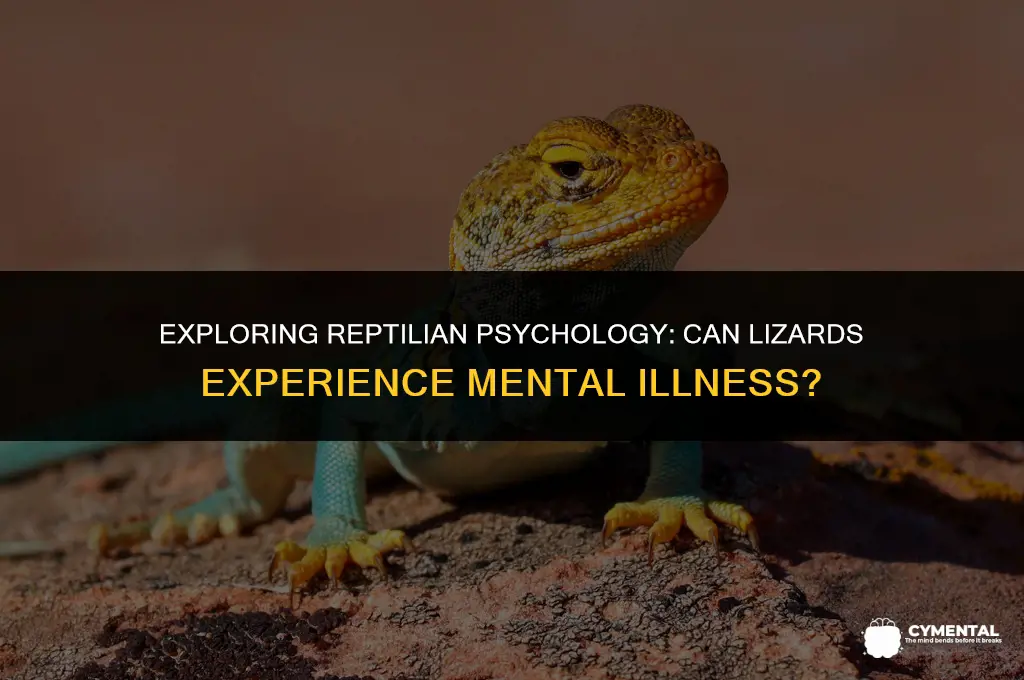
While mental illness is often associated with humans, recent studies have shown that animals, including lizards, can exhibit behaviors indicative of mental health issues. Lizards, like other reptiles, have complex nervous systems and can experience stress, anxiety, and depression. Factors such as environmental changes, social interactions, and even diet can impact a lizard's mental well-being. Understanding the signs and causes of mental illness in lizards is crucial for their care and conservation, as it can affect their behavior, health, and overall quality of life.
Explore related products




What You'll Learn
- Stress in Lizards: Environmental factors causing stress and potential long-term psychological impacts
- Anxiety Disorders: Signs, causes, and treatment options for anxiety-related behaviors in lizards
- Depression in Reptiles: Identifying depressive behaviors and exploring possible interventions
- Captivity Effects: How confinement affects lizard mental health compared to their wild counterparts
- Behavioral Enrichment: Strategies to enhance mental well-being through environmental stimulation and activities

Stress in Lizards: Environmental factors causing stress and potential long-term psychological impacts
Lizards, like many animals, are susceptible to stress caused by environmental factors. One significant source of stress for lizards is habitat destruction or alteration. As human activities encroach upon natural habitats, lizards may find themselves in unfamiliar or unsuitable environments, leading to increased stress levels. This can be particularly problematic for species that have specific habitat requirements, such as certain types of geckos or iguanas.
Another environmental factor that can contribute to stress in lizards is temperature fluctuations. Many lizard species are ectothermic, meaning they rely on external heat sources to regulate their body temperature. Sudden changes in temperature, whether due to natural weather patterns or human-induced climate change, can disrupt a lizard's ability to maintain its optimal body temperature, resulting in stress.
In addition to habitat destruction and temperature fluctuations, lizards may also experience stress due to social factors. Some lizard species are social animals that live in groups, and disruptions to these social structures can cause stress. For example, the introduction of a new lizard into an established group may lead to territorial disputes or changes in social hierarchies, both of which can be stressful for the animals involved.
The long-term psychological impacts of stress on lizards are not fully understood, but research suggests that chronic stress can have negative effects on their mental health. Stressed lizards may exhibit changes in behavior, such as decreased activity levels or altered feeding patterns. They may also be more susceptible to illness and disease, as stress can weaken their immune systems.
To mitigate the effects of stress on lizards, it is important to provide them with a stable and suitable environment. This may involve creating or preserving natural habitats, maintaining consistent temperature levels, and ensuring that social structures are not disrupted. By taking these steps, we can help to promote the mental and physical well-being of lizards and other animals that are vulnerable to environmental stressors.
Navigating Short-Term Disability Benefits for Mental Health Conditions
You may want to see also
Explore related products


Anxiety Disorders: Signs, causes, and treatment options for anxiety-related behaviors in lizards
Lizards, like many animals, can exhibit behaviors indicative of anxiety disorders. These behaviors may include excessive hiding, aggression, or stereotypic movements such as pacing or head bobbing. Understanding the signs of anxiety in lizards is crucial for their well-being, as it allows caretakers to address the underlying causes and provide appropriate treatment.
One common cause of anxiety in lizards is environmental stress. This can be due to factors such as inadequate housing, improper temperature or lighting, or the presence of predators or other stressors in their environment. Additionally, social interactions with other lizards or humans can also contribute to anxiety. For example, a lizard that is frequently handled or bullied by other lizards may develop anxiety-related behaviors.
Treatment options for anxiety in lizards typically involve addressing the environmental factors contributing to the stress. This may include providing a larger or more secure enclosure, adjusting the temperature or lighting, or removing potential stressors from the environment. In some cases, behavioral modification techniques may also be used to help the lizard cope with stress. For example, a caretaker may gradually introduce the lizard to new environments or social interactions, allowing it to become more comfortable over time.
In more severe cases, medication may be necessary to help manage the lizard's anxiety. However, it is important to note that medication should only be used under the guidance of a veterinarian, as it can have potential side effects and interactions with other health conditions.
Preventing anxiety in lizards is also important. This can be done by providing a proper environment from the start, including a secure enclosure, appropriate temperature and lighting, and a balanced diet. Regular veterinary check-ups can also help identify potential health issues that may contribute to anxiety.
In conclusion, anxiety disorders in lizards are a real concern that can significantly impact their quality of life. By understanding the signs, causes, and treatment options, caretakers can help ensure that their lizards lead healthy and stress-free lives.
Navigating Mental Health Days: Your Guide to Obtaining a Sick Note
You may want to see also
Explore related products

$9.53 $16.95


Depression in Reptiles: Identifying depressive behaviors and exploring possible interventions
Reptiles, including lizards, are often perceived as stoic and unemotional creatures. However, recent research suggests that they may be more susceptible to mental health issues than previously thought. Depression in reptiles can manifest in various ways, such as decreased appetite, lethargy, and changes in social behavior. Identifying these signs is crucial for providing appropriate care and interventions.
One of the challenges in diagnosing depression in reptiles is the lack of standardized criteria. Unlike mammals, reptiles do not exhibit facial expressions or body language that are easily recognizable as indicators of depression. Therefore, it is essential to observe their behavior over time and look for subtle changes. For example, a lizard that is normally active and curious may become withdrawn and less interested in its surroundings when experiencing depression.
Possible interventions for depression in reptiles include environmental enrichment, social interaction, and medication. Environmental enrichment can involve providing a more stimulating habitat with varied textures, colors, and hiding spots. Social interaction can be beneficial for some species, as it can help alleviate feelings of isolation and boredom. Medication, such as antidepressants, may be prescribed by a veterinarian in severe cases. However, it is important to note that the use of medication in reptiles is still a relatively new field, and more research is needed to determine its effectiveness and potential side effects.
In addition to these interventions, it is crucial to address any underlying health issues that may be contributing to the reptile's depression. For example, a lizard with a chronic illness or injury may be more prone to depression due to pain or discomfort. Regular veterinary check-ups and a balanced diet can help ensure that the reptile's overall health is maintained, reducing the risk of depression.
In conclusion, while depression in reptiles is a complex and relatively understudied topic, there are steps that can be taken to identify and address depressive behaviors. By providing a stimulating environment, social interaction, and appropriate medical care, it is possible to improve the mental well-being of reptiles and enhance their quality of life.
Navigating Financial Support for Mental Health: A Comprehensive Guide
You may want to see also
Explore related products




Captivity Effects: How confinement affects lizard mental health compared to their wild counterparts
Lizards in captivity often exhibit behaviors that are markedly different from their wild counterparts. One of the most notable differences is in their mental health. In the wild, lizards have the freedom to roam, hunt, and interact with their environment in a way that is natural to them. However, in captivity, these behaviors are often restricted, leading to a range of mental health issues.
One of the primary effects of confinement on lizard mental health is stress. This can manifest in a variety of ways, including pacing, self-harm, and changes in appetite. Stress can also lead to a weakened immune system, making captive lizards more susceptible to illness. In addition to stress, captive lizards may also experience boredom and a lack of stimulation. This can lead to stereotypic behaviors, such as repetitive movements or excessive grooming.
Another significant impact of captivity on lizard mental health is the disruption of their natural social structures. In the wild, many lizard species live in groups and have complex social interactions. However, in captivity, these social structures are often disrupted, leading to feelings of isolation and loneliness. This can be particularly problematic for species that require social interaction for their well-being.
Furthermore, captive lizards may also experience a lack of environmental enrichment. In the wild, lizards have access to a variety of environmental stimuli, such as different types of vegetation, rocks, and other natural features. However, in captivity, these stimuli are often limited, leading to a lack of mental stimulation and exploration opportunities.
To mitigate these effects, it is important for captive lizard owners to provide an environment that is as close to their natural habitat as possible. This includes providing ample space for movement, opportunities for social interaction, and a variety of environmental enrichment activities. By doing so, captive lizard owners can help to promote the mental well-being of their pets and reduce the negative impacts of confinement.
Navigating the Journey: Overcoming Mental Health Challenges
You may want to see also
Explore related products


Behavioral Enrichment: Strategies to enhance mental well-being through environmental stimulation and activities
Lizards, like many animals, can benefit from behavioral enrichment to enhance their mental well-being. Environmental stimulation and activities play a crucial role in preventing boredom and promoting natural behaviors in captive lizards. One effective strategy is to provide a variety of substrates, such as sand, soil, and rocks, which allow lizards to engage in natural digging and burrowing behaviors. Additionally, incorporating plants and hiding spots can offer opportunities for exploration and stress reduction.
Another key aspect of behavioral enrichment for lizards is the provision of appropriate toys and activities. For example, puzzle feeders can encourage problem-solving and foraging behaviors, while basking lamps and UVB lights can simulate natural sunlight, promoting physical and mental health. It's also important to rotate toys and rearrange the enclosure periodically to keep the environment novel and engaging.
Social interaction is another critical component of behavioral enrichment for lizards. While some species are solitary, others can benefit from the presence of conspecifics. Introducing compatible lizards can promote social behaviors and reduce stress levels. However, it's essential to monitor interactions closely and separate individuals if any signs of aggression or stress are observed.
In addition to these strategies, it's crucial to provide lizards with a balanced diet and regular veterinary care to ensure their overall health and well-being. A healthy diet, rich in vitamins and minerals, can support mental health, while regular check-ups can help identify and address any potential health issues early on.
In conclusion, behavioral enrichment is a vital aspect of lizard care, promoting mental well-being through environmental stimulation, activities, and social interaction. By providing a variety of substrates, toys, and opportunities for social interaction, lizard owners can help prevent boredom and stress, ensuring their pets lead happy and healthy lives.
Exploring Mental Health: A Guide to Understanding and Support
You may want to see also
Frequently asked questions
While mental illness is a complex issue primarily studied in humans and some animals like primates and rodents, there is limited research on whether lizards can experience mental illness. However, lizards can exhibit stress and anxiety-like behaviors in response to environmental changes or threats.
Signs of stress in lizards can include changes in appetite, lethargy, increased hiding or avoidance behaviors, and physical symptoms like shedding problems or skin issues. It's important to monitor your lizard's behavior and consult a veterinarian if you notice any concerning changes.
To reduce stress in your pet lizard, ensure it has a proper habitat with adequate hiding spots, a balanced diet, and a consistent routine. Avoid sudden changes in its environment and handle it gently and infrequently to minimize stress. Providing enrichment activities like climbing structures or basking spots can also help.
There are no specific medications or treatments for mental health issues in lizards. However, if your lizard is exhibiting signs of stress or anxiety, it's best to consult a veterinarian who can recommend appropriate interventions or environmental changes to improve its well-being.
Depression is a human-specific mental health condition, and there is no evidence to suggest that lizards can experience depression in the same way humans do. However, lizards can exhibit behaviors that might appear similar to depression, such as lethargy or loss of interest in activities, which are more likely signs of stress or underlying health issues.


