Harper Lewis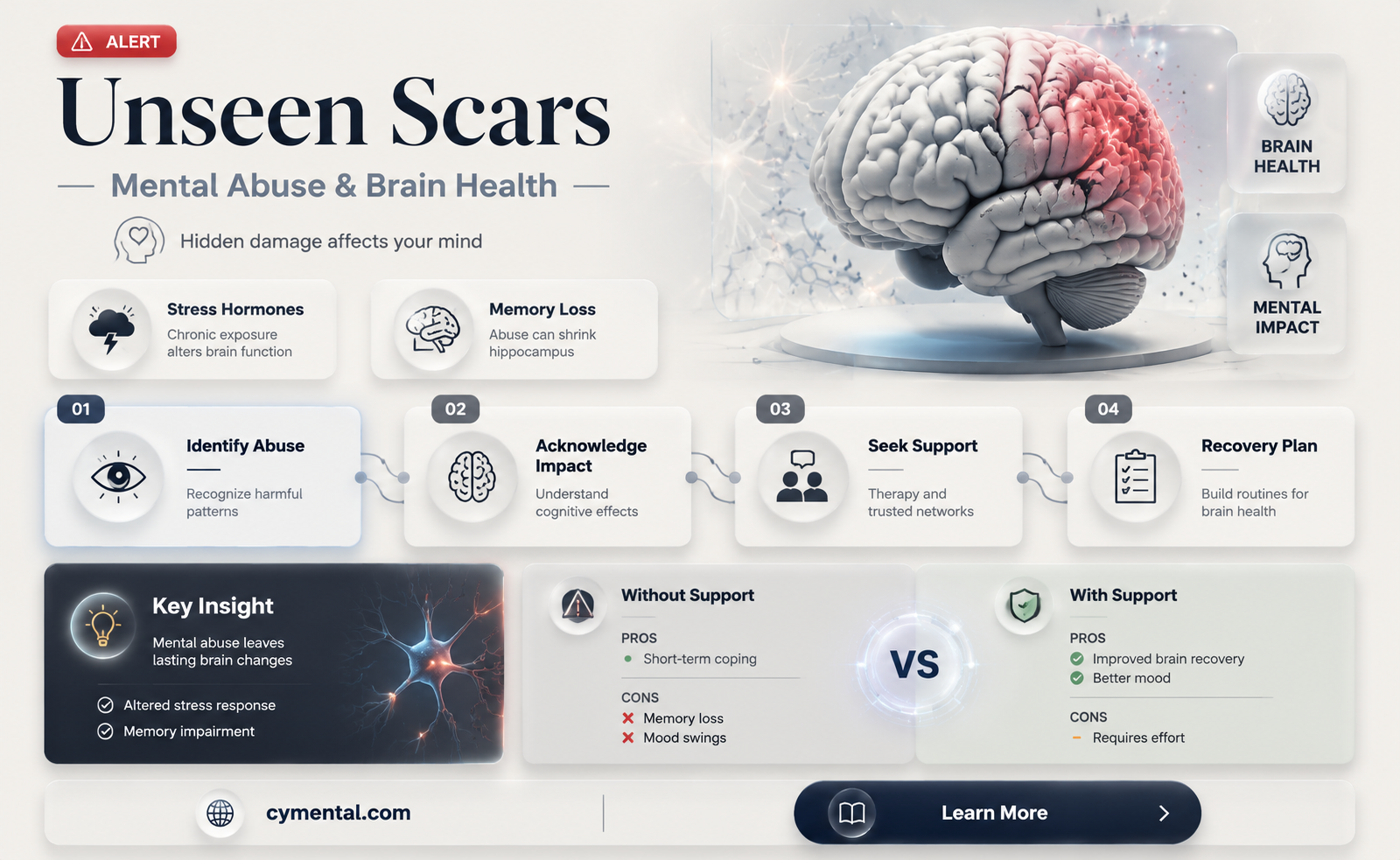
Mental abuse, also known as psychological abuse, is a form of mistreatment that can have profound and lasting effects on an individual's mental and emotional well-being. While it may not leave visible physical scars, mental abuse can indeed cause significant brain damage. This damage can manifest in various ways, including changes in brain structure, alterations in neural pathways, and disruptions to the brain's chemical balance. Over time, these effects can lead to a range of mental health issues, such as anxiety, depression, post-traumatic stress disorder (PTSD), and even cognitive impairments. Understanding the mechanisms by which mental abuse affects the brain is crucial for developing effective treatments and interventions to support those who have experienced this form of trauma.
| Characteristics | Values |
|---|---|
| Definition | Mental abuse refers to the psychological manipulation, humiliation, or intimidation of an individual by another. |
| Types | Verbal abuse, emotional abuse, psychological manipulation, neglect, isolation, gaslighting. |
| Impact on Brain | Can lead to changes in brain structure and function, particularly in areas responsible for emotional regulation, memory, and cognitive processing. |
| Neurological Effects | Increased stress response, altered neural pathways, reduced hippocampal volume, changes in prefrontal cortex activity. |
| Psychological Effects | Anxiety, depression, post-traumatic stress disorder (PTSD), low self-esteem, trust issues, emotional dysregulation. |
| Long-term Consequences | Chronic mental health conditions, difficulties in forming healthy relationships, impaired cognitive function, increased risk of physical health problems. |
| Treatment | Cognitive-behavioral therapy (CBT), trauma-focused therapy, medication for symptom management, support groups. |
| Prevention | Education on healthy relationships, promoting emotional well-being, early intervention for at-risk individuals, legal protections against abuse. |
Explore related products

What You'll Learn
- Neurological Impact: Mental abuse affects brain structure and function, potentially leading to long-term neurological damage
- Stress Response: Chronic stress from mental abuse can alter the brain's stress response system, impacting overall health
- Emotional Regulation: Mental abuse may impair the brain's ability to regulate emotions, leading to mental health disorders
- Cognitive Effects: Cognitive impairments, including memory and learning difficulties, can result from prolonged mental abuse
- Recovery and Resilience: Understanding the brain's capacity for healing and developing resilience against mental abuse is crucial

Neurological Impact: Mental abuse affects brain structure and function, potentially leading to long-term neurological damage
Mental abuse has profound effects on the brain, altering both its structure and function in ways that can lead to long-term neurological damage. Research has shown that chronic exposure to mental abuse can result in changes to the brain's neurochemistry, affecting the balance of neurotransmitters such as serotonin, dopamine, and norepinephrine. These changes can lead to a range of neurological symptoms, including anxiety, depression, and post-traumatic stress disorder (PTSD).
One of the key areas affected by mental abuse is the hippocampus, a region of the brain responsible for memory formation and emotional regulation. Studies have found that individuals who have experienced mental abuse often have a smaller hippocampus, which can lead to difficulties with memory and emotional processing. Additionally, mental abuse can cause changes in the amygdala, a region of the brain involved in fear processing and emotional responses. These changes can result in heightened levels of fear and anxiety, as well as difficulties with emotional regulation.
Mental abuse can also lead to changes in the brain's prefrontal cortex, a region responsible for executive functioning, decision-making, and impulse control. Individuals who have experienced mental abuse may have difficulties with these cognitive functions, which can impact their ability to function in daily life. Furthermore, mental abuse can cause changes in the brain's stress response system, leading to chronic activation of the body's stress response and a range of associated health problems.
The long-term neurological damage caused by mental abuse can have significant implications for an individual's overall health and well-being. It is essential to recognize the signs of mental abuse and seek appropriate support and treatment to mitigate these effects. With the right help, individuals can learn to manage their symptoms and improve their quality of life.
Unseen Scars: The Mental and Emotional Toll of Restraints
You may want to see also
Stress Response: Chronic stress from mental abuse can alter the brain's stress response system, impacting overall health
Chronic stress resulting from mental abuse can significantly alter the brain's stress response system, leading to a cascade of negative effects on overall health. This alteration is primarily driven by the prolonged activation of the hypothalamic-pituitary-adrenal (HPA) axis, which is the body's central stress management system. When this axis is constantly stimulated, it can lead to an overproduction of stress hormones like cortisol, which in turn can cause a range of physiological and psychological issues.
One of the key impacts of chronic stress on the brain is the reduction in neurogenesis, the process by which new neurons are formed. This can lead to a decrease in cognitive function, memory, and learning abilities. Additionally, chronic stress can cause the hippocampus, a region of the brain crucial for memory and emotional regulation, to shrink in size. This reduction in hippocampal volume is associated with an increased risk of developing mood disorders such as depression and anxiety.
Furthermore, the constant barrage of stress hormones can lead to inflammation in the brain, which is linked to a variety of neurological conditions, including Alzheimer's disease and other forms of dementia. Chronic stress also impairs the immune system, making the body more susceptible to infections and diseases. This can create a vicious cycle where the body's ability to respond to stress is further compromised, leading to even more severe health problems.
In terms of practical implications, individuals who have experienced mental abuse may need to seek professional help to manage their stress response and mitigate the potential health risks. Therapies such as cognitive-behavioral therapy (CBT) and mindfulness-based stress reduction (MBSR) can be effective in reducing stress and promoting resilience. Additionally, lifestyle changes such as regular exercise, a healthy diet, and adequate sleep can also play a crucial role in supporting the body's stress management system.
In conclusion, the chronic stress induced by mental abuse can have far-reaching consequences for brain health and overall well-being. Understanding the mechanisms behind this stress response is crucial for developing effective interventions and supporting individuals in their journey towards recovery and resilience.
Understanding Mental Retardation: Causes and Prevention Strategies
You may want to see also
Emotional Regulation: Mental abuse may impair the brain's ability to regulate emotions, leading to mental health disorders
Mental abuse can have profound and lasting effects on an individual's emotional well-being. One of the most significant impacts is on the brain's ability to regulate emotions, a critical function that underpins mental health. Emotional regulation involves the complex interplay of various brain regions, including the prefrontal cortex, amygdala, and hippocampus. These areas work together to manage emotional responses, ensuring that they are appropriate and proportional to the situation.
When mental abuse occurs, it can disrupt this delicate balance. The constant stress and trauma associated with abuse can lead to changes in the brain's structure and function. For instance, studies have shown that individuals who have experienced mental abuse may have a smaller hippocampus, a region crucial for memory and emotional regulation. Additionally, the amygdala, which processes emotions such as fear and anger, may become hyperactive, leading to heightened emotional responses and difficulty in calming down.
These changes can manifest in various mental health disorders. Anxiety and depression are common, as the brain struggles to manage the overwhelming emotional responses triggered by abuse. Post-traumatic stress disorder (PTSD) is another potential outcome, characterized by intrusive memories, heightened arousal, and emotional numbing. The inability to regulate emotions effectively can also lead to self-destructive behaviors, such as substance abuse or self-harm, as individuals may turn to these coping mechanisms to deal with their emotional turmoil.
Moreover, the impact of mental abuse on emotional regulation can have long-term consequences. It can affect an individual's ability to form healthy relationships, as they may struggle to trust others or manage their own emotional responses in social situations. It can also hinder their ability to function effectively in daily life, as emotional dysregulation can lead to difficulties in concentration, decision-making, and problem-solving.
In conclusion, mental abuse can significantly impair the brain's ability to regulate emotions, leading to a range of mental health disorders. Understanding these effects is crucial for developing effective interventions and providing support to those who have experienced mental abuse. By addressing the underlying emotional dysregulation, it is possible to help individuals heal and regain control over their emotional well-being.
Unveiling the Link: Depression's Impact on Cognitive Clarity
You may want to see also
Cognitive Effects: Cognitive impairments, including memory and learning difficulties, can result from prolonged mental abuse
Prolonged mental abuse can have profound cognitive effects, significantly impairing an individual's memory and learning capabilities. Research indicates that chronic exposure to psychological stress can lead to alterations in brain structure and function, particularly affecting the hippocampus and prefrontal cortex—regions crucial for memory formation and cognitive processing.
One of the primary cognitive impairments resulting from mental abuse is difficulty in forming and retaining new memories. This can manifest as forgetfulness, trouble learning new information, and an inability to concentrate. Over time, these memory issues can become more severe, leading to conditions such as dissociative amnesia, where individuals may experience gaps in their memory or even lose their sense of personal identity.
In addition to memory problems, mental abuse can also hinder learning abilities. Victims may struggle with understanding and processing new information, making it challenging to acquire new skills or knowledge. This can be particularly detrimental for children and adolescents, whose brains are still developing and are more susceptible to the negative impacts of stress.
The cognitive effects of mental abuse can also extend to executive functioning, which includes skills such as planning, problem-solving, and decision-making. Individuals who have experienced prolonged mental abuse may find it difficult to organize their thoughts, set goals, and follow through with tasks, leading to a decreased ability to function effectively in daily life.
Furthermore, mental abuse can lead to a heightened state of alertness and hypervigilance, as victims may constantly be on guard against potential threats. This can result in an overactive amygdala, the brain's fear center, which can interfere with cognitive processes and lead to anxiety, depression, and other mental health issues.
In conclusion, the cognitive effects of mental abuse are complex and far-reaching, impacting various aspects of an individual's mental functioning. Addressing these impairments requires a comprehensive approach that includes psychological therapy, stress management techniques, and in some cases, medication to alleviate symptoms. By understanding the specific cognitive challenges faced by victims of mental abuse, we can better tailor interventions to support their recovery and improve their overall quality of life.
Exploring the Complex Factors Behind Altered Mental Status
You may want to see also
Recovery and Resilience: Understanding the brain's capacity for healing and developing resilience against mental abuse is crucial
The human brain possesses an extraordinary capacity for healing and adaptation, a phenomenon often referred to as neuroplasticity. This ability allows the brain to reorganize itself by forming new neural connections throughout life, which is crucial in the context of recovering from mental abuse. Mental abuse can lead to significant changes in brain structure and function, affecting areas such as the hippocampus, amygdala, and prefrontal cortex. However, understanding and harnessing the brain's resilience can play a pivotal role in mitigating these effects.
One of the key mechanisms underlying the brain's capacity for healing is the process of synaptic pruning and neurogenesis. Synaptic pruning involves the elimination of unnecessary neural connections, while neurogenesis is the formation of new neurons. These processes are essential for repairing and restructuring the brain after it has been subjected to the stress and trauma of mental abuse. Additionally, the brain's ability to adapt to new experiences and environments can help individuals develop resilience against the long-term impacts of abuse.
Developing resilience against mental abuse involves a multifaceted approach that includes psychological, social, and biological factors. Psychologically, cognitive-behavioral therapy (CBT) and other forms of psychotherapy can help individuals reframe negative thought patterns and develop coping strategies. Socially, building strong support networks and fostering healthy relationships can provide emotional stability and validation. Biologically, maintaining a healthy lifestyle through proper nutrition, exercise, and sleep can support the brain's natural healing processes.
Moreover, mindfulness practices and stress-reduction techniques, such as meditation and yoga, can also contribute to the development of resilience. These practices help individuals become more aware of their thoughts and emotions, allowing them to better regulate their responses to stress and trauma. By cultivating a greater sense of self-awareness and emotional regulation, individuals can enhance their ability to cope with the challenges posed by mental abuse.
In conclusion, the brain's capacity for healing and developing resilience against mental abuse is a complex and dynamic process that involves a combination of psychological, social, and biological factors. By understanding and leveraging these mechanisms, individuals can take proactive steps towards recovery and build a stronger foundation for long-term mental health and well-being.
Exploring the Link: Lyme Disease and Mental Health
You may want to see also
Frequently asked questions
Yes, mental abuse can cause brain damage. Chronic stress and trauma from mental abuse can lead to changes in brain structure and function, particularly in areas responsible for emotional regulation, memory, and cognitive processing.
Signs of brain damage from mental abuse can include difficulty concentrating, memory problems, emotional instability, depression, anxiety, and post-traumatic stress disorder (PTSD). Physical symptoms may also manifest, such as headaches, fatigue, and sleep disturbances.
Mental abuse can significantly impact a person's behavior and relationships. Victims may experience a loss of self-esteem, become withdrawn or isolated, and struggle with trust issues. They may also exhibit self-destructive behaviors, such as substance abuse, and have difficulty forming and maintaining healthy relationships.