 Caleb Wright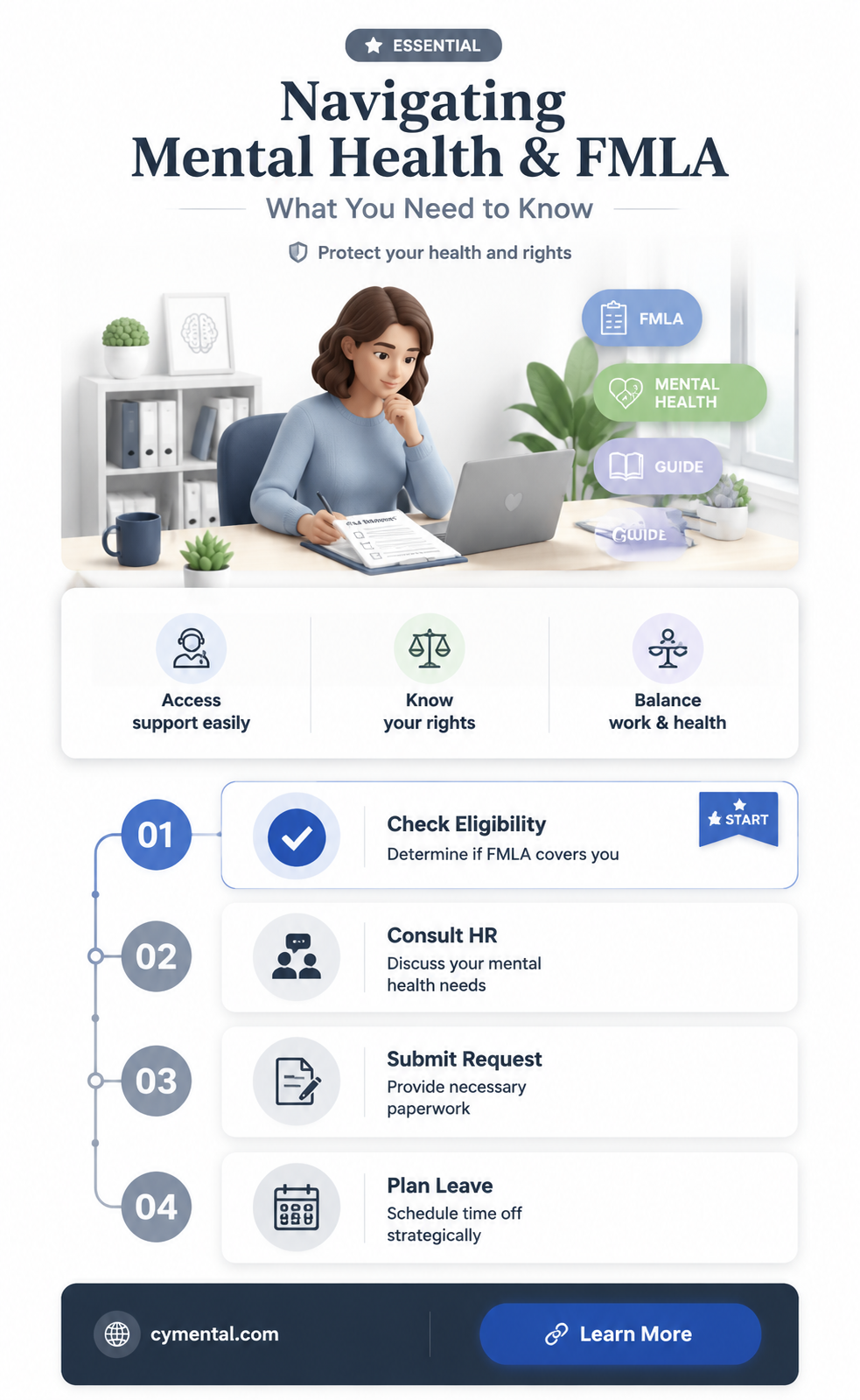
The Family and Medical Leave Act (FMLA) is a federal law that provides eligible employees with up to 12 weeks of unpaid leave per year for certain family and medical reasons. While FMLA is often associated with physical health conditions, it also covers mental health issues. Employees struggling with mental health challenges such as depression, anxiety, or other psychiatric conditions may qualify for FMLA leave if their condition is considered a serious health condition that affects their ability to perform essential job functions. To be eligible, employees must meet specific criteria, including having worked for the employer for at least 12 months and having earned a minimum number of hours. It's important for employees to understand their rights under FMLA and for employers to be aware of their obligations to provide reasonable accommodations and support for employees dealing with mental health concerns.
| Characteristics | Values |
|---|---|
| Eligibility | To be eligible for FMLA (Family and Medical Leave Act) for mental health reasons, an employee must have worked for the employer for at least 12 months, have at least 1,250 hours of service during the 12 months prior to the start of the leave, and the employer must have 50 or more employees within a 75-mile radius. |
| Qualifying Conditions | Mental health conditions that qualify for FMLA include depression, anxiety, bipolar disorder, schizophrenia, and other serious mental health conditions that require ongoing treatment and significantly impact daily activities. |
| Documentation Required | Employees may need to provide medical certification from a healthcare provider to support their need for FMLA due to a mental health condition. This certification should include the diagnosis, the duration of the condition, and the impact on the employee's ability to perform their job. |
| Leave Duration | FMLA allows for up to 12 weeks of unpaid leave in a 12-month period. This leave can be taken intermittently or as a continuous block, depending on the employee's needs and the employer's policies. |
| Job Protection | Under FMLA, eligible employees are entitled to return to their original job or an equivalent position with the same pay, benefits, and other employment terms after their leave. Employers are prohibited from retaliating against employees who take FMLA leave. |
| Notice Requirements | Employees are generally required to provide 30 days' notice to their employer before taking FMLA leave. However, if the need for leave is unforeseen, employees should notify their employer as soon as possible. |
| Employer Responsibilities | Employers must maintain the employee's health insurance coverage during FMLA leave and must comply with all FMLA regulations, including providing written notice of the employee's rights and responsibilities under FMLA. |
| Confidentiality | Employers must keep all medical information related to an employee's FMLA leave confidential and may only share this information with authorized personnel who need to know. |
| Intermittent Leave | FMLA allows for intermittent leave, which means employees can take leave in blocks of time as needed for their mental health treatment. This can be particularly useful for employees undergoing therapy or other ongoing treatment. |
| Reduced Schedule | Employees may also request a reduced work schedule under FMLA, which can help them manage their mental health condition while still maintaining some level of employment. |
| State-Specific Laws | Some states have their own family and medical leave laws that may provide additional protections or benefits beyond federal FMLA. Employees should be aware of their state's specific laws regarding mental health and family leave. |
| Resources and Support | Employees seeking FMLA for mental health reasons may benefit from resources such as mental health hotlines, counseling services, and support groups. Employers may also offer Employee Assistance Programs (EAPs) that provide access to mental health professionals. |
| Impact on Career | Taking FMLA for mental health reasons should not negatively impact an employee's career. Employers are legally required to treat employees who take FMLA leave the same as they would any other employee. |
| Planning for Return | Before returning to work after FMLA leave, employees may want to discuss their return plan with their employer, including any necessary accommodations or adjustments to their work schedule or responsibilities. |
| Legal Protections | FMLA provides legal protections against discrimination and retaliation for employees who take leave for mental health reasons. If an employer violates these protections, employees may have legal recourse. |
Explore related products


What You'll Learn
- Eligibility for FMLA: Understand the criteria for qualifying for FMLA, including employment duration and health conditions
- Mental Health Coverage: Explore how FMLA protects employees seeking treatment for mental health issues
- Documentation Requirements: Learn about the necessary medical documentation needed to support an FMLA request
- Job Protection: Discover how FMLA ensures job security for employees taking leave for mental health reasons
- Return to Work: Find out about the process and accommodations for returning to work after FMLA leave

Eligibility for FMLA: Understand the criteria for qualifying for FMLA, including employment duration and health conditions
To qualify for FMLA, an employee must meet specific eligibility criteria. First and foremost, the employee must have worked for the employer for at least 12 months. This period does not have to be consecutive, but it must total 12 months of service. Additionally, the employee must have worked at least 1,250 hours during the 12 months immediately preceding the start of the FMLA leave. This requirement ensures that the employee has a substantial connection to the employer and has contributed significantly to the workforce.
The FMLA also requires that the employee's health condition must be serious enough to interfere with their ability to perform their job duties. This includes both physical and mental health conditions. For mental health conditions, this could mean that the employee is experiencing symptoms such as severe depression, anxiety, or other psychiatric disorders that make it difficult for them to concentrate, interact with others, or manage their daily tasks at work.
Furthermore, the employee must provide medical certification from a qualified healthcare provider to support their request for FMLA leave. This certification must include information about the employee's health condition, the duration of the condition, and the impact it has on the employee's ability to work. The employer may also require additional documentation or clarification if needed.
It's important to note that the FMLA does not require the employee's health condition to be permanent or long-term. Even temporary conditions that significantly impact the employee's ability to work may qualify for FMLA leave. However, the employee must be able to provide evidence that they are actively seeking treatment or care for their condition.
In summary, to be eligible for FMLA leave for mental health reasons, an employee must have worked for their employer for at least 12 months, have worked at least 1,250 hours in the previous 12 months, have a serious mental health condition that interferes with their job duties, and provide medical certification to support their request for leave.
Navigating Involuntary Commitment: A Guide to Mental Health Support in California
You may want to see also
Explore related products


Mental Health Coverage: Explore how FMLA protects employees seeking treatment for mental health issues
The Family and Medical Leave Act (FMLA) provides a critical safety net for employees dealing with mental health issues. Under FMLA, eligible employees are entitled to take up to 12 weeks of unpaid leave per year for the treatment of a serious health condition, which includes mental health disorders. This leave can be taken all at once or intermittently, depending on the employee's needs and the employer's policies.
To qualify for FMLA leave for mental health treatment, an employee must first meet the eligibility criteria. This includes working for a covered employer—typically those with 50 or more employees—and having worked at least 1,250 hours during the 12 months prior to the start of the leave. The employee must also provide medical certification from a healthcare provider, documenting the need for leave due to a serious health condition.
Once an employee has qualified for FMLA leave, they are protected from retaliation and discrimination by their employer. This means that the employer cannot terminate, demote, or otherwise penalize the employee for taking leave under FMLA. Additionally, the employer must maintain the employee's health insurance coverage during the leave period, ensuring that the employee continues to receive the same benefits as if they were actively working.
FMLA also provides job protection, meaning that the employee is entitled to return to their original position or an equivalent position with the same pay, benefits, and other employment terms. This protection is crucial for employees seeking mental health treatment, as it allows them to focus on their recovery without worrying about losing their job or facing discrimination upon their return.
In conclusion, FMLA serves as an essential tool for protecting employees who need to take time off for mental health treatment. By providing eligibility criteria, job protection, and continued health insurance coverage, FMLA helps to ensure that employees can seek the care they need without fear of retaliation or discrimination. This support is vital for promoting workplace wellness and helping employees to manage their mental health effectively.
Exploring Gun Ownership and Mental Health: A Complex Conversation
You may want to see also
Explore related products


Documentation Requirements: Learn about the necessary medical documentation needed to support an FMLA request
To support an FMLA request for mental health reasons, specific medical documentation is required. This documentation must be provided by a licensed healthcare provider and should include a diagnosis of a serious health condition that qualifies under the FMLA. The documentation should detail the nature of the condition, the dates of treatment, and the expected duration of the condition. It should also explain how the condition affects the employee's ability to perform their job duties.
The documentation should be as detailed as possible and should include any relevant medical records, such as hospital stays, doctor's visits, and medication prescriptions. It should also include any notes from therapy sessions or counseling appointments. The more comprehensive the documentation, the stronger the case for FMLA eligibility.
In addition to the medical documentation, the employee may also need to provide documentation from their employer, such as a job description and a statement of the essential functions of their position. This documentation will help to establish how the employee's mental health condition affects their ability to perform their job duties.
It is important to note that the documentation requirements for FMLA can vary depending on the specific circumstances of the case. For example, if the employee's mental health condition is chronic, the documentation may need to include a history of the condition and any previous treatments. If the condition is acute, the documentation may need to include more recent medical records and a prognosis for recovery.
Overall, the key to successfully supporting an FMLA request for mental health reasons is to provide thorough and detailed medical documentation that clearly demonstrates the employee's eligibility under the FMLA. This documentation should be provided in a timely manner and should be kept confidential to protect the employee's privacy.
Recognizing and Reporting Mental Health Concerns Responsibly
You may want to see also
Explore related products


Job Protection: Discover how FMLA ensures job security for employees taking leave for mental health reasons
The Family and Medical Leave Act (FMLA) provides a critical safety net for employees who need to take time off work due to mental health conditions. Under FMLA, eligible employees are entitled to up to 12 weeks of unpaid leave per year for certain family and medical reasons, including their own serious health condition. This leave is protected, meaning that employees cannot be fired or retaliated against for taking it.
To qualify for FMLA leave for mental health reasons, an employee must have a serious health condition that makes them unable to perform their job duties. This can include conditions such as depression, anxiety, bipolar disorder, and other mental illnesses. The employee must also have worked for their employer for at least 12 months and meet certain other eligibility requirements.
One of the key benefits of FMLA is that it ensures job security for employees taking leave for mental health reasons. This means that employees can focus on their recovery without worrying about losing their job. In addition, FMLA requires employers to maintain the employee's health insurance coverage during their leave, which can be a significant relief for those dealing with mental health issues.
Employers are also required to provide reasonable accommodations to employees returning from FMLA leave. This may include modifying job duties, adjusting work schedules, or providing additional support to help the employee transition back to work. By ensuring that employees have the necessary support and protections, FMLA helps to promote a healthier and more productive workforce.
In conclusion, FMLA plays a vital role in protecting the job security of employees who need to take time off work due to mental health conditions. By providing eligible employees with up to 12 weeks of protected leave, FMLA allows individuals to focus on their recovery without fear of losing their job. This not only benefits the individual employee but also contributes to a more supportive and inclusive workplace culture.
Pursuing Legal Action for Mental Anguish: What You Need to Know
You may want to see also
Explore related products



Return to Work: Find out about the process and accommodations for returning to work after FMLA leave
Returning to work after taking Family and Medical Leave Act (FMLA) leave for mental health reasons can be a challenging process. It's essential to understand the steps involved and the accommodations that may be available to ensure a smooth transition back to the workplace.
First, it's important to note that the FMLA requires employers to maintain an employee's health insurance coverage during their leave. This means that employees should continue to receive the same health benefits they had before taking leave, including mental health coverage. Upon returning to work, employees should be reinstated to their previous position or an equivalent one with the same pay, benefits, and other employment terms.
To facilitate a successful return to work, employees should communicate with their employer about their needs and any necessary accommodations. This may include a gradual return to work schedule, modified job duties, or access to mental health resources. Employers are required to provide reasonable accommodations under the Americans with Disabilities Act (ADA), and employees should be aware of their rights and the resources available to them.
Employees should also be prepared to provide documentation from their healthcare provider certifying their need for FMLA leave and their ability to return to work. This documentation may include a note from a psychiatrist or therapist stating that the employee is fit to return to work and any recommended accommodations.
Finally, it's important for employees to be aware of their rights under the FMLA and to advocate for themselves throughout the process. This may include seeking legal advice or contacting the U.S. Department of Labor for assistance. By understanding the process and their rights, employees can ensure a successful return to work after taking FMLA leave for mental health reasons.
Approaching the Conversation: Discussing Mental Health with Empathy
You may want to see also
