Ava Ramirez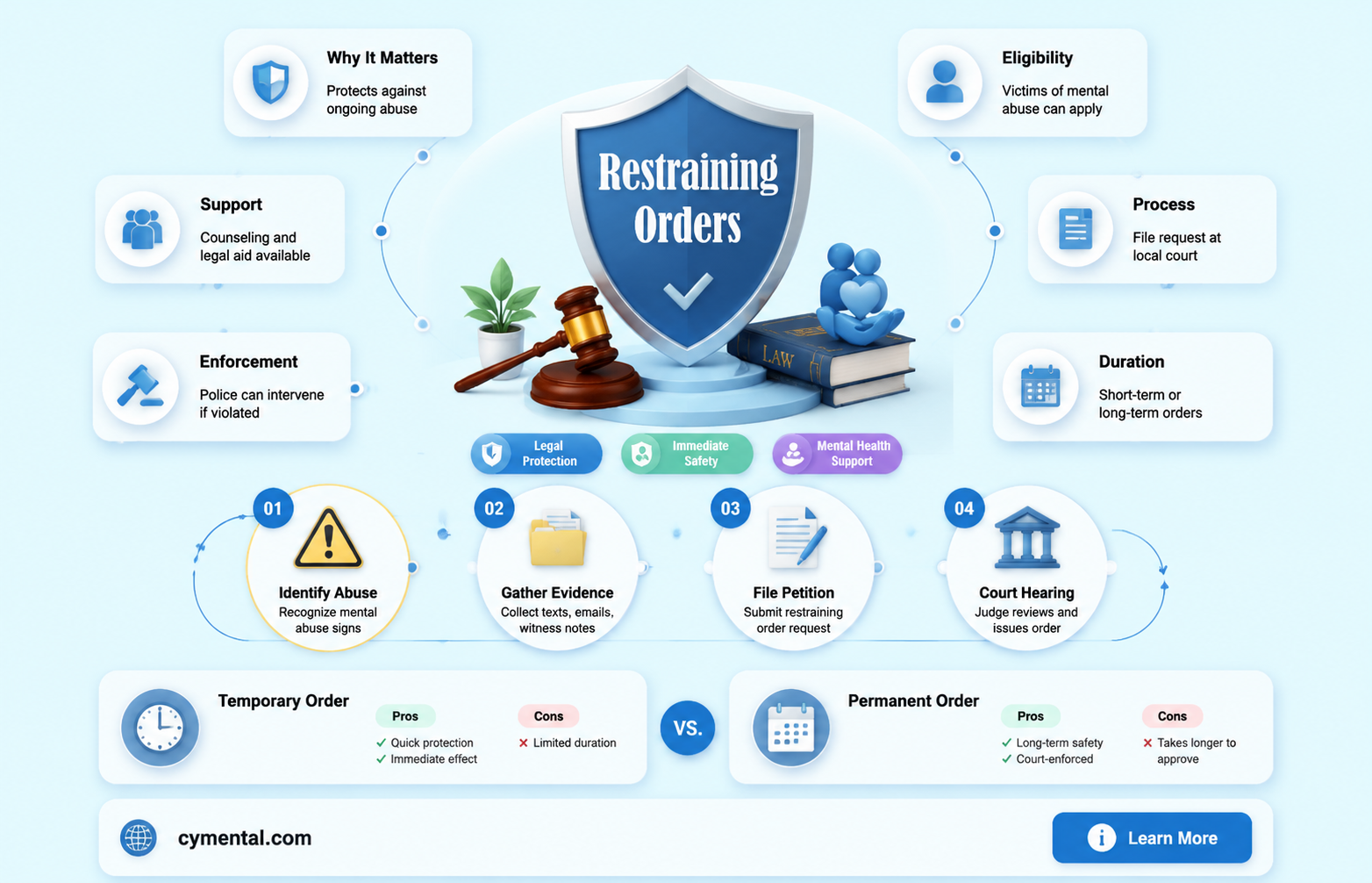
The topic of whether one can obtain a restraining order for mental abuse is a complex and sensitive issue. Mental abuse, also known as emotional abuse, can be just as damaging as physical abuse, yet it often leaves no visible scars, making it harder to recognize and prove. In many jurisdictions, restraining orders are typically associated with physical threats or violence, but some regions have expanded their criteria to include emotional and psychological abuse. This expansion acknowledges the severe impact mental abuse can have on a person's well-being and safety. To obtain a restraining order for mental abuse, one generally needs to provide evidence of a pattern of behavior that causes significant emotional distress or fear. This might include threats, intimidation, stalking, or other forms of psychological manipulation. The legal process can vary significantly depending on the location, and it's crucial for individuals seeking such protection to understand their rights and the requirements of their local laws.
| Characteristics | Values |
|---|---|
| Legal Definition | A restraining order for mental abuse is a legal document issued by a court to protect an individual from another person's psychological or emotional abuse. |
| Eligibility | To obtain a restraining order for mental abuse, the petitioner must demonstrate that they have been subjected to a pattern of behavior that causes them emotional distress or fear for their safety. |
| Evidence Required | Evidence of mental abuse may include verbal abuse, threats, intimidation, isolation, and other forms of psychological manipulation. Documentation such as emails, text messages, and witness statements can be used as evidence. |
| Filing Process | The process of filing for a restraining order for mental abuse varies by jurisdiction. Typically, the petitioner must file a complaint or petition with the local court and provide evidence of the abuse. |
| Temporary vs. Permanent Orders | Temporary restraining orders (TROs) can be issued immediately to provide temporary protection. Permanent restraining orders require a hearing and can last for a longer period, often up to five years or indefinitely. |
| Consequences for Violation | Violating a restraining order for mental abuse can result in legal consequences, including fines, imprisonment, and further legal action. |
| Support Resources | Victims of mental abuse can seek support from local domestic violence shelters, mental health professionals, and legal aid organizations. |
| Documentation | Keeping a detailed record of incidents, including dates, times, and descriptions of the abuse, can be crucial in obtaining and enforcing a restraining order. |
| Confidentiality | Courts often provide confidentiality measures to protect the petitioner's identity and personal information during the restraining order process. |
| Legal Representation | While not always required, having legal representation can be beneficial in navigating the complex process of obtaining a restraining order for mental abuse. |
Explore related products


What You'll Learn
- Definition of Mental Abuse: Understanding what constitutes mental abuse, including emotional manipulation and psychological harm
- Legal Criteria for Restraining Orders: Exploring the legal requirements and evidence needed to obtain a restraining order for mental abuse
- Types of Restraining Orders: Discussing different types of restraining orders available, such as temporary and permanent orders
- Process of Filing for a Restraining Order: Outlining the steps involved in filing for a restraining order, including paperwork and court appearances
- Support Resources for Victims: Providing information on support services, hotlines, and counseling available for victims of mental abuse seeking legal protection

Definition of Mental Abuse: Understanding what constitutes mental abuse, including emotional manipulation and psychological harm
Mental abuse, also known as emotional abuse or psychological abuse, is a form of abuse characterized by a person subjecting another to behavior that may cause psychological trauma, including anxiety, chronic depression, or post-traumatic stress disorder. It involves the use of verbal, emotional, or physical tactics to control, belittle, or manipulate another person. Emotional manipulation is a key component of mental abuse, where the abuser may use guilt, shame, or fear to control the victim's actions or emotions. Psychological harm can result from repeated exposure to such manipulative behaviors, leading to long-term mental health issues.
Understanding what constitutes mental abuse is crucial for recognizing when it is occurring and taking appropriate action. Mental abuse can take many forms, including verbal abuse, such as name-calling or insults; emotional abuse, such as making someone feel worthless or unloved; and psychological abuse, such as gaslighting or manipulating someone's perception of reality. It is important to note that mental abuse can occur in any type of relationship, including romantic relationships, family relationships, or friendships.
Recognizing the signs of mental abuse is the first step in addressing it. Some common signs include feeling constantly criticized or belittled, feeling isolated from friends and family, feeling anxious or depressed, and feeling like you are walking on eggshells around the abuser. If you or someone you know is experiencing these signs, it is important to seek help from a mental health professional or a support hotline.
In the context of restraining orders, mental abuse can be a grounds for obtaining a restraining order in many jurisdictions. A restraining order is a legal document that orders one person to stop abusing or harassing another person. In order to obtain a restraining order for mental abuse, the victim must typically provide evidence of the abuse, such as witness statements, medical records, or recordings of the abuse. It is important to note that the specific requirements for obtaining a restraining order may vary depending on the jurisdiction.
In conclusion, mental abuse is a serious form of abuse that can have long-term psychological effects on the victim. Understanding what constitutes mental abuse and recognizing the signs are crucial for addressing it and seeking help. In cases where mental abuse is severe or ongoing, a restraining order may be a necessary step to protect the victim and hold the abuser accountable.
Exploring the Mind: A Guide to Brain Scans for Mental Health
You may want to see also
Explore related products


Legal Criteria for Restraining Orders: Exploring the legal requirements and evidence needed to obtain a restraining order for mental abuse
To obtain a restraining order for mental abuse, the petitioner must meet specific legal criteria and provide sufficient evidence to support their claim. The legal requirements vary by jurisdiction, but generally, the petitioner must demonstrate that they have been subjected to mental abuse and that there is an imminent risk of further abuse.
The first step in obtaining a restraining order is to file a petition with the court. The petition must include a detailed description of the abuse, including the dates, times, and locations of the incidents. The petitioner must also provide evidence to support their claim, such as witness statements, medical records, or recordings of the abuse.
In many jurisdictions, the petitioner must also demonstrate that they have a reasonable fear of imminent harm. This can be done by providing evidence of threats or previous acts of violence by the abuser. The petitioner may also need to provide information about the abuser's history of mental illness or substance abuse, as these factors can increase the risk of further abuse.
Once the petition is filed, the court will schedule a hearing to determine whether to grant the restraining order. At the hearing, the petitioner must present their evidence and testify about the abuse. The abuser will also have the opportunity to present their case and cross-examine the petitioner.
If the court finds that the petitioner has met the legal criteria and provided sufficient evidence, it will grant the restraining order. The restraining order will typically require the abuser to stay a certain distance away from the petitioner and to cease all contact with them. The order may also include provisions for child custody, visitation, and support.
In conclusion, obtaining a restraining order for mental abuse requires meeting specific legal criteria and providing sufficient evidence to support the claim. The process can be complex and emotionally challenging, but it is an important step in protecting oneself from further abuse.
Navigating Mental Health Medication Access Without Insurance Coverage
You may want to see also
Explore related products


Types of Restraining Orders: Discussing different types of restraining orders available, such as temporary and permanent orders
Restraining orders serve as legal protections for individuals facing abuse, and they come in various forms tailored to the specific needs and circumstances of the victim. Temporary restraining orders (TROs) are often the first step in seeking protection. These orders are issued by a judge and provide immediate protection until a more permanent solution can be arranged. TROs are typically granted without a hearing and can be obtained quickly, sometimes even on the same day of application, making them crucial for those in urgent need of protection from mental abuse.
Permanent restraining orders, on the other hand, offer long-term protection and are usually granted after a formal hearing where both parties have the opportunity to present their case. These orders can last for several years or even indefinitely, depending on the severity of the abuse and the risk to the victim. Permanent restraining orders often include specific provisions detailing the actions the abuser is prohibited from taking, such as contacting the victim, coming near their home or workplace, or engaging in any form of harassment or abuse.
Another type of restraining order is the emergency protective order (EPO), which is similar to a TRO but is typically issued by law enforcement officers rather than a judge. EPOs are designed to provide immediate protection in situations where there is an imminent threat of harm, and they are usually valid for a shorter period than TROs or permanent orders.
In cases of mental abuse, it is essential to understand the different types of restraining orders available and to choose the one that best fits the specific situation. Victims should consult with legal professionals to determine the most appropriate course of action and to ensure that they receive the necessary protections to safeguard their well-being.
Where to Get a Mental Evaluation: A Comprehensive Guide
You may want to see also
Explore related products


Process of Filing for a Restraining Order: Outlining the steps involved in filing for a restraining order, including paperwork and court appearances
Filing for a restraining order due to mental abuse involves several critical steps that must be followed meticulously. The process begins with documenting the abuse, which is essential for providing evidence in court. This documentation should include dates, times, and detailed descriptions of the incidents, as well as any supporting evidence such as emails, texts, or recordings. It is also advisable to seek medical or psychological support and to keep records of any treatment received.
The next step is to obtain the necessary forms from the local courthouse or online. These forms typically include a petition for a restraining order and an affidavit detailing the abuse. The forms must be filled out completely and accurately, as any errors or omissions could delay the process or affect the outcome. Once the forms are completed, they must be filed with the court clerk, who will assign a hearing date.
In some jurisdictions, a temporary restraining order (TRO) may be granted ex parte, meaning without the abuser being present or notified. This is usually done in cases where there is an immediate threat of harm. The TRO will remain in effect until the full hearing, at which both parties will have the opportunity to present their case.
At the hearing, the petitioner must prove that they have been subjected to mental abuse and that there is a reasonable fear of future abuse. The abuser will also have the opportunity to defend themselves and present their own evidence. If the judge finds in favor of the petitioner, a permanent restraining order will be issued, outlining the terms and conditions that the abuser must follow.
It is important to note that the process of filing for a restraining order can be complex and emotionally draining. Seeking legal advice and support from a qualified attorney or advocate can be extremely helpful in navigating this process. Additionally, there are often resources available through local domestic violence shelters or support groups that can provide assistance and guidance.
Understanding Mental Health Days for Illinois Students: A Guide
You may want to see also
Explore related products


Support Resources for Victims: Providing information on support services, hotlines, and counseling available for victims of mental abuse seeking legal protection
Victims of mental abuse seeking legal protection often require a multifaceted approach that includes emotional support, legal guidance, and practical resources. Recognizing the need for comprehensive assistance, various organizations and governmental bodies have established support services, hotlines, and counseling programs specifically tailored to address the unique challenges faced by these individuals.
One crucial resource is the National Domestic Violence Hotline (NDVH), which provides 24/7 support to victims of domestic violence, including mental abuse. By calling 1-800-799-SAFE (7233) or visiting their website, victims can access confidential assistance, safety planning, and referrals to local resources. The NDVH also offers specialized support for individuals with disabilities, ensuring that all victims have access to the help they need.
In addition to hotlines, many communities have local domestic violence shelters that offer temporary housing, counseling, and legal advocacy for victims. These shelters often have trained staff who can help victims navigate the complexities of obtaining a restraining order, including providing information on the legal process, accompanying them to court, and offering emotional support throughout the proceedings.
Online resources also play a vital role in supporting victims of mental abuse. Websites such as the National Coalition Against Domestic Violence (NCADV) and the National Center for Victims of Crime (NCVC) provide valuable information on recognizing the signs of abuse, understanding legal rights, and accessing local resources. These platforms often include interactive tools, such as safety plans and legal forms, which can be downloaded and used by victims to document their experiences and prepare for legal proceedings.
Furthermore, mental health professionals can offer specialized counseling and therapy to help victims cope with the emotional trauma of mental abuse. Cognitive-behavioral therapy (CBT), trauma-focused therapy, and support groups are among the various therapeutic approaches that can be beneficial in addressing the psychological impact of abuse and empowering victims to rebuild their lives.
In conclusion, the array of support resources available for victims of mental abuse seeking legal protection is extensive and diverse. By providing emotional support, legal guidance, and practical resources, these services play a critical role in helping victims navigate the complex process of obtaining a restraining order and rebuilding their lives free from abuse.
Overcoming Mental Hurdles in Tumbling: A Guide to Unblock Your Potential
You may want to see also
Frequently asked questions
Yes, in many jurisdictions, you can obtain a restraining order for mental or emotional abuse. This type of abuse can include threats, intimidation, stalking, or any behavior that causes significant emotional distress.
To obtain a restraining order for mental abuse, you will typically need to provide evidence of the abusive behavior. This can include screenshots of threatening messages, emails, or social media posts, recordings of abusive phone calls, witness statements, or any other documentation that supports your claim of mental abuse.
The process for obtaining a restraining order for mental abuse varies depending on your location. Generally, you will need to file a petition with the local court, provide evidence of the abuse, and attend a hearing where a judge will determine whether to grant the order.
The criteria for obtaining a restraining order for mental abuse typically include demonstrating that you have been subjected to behavior that causes you to fear for your safety or well-being, and that the behavior is likely to continue. You may also need to show that the abuse has had a significant impact on your mental health or daily life.
Violating a restraining order for mental abuse can result in serious legal consequences for the abuser. These can include fines, jail time, and further legal action. It is important to report any violations of the restraining order to the authorities immediately.