Harper Lewis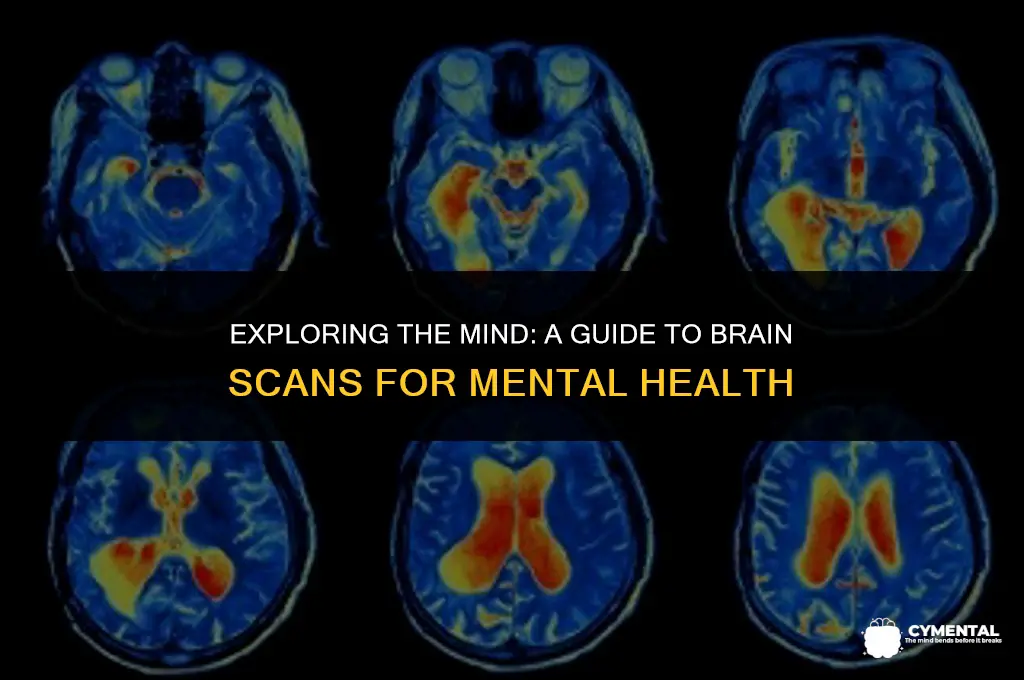
Seeking a brain scan for mental illness can be a pivotal step in understanding and managing your condition. Brain scans, such as MRI, CT, or PET scans, provide detailed images of the brain's structure and function, helping clinicians identify abnormalities associated with various mental health disorders. If you're considering getting a brain scan, it's essential to consult with a healthcare professional who can evaluate your symptoms and medical history to determine the most appropriate type of scan. They will also guide you through the process, ensuring you're prepared for the procedure and understand how to interpret the results. Remember, brain scans are typically used in conjunction with other diagnostic methods, such as psychological evaluations and lab tests, to provide a comprehensive picture of your mental health.
| Characteristics | Values |
|---|---|
| Purpose | To diagnose or monitor mental health conditions |
| Types of Scans | MRI, CT, PET, SPECT |
| Preparation | Varies by scan type; may include fasting or avoiding certain medications |
| Procedure | Non-invasive; patient lies still while images are captured |
| Duration | Typically 15-60 minutes depending on scan type |
| Cost | Varies by location and insurance coverage; can range from $100 to $5,000+ |
| Accessibility | Available at hospitals, clinics, and specialized imaging centers |
| Referral Process | Usually requires a referral from a healthcare provider |
| Results | Interpreted by a radiologist; may take several days to receive |
| Follow-up | May lead to further testing or treatment recommendations |
Explore related products


What You'll Learn
- Types of Brain Scans: Understand different scan types like MRI, CT, PET, and SPECT used for mental health assessments
- Preparation for Scans: Learn about preparation steps, such as removing metal objects, fasting, or avoiding certain medications before the scan
- During the Scan: Know what to expect during the scanning process, including positioning, duration, and any potential discomfort
- Interpreting Results: Discover how radiologists and psychiatrists analyze scan images to identify abnormalities related to mental illness
- Cost and Insurance: Explore the financial aspects of brain scans, including typical costs and insurance coverage for mental health-related scans

Types of Brain Scans: Understand different scan types like MRI, CT, PET, and SPECT used for mental health assessments
Brain scans are essential tools in the diagnosis and treatment of mental illnesses. They provide detailed images of the brain's structure and function, allowing healthcare professionals to identify abnormalities and develop targeted treatment plans. The most common types of brain scans used for mental health assessments are Magnetic Resonance Imaging (MRI), Computed Tomography (CT), Positron Emission Tomography (PET), and Single Photon Emission Computed Tomography (SPECT).
MRI scans use powerful magnets and radio waves to create detailed images of the brain's structure. They are particularly useful for detecting structural abnormalities, such as tumors, lesions, and changes in brain volume. MRI scans are non-invasive and do not use ionizing radiation, making them a safe option for repeated use.
CT scans use X-rays to create images of the brain's structure. They are faster than MRI scans and can be used in emergency situations to quickly identify structural abnormalities. However, CT scans use ionizing radiation, which can increase the risk of cancer with repeated exposure.
PET scans use radioactive tracers to visualize the brain's metabolic activity. They are particularly useful for detecting functional abnormalities, such as changes in blood flow and glucose metabolism. PET scans can help identify areas of the brain that are affected by mental illnesses, such as depression and anxiety.
SPECT scans also use radioactive tracers to visualize the brain's metabolic activity, but they provide less detailed images than PET scans. SPECT scans are often used to detect functional abnormalities in the brain, such as changes in blood flow and oxygen metabolism. They can be particularly useful for diagnosing conditions like ADHD and dementia.
Each type of brain scan has its own advantages and disadvantages, and the choice of scan will depend on the specific needs of the patient. Healthcare professionals will consider factors such as the patient's symptoms, medical history, and the suspected mental illness when determining which type of scan to use.
Navigating the Legal Process for a Court-Ordered Mental Health Evaluation
You may want to see also
Explore related products


Preparation for Scans: Learn about preparation steps, such as removing metal objects, fasting, or avoiding certain medications before the scan
Before undergoing a brain scan for mental illness, it is crucial to follow specific preparation steps to ensure the accuracy and safety of the procedure. One of the primary preparations involves removing all metal objects from your body. This includes jewelry, watches, hairpins, and even clothing with metal fasteners. Metal can interfere with the imaging equipment, potentially causing distortions in the scan results or even posing a safety risk.
Fasting is another common preparation step for certain types of brain scans, particularly those that require the use of contrast agents. Contrast agents help to highlight specific areas of the brain, making it easier to detect abnormalities. Fasting for several hours before the scan ensures that the contrast agent is absorbed properly and that the scan produces clear, accurate images. It is important to follow the specific fasting instructions provided by your healthcare provider, as the duration and type of fast can vary depending on the scan.
Avoiding certain medications before the scan is also essential. Some medications can affect the results of the scan, either by altering brain activity or by interacting with the imaging equipment. For example, sedatives, tranquilizers, and some antidepressants can impact brain function and should be avoided for a period before the scan. It is crucial to consult with your healthcare provider about any medications you are taking and to follow their instructions regarding medication use before the scan.
In addition to these steps, it is important to inform your healthcare provider about any medical conditions or allergies you have. Certain conditions, such as claustrophobia or kidney disease, may require special considerations or adjustments to the scan procedure. Allergies to contrast agents or other materials used in the scan can also pose a risk and should be discussed with your provider beforehand.
On the day of the scan, it is advisable to wear comfortable, loose-fitting clothing that is easy to remove. You may also want to bring a list of your medications and any relevant medical records to the appointment. Arriving early can help ensure that you have enough time to complete the necessary preparations and that the scan can proceed smoothly.
By following these preparation steps, you can help ensure that your brain scan is accurate, safe, and effective in diagnosing and managing your mental illness.
Navigating the VA Disability Claims Process for Depression: A Comprehensive Guide
You may want to see also
Explore related products


During the Scan: Know what to expect during the scanning process, including positioning, duration, and any potential discomfort
The scanning process for mental illness typically involves a series of steps designed to ensure accuracy and comfort. Upon arrival, patients are usually greeted by a technician who will guide them through the procedure. It's important to follow their instructions carefully to ensure the best possible results.
During the scan, patients are positioned in a specific manner depending on the type of scan being conducted. For example, in an MRI, patients lie on their back on a narrow table that slides into the scanning machine. In a CT scan, patients may be asked to lie on their stomach or side. The technician will ensure that the patient is properly positioned and may use pillows or straps to help maintain the correct posture.
The duration of the scan can vary depending on the type of scan and the specific area being examined. MRI scans can take anywhere from 30 minutes to several hours, while CT scans are typically shorter, lasting around 10-30 minutes. Patients are usually asked to remain still during the scan to avoid blurring the images.
Some patients may experience discomfort during the scan, particularly if they are claustrophobic or have difficulty lying still for extended periods. It's important to communicate any concerns or discomfort to the technician, who can provide reassurance and support. In some cases, sedation may be offered to help patients relax during the scan.
After the scan, patients are usually able to resume their normal activities immediately. However, it's important to follow any specific instructions provided by the technician or doctor, such as avoiding certain medications or activities for a period of time. The results of the scan will typically be available within a few days, and a follow-up appointment may be scheduled to discuss the findings and any necessary treatment options.
Navigating Mental Health Waivers: A Guide for Military Aspirants
You may want to see also
Explore related products


Interpreting Results: Discover how radiologists and psychiatrists analyze scan images to identify abnormalities related to mental illness
Radiologists and psychiatrists play a crucial role in interpreting brain scan images to identify abnormalities related to mental illness. Their analysis involves a meticulous process of examining the scans for any deviations from the norm, which can indicate underlying psychiatric conditions. This process requires specialized training and expertise, as well as a deep understanding of the complex interplay between brain structure and function.
The interpretation of brain scans begins with a thorough review of the patient's medical history and symptoms. This information helps the radiologist or psychiatrist to focus their analysis on specific areas of the brain that may be relevant to the patient's condition. For example, if a patient is experiencing symptoms of depression, the clinician may pay particular attention to regions of the brain involved in mood regulation, such as the amygdala and hippocampus.
Next, the clinician will examine the scan images for any structural abnormalities, such as changes in brain volume, shape, or density. These abnormalities can be indicative of various mental health conditions, including schizophrenia, bipolar disorder, and major depressive disorder. Advanced imaging techniques, such as functional magnetic resonance imaging (fMRI) and positron emission tomography (PET), can also provide valuable insights into brain function and metabolism, which can further aid in diagnosis.
In addition to identifying structural and functional abnormalities, radiologists and psychiatrists must also consider the patient's age, gender, and other demographic factors that may influence brain development and function. For example, certain brain regions may develop differently in males and females, and age-related changes in brain structure and function can also impact the interpretation of scan results.
The final step in the interpretation process involves integrating the findings from the brain scan with other diagnostic information, such as psychological assessments and laboratory tests. This comprehensive approach allows the clinician to develop a more accurate diagnosis and treatment plan for the patient. It is important to note that brain scans are not a standalone diagnostic tool, but rather one component of a larger diagnostic process.
In conclusion, the interpretation of brain scan images for mental illness is a complex and nuanced process that requires specialized expertise and a thorough understanding of the relationship between brain structure, function, and psychiatric conditions. By combining this expertise with a comprehensive approach to diagnosis, radiologists and psychiatrists can provide valuable insights that can help to improve patient outcomes.
Navigating Workers' Comp for Mental Health: A Comprehensive Guide
You may want to see also
Explore related products


Cost and Insurance: Explore the financial aspects of brain scans, including typical costs and insurance coverage for mental health-related scans
The cost of brain scans for mental illness can vary widely depending on several factors, including the type of scan, the location of the facility, and whether or not insurance coverage is available. On average, a single brain scan can cost anywhere from $1,000 to $3,000 or more. For example, an MRI scan may cost around $1,500, while a PET scan could cost upwards of $3,000. These costs can quickly add up, especially if multiple scans are required for diagnosis or treatment monitoring.
Insurance coverage for mental health-related brain scans can also be complex. While many insurance plans do cover some mental health services, the extent of coverage for brain scans may vary. Some plans may cover the full cost of the scan, while others may require a copay or coinsurance. Additionally, some insurance plans may have specific requirements or restrictions for mental health coverage, such as limiting the number of scans that can be performed or requiring pre-authorization from the insurance company.
For those without insurance or with limited coverage, there may be options for financial assistance. Some hospitals and clinics offer sliding scale fees or payment plans to help make the cost of brain scans more manageable. Additionally, there may be government programs or non-profit organizations that provide financial assistance for mental health services, including brain scans.
When considering the cost and insurance coverage for brain scans, it is important to weigh the potential benefits against the financial burden. Brain scans can provide valuable information for diagnosing and treating mental illness, but they are not always necessary. It is important to work with a healthcare provider to determine if a brain scan is the right choice for you or your loved one, and to explore all available options for financial assistance and insurance coverage.
In conclusion, navigating the cost and insurance coverage for brain scans related to mental illness can be challenging, but there are resources and options available to help. By understanding the potential costs and coverage limitations, individuals can make informed decisions about their mental health care and find ways to manage the financial aspects of brain scans.
Navigating the Process: A Guide to Obtaining Conservatorship for the Mentally Ill
You may want to see also
Frequently asked questions
The most commonly used brain scans for diagnosing mental illness are Magnetic Resonance Imaging (MRI) and Computed Tomography (CT) scans. MRI uses strong magnetic fields and radio waves to produce detailed images of the brain, while CT scans use X-rays to create cross-sectional images.
Preparation for a brain scan typically involves avoiding certain foods or drinks before the scan, removing any metal objects or jewelry, and wearing comfortable, loose-fitting clothing. It's also important to inform the technician about any medications you're taking or if you have any allergies.
During a brain scan, you'll be asked to lie still on a table that slides into the scanning machine. The scan itself is usually painless and takes anywhere from 15 minutes to an hour, depending on the type of scan and the area of the brain being examined. You may hear loud noises during the scan, and it's important to remain as still as possible to ensure clear images are produced.