Madison Cole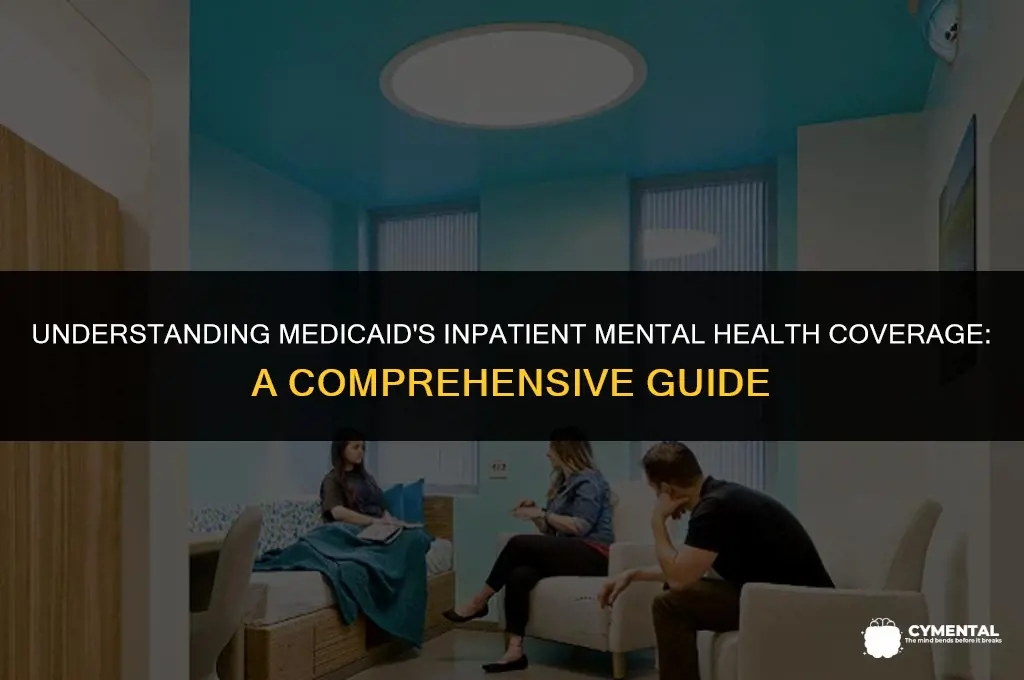
Medicaid is a government-funded health insurance program that provides coverage to millions of Americans, including those with mental health conditions. One of the key benefits of Medicaid is its coverage of inpatient mental health services, which can be crucial for individuals experiencing severe mental health crises. Inpatient mental health care typically involves a stay in a hospital or specialized facility, where patients receive intensive treatment and support. Medicaid's coverage of these services can help ensure that individuals have access to the care they need, regardless of their financial situation. However, it's important to note that Medicaid coverage can vary by state, and some states may have limitations or restrictions on inpatient mental health services.
Explore related products

$59.95 $66.99


What You'll Learn
- Eligibility Criteria: Understand the specific requirements to qualify for Medicaid's inpatient mental health coverage
- Covered Services: Explore the types of inpatient mental health services that Medicaid typically covers
- Duration of Stay: Learn about the average length of inpatient stays covered by Medicaid for mental health treatment
- Provider Network: Discover the importance of choosing a mental health provider within Medicaid's network for coverage
- Out-of-Pocket Costs: Find out about any potential copays or out-of-pocket expenses for inpatient mental health care under Medicaid

Eligibility Criteria: Understand the specific requirements to qualify for Medicaid's inpatient mental health coverage
To qualify for Medicaid's inpatient mental health coverage, individuals must meet specific eligibility criteria. These requirements vary by state, but generally include income limits, residency status, and medical necessity. Applicants must typically be U.S. citizens or qualified immigrants, and their income must fall below a certain percentage of the Federal Poverty Level (FPL). Additionally, they must reside in the state where they are applying for Medicaid.
Medical necessity is another crucial factor in determining eligibility for inpatient mental health coverage. This means that a healthcare provider must deem the inpatient treatment necessary for the individual's mental health condition. The provider must also document the medical necessity in the patient's records. In some cases, pre-authorization from the Medicaid program may be required before inpatient treatment can be covered.
It's important to note that Medicaid's eligibility criteria can be complex and may change over time. Therefore, it's essential to check with the specific state's Medicaid program for the most up-to-date information. Additionally, individuals may want to consult with a healthcare provider or a Medicaid specialist to ensure they meet all the necessary requirements for coverage.
In summary, understanding the eligibility criteria for Medicaid's inpatient mental health coverage is crucial for individuals seeking treatment. By meeting the income limits, residency status, and medical necessity requirements, applicants can increase their chances of qualifying for this important coverage.
Exploring the Salary Range for Mental Health Nurses: A Comprehensive Guide
You may want to see also
Explore related products


$38.93 $72


Covered Services: Explore the types of inpatient mental health services that Medicaid typically covers
Medicaid typically covers a range of inpatient mental health services, which can include psychiatric evaluations, medication management, individual and group therapy sessions, and crisis intervention. These services are designed to provide comprehensive care to individuals experiencing acute mental health issues that require a higher level of supervision and support than outpatient services can offer.
One of the key aspects of Medicaid's coverage for inpatient mental health services is the emphasis on medically necessary care. This means that the services provided must be deemed essential for the treatment of a specific mental health condition, and must be ordered by a qualified healthcare provider. In addition, Medicaid often requires that inpatient mental health services be provided in a cost-effective manner, which may involve utilizing the least restrictive and most appropriate level of care for each individual's needs.
It's important to note that while Medicaid does cover inpatient mental health services, there may be limitations and restrictions on the types of services that are eligible for coverage. For example, some states may have specific requirements for the length of stay or the types of treatments that can be provided. Additionally, Medicaid may not cover certain ancillary services, such as recreational therapy or art therapy, unless they are deemed medically necessary.
When seeking inpatient mental health services under Medicaid, it's crucial for individuals to understand their rights and the coverage options available to them. This may involve working with a healthcare provider to develop a treatment plan that meets Medicaid's requirements, as well as appealing any denials of coverage that may occur. By being informed and proactive, individuals can ensure that they receive the care they need while navigating the complexities of Medicaid's coverage policies.
Unveiling the Salary Potential for Mental Health Counselors
You may want to see also
Explore related products


Duration of Stay: Learn about the average length of inpatient stays covered by Medicaid for mental health treatment
The average length of inpatient stays covered by Medicaid for mental health treatment varies significantly depending on several factors, including the state's Medicaid policies, the individual's specific mental health needs, and the availability of alternative treatment options. Generally, Medicaid-covered inpatient stays for mental health treatment can range from a few days to several weeks.
In many states, Medicaid imposes limits on the number of days it will cover for inpatient mental health treatment. These limits are often based on medical necessity and the individual's progress in treatment. For example, some states may cover up to 30 days of inpatient treatment per year, while others may have shorter or longer limits.
It's important to note that these limits are not always rigidly enforced, and exceptions can be made for individuals who require longer stays due to the severity of their condition or other extenuating circumstances. In such cases, Medicaid may cover additional days of treatment if it is deemed medically necessary by the individual's treatment team.
The variability in Medicaid coverage for inpatient mental health treatment highlights the importance of understanding your state's specific policies and working closely with your healthcare provider to ensure you receive the appropriate level of care. If you or a loved one is seeking inpatient mental health treatment covered by Medicaid, it's essential to be aware of the potential limitations and to advocate for the necessary care.
In conclusion, while Medicaid does cover inpatient mental health treatment, the duration of stay is subject to various factors and limitations. By being informed about your state's policies and working collaboratively with your healthcare provider, you can navigate the complexities of Medicaid coverage and access the care you need.
Understanding Mental Health Awareness Day: A Global Initiative for Well-being
You may want to see also
Explore related products


Provider Network: Discover the importance of choosing a mental health provider within Medicaid's network for coverage
Choosing a mental health provider within Medicaid's network is crucial for ensuring coverage and minimizing out-of-pocket expenses. Medicaid, a joint federal and state program, provides health coverage to low-income individuals, including those with mental health needs. However, to fully benefit from this coverage, it's essential to select a provider who is part of the Medicaid network.
Providers within the Medicaid network have agreed to accept Medicaid payments as full compensation for their services, which means that beneficiaries typically won't have to pay any additional fees. This can be a significant advantage, especially for individuals who require ongoing mental health care or those who have limited financial resources.
Moreover, selecting a provider within the network can streamline the billing process, reducing the likelihood of errors or delays in payment. This can lead to a more seamless and stress-free experience for both the provider and the beneficiary. Additionally, providers within the Medicaid network are often subject to quality standards and oversight, which can help ensure that beneficiaries receive appropriate and effective care.
To find a mental health provider within the Medicaid network, beneficiaries can use the Medicaid website or contact their local Medicaid office for a list of approved providers. It's also important to verify that the provider is accepting new Medicaid patients and that they offer the specific services needed.
In conclusion, choosing a mental health provider within Medicaid's network is essential for maximizing coverage and minimizing costs. By selecting a provider who is part of the network, beneficiaries can ensure that they receive quality care while also taking advantage of the financial protections offered by Medicaid.
Unraveling the Spiral: Understanding and Coping with Mental Health Challenges
You may want to see also
Explore related products



Out-of-Pocket Costs: Find out about any potential copays or out-of-pocket expenses for inpatient mental health care under Medicaid
Understanding the out-of-pocket costs associated with inpatient mental health care under Medicaid is crucial for individuals seeking treatment. While Medicaid does cover a significant portion of mental health services, there may still be expenses that beneficiaries need to pay directly. These out-of-pocket costs can vary depending on several factors, including the state in which the individual resides, the specific mental health facility, and the type of treatment received.
One potential out-of-pocket expense is copays, which are fixed amounts that beneficiaries must pay for each service or prescription medication. Copays can add up quickly, especially for individuals who require multiple services or medications. Additionally, some states may impose a deductible, which is a set amount that beneficiaries must pay before Medicaid coverage kicks in. Meeting this deductible can be a financial burden for those with limited resources.
Another factor to consider is the possibility of coinsurance, where beneficiaries are responsible for a percentage of the cost of services. This can be particularly challenging for inpatient care, where the total cost of treatment can be substantial. Furthermore, some mental health facilities may not accept Medicaid, or they may have limited Medicaid-covered beds, which can force individuals to seek treatment at out-of-network providers, resulting in higher out-of-pocket costs.
To mitigate these expenses, it is essential for individuals to research their state's Medicaid program and understand the specific coverage and cost-sharing requirements. They should also verify the network status of mental health facilities and providers to ensure that they are maximizing their Medicaid benefits. Additionally, individuals may want to explore other financial assistance options, such as sliding fee scales or charitable organizations, to help cover any remaining out-of-pocket costs.
In conclusion, while Medicaid provides vital coverage for inpatient mental health care, beneficiaries should be aware of the potential out-of-pocket costs and take steps to minimize these expenses. By understanding their state's Medicaid program, verifying provider network status, and exploring additional financial assistance options, individuals can make informed decisions about their mental health treatment and better manage the associated costs.
Understanding Complex PTSD: A Guide to Mental Health Recovery
You may want to see also