Caleb Wright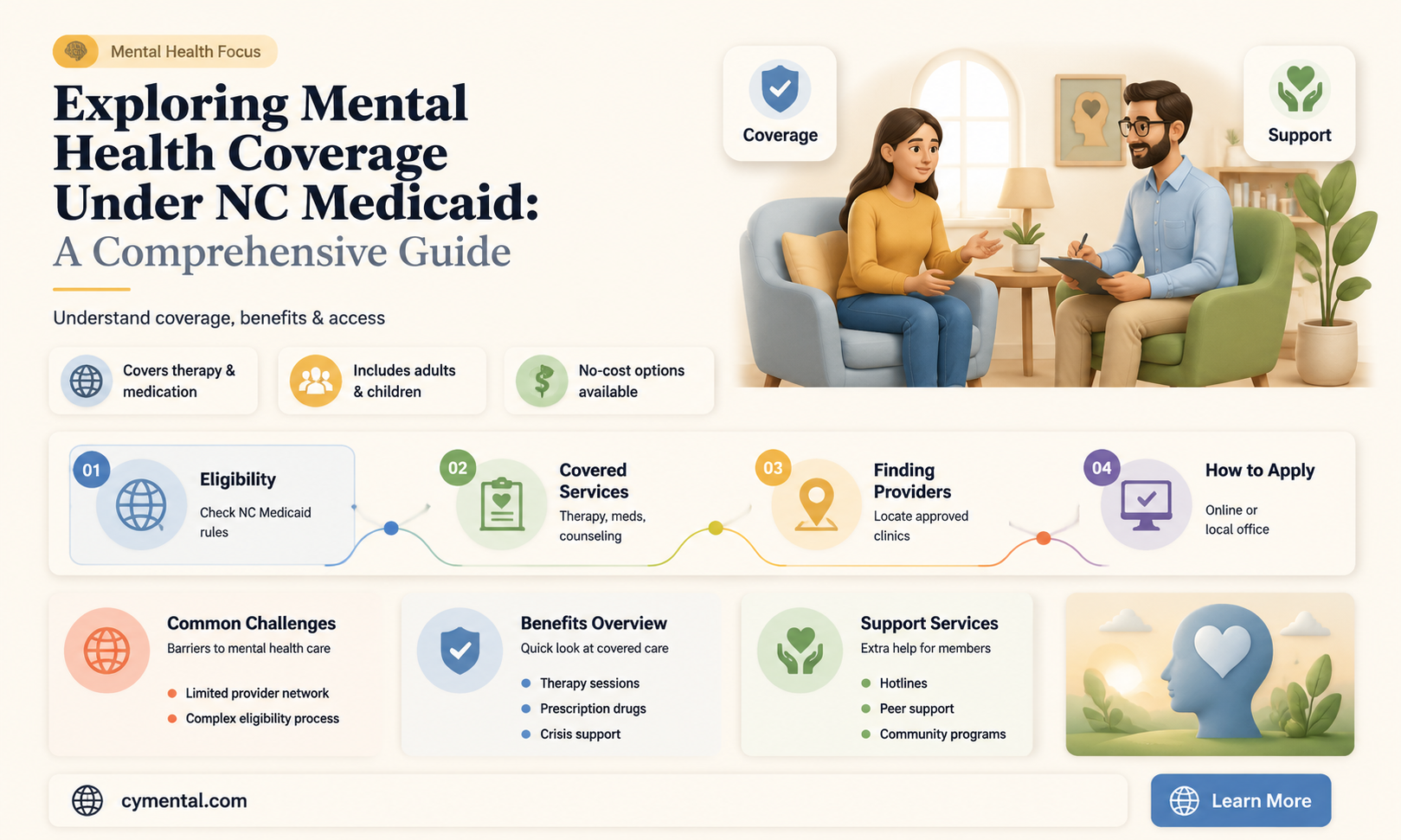
North Carolina Medicaid, a joint federal and state program, provides health coverage to eligible low-income residents, including mental health services. Mental health coverage under NC Medicaid includes a range of services such as outpatient therapy, inpatient psychiatric care, substance abuse treatment, and crisis intervention. To access these services, individuals must be enrolled in Medicaid and meet specific eligibility criteria. Providers must also be Medicaid-approved to offer these services. While NC Medicaid does cover mental health, there may be limitations and requirements that beneficiaries need to be aware of, such as prior authorization for certain treatments and adherence to treatment plans.
Explore related products


What You'll Learn
- Eligibility Criteria: Understand the requirements to qualify for NC Medicaid mental health coverage
- Covered Services: Explore the types of mental health services included under NC Medicaid
- Provider Network: Find out which mental health providers accept NC Medicaid
- Cost Sharing: Learn about any out-of-pocket costs for mental health services with NC Medicaid
- Application Process: Get guidance on how to apply for NC Medicaid mental health benefits

Eligibility Criteria: Understand the requirements to qualify for NC Medicaid mental health coverage
To qualify for NC Medicaid mental health coverage, individuals must meet specific eligibility criteria. These requirements are designed to ensure that those who need mental health services the most have access to them. The criteria include both financial and non-financial conditions that must be met. Financially, individuals must fall within certain income limits, which vary depending on the size of their household. Non-financial criteria include factors such as age, residency status, and the presence of a diagnosable mental health condition.
One of the key aspects of the eligibility criteria is the income limit. For example, as of the latest update, a single adult must have an income of no more than $17,655 per year to qualify for Medicaid. For families, the income limit increases based on the number of people in the household. It's important to note that these figures can change, so it's always best to check the most current information.
In addition to income, applicants must also be residents of North Carolina and meet certain age requirements. Children and adults up to the age of 64 are generally eligible, though there are specific programs for different age groups. For instance, children may be eligible for the Early and Periodic Screening, Diagnostic, and Treatment (EPSDT) benefit, which covers a wide range of mental health services.
Applicants must also have a diagnosable mental health condition that requires treatment. This can include conditions such as depression, anxiety, bipolar disorder, and schizophrenia, among others. A qualified healthcare provider must diagnose the condition and determine that treatment is medically necessary.
Understanding these eligibility criteria is crucial for individuals seeking mental health coverage through NC Medicaid. By knowing the requirements, applicants can better prepare their applications and increase their chances of receiving the necessary benefits. It's also important for healthcare providers and advocates to be familiar with these criteria to help guide their patients through the process.
Unlocking Your Mental Health History: A Guide to Obtaining Records
You may want to see also
Explore related products


Covered Services: Explore the types of mental health services included under NC Medicaid
NC Medicaid covers a comprehensive range of mental health services, ensuring that beneficiaries have access to the care they need. These services include inpatient and outpatient care, medication management, and various forms of therapy. Inpatient services are provided in hospitals or residential settings for individuals who require intensive, short-term treatment. Outpatient services, on the other hand, are offered in clinics, offices, or community settings for those who need ongoing, less intensive care. Medication management is a crucial component, involving the prescription, monitoring, and adjustment of psychiatric medications by qualified healthcare providers. Therapy services encompass individual, group, and family therapy sessions, aimed at addressing various mental health conditions and promoting overall well-being.
One unique aspect of NC Medicaid's mental health coverage is the inclusion of specialized services for specific populations. For example, there are programs tailored to the needs of children and adolescents, as well as services designed to support individuals with serious mental illnesses. These specialized services often involve multidisciplinary teams of healthcare professionals, including psychiatrists, psychologists, social workers, and counselors, who collaborate to provide comprehensive, individualized care.
Another important feature of NC Medicaid's mental health coverage is the emphasis on integration with primary care. This approach recognizes the interconnectedness of mental and physical health and seeks to address both aspects simultaneously. Integrated care models often involve co-location of mental health providers in primary care settings, shared electronic health records, and collaborative treatment planning. This integration can lead to improved health outcomes, increased patient satisfaction, and more efficient use of resources.
In addition to these core services, NC Medicaid also covers innovative treatments and interventions that have been shown to be effective in addressing mental health conditions. For instance, the program may cover evidence-based practices such as cognitive-behavioral therapy, dialectical behavior therapy, and trauma-focused cognitive-behavioral therapy. These treatments are designed to help individuals develop coping skills, manage symptoms, and improve their overall quality of life.
To access these mental health services, NC Medicaid beneficiaries typically need to obtain a referral from their primary care provider or a mental health professional. Once a referral is obtained, the beneficiary can choose from a network of approved providers who participate in the Medicaid program. It is important to note that some services may require prior authorization from Medicaid before they can be provided, so beneficiaries should check with their providers to ensure that all necessary steps are taken to access the care they need.
In conclusion, NC Medicaid's coverage of mental health services is comprehensive and multifaceted, addressing the diverse needs of its beneficiaries. From inpatient and outpatient care to medication management and therapy, the program strives to provide accessible, high-quality mental health services that promote recovery and well-being.
Pursuing a Career in Mental Health Nursing: A Comprehensive Guide
You may want to see also
Explore related products


Provider Network: Find out which mental health providers accept NC Medicaid
Navigating the provider network for mental health services under NC Medicaid can be a critical step in accessing necessary care. To begin this process, individuals should first confirm their Medicaid eligibility and then proceed to explore the network of providers who accept this form of insurance. The North Carolina Department of Health and Human Services (NCDHHS) maintains an online directory that can be searched by location, specialty, and insurance accepted, including Medicaid. This resource is invaluable for finding a comprehensive list of mental health professionals, from psychiatrists to therapists, who are authorized to provide services under Medicaid.
Once a list of potential providers is compiled, it's essential to verify their current participation in the Medicaid program, as this can change over time. Contacting the provider's office directly to confirm their Medicaid acceptance status and to inquire about any specific requirements or limitations they may have is a prudent step. Additionally, individuals should consider reaching out to their Medicaid caseworker or a local Medicaid office for assistance in navigating the provider network and understanding the coverage details specific to their situation.
It's also important to be aware of the different types of mental health services that may be covered under NC Medicaid. These can include outpatient therapy, inpatient psychiatric care, medication management, and crisis intervention services, among others. Understanding the scope of covered services can help individuals make informed decisions about their care and ensure they are utilizing the appropriate resources available to them.
In some cases, individuals may encounter challenges in finding a provider within the Medicaid network who can meet their specific needs, such as a provider who specializes in a particular mental health condition or who offers services in a preferred language. In such situations, it may be necessary to expand the search radius or to seek out alternative resources, such as community mental health centers or federally qualified health centers, which may offer more comprehensive or culturally sensitive services.
Ultimately, the key to successfully navigating the provider network for mental health services under NC Medicaid lies in being proactive, informed, and persistent. By utilizing available resources, verifying provider participation, and understanding the scope of covered services, individuals can increase their chances of accessing the care they need in a timely and efficient manner.
Exploring Workers' Comp Coverage for Mental Health: What You Need to Know
You may want to see also
Explore related products


Cost Sharing: Learn about any out-of-pocket costs for mental health services with NC Medicaid
Understanding cost-sharing is crucial for beneficiaries of NC Medicaid who require mental health services. Cost-sharing refers to the portion of healthcare expenses that you, as the beneficiary, are responsible for paying out-of-pocket. These costs can include copayments, coinsurance, and deductibles. In the context of NC Medicaid, it's important to note that the program aims to provide affordable healthcare, but some level of cost-sharing may still be required for certain services.
When it comes to mental health services specifically, NC Medicaid may cover a wide range of treatments, including therapy sessions, counseling, and medication. However, the extent of coverage and the associated out-of-pocket costs can vary depending on the specific service and the provider. For instance, some mental health services might be fully covered, while others may require a copayment or coinsurance. It's essential to review your NC Medicaid plan details to understand which mental health services are covered and what your financial responsibilities might be.
To navigate cost-sharing effectively, beneficiaries should familiarize themselves with their plan's specifics. This includes understanding the formulary for prescription medications, as some mental health drugs may have different coverage levels or prior authorization requirements. Additionally, it's advisable to choose healthcare providers who are in-network with NC Medicaid, as this can often result in lower out-of-pocket costs compared to out-of-network providers.
In some cases, beneficiaries may be eligible for additional assistance programs that can help reduce their out-of-pocket expenses for mental health services. These programs might include patient assistance programs offered by pharmaceutical companies or local health departments. Beneficiaries should consult with their healthcare providers or a Medicaid representative to explore these options further.
Ultimately, while NC Medicaid strives to make mental health services accessible, understanding and managing cost-sharing is an integral part of ensuring that these services remain affordable for beneficiaries. By taking the time to review plan details, choose in-network providers, and explore additional assistance programs, individuals can better navigate the financial aspects of their mental healthcare.
Exploring Mental Health Coverage: What Cigna Offers
You may want to see also
Explore related products


Application Process: Get guidance on how to apply for NC Medicaid mental health benefits
To apply for NC Medicaid mental health benefits, individuals must first determine their eligibility. This involves meeting specific income and residency requirements, as well as having a documented mental health condition that necessitates treatment. Once eligibility is established, applicants can begin the formal application process, which typically involves submitting personal information, proof of income, and medical documentation to the North Carolina Department of Health and Human Services.
The application form can be obtained online or in person at a local DHHS office. It is important to fill out the form completely and accurately, as any missing or incorrect information can delay the processing of the application. Along with the form, applicants must provide supporting documents such as pay stubs, tax returns, and medical records that verify their eligibility for mental health benefits.
After submitting the application, individuals may be required to attend an interview with a Medicaid representative to discuss their mental health needs and treatment options. This interview is an opportunity for applicants to ask questions and receive guidance on the Medicaid program and its benefits. Following the interview, the DHHS will review the application and make a determination on eligibility within a specified timeframe.
If approved for NC Medicaid mental health benefits, individuals will receive a Medicaid card and information about their coverage, including any copayments or deductibles they may be responsible for. It is important to note that Medicaid coverage for mental health services may be subject to certain limitations and restrictions, such as the number of therapy sessions or psychiatric medications covered per month.
Throughout the application process, it is crucial for individuals to stay informed about their rights and responsibilities as Medicaid applicants and recipients. This includes understanding the appeals process in case of a denial of benefits, as well as knowing how to report changes in income or residency status that may affect their Medicaid coverage. By staying informed and proactive, individuals can navigate the application process more effectively and ensure they receive the mental health benefits they need.
Unveiling the Palette of Mental Health: A Colorful Exploration
You may want to see also
Frequently asked questions
Yes, NC Medicaid covers mental health services, including outpatient therapy, counseling, and psychiatric care.
NC Medicaid covers services provided by licensed mental health professionals such as psychiatrists, psychologists, licensed clinical social workers, and licensed professional counselors.
While NC Medicaid does cover mental health services, there may be limitations on the number of sessions or specific types of treatments covered. It's important to check with your Medicaid provider for details on coverage and any potential restrictions.
You can find a mental health provider that accepts NC Medicaid by visiting the NC Medicaid website or contacting your local Medicaid office. They can provide you with a list of approved providers in your area.
Yes, NC Medicaid covers emergency mental health services, including crisis intervention and inpatient psychiatric care. If you or someone you know is experiencing a mental health emergency, it's important to seek help immediately.