Lucas Bennett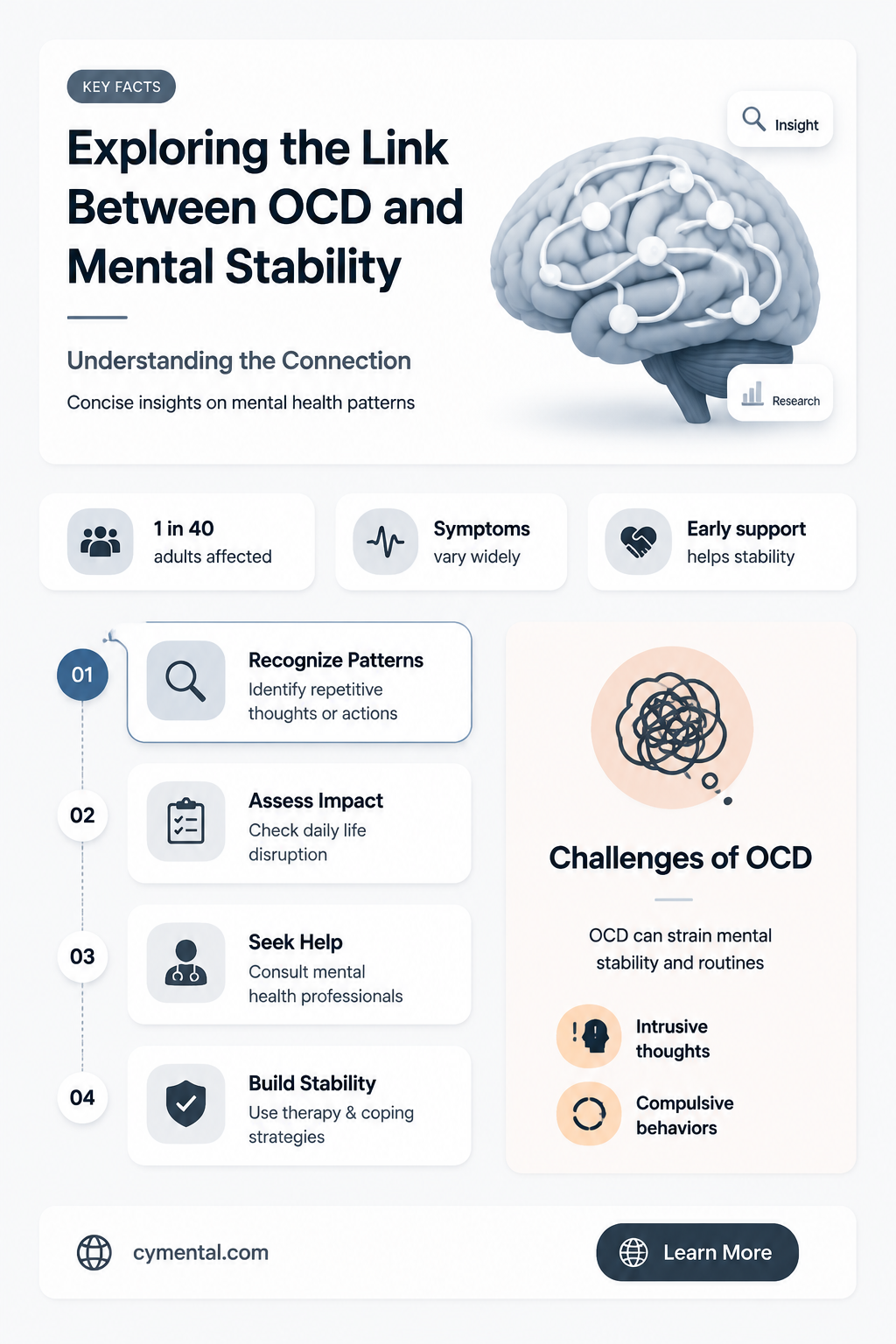
Obsessive-Compulsive Disorder (OCD) is a mental health condition characterized by intrusive, unwanted thoughts (obsessions) that often lead to repetitive behaviors (compulsions). These behaviors are performed in an attempt to relieve the stress or anxiety caused by these obsessions. While OCD can significantly impact a person's daily life and functioning, it does not inherently make someone mentally unstable. Mental stability is a complex concept that encompasses a range of factors, including emotional regulation, cognitive functioning, and social adaptation. Individuals with OCD can experience periods of intense distress and may struggle with certain aspects of mental stability, such as managing anxiety or resisting compulsive behaviors. However, with proper treatment, which often includes cognitive-behavioral therapy and medication, many people with OCD can lead fulfilling and stable lives. It is important to approach discussions about mental health with sensitivity and to avoid stigmatizing conditions like OCD by equating them with mental instability.
| Characteristics | Values |
|---|---|
| Definition | OCD (Obsessive-Compulsive Disorder) is a mental health condition characterized by intrusive, unwanted thoughts (obsessions) and repetitive behaviors (compulsions). |
| Stability | Mental stability is a subjective concept. While OCD can cause significant distress and impairment, it does not inherently make someone "mentally unstable" in the traditional sense. |
| Symptoms | Common symptoms include persistent, intrusive thoughts, urges, or images; repetitive behaviors such as handwashing, checking, or counting; and a strong need for order and symmetry. |
| Impact on Daily Life | OCD can interfere with daily activities, relationships, and work or school performance due to the time and energy spent on compulsive behaviors and the distress caused by obsessions. |
| Treatment | Effective treatments include cognitive-behavioral therapy (CBT), specifically exposure and response prevention (ERP), and certain medications like selective serotonin reuptake inhibitors (SSRIs). |
| Prognosis | With proper treatment, many individuals with OCD can manage their symptoms and lead fulfilling lives. However, it is a chronic condition that may require ongoing treatment. |
| Misconceptions | A common misconception is that OCD is just about being neat or orderly. In reality, it involves distressing thoughts and compulsions that can be debilitating. |
| Comorbidity | OCD often co-occurs with other mental health conditions such as anxiety disorders, depression, and tic disorders. |
| Neurobiology | Research suggests that OCD may be associated with abnormalities in brain structure and function, particularly in regions involved in emotion regulation and impulse control. |
| Societal Perception | OCD is sometimes stigmatized or misunderstood, leading to challenges in seeking help and finding support. |
| Self-Management | Individuals with OCD can benefit from self-help strategies, support groups, and learning to challenge and reframe their obsessive thoughts. |
| Family and Friends | Loved ones can play a crucial role in supporting someone with OCD by understanding the condition, encouraging treatment, and providing emotional support. |
What You'll Learn
- Defining OCD: Understanding obsessive-compulsive disorder and its impact on mental health
- Stability vs. Instability: Exploring the spectrum of mental stability and how OCD fits within it
- OCD Symptoms: Identifying common symptoms and behaviors associated with obsessive-compulsive disorder
- Treatment Options: Discussing available treatments and therapies for managing OCD symptoms effectively
- Living with OCD: Sharing insights and coping strategies from individuals who experience OCD daily

Defining OCD: Understanding obsessive-compulsive disorder and its impact on mental health
Obsessive-compulsive disorder (OCD) is a complex mental health condition characterized by intrusive, unwanted thoughts (obsessions) that often lead to repetitive behaviors (compulsions). These behaviors are performed in an attempt to relieve the stress or anxiety caused by these obsessions. OCD can manifest in various ways, such as excessive handwashing, checking, counting, or arranging things in a particular order. While these behaviors may provide temporary relief, they can also interfere significantly with a person's daily life and overall well-being.
Understanding OCD requires recognizing that it is not simply a matter of being meticulous or detail-oriented. The disorder involves a cycle of obsessions and compulsions that can be difficult to break without proper treatment. Cognitive-behavioral therapy (CBT), particularly exposure and response prevention (ERP), is a common and effective treatment for OCD. Medications, such as selective serotonin reuptake inhibitors (SSRIs), can also be helpful in managing symptoms.
The impact of OCD on mental health can be profound. Individuals with OCD may experience feelings of shame, guilt, or embarrassment about their symptoms, leading to social isolation and decreased self-esteem. The disorder can also co-occur with other mental health conditions, such as depression, anxiety, or substance abuse, further complicating treatment and recovery. It is essential for those affected by OCD to seek professional help and for society to foster a supportive and understanding environment for individuals struggling with this condition.
In conclusion, OCD is a serious mental health disorder that requires a comprehensive understanding and approach to treatment. By recognizing the complexities of OCD and its impact on individuals, we can work towards providing better support and resources for those affected by this challenging condition.
Unraveling the Mind: Understanding the Mental Breakdown Process
You may want to see also
Stability vs. Instability: Exploring the spectrum of mental stability and how OCD fits within it
Mental stability is often viewed as a binary concept—either one is stable or unstable. However, this oversimplification neglects the nuanced spectrum that exists between these two extremes. Obsessive-Compulsive Disorder (OCD) is a condition that can challenge this binary understanding, as it manifests in a unique way that can affect an individual's mental stability without necessarily pushing them into the category of 'unstable.'
To explore this spectrum, it's essential to understand that mental stability is not a fixed state but rather a dynamic one that can fluctuate based on various factors such as stress, environment, and coping mechanisms. OCD, characterized by intrusive thoughts and repetitive behaviors, can be seen as a condition that introduces a significant amount of distress and disruption into an individual's life. This disruption can lead to a perception of instability, as the person may struggle to maintain a consistent level of functioning or emotional equilibrium.
Yet, it's crucial to recognize that OCD does not equate to a complete loss of mental stability. Many individuals with OCD are able to lead fulfilling lives, maintain relationships, and perform well in their professional or academic pursuits. The key lies in the management of the disorder and the development of effective coping strategies. With proper treatment, such as Cognitive Behavioral Therapy (CBT) and medication, individuals with OCD can learn to control their symptoms and navigate the spectrum of mental stability more effectively.
In conclusion, OCD presents a complex case when considering the concept of mental stability. It introduces challenges that can disrupt an individual's life, but it does not inherently define their overall mental state as unstable. By acknowledging the spectrum of mental stability and the role that conditions like OCD play within it, we can foster a more nuanced understanding of mental health and the diverse experiences of those living with such disorders.
Understanding the Complex Aftermath of a Tragic Act by a Mentally Ill Individual
You may want to see also
OCD Symptoms: Identifying common symptoms and behaviors associated with obsessive-compulsive disorder
Obsessive-compulsive disorder (OCD) is characterized by a cycle of unwanted and intrusive thoughts (obsessions) that often lead to repetitive behaviors (compulsions). These symptoms can significantly interfere with a person's daily life and mental well-being. While OCD is a treatable condition, it's essential to recognize the common symptoms and behaviors associated with it to seek appropriate help.
One of the primary symptoms of OCD is the presence of obsessions, which are persistent and distressing thoughts, images, or urges that a person cannot control. These obsessions often revolve around themes such as cleanliness, order, safety, or morality. For example, a person with OCD may have recurring thoughts about germs and contamination, leading them to excessively wash their hands or avoid touching certain objects.
Compulsions are the repetitive behaviors or mental acts that a person with OCD feels compelled to perform in response to their obsessions. These compulsions can include actions like handwashing, checking, counting, or arranging things in a particular way. They may also involve mental rituals, such as repeating words or phrases, or visualizing specific images. Compulsions are often performed in an attempt to relieve the anxiety or distress caused by obsessions, but they can also become a source of anxiety in themselves.
In addition to obsessions and compulsions, people with OCD may also experience other symptoms, such as anxiety, depression, or avoidance behaviors. They may avoid certain situations or objects that trigger their obsessions or compulsions, which can lead to social isolation or difficulties in daily functioning. It's important to note that while these symptoms can be challenging, they do not necessarily indicate mental instability. OCD is a treatable condition, and with appropriate therapy and medication, many people are able to manage their symptoms and lead fulfilling lives.
If you suspect that you or someone you know may have OCD, it's crucial to seek professional help. A mental health professional can provide a thorough evaluation and recommend appropriate treatment options. Remember, OCD is not a sign of weakness or a character flaw; it is a medical condition that requires understanding and support. By recognizing the common symptoms and behaviors associated with OCD, we can work towards reducing stigma and promoting early intervention and treatment.
Finding the Words: How to Share Your Mental Health Struggles
You may want to see also
Treatment Options: Discussing available treatments and therapies for managing OCD symptoms effectively
Cognitive-behavioral therapy (CBT) is a frontline treatment for OCD, focusing on identifying and challenging negative thought patterns and behaviors. A specific form of CBT known as exposure and response prevention (ERP) involves gradually exposing individuals to feared situations or objects and teaching them to resist the urge to perform compulsive behaviors. This approach has been shown to be highly effective in reducing OCD symptoms.
Medication can also play a crucial role in managing OCD. Selective serotonin reuptake inhibitors (SSRIs) are commonly prescribed to help regulate serotonin levels in the brain, which can reduce the frequency and intensity of obsessive thoughts and compulsive behaviors. In some cases, a combination of CBT and medication may be recommended for optimal results.
For individuals who do not respond well to traditional treatments, alternative therapies may be considered. These can include mindfulness-based therapies, which help individuals develop greater awareness and acceptance of their thoughts and feelings, and transcranial magnetic stimulation (TMS), a non-invasive procedure that uses magnetic fields to stimulate areas of the brain associated with OCD.
In addition to professional treatments, there are several self-help strategies that individuals with OCD can employ to manage their symptoms. These include practicing relaxation techniques such as deep breathing and progressive muscle relaxation, engaging in regular physical activity, and maintaining a balanced diet. It is also important for individuals with OCD to build a strong support network, which can include family, friends, and support groups.
When seeking treatment for OCD, it is essential to consult with a mental health professional who has experience in treating this condition. They can help develop a personalized treatment plan that takes into account the individual's specific needs and circumstances. With the right treatment and support, individuals with OCD can learn to manage their symptoms effectively and lead fulfilling lives.
Navigating Divorce When a Partner Struggles with Mental Illness
You may want to see also
Living with OCD: Sharing insights and coping strategies from individuals who experience OCD daily
Living with OCD can be a daily challenge, but it's one that many individuals face with resilience and determination. For those who experience OCD, it's not just about the compulsions or obsessions; it's about finding ways to manage these symptoms so they can lead fulfilling lives. One of the most effective strategies is Cognitive Behavioral Therapy (CBT), particularly Exposure and Response Prevention (ERP). This involves gradually exposing oneself to the feared situation or object and resisting the urge to perform the compulsive behavior. Over time, this can help reduce the anxiety associated with the obsessions and decrease the frequency of compulsions.
Another coping strategy is mindfulness meditation. By focusing on the present moment and observing thoughts without judgment, individuals with OCD can learn to detach from their obsessive thoughts and reduce the distress they cause. Additionally, medication can be a helpful tool when used in conjunction with therapy. Selective Serotonin Reuptake Inhibitors (SSRIs) are often prescribed to help manage OCD symptoms.
Support groups can also play a crucial role in coping with OCD. Sharing experiences and strategies with others who understand the condition can provide a sense of community and reduce feelings of isolation. Online resources and apps, such as OCD Action, can offer additional support and tools for managing symptoms.
It's important for individuals with OCD to remember that they are not alone and that with the right treatment and support, they can learn to manage their symptoms and lead a satisfying life. OCD does not define a person's mental stability; it is a treatable condition that can be managed with the appropriate strategies and support.
Legal Guide: Establishing Mental Incompetence in a Loved One
You may want to see also
Frequently asked questions
OCD, or Obsessive-Compulsive Disorder, is a mental health condition characterized by unwanted and intrusive thoughts (obsessions) that often lead to repetitive behaviors (compulsions). While OCD can significantly impact a person's daily life and cause distress, it does not inherently make someone mentally unstable. Mental stability is a broader concept that encompasses a person's overall emotional and psychological well-being. People with OCD can lead stable lives with proper treatment and support.
OCD can affect a person's daily life in various ways. The intrusive thoughts and compulsive behaviors associated with OCD can consume a significant amount of time and energy, leading to difficulties in maintaining relationships, performing at work or school, and engaging in leisure activities. The disorder can also cause physical symptoms, such as headaches or muscle tension, due to the stress and anxiety associated with the obsessive thoughts and compulsive behaviors.
There are several common misconceptions about OCD. One misconception is that people with OCD are simply perfectionists or overly organized. While some individuals with OCD may exhibit perfectionistic tendencies, the disorder is more complex and involves intrusive thoughts and compulsive behaviors that are not necessarily related to organization or cleanliness. Another misconception is that OCD is rare. In reality, OCD is a relatively common mental health condition, affecting approximately 2-3% of the population worldwide. Finally, some people believe that OCD can be overcome through willpower alone. However, OCD is a treatable condition that often requires a combination of medication, therapy, and support to manage effectively.