Caleb Wright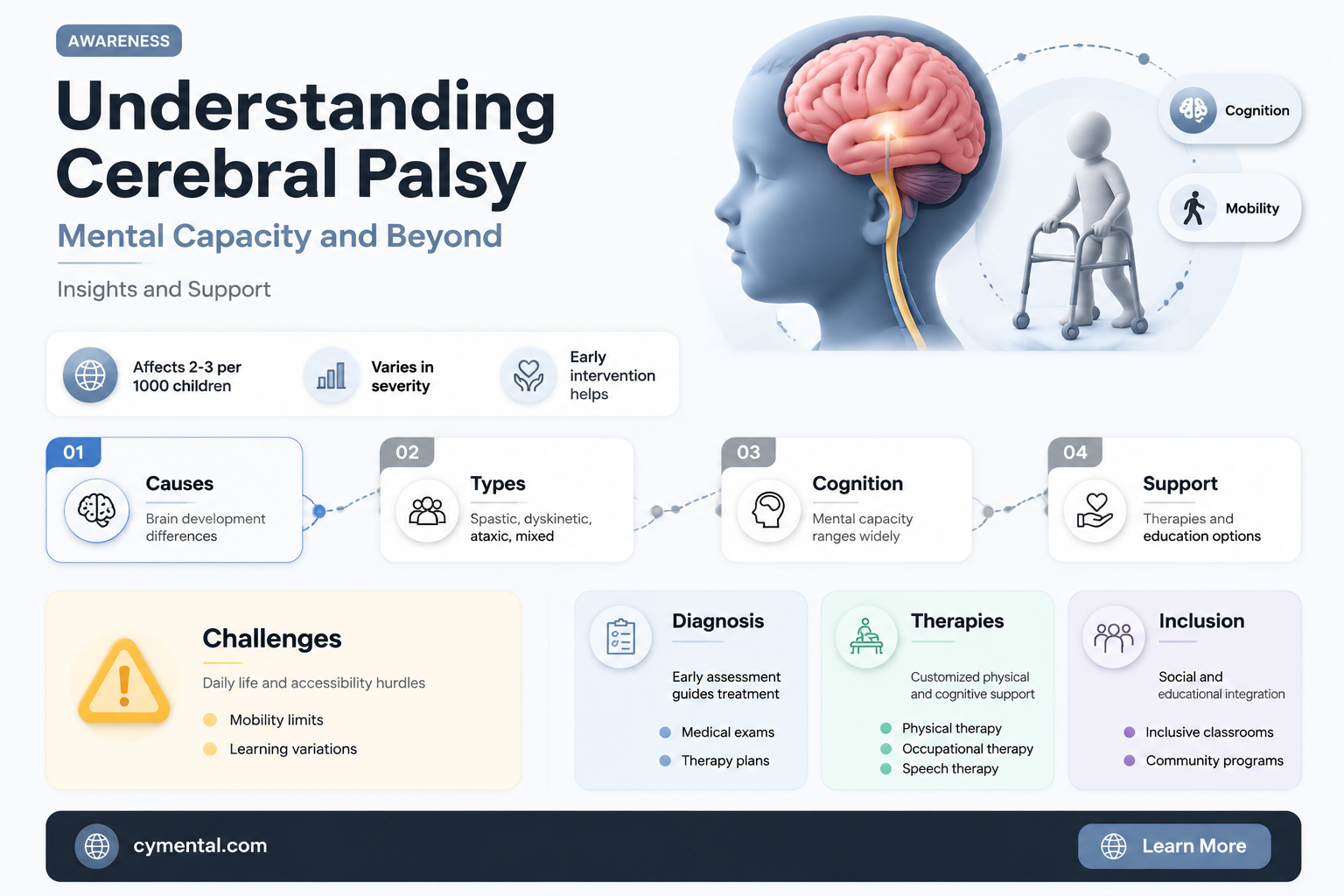
Cerebral palsy is a neurological condition that affects movement and coordination, but it does not inherently impact a person's mental capacity. Individuals with cerebral palsy can have varying levels of cognitive function, just like the general population. Some may have intellectual disabilities, while others may have average or above-average intelligence. It's important to recognize that cerebral palsy is a diverse condition, and each person's abilities and challenges are unique. Therefore, when discussing mental capacity, it's crucial to consider the individual's specific circumstances and not make generalizations based on their physical condition.
| Characteristics | Values |
|---|---|
| Definition | Cerebral palsy is a neurological disorder that affects movement and coordination. It does not inherently affect mental capacity. |
| Mental Capacity | Mental capacity refers to a person's ability to understand and make decisions. Individuals with cerebral palsy can have varying levels of mental capacity, just like anyone else. |
| Factors Affecting Mental Capacity | Factors such as the severity of cerebral palsy, associated medical conditions, and individual cognitive development can influence mental capacity. |
| Communication | Some individuals with cerebral palsy may have difficulty communicating verbally, but this does not necessarily indicate a lack of mental capacity. Alternative communication methods can be used. |
| Education | With appropriate support and accommodations, individuals with cerebral palsy can receive education and develop their cognitive abilities. |
| Legal Rights | People with cerebral palsy have the same legal rights as others, including the right to make decisions about their own lives when they have the mental capacity to do so. |
| Support Needs | Depending on the individual's specific needs, support can range from minimal to extensive, but this support does not define their mental capacity. |
| Misconceptions | A common misconception is that cerebral palsy affects intelligence. In reality, intelligence and mental capacity can vary widely among individuals with cerebral palsy. |
| Assessment | Mental capacity should be assessed on an individual basis by qualified professionals, taking into account the person's unique circumstances and abilities. |
| Inclusion | Society should strive to be inclusive, providing equal opportunities for individuals with cerebral palsy to participate and contribute, regardless of their mental capacity. |
Explore related products


What You'll Learn
- Definition of Cerebral Palsy: A group of permanent disorders affecting movement and coordination, caused by brain damage
- Mental Capacity: Refers to a person's ability to make decisions, understand information, and communicate effectively
- Variability in Mental Capacity: Individuals with cerebral palsy may have varying levels of mental capacity, ranging from mild to severe
- Factors Influencing Capacity: Factors such as the severity of brain damage, associated medical conditions, and educational opportunities can impact mental capacity
- Legal and Ethical Considerations: Understanding mental capacity is crucial for ensuring the rights and autonomy of individuals with cerebral palsy

Definition of Cerebral Palsy: A group of permanent disorders affecting movement and coordination, caused by brain damage
Cerebral palsy is a group of permanent disorders that affect movement and coordination. It is caused by brain damage that occurs before, during, or shortly after birth. The condition can result in a range of physical impairments, including muscle weakness, stiffness, and difficulties with balance and coordination. While cerebral palsy primarily affects physical function, it can also have an impact on cognitive abilities, such as learning and problem-solving.
The severity of cerebral palsy can vary greatly from person to person. Some individuals may have mild symptoms that do not significantly impact their daily lives, while others may have more severe impairments that require extensive support and assistance. The condition is often classified into different types based on the specific areas of the brain that are affected and the resulting symptoms.
One common misconception about cerebral palsy is that it always results in intellectual disability. However, this is not the case. While some individuals with cerebral palsy may also have intellectual impairments, many others have average or above-average intelligence. The cognitive abilities of individuals with cerebral palsy can vary widely, and it is important not to make assumptions about a person's mental capacity based solely on their physical condition.
In terms of mental capacity, individuals with cerebral palsy may face unique challenges. For example, they may have difficulty communicating their thoughts and ideas due to speech impairments or other physical limitations. They may also require additional support and accommodations in educational and employment settings to fully participate and demonstrate their abilities. However, with appropriate support and resources, many individuals with cerebral palsy are able to lead fulfilling and independent lives.
It is crucial to recognize that cerebral palsy is a complex condition that affects each individual differently. While it can have an impact on mental capacity, it is not a defining factor of a person's intelligence or potential. By understanding the diverse experiences of individuals with cerebral palsy and providing them with the necessary support and opportunities, we can help to ensure that they are able to reach their full potential and participate fully in society.
Understanding Mental Health Inpatient Care Duration
You may want to see also
Explore related products


Mental Capacity: Refers to a person's ability to make decisions, understand information, and communicate effectively
Individuals with cerebral palsy may face unique challenges in demonstrating their mental capacity due to physical impairments that can affect communication and interaction. However, it is crucial to recognize that cerebral palsy does not inherently impact cognitive abilities. Each person's mental capacity should be assessed on an individual basis, taking into account their specific needs and abilities.
Effective communication is a key component of mental capacity, and for individuals with cerebral palsy, this may involve alternative methods such as augmentative and alternative communication (AAC) devices, sign language, or other assistive technologies. It is essential for caregivers and professionals to be aware of these tools and to provide appropriate support to ensure that individuals with cerebral palsy can express their thoughts and decisions effectively.
In addition to communication challenges, individuals with cerebral palsy may also face barriers in accessing information and understanding complex concepts. This can be addressed through the use of simplified language, visual aids, and other educational strategies tailored to the individual's learning style and abilities. By providing accessible information and support, individuals with cerebral palsy can make informed decisions and participate fully in their own care and planning.
It is important to note that mental capacity is not solely determined by cognitive abilities but also by the ability to apply knowledge and skills in practical situations. Individuals with cerebral palsy may require additional support in developing these practical skills, but with the right resources and guidance, they can achieve a high level of independence and autonomy.
In conclusion, while individuals with cerebral palsy may face unique challenges in demonstrating their mental capacity, it is essential to recognize their inherent abilities and to provide the necessary support and resources to ensure that they can make decisions, understand information, and communicate effectively. By doing so, we can promote their full participation and inclusion in society.
Exploring the Ethics: Mental Illness and the Death Penalty
You may want to see also
Explore related products


Variability in Mental Capacity: Individuals with cerebral palsy may have varying levels of mental capacity, ranging from mild to severe
Individuals with cerebral palsy exhibit a wide range of mental capacities, which can vary significantly from person to person. This variability is influenced by multiple factors, including the severity and location of brain damage, the presence of associated conditions such as epilepsy or sensory impairments, and the individual's access to supportive care and educational resources.
In some cases, individuals with cerebral palsy may have mild cognitive impairments that affect specific areas of functioning, such as memory or problem-solving skills. These impairments may not necessarily impact their overall intelligence but can influence their ability to perform certain tasks independently. For example, a person with cerebral palsy might require additional support in managing daily activities like finances or meal preparation, despite having average or above-average intellectual abilities in other areas.
Conversely, some individuals with cerebral palsy may have more severe cognitive impairments that affect multiple aspects of their mental functioning. These impairments can include difficulties with communication, understanding complex information, and performing tasks that require higher-order thinking skills. In such cases, individuals may require more extensive support and accommodations to participate fully in their communities and achieve their goals.
It is essential to recognize that mental capacity is not a fixed trait and can change over time due to various factors, including medical interventions, educational programs, and life experiences. Therefore, assessments of mental capacity in individuals with cerebral palsy should be conducted regularly and consider the person's current abilities, needs, and circumstances.
In conclusion, the variability in mental capacity among individuals with cerebral palsy underscores the importance of personalized approaches to care and support. By understanding and addressing the unique cognitive strengths and challenges of each person, we can help ensure that they have the opportunity to reach their full potential and live meaningful, fulfilling lives.
Exploring the Mysteries of Telepathic Communication: Can You Send Mental Messages to Someone?
You may want to see also
Explore related products


Factors Influencing Capacity: Factors such as the severity of brain damage, associated medical conditions, and educational opportunities can impact mental capacity
The mental capacity of individuals with cerebral palsy can be influenced by several factors, including the severity of brain damage, associated medical conditions, and educational opportunities. It is essential to understand these factors to provide appropriate support and care for individuals with cerebral palsy.
Severity of brain damage is a critical factor in determining mental capacity. Individuals with more severe brain damage may experience greater cognitive impairments, which can affect their ability to process information, make decisions, and communicate effectively. In contrast, those with milder brain damage may have fewer cognitive impairments and may be able to function more independently.
Associated medical conditions can also impact mental capacity. For example, individuals with cerebral palsy may experience seizures, which can affect their cognitive functioning. Additionally, they may have other medical conditions, such as hydrocephalus or apnea, which can also impact their mental capacity. It is crucial to address these medical conditions to optimize cognitive functioning.
Educational opportunities play a significant role in developing mental capacity. Individuals with cerebral palsy may require specialized educational programs that cater to their unique needs. These programs may include speech therapy, occupational therapy, and physical therapy, as well as academic instruction. Providing access to these educational opportunities can help individuals with cerebral palsy develop their cognitive skills and reach their full potential.
In conclusion, mental capacity in individuals with cerebral palsy is influenced by several factors, including the severity of brain damage, associated medical conditions, and educational opportunities. By understanding these factors and providing appropriate support and care, we can help individuals with cerebral palsy develop their cognitive skills and improve their quality of life.
Serving with Strength: Mental Illness and Military Service Explored
You may want to see also
Explore related products


Legal and Ethical Considerations: Understanding mental capacity is crucial for ensuring the rights and autonomy of individuals with cerebral palsy
Understanding mental capacity is a complex and sensitive issue, particularly when it comes to individuals with cerebral palsy. Mental capacity refers to a person's ability to make decisions for themselves, understand the implications of those decisions, and communicate their choices effectively. In the context of cerebral palsy, which can affect motor function, speech, and cognitive abilities, assessing mental capacity requires a nuanced and individualized approach. It is crucial to recognize that cerebral palsy does not inherently equate to a lack of mental capacity, and each person's abilities and needs must be evaluated on a case-by-case basis.
Legal and ethical considerations play a significant role in ensuring that the rights and autonomy of individuals with cerebral palsy are protected. In many jurisdictions, laws and regulations exist to safeguard the rights of people with disabilities, including those with cerebral palsy. These laws often require that individuals are presumed to have mental capacity unless it is proven otherwise through a thorough assessment process. This presumption is essential for upholding the principle of autonomy and ensuring that individuals are not unjustly deprived of their decision-making powers.
In practice, assessing mental capacity involves a multidisciplinary approach, incorporating input from medical professionals, psychologists, social workers, and legal experts. This collaborative process helps to ensure that assessments are comprehensive and take into account the full range of an individual's abilities and circumstances. It is also important to consider the individual's wishes and preferences, as well as any advance directives or legal documents that may be in place.
One of the key ethical considerations in this context is the need to balance the individual's right to autonomy with the duty to protect them from harm. In some cases, individuals with cerebral palsy may require support or assistance in making decisions, particularly if their communication abilities are impaired. However, it is essential to ensure that this support does not undermine their autonomy or lead to paternalistic decision-making. Instead, efforts should be made to empower individuals to make their own choices, using assistive technologies or other forms of support as needed.
Ultimately, understanding mental capacity in the context of cerebral palsy is crucial for ensuring that individuals are treated with respect, dignity, and autonomy. By recognizing the complexities of this issue and taking a thoughtful, individualized approach, we can help to uphold the rights and well-being of people with cerebral palsy and promote a more inclusive and equitable society.
Texting Support: How to Comfort a Mentally Exhausted Friend
You may want to see also
Frequently asked questions
No, cerebral palsy is a physical condition that affects movement and coordination, and it does not inherently impact a person's mental capacity or intelligence.
Yes, in some cases, individuals with cerebral palsy may experience cognitive impairments, but this varies widely from person to person and depends on the severity and specific nature of their condition.
Mental capacity is assessed on a case-by-case basis, typically by healthcare professionals and psychologists who evaluate the individual's ability to understand, reason, and make decisions.
Support can include educational programs tailored to their needs, assistive technologies, therapy, and legal assistance to ensure their rights are protected.