Ava Ramirez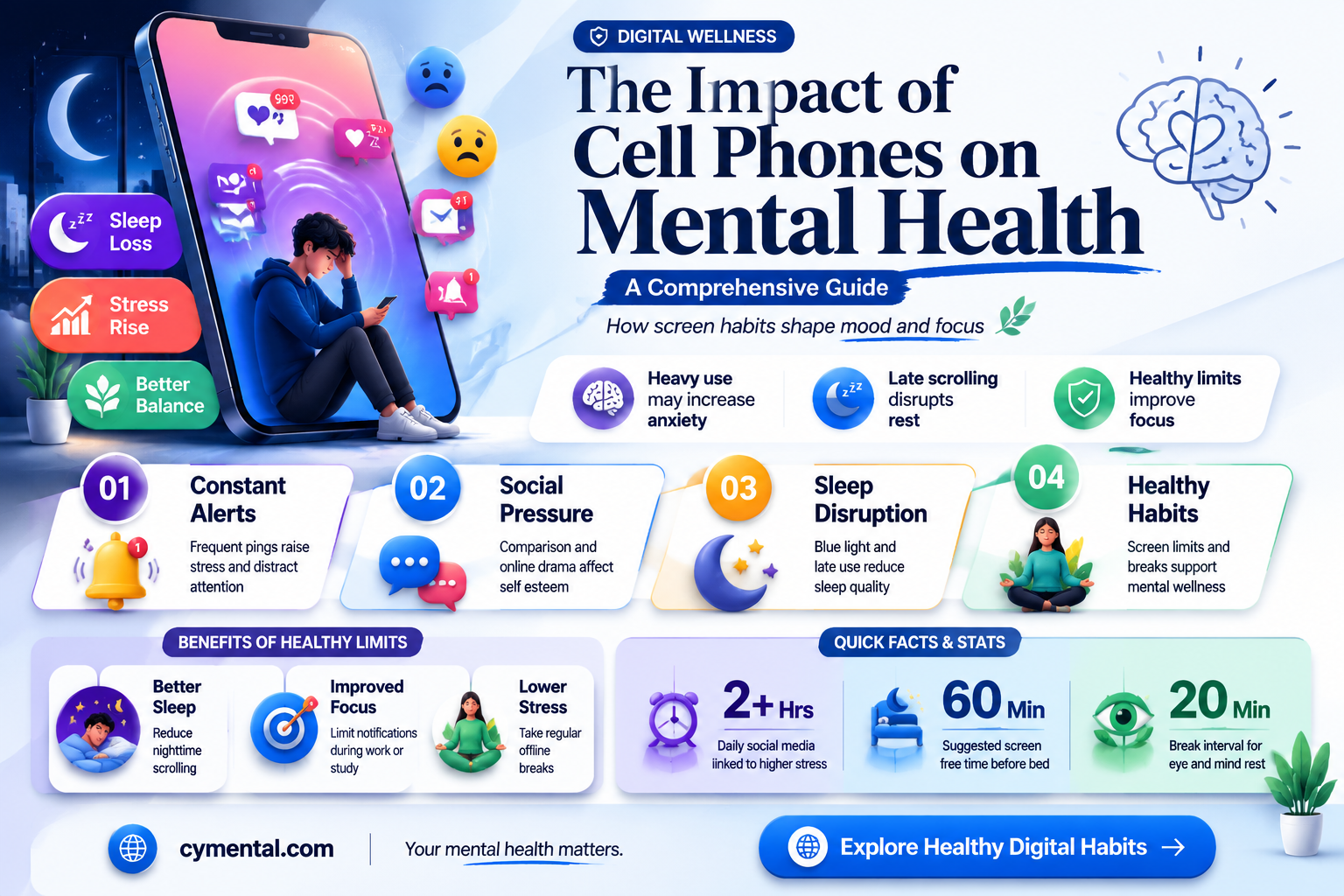
Cell phones have become an integral part of our daily lives, offering numerous benefits such as instant communication, access to information, and various forms of entertainment. However, the pervasive use of these devices has also raised concerns about their impact on mental health. Research suggests that excessive cell phone usage can lead to a range of negative effects, including increased stress, anxiety, and depression. The constant connectivity and barrage of notifications can create a sense of being overwhelmed, while the blue light emitted by screens can interfere with sleep patterns. Additionally, the social isolation that can result from spending too much time on a cell phone may exacerbate feelings of loneliness and disconnection. It is essential to strike a balance between the benefits and potential drawbacks of cell phone use to maintain good mental health.
| Characteristics | Values |
|---|---|
| Social Isolation | Excessive phone use can lead to reduced face-to-face interactions, potentially causing feelings of loneliness and isolation. |
| Sleep Disturbances | The blue light emitted by screens can interfere with sleep patterns, leading to insomnia or disrupted sleep cycles. |
| Anxiety and Stress | Constant connectivity and the pressure to respond immediately can heighten anxiety levels and contribute to chronic stress. |
| Depression | Overuse of social media on cell phones has been linked to increased symptoms of depression, particularly in younger individuals. |
| Addiction | The dopamine release associated with phone use can lead to addictive behaviors, making it difficult to reduce usage. |
| Cognitive Impairment | Multitasking on cell phones can impair cognitive functions such as attention, memory, and problem-solving abilities. |
| Self-Esteem Issues | Comparison with others on social media can negatively impact self-esteem and body image. |
| Cyberbullying | Cell phones provide a platform for cyberbullying, which can have severe mental health consequences for victims. |
| Information Overload | The constant influx of information can lead to feelings of overwhelm and decreased ability to focus. |
| Reduced Physical Activity | Sedentary phone use can contribute to a decrease in physical activity, which is essential for maintaining good mental health. |
Explore related products


What You'll Learn
- Social Media Addiction: Excessive use can lead to compulsive checking, anxiety, and depression
- Sleep Disturbances: Blue light exposure and late-night usage disrupt sleep patterns, affecting mood and cognitive function
- Cyberbullying: Online harassment can cause severe emotional distress, especially among younger users
- Information Overload: Constant notifications and information flow can increase stress and decrease attention span
- Fear of Missing Out (FOMO): Seeing others' curated lives can lead to feelings of inadequacy and anxiety

Social Media Addiction: Excessive use can lead to compulsive checking, anxiety, and depression
Social media addiction is a growing concern as excessive use can lead to compulsive checking, anxiety, and depression. This phenomenon is characterized by an overwhelming urge to constantly check social media platforms, leading to a cycle of addiction that can have severe mental health consequences. Research has shown that the constant stream of notifications and the fear of missing out (FOMO) can create a sense of anxiety and urgency, compelling individuals to check their phones repeatedly throughout the day.
One of the key factors contributing to social media addiction is the design of these platforms themselves. Social media companies use algorithms that are specifically engineered to keep users engaged for as long as possible. These algorithms often prioritize content that is likely to elicit strong emotional responses, such as likes, comments, and shares. As a result, users may find themselves constantly seeking validation and approval from their online networks, leading to a sense of dependency and low self-esteem.
Excessive social media use can also lead to depression, as individuals may compare their lives to the curated and often unrealistic images presented online. This constant comparison can create feelings of inadequacy and hopelessness, contributing to the development of depressive symptoms. Furthermore, the lack of face-to-face interaction and social isolation that can result from excessive social media use can exacerbate feelings of loneliness and disconnection.
Breaking the cycle of social media addiction requires a conscious effort to set boundaries and establish healthier habits. This may involve limiting the amount of time spent on social media each day, disabling notifications, and engaging in other activities that promote mental well-being, such as exercise, meditation, or spending time with friends and family. It is also important to recognize the signs of social media addiction and seek professional help if necessary.
In conclusion, social media addiction is a serious issue that can have significant negative impacts on mental health. By understanding the factors that contribute to this addiction and taking steps to establish healthier habits, individuals can reduce their reliance on social media and improve their overall well-being.
The Impact of Procrastination on Mental Health: A Comprehensive Guide
You may want to see also
Explore related products


Sleep Disturbances: Blue light exposure and late-night usage disrupt sleep patterns, affecting mood and cognitive function
The pervasive use of cell phones, especially before bedtime, has been linked to sleep disturbances due to the emission of blue light. This blue light suppresses the production of melatonin, a hormone responsible for regulating sleep-wake cycles. As a result, individuals who frequently use their phones late at night may experience difficulty falling asleep, interrupted sleep, and overall poor sleep quality. These sleep disruptions can have a cascading effect on mental health, leading to mood imbalances, increased stress levels, and cognitive impairments such as reduced attention span and memory retention.
Research indicates that the impact of blue light on sleep is particularly pronounced in adolescents and young adults, whose developing brains are more sensitive to the effects of light exposure. A study published in the journal Sleep Health found that teenagers who used their phones for more than two hours before bedtime were more likely to experience sleep disturbances and daytime sleepiness. Furthermore, the habit of checking notifications or engaging in social media activities before sleep can stimulate the brain, making it harder to wind down and transition into a restful state.
To mitigate these effects, experts recommend implementing a digital bedtime routine that involves reducing screen time at least an hour before sleep. This can be achieved by setting a specific time to stop using electronic devices, engaging in relaxing activities such as reading or meditation, and creating a sleep-conducive environment by dimming lights and maintaining a cool room temperature. Additionally, many smartphones now offer features such as night mode, which reduces the amount of blue light emitted by the screen, and apps that track and limit screen time, helping users to establish healthier habits.
In conclusion, while cell phones have become an integral part of modern life, their impact on sleep and mental health cannot be overlooked. By understanding the mechanisms through which blue light and late-night phone usage disrupt sleep patterns, individuals can take proactive steps to safeguard their mental well-being and ensure a good night's rest.
Exploring the Complex Link Between Abortion and Mental Health
You may want to see also
Explore related products



Cyberbullying: Online harassment can cause severe emotional distress, especially among younger users
Cyberbullying is a pervasive issue that can have devastating effects on mental health, particularly among younger users. Online harassment can manifest in various forms, including threatening messages, derogatory comments, and the sharing of personal information without consent. The anonymity of the internet can embolden bullies, making it easier for them to target victims without fear of repercussions.
The impact of cyberbullying on mental health can be severe, leading to increased anxiety, depression, and even suicidal thoughts. Younger users, who are still developing their emotional resilience, are especially vulnerable to these effects. The constant connectivity provided by cell phones can exacerbate the problem, as victims may feel that they are under constant surveillance and that there is no escape from the harassment.
One of the challenges in addressing cyberbullying is the difficulty in identifying and prosecuting perpetrators. Law enforcement agencies often struggle to keep up with the evolving tactics used by online bullies, and the lack of clear legal frameworks can make it difficult to hold them accountable. Furthermore, the stigma associated with being a victim of cyberbullying can prevent individuals from seeking help, fearing that they will be judged or blamed for the harassment they are experiencing.
To combat cyberbullying, it is essential to educate users about online safety and to promote a culture of respect and empathy. Parents, educators, and policymakers must work together to develop strategies that can help prevent cyberbullying and support victims. This may include implementing stricter regulations on social media platforms, providing resources for victims to report harassment, and promoting digital literacy programs that teach users how to navigate the online world safely.
Ultimately, addressing cyberbullying requires a multifaceted approach that involves technological, legal, and social solutions. By working together, we can create a safer online environment that promotes positive interactions and supports the mental well-being of all users.
Unveiling the Impact: Mental Health's Influence on Daily Living
You may want to see also
Explore related products




Information Overload: Constant notifications and information flow can increase stress and decrease attention span
The relentless barrage of notifications and information flow from our cell phones can lead to a state of information overload, significantly impacting our mental health. This constant influx of data can increase stress levels and decrease our attention span, making it difficult to focus on any one task for an extended period. Research has shown that the average person receives over 100 notifications per day, which can lead to a sense of being overwhelmed and constantly on edge.
One of the primary ways that information overload affects our mental health is through the release of cortisol, a hormone associated with stress. When we are constantly bombarded with notifications and information, our brain interprets this as a threat, triggering the release of cortisol. Over time, this can lead to chronic stress, which has been linked to a range of mental health issues, including anxiety, depression, and burnout.
In addition to increasing stress levels, information overload can also decrease our attention span. With so much information competing for our attention, it becomes increasingly difficult to focus on any one thing for an extended period. This can lead to a state of continuous partial attention, where we are never fully engaged with anything we are doing. This can have a negative impact on our productivity, creativity, and overall well-being.
To combat information overload, it is essential to establish boundaries around our use of cell phones. This can include setting specific times for checking notifications, limiting the number of apps we use, and taking regular breaks from our devices. By creating these boundaries, we can reduce the amount of information we are exposed to and give our brains a chance to rest and recharge.
Another effective strategy for managing information overload is to practice mindfulness. Mindfulness involves being present in the moment and fully engaged with whatever we are doing. By practicing mindfulness, we can learn to tune out distractions and focus on the task at hand. This can help to reduce stress levels and improve our attention span.
In conclusion, information overload is a significant issue that can have a negative impact on our mental health. By establishing boundaries around our use of cell phones and practicing mindfulness, we can learn to manage information overload and improve our overall well-being.
Unveiling the Impact: Smoking and Mental Health Connection
You may want to see also
Explore related products





Fear of Missing Out (FOMO): Seeing others' curated lives can lead to feelings of inadequacy and anxiety
Social media platforms, which are often accessed through cell phones, present a curated version of people's lives. This can lead to a phenomenon known as Fear of Missing Out (FOMO). FOMO is the anxiety that one might be missing out on an event, experience, or interaction that others are having. It's a feeling that can be exacerbated by the constant stream of updates and posts that showcase the highlights of others' lives.
The impact of FOMO on mental health can be significant. It can lead to feelings of inadequacy, as individuals compare their own lives to the seemingly perfect lives of others online. This comparison can foster a sense of dissatisfaction and unhappiness with one's own circumstances. Furthermore, FOMO can contribute to increased levels of anxiety and stress, as individuals feel pressured to keep up with the activities and achievements of their peers.
One of the reasons why FOMO can be so damaging is that it often leads to a cycle of negative self-comparison. When individuals see others' curated lives, they may feel that they are not measuring up in some way. This can lead to a decrease in self-esteem and a sense of not being good enough. Additionally, FOMO can contribute to a sense of isolation, as individuals may feel that they are on the outside looking in on others' experiences.
To combat FOMO, it's important to recognize that social media is not always an accurate representation of reality. People often post the highlights of their lives, while omitting the less glamorous aspects. It's also important to focus on one's own goals and achievements, rather than constantly comparing oneself to others. Taking breaks from social media can also be helpful in reducing feelings of FOMO and improving overall mental health.
In conclusion, FOMO is a significant issue that can arise from the use of cell phones and social media. It can lead to feelings of inadequacy, anxiety, and isolation. However, by recognizing the curated nature of social media and focusing on one's own accomplishments, it's possible to mitigate the negative effects of FOMO and maintain a healthier mental state.
Digital Dilemma: The Impact of Technology on Mental Health
You may want to see also
Frequently asked questions
Excessive cell phone use has been linked to increased levels of stress, anxiety, and depression. Constant connectivity can lead to a sense of being overwhelmed and unable to switch off or relax.
Strategies include setting boundaries for screen time, engaging in regular physical activity, practicing mindfulness, and prioritizing face-to-face social interactions over digital communication.
Yes, cell phones can provide access to mental health resources, support networks, and therapeutic apps. They can also facilitate communication with loved ones and offer a sense of connection.
Social media can contribute to feelings of loneliness, inadequacy, and FOMO (fear of missing out). However, it can also offer a platform for self-expression, community building, and sharing positive experiences.