Harper Lewis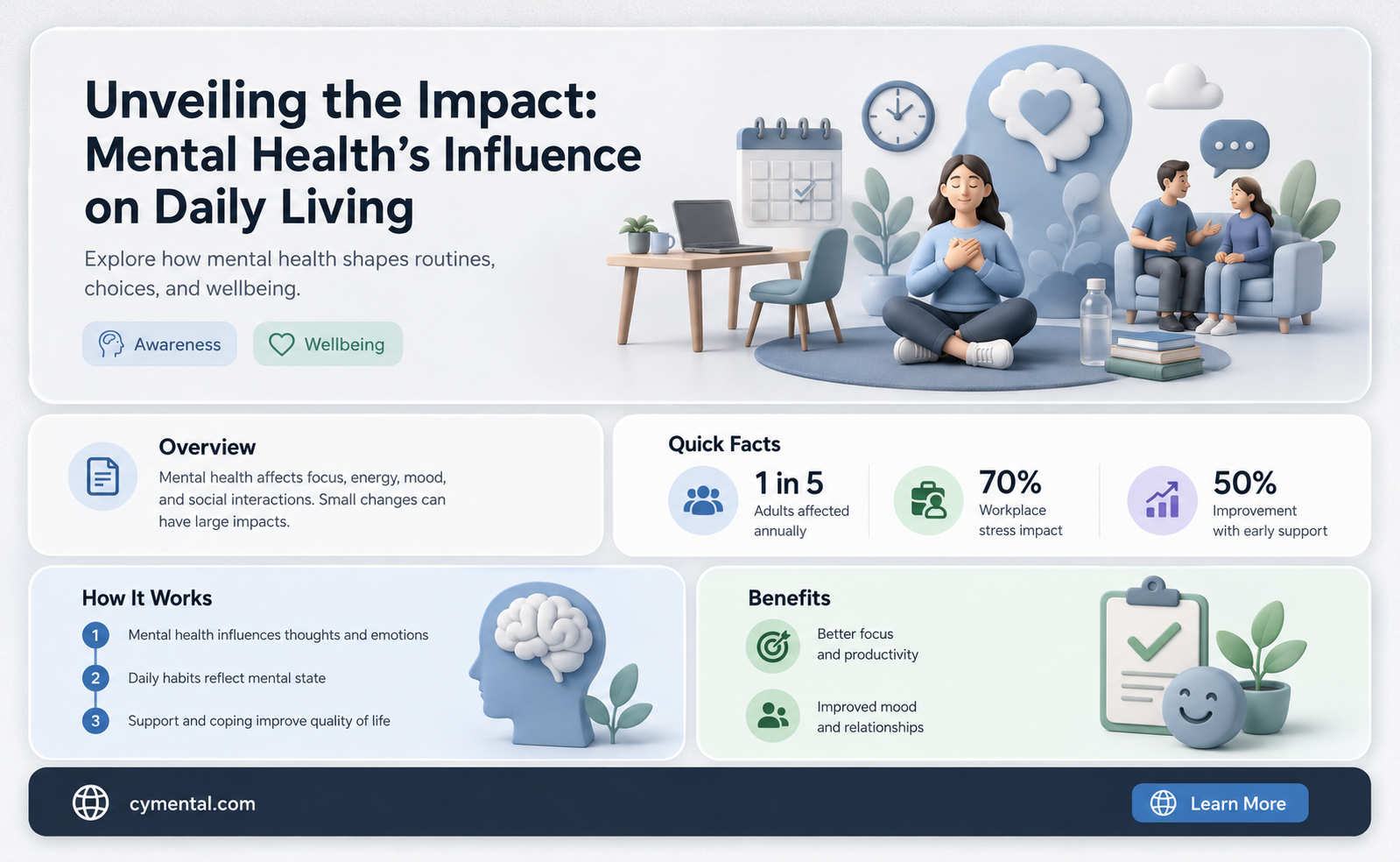
Mental health plays a crucial role in our daily lives, influencing how we think, feel, and behave. It affects our ability to cope with stress, form relationships, and make decisions. Good mental health allows us to lead fulfilling lives, while poor mental health can lead to a range of challenges, including anxiety, depression, and other mental health disorders. These challenges can impact our work, our relationships, and our overall well-being. Therefore, it is essential to prioritize mental health and seek support when needed to maintain a healthy and balanced life.
| Characteristics | Values |
|---|---|
| Mood | Frequent mood swings, irritability, sadness, or anxiety |
| Energy | Low energy, fatigue, or lack of motivation |
| Sleep | Insomnia, oversleeping, or disrupted sleep patterns |
| Appetite | Changes in appetite, overeating, or undereating |
| Concentration | Difficulty focusing, remembering, or making decisions |
| Social Interaction | Withdrawal from social activities, friends, or family |
| Physical Health | Unexplained physical symptoms, such as headaches or stomachaches |
| Self-Esteem | Low self-esteem, self-doubt, or feelings of worthlessness |
| Coping Mechanisms | Unhealthy coping strategies, such as substance abuse or self-harm |
| Overall Well-being | Reduced overall sense of well-being or life satisfaction |
Explore related products


What You'll Learn
- Emotional Well-being: Mental health impacts mood, happiness, and overall emotional stability
- Physical Health: Poor mental health can lead to physical symptoms like fatigue, pain, and illness
- Social Interactions: Mental health affects relationships, communication, and social engagement
- Work and Productivity: Mental health influences focus, motivation, and performance in professional settings
- Daily Routines: Mental health can disrupt sleep, eating habits, and daily activities

Emotional Well-being: Mental health impacts mood, happiness, and overall emotional stability
Our emotional well-being is deeply intertwined with our mental health, influencing how we perceive and react to the world around us. Mood, happiness, and emotional stability are not just fleeting feelings but are significantly shaped by our mental state. For instance, individuals with depression often experience persistent feelings of sadness and hopelessness, which can permeate every aspect of their daily lives, from personal relationships to professional performance.
The impact of mental health on emotional well-being can be seen in the way it affects our ability to cope with stress and adversity. Those with robust mental health are better equipped to handle life's challenges, bouncing back more quickly from setbacks. In contrast, poor mental health can lead to prolonged periods of emotional distress, making it difficult to function normally. This can manifest in various ways, such as increased irritability, anxiety, or withdrawal from social activities.
Moreover, mental health plays a crucial role in our capacity for emotional regulation. This involves managing our emotions in a way that is appropriate for the situation and conducive to our well-being. For example, someone with borderline personality disorder may struggle with intense emotional swings, making it challenging to maintain stable relationships or hold down a job. Effective emotional regulation, on the other hand, allows us to navigate complex social interactions and make decisions that align with our long-term goals.
The connection between mental health and emotional well-being is further underscored by the impact of mental illness on physical health. Chronic stress and anxiety, for instance, can lead to a range of physical symptoms, including headaches, digestive issues, and sleep disturbances. These physical manifestations can, in turn, exacerbate mental health issues, creating a vicious cycle that is difficult to break.
In conclusion, the interplay between mental health and emotional well-being is complex and multifaceted. By understanding this relationship, we can better appreciate the importance of prioritizing mental health and seeking support when needed. This might involve practicing stress-reduction techniques, such as meditation or yoga, seeking therapy, or simply making time for activities that bring joy and relaxation. Ultimately, nurturing our mental health is essential for maintaining emotional stability and leading a fulfilling life.
Navigating Choices: The Impact of Stress and Mental Health on Decision-Making
You may want to see also
Explore related products


Physical Health: Poor mental health can lead to physical symptoms like fatigue, pain, and illness
Poor mental health can manifest in a myriad of physical symptoms, often overlooked or misdiagnosed. Fatigue, for instance, is a common complaint among those struggling with mental health issues. It's not just a feeling of tiredness; it's a pervasive exhaustion that can make even simple tasks feel insurmountable. This fatigue can stem from the constant mental strain of anxiety, depression, or other psychological conditions, which can wear down the body's energy reserves over time.
Pain is another physical symptom closely linked to mental health. Chronic pain conditions, such as fibromyalgia or irritable bowel syndrome, are often exacerbated by stress and anxiety. The mind-body connection is a powerful one, and when mental health suffers, the body can respond with heightened sensitivity to pain. This isn't to say that the pain isn't real; rather, it's a complex interplay between psychological and physiological factors.
Illness, too, can be a consequence of poor mental health. A weakened immune system, brought on by chronic stress or depression, can make the body more susceptible to infections and diseases. This is particularly concerning in the context of global health crises, where mental health challenges can compound the risk of physical illness.
It's crucial to recognize these physical symptoms as potential indicators of mental health struggles. By addressing the root cause—the mental health issues—individuals can often find relief from these physical symptoms as well. This might involve seeking therapy, practicing stress-reduction techniques, or even making lifestyle changes to promote overall well-being.
In conclusion, the impact of mental health on physical health is profound and multifaceted. By understanding and addressing this connection, individuals can take important steps towards improving their overall quality of life.
Digital Detox: Unraveling the Impact of Screen Time on Mental Health
You may want to see also
Explore related products


$14.99 $16.99


Social Interactions: Mental health affects relationships, communication, and social engagement
Mental health plays a pivotal role in shaping our social interactions, influencing how we form relationships, communicate with others, and engage in social activities. Poor mental health can lead to difficulties in these areas, manifesting as challenges in maintaining friendships, misunderstandings in communication, and a general withdrawal from social engagements. For instance, individuals experiencing depression may find it hard to muster the energy to participate in social events, while those with anxiety disorders might struggle with the fear of judgment or rejection in social settings.
The impact of mental health on relationships is multifaceted. It can affect one's ability to empathize with others, leading to strained interpersonal connections. Mental health issues can also result in a lack of motivation to engage in activities that were once enjoyable, causing a rift between friends and family members. Furthermore, the stigma surrounding mental health can lead to feelings of isolation, as individuals may feel reluctant to discuss their struggles with others for fear of being misunderstood or judged.
Effective communication is another area where mental health can have a significant impact. Conditions such as depression and anxiety can impair cognitive functions, making it difficult to articulate thoughts clearly or to focus on conversations. This can lead to misunderstandings and miscommunications, further straining relationships. Additionally, mental health issues can affect non-verbal communication, such as body language and facial expressions, which are crucial components of effective social interaction.
Social engagement is often influenced by one's mental state. When individuals are struggling with their mental health, they may avoid social situations altogether, leading to a decrease in opportunities for social interaction and support. This can create a vicious cycle, where social isolation exacerbates mental health issues, which in turn further diminishes social engagement. Breaking this cycle often requires a concerted effort to reach out for support and to gradually rebuild social connections.
In conclusion, mental health has a profound impact on social interactions, affecting relationships, communication, and social engagement in numerous ways. Addressing these issues requires a comprehensive approach that includes seeking professional help, building a support network, and developing strategies to improve communication and social skills. By doing so, individuals can work towards mitigating the negative effects of mental health on their social lives and fostering more meaningful and fulfilling relationships.
The Impact of Procrastination on Mental Health: A Comprehensive Guide
You may want to see also
Explore related products


Work and Productivity: Mental health influences focus, motivation, and performance in professional settings
Mental health plays a pivotal role in determining an individual's ability to focus, stay motivated, and perform optimally in professional settings. Research indicates that mental health conditions such as depression, anxiety, and stress can significantly impair cognitive functions, leading to decreased productivity and efficiency at work. For instance, a study published in the Journal of Occupational and Environmental Medicine found that employees with depression were 35% less productive than their peers without the condition.
One of the primary ways mental health affects work productivity is through its impact on focus and concentration. Individuals struggling with mental health issues often find it challenging to maintain attention on tasks, leading to procrastination and a decrease in the quality of work. Moreover, mental health conditions can also influence motivation levels, making it difficult for individuals to find the drive to complete tasks or pursue professional goals.
In addition to focus and motivation, mental health also has a direct impact on performance. Employees dealing with mental health issues may experience physical symptoms such as fatigue, headaches, and sleep disturbances, which can hinder their ability to perform tasks effectively. Furthermore, mental health conditions can lead to increased absenteeism and presenteeism (being present at work but not fully productive), both of which can have significant negative impacts on overall work performance.
Employers can take several steps to support employees' mental health and, in turn, enhance productivity. Implementing mental health awareness programs, providing access to counseling services, and promoting work-life balance are all effective strategies. Additionally, fostering a supportive work environment that encourages open communication about mental health can help reduce stigma and encourage employees to seek help when needed.
In conclusion, the relationship between mental health and work productivity is complex and multifaceted. By understanding the specific ways mental health conditions can impact focus, motivation, and performance, employers and employees can work together to create a healthier, more productive work environment.
The Dark Side of Sports: Unveiling Mental Health Challenges
You may want to see also
Explore related products





Daily Routines: Mental health can disrupt sleep, eating habits, and daily activities
Mental health issues can significantly disrupt daily routines, affecting various aspects of a person's life. One of the most common areas impacted is sleep. Individuals with mental health conditions such as anxiety or depression may experience insomnia or hypersomnia, leading to either a lack of restful sleep or excessive sleeping. This disruption in sleep patterns can further exacerbate mental health symptoms, creating a vicious cycle that is difficult to break.
Eating habits are another critical area affected by mental health. Conditions like depression can lead to a loss of appetite, resulting in inadequate nutrition and potential weight loss. Conversely, some individuals may turn to overeating or binge eating as a coping mechanism, which can lead to weight gain and other health issues. The relationship between mental health and eating habits is complex, with each influencing the other in a continuous feedback loop.
Daily activities, including work, school, and social interactions, can also be severely impacted by mental health issues. Anxiety disorders, for example, can make it difficult for individuals to concentrate or participate in social situations, leading to avoidance behaviors and potential isolation. Depressive disorders can sap energy and motivation, making even simple tasks feel overwhelming. This can result in decreased productivity and a sense of helplessness, further contributing to the negative impact on mental health.
To address these disruptions, it is essential to develop strategies that promote healthy routines. Establishing a consistent sleep schedule, creating a relaxing bedtime routine, and limiting exposure to screens before bed can help improve sleep quality. Mindful eating practices, such as paying attention to hunger and fullness cues and avoiding emotional eating, can help regulate eating habits. Additionally, setting realistic goals for daily activities and gradually increasing social interactions can help individuals with mental health issues regain a sense of control and purpose in their lives.
In conclusion, mental health issues can have a profound impact on daily routines, affecting sleep, eating habits, and daily activities. By understanding these relationships and implementing strategies to promote healthy routines, individuals can take important steps towards managing their mental health and improving their overall well-being.
Festive Blues: Unwrapping the Impact of Holidays on Mental Health
You may want to see also
Frequently asked questions
Mental health can significantly impact daily life by influencing emotions, thoughts, and behaviors. Conditions like depression, anxiety, and stress can lead to decreased productivity, strained relationships, and a reduced ability to cope with life's challenges.
Common signs of poor mental health include persistent feelings of sadness or anxiety, changes in appetite or sleep patterns, difficulty concentrating, withdrawal from social activities, and unexplained physical symptoms like headaches or stomachaches.
Improving mental health can involve various strategies such as practicing mindfulness and meditation, engaging in regular physical activity, maintaining a balanced diet, getting adequate sleep, seeking professional help like therapy or counseling, and building strong social connections.
Stress can have a significant impact on mental health. Chronic stress can lead to the development of mental health conditions like anxiety and depression. It can also exacerbate existing mental health issues and impair cognitive function, emotional regulation, and physical health.
Mental health can affect physical health in numerous ways. Poor mental health has been linked to an increased risk of chronic diseases like heart disease, diabetes, and respiratory illnesses. It can also lead to compromised immune function, increased inflammation, and a higher likelihood of engaging in unhealthy behaviors like smoking or overeating.