Ava Ramirez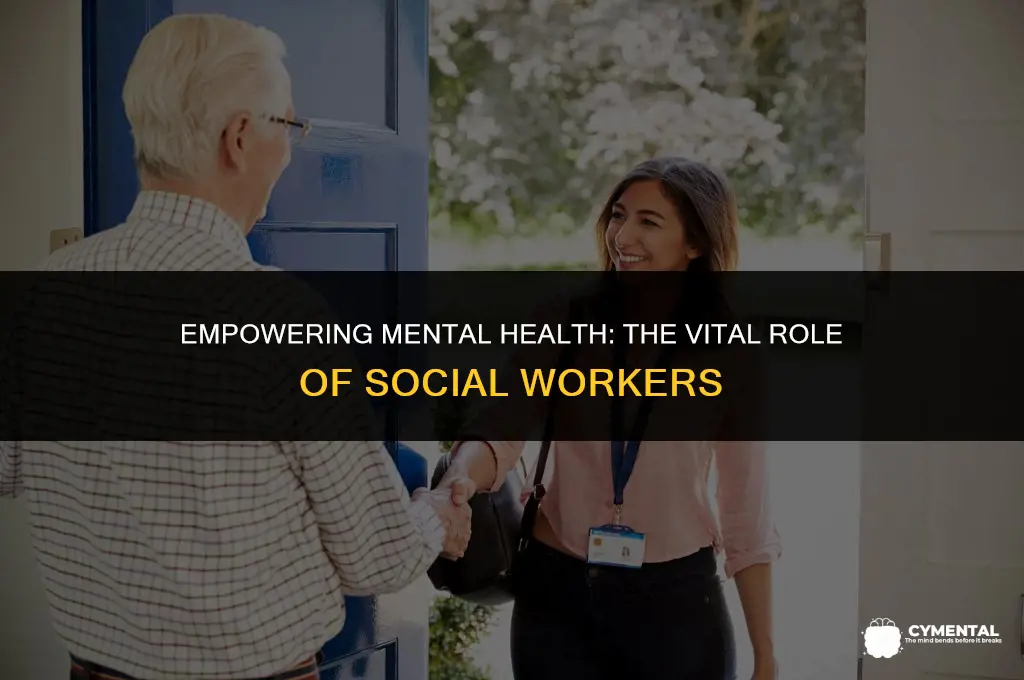
Social workers play a crucial role in supporting individuals with mental illness, offering a range of services to help them manage their conditions and improve their overall well-being. They work collaboratively with clients to develop personalized treatment plans, which may include therapy, medication management, and lifestyle changes. Additionally, social workers provide emotional support, helping clients to cope with the challenges of their illness and build resilience. They also connect clients with community resources, such as support groups and housing assistance, to ensure they have access to the help they need. By taking a holistic approach to care, social workers empower individuals with mental illness to lead fulfilling lives and achieve their goals.
| Characteristics | Values |
|---|---|
| Empathy and Compassion | Social workers provide a supportive and non-judgmental environment, fostering trust and understanding with clients. |
| Active Listening | They engage in attentive listening to understand the client's experiences, emotions, and needs. |
| Assessment and Diagnosis | Social workers assess clients' mental health status, identify strengths and challenges, and collaborate with other professionals for accurate diagnosis. |
| Treatment Planning | They develop individualized treatment plans, setting realistic goals and objectives in collaboration with the client. |
| Counseling and Therapy | Social workers offer various therapeutic approaches, such as cognitive-behavioral therapy, to help clients manage symptoms and improve functioning. |
| Medication Management | They educate clients about medications, monitor side effects, and collaborate with psychiatrists for medication adjustments. |
| Crisis Intervention | Social workers provide immediate support and resources during mental health crises, ensuring client safety and stability. |
| Advocacy and Empowerment | They advocate for clients' rights, help them navigate the mental health system, and empower them to make informed decisions. |
| Community Resource Connection | Social workers connect clients with community resources, such as support groups, housing assistance, and employment services. |
| Family and Social Support | They involve family members and friends in the treatment process, providing education and support to enhance the client's social network. |
| Cultural Competence | Social workers are sensitive to cultural differences and tailor their approach to meet the unique needs of diverse populations. |
| Confidentiality and Ethics | They maintain strict confidentiality, adhere to ethical guidelines, and ensure that client information is protected. |
| Interdisciplinary Collaboration | Social workers collaborate with other mental health professionals, such as psychologists, psychiatrists, and nurses, to provide comprehensive care. |
| Evidence-Based Practice | They stay up-to-date with the latest research and evidence-based practices, incorporating them into their work with clients. |
| Self-Care and Burnout Prevention | Social workers prioritize their own self-care, recognizing the importance of maintaining their mental and emotional well-being to provide effective support to clients. |
Explore related products




What You'll Learn
- Assessment and Diagnosis: Social workers evaluate clients' mental health, identify symptoms, and develop treatment plans
- Counseling and Therapy: They provide individual, group, or family counseling to help clients cope with mental illness
- Case Management: Social workers coordinate care, connect clients with resources, and monitor their progress
- Advocacy and Support: They advocate for clients' rights, provide emotional support, and empower them to manage their mental health
- Crisis Intervention: Social workers respond to mental health crises, de-escalate situations, and ensure clients' safety

Assessment and Diagnosis: Social workers evaluate clients' mental health, identify symptoms, and develop treatment plans
Social workers play a crucial role in the assessment and diagnosis of mental health conditions. They are trained to evaluate a client's mental health, identify symptoms, and develop personalized treatment plans. This process begins with a thorough assessment, which may include interviews, questionnaires, and observations. Social workers use this information to identify potential mental health issues and determine the appropriate course of action.
One of the key tools used by social workers in assessment and diagnosis is the Diagnostic and Statistical Manual of Mental Disorders (DSM-5). This manual provides a standardized set of criteria for diagnosing mental health conditions, allowing social workers to make accurate and consistent diagnoses. Social workers may also consult with other mental health professionals, such as psychiatrists or psychologists, to confirm a diagnosis and develop a comprehensive treatment plan.
In addition to assessing and diagnosing mental health conditions, social workers also play a critical role in developing treatment plans. These plans may include a variety of interventions, such as therapy, medication, and community support services. Social workers work closely with clients to develop treatment plans that are tailored to their individual needs and goals. They also monitor clients' progress and make adjustments to the treatment plan as needed.
Social workers may also provide education and support to clients and their families. They may help clients understand their mental health condition, the treatment options available, and how to manage their symptoms. Social workers may also provide resources and referrals to community services that can support clients in their recovery.
In conclusion, social workers are essential in the assessment, diagnosis, and treatment of mental health conditions. They provide a critical link between clients and the mental health system, ensuring that clients receive the care and support they need to recover and thrive.
Navigating Able Accounts: Mental Health Disability Qualification Explained
You may want to see also
Explore related products


Counseling and Therapy: They provide individual, group, or family counseling to help clients cope with mental illness
Social workers play a crucial role in providing counseling and therapy to individuals, groups, and families affected by mental illness. This support is tailored to help clients cope with their conditions, manage symptoms, and improve their overall quality of life. Counseling sessions can be conducted one-on-one, in group settings, or with family members, depending on the client's needs and preferences.
In individual counseling, social workers create a safe and confidential environment where clients can express their thoughts and feelings freely. They use various therapeutic techniques, such as cognitive-behavioral therapy (CBT), motivational interviewing, and solution-focused therapy, to help clients identify and challenge negative thought patterns, set goals, and develop coping strategies. These sessions are typically scheduled regularly, allowing clients to track their progress and receive ongoing support.
Group counseling offers a different dynamic, where clients can share their experiences and learn from others facing similar challenges. Social workers facilitate these groups, ensuring that each participant has an opportunity to contribute and benefit from the collective wisdom. Group therapy can be particularly effective for individuals struggling with social isolation or those who find comfort in community support.
Family counseling is another vital component of social work practice in mental health. By involving family members in the therapeutic process, social workers can help address relationship issues, improve communication, and educate loved ones about mental illness. This approach can lead to a more supportive home environment and better outcomes for the client.
In addition to traditional counseling methods, social workers may also incorporate other strategies to support clients with mental illness. These can include connecting clients with community resources, advocating for their rights, and collaborating with other healthcare professionals to ensure comprehensive care. By taking a holistic approach to mental health, social workers can help clients navigate the complexities of their conditions and work towards recovery and well-being.
Navigating Involuntary Commitment: A Guide to Mental Health Support in California
You may want to see also
Explore related products




Case Management: Social workers coordinate care, connect clients with resources, and monitor their progress
Social workers play a crucial role in case management for individuals with mental illness. They coordinate care by collaborating with various healthcare providers, ensuring that clients receive comprehensive and cohesive treatment. This involves organizing meetings with psychiatrists, therapists, and other specialists to discuss the client's progress and adjust treatment plans as necessary. By facilitating communication between different members of the care team, social workers help to prevent gaps in service and ensure that all providers are working towards the same goals.
In addition to coordinating care, social workers are skilled at connecting clients with resources. They are knowledgeable about community services, support groups, and other resources that can benefit individuals with mental illness. Social workers can help clients access these resources by providing information, making referrals, and even accompanying them to appointments or meetings. This support can be invaluable for clients who may be struggling to navigate the complex mental health system on their own.
Monitoring progress is another key component of case management. Social workers regularly check in with clients to assess their well-being and ensure that they are adhering to their treatment plans. This may involve conducting home visits, attending therapy sessions, or simply having regular phone calls. By closely monitoring clients' progress, social workers can quickly identify any issues or setbacks and take appropriate action to address them. This proactive approach can help to prevent crises and keep clients on track towards recovery.
Overall, case management is a critical aspect of social work practice in mental health. By coordinating care, connecting clients with resources, and monitoring their progress, social workers can significantly improve outcomes for individuals with mental illness. Their holistic approach to care ensures that clients receive the support they need to manage their symptoms, achieve their goals, and lead fulfilling lives.
Navigating Love and Mental Health: A Guide to Supportive Relationships
You may want to see also
Explore related products





Advocacy and Support: They advocate for clients' rights, provide emotional support, and empower them to manage their mental health
Social workers play a crucial role in advocating for the rights of individuals with mental illness. They ensure that their clients receive fair treatment and are not discriminated against due to their mental health status. This advocacy can involve representing clients in legal proceedings, negotiating with healthcare providers, or working with community organizations to promote mental health awareness and reduce stigma.
In addition to advocacy, social workers provide essential emotional support to their clients. They offer a listening ear, validate their clients' feelings, and help them navigate the challenges of living with a mental illness. This emotional support can be particularly important for individuals who may feel isolated or misunderstood due to their condition.
Empowerment is another key aspect of a social worker's role. They help clients develop the skills and confidence needed to manage their mental health effectively. This can include teaching coping strategies, assisting with medication management, and connecting clients with resources such as support groups or online tools. By empowering their clients, social workers enable them to take an active role in their own recovery and improve their overall quality of life.
Social workers also work collaboratively with other healthcare professionals to ensure that their clients receive comprehensive care. They may coordinate with psychiatrists, psychologists, and other mental health providers to develop a treatment plan that addresses all aspects of a client's mental health needs. This collaborative approach helps to ensure that clients receive the most effective care possible.
In summary, social workers are invaluable in the lives of individuals with mental illness. Through advocacy, emotional support, and empowerment, they help their clients navigate the complexities of mental health care and improve their overall well-being. Their collaborative approach ensures that clients receive comprehensive care that addresses all of their needs.
Unraveling the Complex Link Between Dishonesty and Mental Health
You may want to see also
Explore related products




Crisis Intervention: Social workers respond to mental health crises, de-escalate situations, and ensure clients' safety
Social workers play a crucial role in crisis intervention, particularly when it comes to mental health emergencies. They are often the first responders to such crises, equipped with the skills and knowledge necessary to de-escalate situations and ensure the safety of their clients. This involves a combination of active listening, empathy, and practical problem-solving to address the immediate needs of individuals in distress.
One of the key strategies employed by social workers in crisis intervention is the use of a crisis assessment framework. This framework helps them to quickly identify the nature and severity of the crisis, as well as any potential risks to the client or others. By conducting a thorough assessment, social workers can develop an individualized crisis plan that outlines specific steps to be taken to resolve the situation and prevent future crises.
In addition to assessment and planning, social workers also provide direct support and interventions to clients in crisis. This may include connecting them with emergency services, such as psychiatric hospitals or crisis hotlines, as well as providing ongoing counseling and therapy to help them cope with their mental health challenges. Social workers also work closely with other professionals, such as psychiatrists and psychologists, to ensure that clients receive comprehensive care.
Another important aspect of crisis intervention is the follow-up phase. Social workers continue to work with clients after the immediate crisis has passed to help them develop long-term coping strategies and prevent future crises. This may involve regular check-ins, ongoing therapy, and connecting clients with community resources and support networks.
Overall, the role of social workers in crisis intervention is multifaceted and requires a high level of skill, compassion, and dedication. By providing timely and effective support, social workers can help individuals in crisis to regain stability and improve their overall mental health and well-being.
Navigating the Process of Mental Health Commitment: A Guide
You may want to see also
Frequently asked questions
The primary role of a social worker is to provide support, guidance, and resources to individuals with mental illness. They help clients manage their conditions, improve their quality of life, and navigate the complexities of the mental health system.
Social workers often collaborate with psychiatrists, psychologists, and other mental health professionals to develop comprehensive treatment plans. They communicate regularly to ensure that the client's needs are being met and that the treatment plan is effective.
Social workers may use a variety of interventions, including counseling, case management, and advocacy. They may also connect clients with community resources, such as support groups, housing assistance, and employment services.
Social workers play a crucial role in reducing the stigma associated with mental illness by educating the public, promoting awareness, and advocating for policies that support individuals with mental health conditions. They also work to empower clients by helping them to understand their rights and to access the resources they need to live fulfilling lives.