Ava Ramirez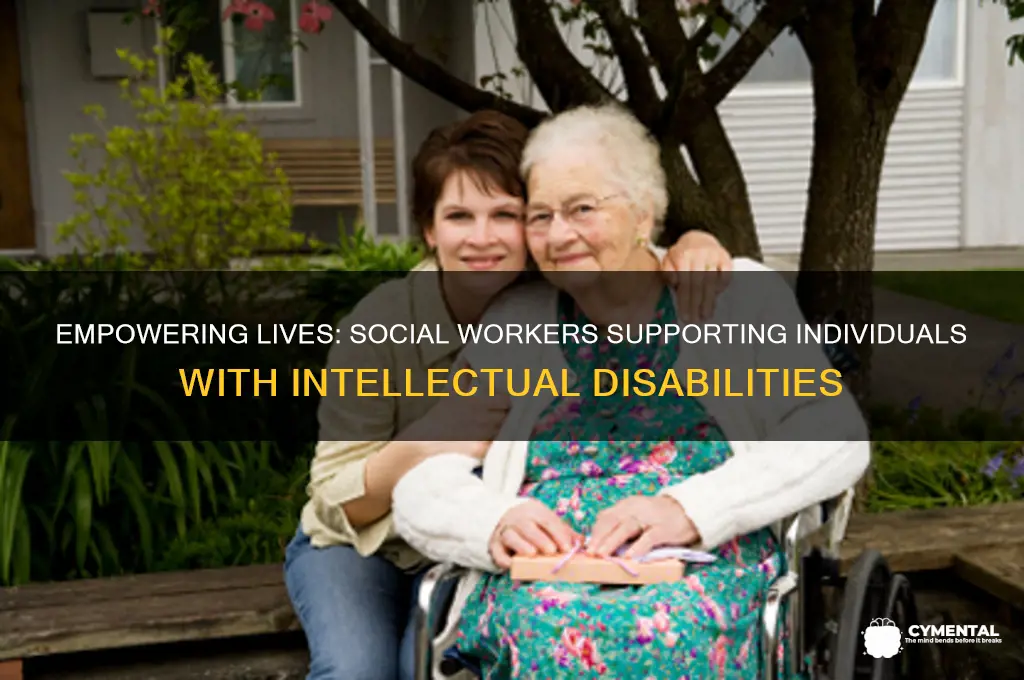
Social workers play a crucial role in supporting individuals with intellectual disabilities, formerly referred to as mental retardation, by providing comprehensive and individualized care tailored to their unique needs. Through a strengths-based approach, social workers assess the person’s abilities, challenges, and goals, collaborating with them, their families, and other professionals to develop personalized plans that promote independence, inclusion, and quality of life. They advocate for access to essential resources such as education, employment, healthcare, and community services, while also addressing social stigma and fostering a supportive environment. By offering counseling, crisis intervention, and long-term case management, social workers empower individuals with intellectual disabilities to navigate daily challenges, build meaningful relationships, and achieve their full potential within society.
| Characteristics | Values |
|---|---|
| Assessment and Planning | Conduct comprehensive assessments to identify strengths, needs, and challenges. Develop individualized care plans. |
| Advocacy | Advocate for the rights and needs of individuals with intellectual disabilities in various settings (e.g., schools, workplaces, healthcare). |
| Skill Development | Assist in developing life skills such as communication, self-care, and social interaction. |
| Community Integration | Facilitate access to community resources, programs, and activities to promote inclusion and independence. |
| Family Support | Provide counseling and support to families, helping them understand and manage the challenges of caring for a loved one with intellectual disabilities. |
| Crisis Intervention | Offer immediate support during crises, such as behavioral issues or emergencies, and connect individuals to appropriate services. |
| Education and Training | Educate individuals and their families about intellectual disabilities, available resources, and coping strategies. |
| Legal and Financial Assistance | Help navigate legal systems, apply for benefits (e.g., SSI, Medicaid), and manage financial matters. |
| Behavioral Management | Develop strategies to address challenging behaviors and improve overall functioning. |
| Transition Planning | Assist with transitions, such as moving from school to work or aging-related changes, ensuring continuity of care. |
| Collaboration with Professionals | Work with healthcare providers, educators, and therapists to ensure holistic care and coordinated services. |
| Empowerment and Self-Advocacy | Encourage individuals to advocate for themselves and make informed decisions about their lives. |
| Monitoring and Follow-Up | Regularly review and adjust care plans to meet evolving needs and ensure progress. |
| Cultural Sensitivity | Provide culturally competent services that respect the individual's background, beliefs, and preferences. |
| Prevention and Early Intervention | Identify and address potential issues early to prevent complications and promote better outcomes. |
Explore related products


What You'll Learn
- Assessing Individual Needs: Identifying strengths, challenges, and goals to tailor support for daily functioning and independence
- Creating Support Plans: Developing personalized strategies for skill-building, communication, and community integration
- Advocating for Rights: Ensuring access to resources, services, and equal opportunities in society
- Providing Emotional Support: Offering counseling and encouragement to boost self-esteem and mental well-being
- Connecting to Services: Linking individuals with healthcare, education, and vocational programs for holistic development

Assessing Individual Needs: Identifying strengths, challenges, and goals to tailor support for daily functioning and independence
Effective support for individuals with intellectual disabilities begins with a comprehensive assessment of their unique needs, strengths, and aspirations. This process is not a one-size-fits-all checklist but a nuanced exploration of the individual’s daily life, capabilities, and barriers. For instance, a 25-year-old with mild intellectual disability may excel in structured tasks like grocery shopping but struggle with abstract concepts like budgeting. Identifying such specifics allows social workers to design interventions that build on existing skills while addressing deficits, fostering both independence and confidence.
The assessment process involves a multi-faceted approach, combining direct observation, interviews, and standardized tools. For children under 12, tools like the Vineland Adaptive Behavior Scales can quantify daily living skills, while for adults, the Supports Intensity Scale (SIS) measures the type and amount of support needed across various domains. Caution must be taken to avoid over-reliance on standardized tests, as they may not capture the individual’s potential in real-world settings. For example, a person who scores low on communication tests might still effectively convey needs through gestures or visual aids when observed at home.
Tailoring support requires a dual focus: enhancing strengths and mitigating challenges. Suppose an assessment reveals a 40-year-old individual’s strength in social interaction but difficulty with time management. A practical strategy might involve pairing them with a peer mentor who can model organizational skills during shared activities. Similarly, for someone with sensory sensitivities, creating a calm, predictable environment—such as using noise-canceling headphones in public spaces—can reduce anxiety and improve daily functioning.
Goal-setting is a collaborative process, ensuring the individual’s voice is central. Goals should be SMART (Specific, Measurable, Achievable, Relevant, Time-bound) and aligned with their aspirations. For a teenager aiming for part-time employment, a goal might be: “Within six months, independently complete three job applications and attend one interview with 80% accuracy in task completion.” Regular reviews are essential to adjust strategies as the individual grows or circumstances change, ensuring support remains relevant and effective.
Ultimately, the goal of assessing individual needs is to empower, not just assist. By identifying strengths, challenges, and goals, social workers can craft personalized plans that promote independence in meaningful ways. This approach shifts the focus from limitations to possibilities, enabling individuals with intellectual disabilities to lead fulfilling lives on their own terms. Practicality and adaptability are key—whether it’s modifying a kitchen layout for safer meal prep or using visual schedules to structure a daily routine, every adjustment should aim to enhance autonomy and quality of life.
Exercise Boosts Elderly Mental Health: Benefits and Strategies for Wellbeing
You may want to see also
Explore related products


Creating Support Plans: Developing personalized strategies for skill-building, communication, and community integration
Social workers play a pivotal role in crafting support plans that empower individuals with intellectual disabilities to lead fulfilling lives. These plans are not one-size-fits-all; they are meticulously tailored to address unique strengths, challenges, and aspirations. At the heart of this process is the belief that every individual, regardless of cognitive ability, deserves opportunities for growth, connection, and autonomy.
Skill-building forms the foundation of these support plans. Social workers assess functional abilities across daily living domains—personal care, household tasks, money management, and vocational skills. For a 25-year-old with mild intellectual disability, this might involve breaking down complex tasks like grocery shopping into manageable steps: creating a list, budgeting, navigating the store, and using public transportation. Each step is practiced through role-playing, visual aids, and real-world trials, with progress tracked weekly. Research shows that task analysis, combined with positive reinforcement, can increase independence by up to 70% in targeted areas.
Communication strategies are equally vital, as expressive and receptive language deficits often accompany intellectual disabilities. Social workers collaborate with speech-language pathologists to introduce augmentative and alternative communication (AAC) tools—picture exchange systems, speech-generating devices, or sign language. For a nonverbal teenager, a social worker might design a visual schedule using symbols to represent daily activities, reducing anxiety and fostering predictability. Studies indicate that AAC use improves social interactions and emotional expression, particularly when introduced before age 12.
Community integration is the ultimate goal, ensuring individuals are not merely existing within society but actively participating. Social workers identify natural supports—neighbors, faith groups, or recreational clubs—that align with the person’s interests. For a 40-year-old with moderate intellectual disability who loves music, this could mean joining a community choir or volunteering at a local radio station. Structured outings, such as weekly library visits or park walks, are paired with social narratives to prepare for new environments. Data from the National Core Indicators reveals that individuals with intellectual disabilities who engage in community activities report higher life satisfaction scores.
However, creating these plans requires vigilance against common pitfalls. Overlooking the person’s preferences, setting unrealistic goals, or failing to involve family caregivers can undermine success. Social workers must balance professional expertise with the individual’s self-determination, using tools like preference assessments and person-centered planning meetings. For instance, a 30-year-old who resists traditional employment might thrive in a micro-enterprise, such as selling handmade crafts at local markets, if given the choice.
In conclusion, effective support plans are dynamic blueprints that evolve with the individual’s growth and changing circumstances. By integrating evidence-based skill-building techniques, adaptive communication methods, and intentional community connections, social workers enable people with intellectual disabilities to carve out meaningful roles in society. The measure of success lies not in perfection but in progress—each new skill mastered, each voice heard, each step toward belonging.
Canine Companions: How Dogs Boost Mental Health and Well-being
You may want to see also
Explore related products


Advocating for Rights: Ensuring access to resources, services, and equal opportunities in society
Social workers play a pivotal role in advocating for the rights of individuals with intellectual disabilities, ensuring they are not marginalized but instead empowered to lead fulfilling lives. This advocacy is a multifaceted process, requiring a deep understanding of the challenges these individuals face and the resources available to address them.
Identifying Barriers and Facilitating Access: The first step in advocacy is recognizing the obstacles that hinder equal participation in society. For instance, a social worker might assess the accessibility of local community centers for individuals with intellectual disabilities. Are there ramps for wheelchair users? Is information available in easy-read formats? By identifying these barriers, social workers can then facilitate access to necessary resources. This could involve collaborating with local authorities to implement physical modifications or advocating for the provision of specialized services, such as supported employment programs tailored to different cognitive abilities.
Empowering Through Education: Advocacy also entails educating both the individuals with intellectual disabilities and their support networks. Social workers can teach self-advocacy skills, helping clients understand their rights and express their needs effectively. For a young adult with Down syndrome, this might mean role-playing job interviews to build confidence and communication skills. Additionally, educating families and caregivers about available resources, such as respite care services or financial assistance programs, ensures a comprehensive support system.
Navigating Complex Systems: The journey towards equal opportunities often requires navigating intricate social service systems. Social workers act as guides, helping individuals and their families access benefits, apply for disability services, and understand legal rights. For instance, they can assist in completing applications for Supplemental Security Income (SSI) or explaining the process of obtaining a legal guardian, ensuring the individual's best interests are represented. This aspect of advocacy is crucial in preventing vulnerable individuals from being overlooked or denied their entitlements.
Promoting Inclusion and Challenging Stigma: A powerful form of advocacy is promoting social inclusion and challenging societal stigma. Social workers can organize community events that foster interaction between individuals with and without intellectual disabilities, breaking down barriers and promoting understanding. They might also engage in public awareness campaigns, sharing success stories and challenging stereotypes. By doing so, they contribute to a cultural shift, where diversity is celebrated and equal opportunities become a shared societal goal.
In the context of mental retardation, now more commonly referred to as intellectual disability, social workers are instrumental in translating rights into tangible realities. Through advocacy, they ensure that individuals are not merely recipients of services but active participants in a society that values and accommodates their unique needs and abilities. This process requires a combination of practical support, education, and systemic navigation, ultimately fostering a more inclusive and equitable community.
Supporting Loved Ones: A Guide to Accessing Mental Health Assistance
You may want to see also
Explore related products


Providing Emotional Support: Offering counseling and encouragement to boost self-esteem and mental well-being
Emotional support is a cornerstone of social work practice, especially when assisting individuals with intellectual disabilities. For those with mental retardation, social workers play a pivotal role in fostering self-worth and resilience through counseling and encouragement. This process begins with establishing a safe, non-judgmental environment where the individual feels heard and valued. By actively listening and validating their experiences, social workers help dismantle feelings of inadequacy often exacerbated by societal stigma. For instance, a 32-year-old client with mild intellectual disability might express frustration over repeated job rejections. A social worker could reframe these setbacks as opportunities for growth, emphasizing the client’s persistence and unique strengths, such as punctuality or teamwork skills.
Counseling techniques tailored to cognitive abilities are essential. Cognitive-behavioral therapy (CBT) adapted for intellectual disabilities, for example, uses simpler language and visual aids to help clients identify negative thought patterns and replace them with positive affirmations. A practical tip is to create a "success board" where clients pin achievements, no matter how small, to visually reinforce their capabilities. For younger individuals, aged 12–18, incorporating play therapy or role-playing scenarios can make emotional exploration less intimidating. Encouragement should be specific and actionable; instead of generic praise, highlight tangible improvements like, "You’ve been practicing your communication skills, and it shows in how clearly you explained your idea today."
Encouragement extends beyond verbal affirmations to include structured goal-setting. Social workers often collaborate with clients to set realistic, measurable objectives that align with their interests and abilities. For a 45-year-old client who enjoys gardening, a goal might be to grow three types of plants independently within three months. Achieving such goals not only boosts self-esteem but also fosters a sense of purpose. Caution must be taken, however, to avoid setting overly ambitious targets that could lead to frustration. Regular check-ins are crucial to assess progress and adjust strategies as needed, ensuring the client remains motivated and confident.
The impact of emotional support is profound but requires consistency and patience. Social workers must model empathy and resilience themselves, as clients often mirror their attitudes and behaviors. For families or caregivers, social workers can provide training on positive reinforcement techniques, such as using a 5:1 ratio of positive to corrective feedback. This approach ensures that encouragement becomes a daily practice, not just a therapeutic intervention. Ultimately, by nurturing self-esteem and mental well-being, social workers empower individuals with mental retardation to lead more fulfilling, independent lives.
Inpatient Mental Health Facilities: Effective Treatment or Temporary Relief?
You may want to see also
Explore related products


Connecting to Services: Linking individuals with healthcare, education, and vocational programs for holistic development
Social workers play a pivotal role in bridging the gap between individuals with intellectual disabilities and the services they need to thrive. One of their most critical functions is connecting these individuals to healthcare, education, and vocational programs, ensuring a holistic approach to their development. This process involves meticulous assessment, advocacy, and collaboration with various stakeholders to tailor support systems that meet unique needs.
Assessment and Individualized Planning:
The first step in connecting individuals to services is a comprehensive assessment of their strengths, challenges, and goals. Social workers evaluate cognitive, emotional, and physical capabilities, often using tools like the Vineland Adaptive Behavior Scales or the Wechsler Intelligence Scales. For example, a 25-year-old with mild intellectual disability might excel in social interactions but struggle with abstract reasoning. Based on this, a social worker would design a plan that includes vocational training in a structured, hands-on environment, such as a supported employment program. This individualized approach ensures that interventions align with the person’s abilities and aspirations.
Navigating Healthcare Services:
Access to healthcare is often fragmented for individuals with intellectual disabilities, who may face barriers like communication difficulties or systemic biases. Social workers act as navigators, linking them to specialized services such as regular check-ups, mental health counseling, and therapies like speech or occupational therapy. For instance, a child with Down syndrome might require early intervention services, including physical therapy sessions twice a week to improve motor skills. Social workers also advocate for accommodations, such as simplified medical explanations or longer appointment times, to ensure equitable care.
Educational Integration and Support:
Education is a cornerstone of development, and social workers facilitate access to inclusive learning environments. This could mean enrolling a teenager in a special education program that offers modified curricula or securing an Individualized Education Program (IEP) that includes goals like improving literacy or social skills. For adults, social workers might connect them to adult education programs that teach life skills, such as budgeting or public transportation navigation. A practical tip: social workers often collaborate with educators to incorporate visual aids or repetitive learning strategies, which are particularly effective for individuals with intellectual disabilities.
Vocational Training and Employment Opportunities:
Employment fosters independence and self-worth, but finding suitable opportunities can be challenging. Social workers link individuals to vocational rehabilitation programs that offer job training, such as retail or food service skills. They also negotiate with employers for supported employment arrangements, where job coaches provide on-the-job assistance. For example, a 30-year-old with moderate intellectual disability might start with a part-time role in a grocery store, gradually increasing hours as confidence and skills grow. Social workers ensure these placements are sustainable by addressing workplace challenges, such as sensory sensitivities or task complexity.
Collaboration and Advocacy:
Effective service linkage requires collaboration with families, educators, healthcare providers, and community organizations. Social workers act as advocates, ensuring that all parties understand the individual’s needs and work cohesively toward shared goals. For instance, they might organize multidisciplinary team meetings to discuss progress and adjust plans as needed. Additionally, they advocate for policy changes that improve access to services, such as funding for assistive technologies or inclusive housing programs.
In conclusion, connecting individuals with intellectual disabilities to healthcare, education, and vocational services is a multifaceted process that demands expertise, empathy, and persistence. Social workers are uniquely positioned to orchestrate this support network, fostering holistic development and enhancing quality of life. By addressing barriers and leveraging resources, they empower individuals to achieve their fullest potential.
Rising Demand for Mental Health Support: A Growing Trend in Seeking Help
You may want to see also
Frequently asked questions
A social worker helps individuals with mental retardation by assessing their needs, connecting them to resources, and developing personalized care plans. They advocate for their rights, provide emotional support, and collaborate with families and other professionals to ensure holistic well-being.
Social workers provide families with education, counseling, and access to community services. They help families navigate systems like healthcare, education, and legal support, and offer strategies to manage stress and improve family dynamics.
Social workers focus on skill-building, such as daily living activities, communication, and social interaction. They also help individuals access vocational training, supported employment, and inclusive community programs to foster independence and inclusion.